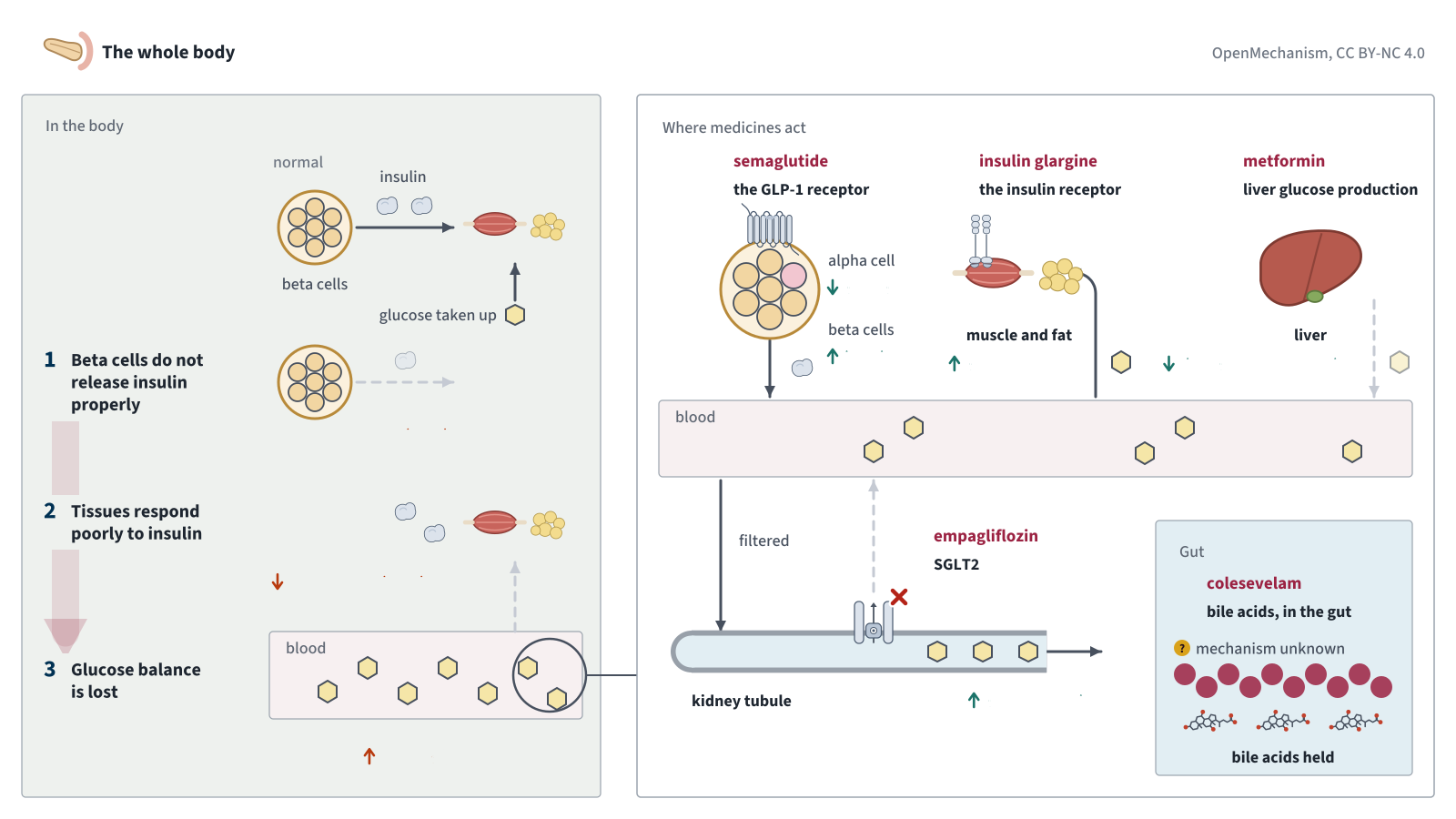
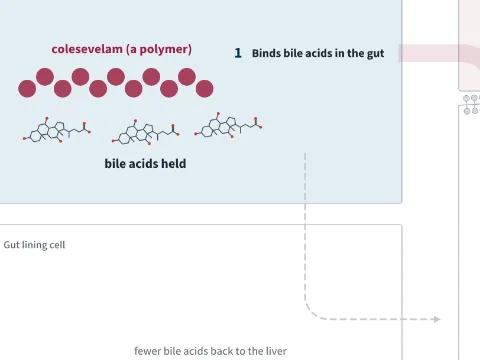
In type 2 diabetes the pancreas's beta cells do not release insulin properly and the tissues that should respond to it respond poorly, which can upset glucose balance. Medicines act in the pancreas, in muscle, fat and liver, and in the kidney; one that binds bile acids in the gut also helps, though its label says how is unknown.
Clinical study: In Fonseca and colleagues' 2008 randomized, double-blind trial of 461 adults with type 2 diabetes not well controlled on sulfonylurea-based treatment, colesevelam 3.75 g a day lowered A1C against placebo over 26 weeks; the trial measured the effect, not how it works: Colesevelam improved glycemic control and reduced LDL cholesterol levels in patients with type 2 diabetes receiving sulfonylurea-based therapy.Fonseca VA et al., Diabetes Care 2008 (PMID 18458145)
Glucose balance is lost. Insulin release and action keep glucose in balance, so defects in them can lead to the metabolic imbalance behind the disease.1
What the source says
“Because insulin release and activity are essential processes for glucose homeostasis”
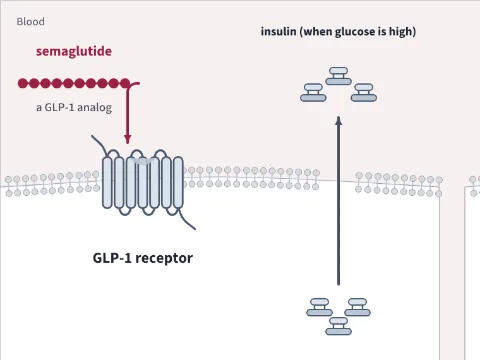
Activates the receptor, so that when blood glucose is high more insulin and less glucagon are released.2
Used forBlood sugar control: with diet and exercise, in adultsHeart attack, stroke and cardiovascular death: lower the risk, in adults with established cardiovascular diseaseKidney decline, kidney failure and cardiovascular death: lower the risk, in adults with chronic kidney disease
What the label says
“Semaglutide acts as a GLP-1 receptor agonist that selectively binds to and activates the GLP-1 receptor, the target for native GLP-1.”
“Semaglutide reduces blood glucose through a mechanism where it stimulates insulin secretion and lowers glucagon secretion, both in a glucose-dependent manner.”
“to reduce the risk of major adverse cardiovascular events (cardiovascular death, non-fatal myocardial infarction or non-fatal stroke) in adults with type 2 diabetes mellitus and established cardiovascular disease.”
“to reduce the risk of sustained eGFR decline, end-stage kidney disease, and cardiovascular death in adults with type 2 diabetes mellitus and chronic kidney disease.”
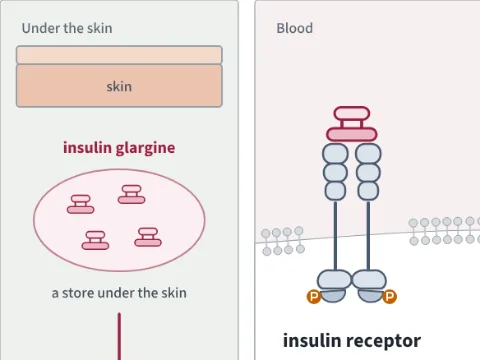
Stimulates glucose uptake, especially by muscle and fat, and holds back the liver's glucose production.3,4
Used forBlood sugar control: adults and children with diabetes
What the label says
“Insulin and its analogs lower blood glucose by stimulating peripheral glucose uptake, especially by skeletal muscle and fat, and by inhibiting hepatic glucose production.”
“Binding of human insulin or insulin analogs to the human insulin receptor on cells induces the auto-phosphorylation of the receptor’s kinase domain, a modification which is necessary for kinase activity and receptor activation.”
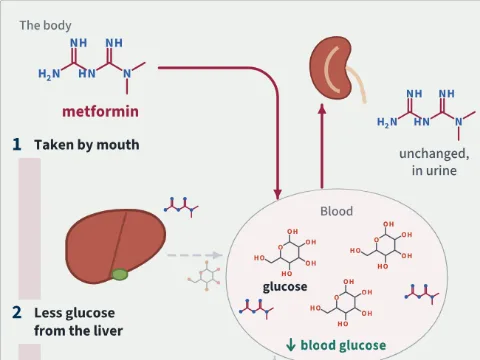
Lowers the liver's glucose production; it also cuts glucose absorption from the gut and improves insulin sensitivity by raising glucose uptake by the tissues.5
Used forBlood sugar control: with diet and exercise, adults and children 10 and older
What the label says
“Metformin decreases hepatic glucose production, decreases intestinal absorption of glucose, and improves insulin sensitivity by increasing peripheral glucose uptake and utilization.”
“Metformin hydrochloride tablets are indicated as an adjunct to diet and exercise to improve glycemic control in adults and pediatric patients 10 years of age and older with type 2 diabetes mellitus.”
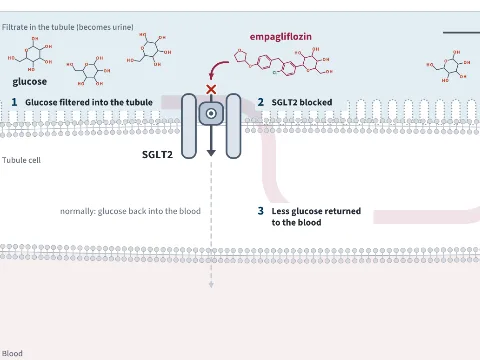
Blocks , the kidney's main transporter for taking filtered glucose back, so more glucose leaves in the urine.6
Used forBlood sugar control: with diet and exercise, adults and children 10 and olderCardiovascular death: lower the risk, in adults with established cardiovascular disease
What the label says
“Empagliflozin is an inhibitor of SGLT2, the predominant transporter responsible for reabsorption of glucose from the glomerular filtrate back into the circulation.”
“By inhibiting SGLT2, empagliflozin reduces renal reabsorption of filtered glucose and lowers the renal threshold for glucose, and thereby increases urinary glucose excretion.”
“as an adjunct to diet and exercise to improve glycemic control in adults and pediatric patients aged 10 years and older with type 2 diabetes mellitus.”
“Colesevelam hydrochloride tablets are indicated as an adjunct to diet and exercise to improve glycemic control in adults with type 2 diabetes mellitus.”
Also used in people with diabetes: glucagon (for severe low blood sugar: “GVOKE is indicated for subcutaneous use for the treatment of severe hypoglycemia in adult and pediatric patients aged two and older with diabetes.”8).
Januvia (sitagliptin): FDA label12.1 Mechanism of Action. The drawing's beta cells at A, where GLP-1 raises insulin, and alpha cell, where it lowers glucagon, rest on this label. Saved copy
The disease steps come from one review article's abstract; each medicine's action comes from its own label, and insulin glargine's receptor from an FDA research page.
The review also covers diet, physical activity, gut bacteria and “metabolic memory”, which this drawing leaves out.1
text 2049b9851024…; drawings 3ba23b6a831c…; notes 643f8b6c7aae…
AI source check
Claude Opus 5.5 (AI source check), 30 October 2026: 49 statements compared with their sources, 14 flagged for the reviewer. An automated check, not a medical review.
Conflict of interest
Glipizide: Pfizer, the reviewer's former employer, makes or markets this medicine. Details
Next review due
30 April 2028
Cite this page
Tran D. Type 2 diabetes [Internet]. OpenMechanism; 2026 [updated 2026 Oct 30; cited 2026 Oct 30]. Available from: https://openmechanism.com/conditions/type-2-diabetes