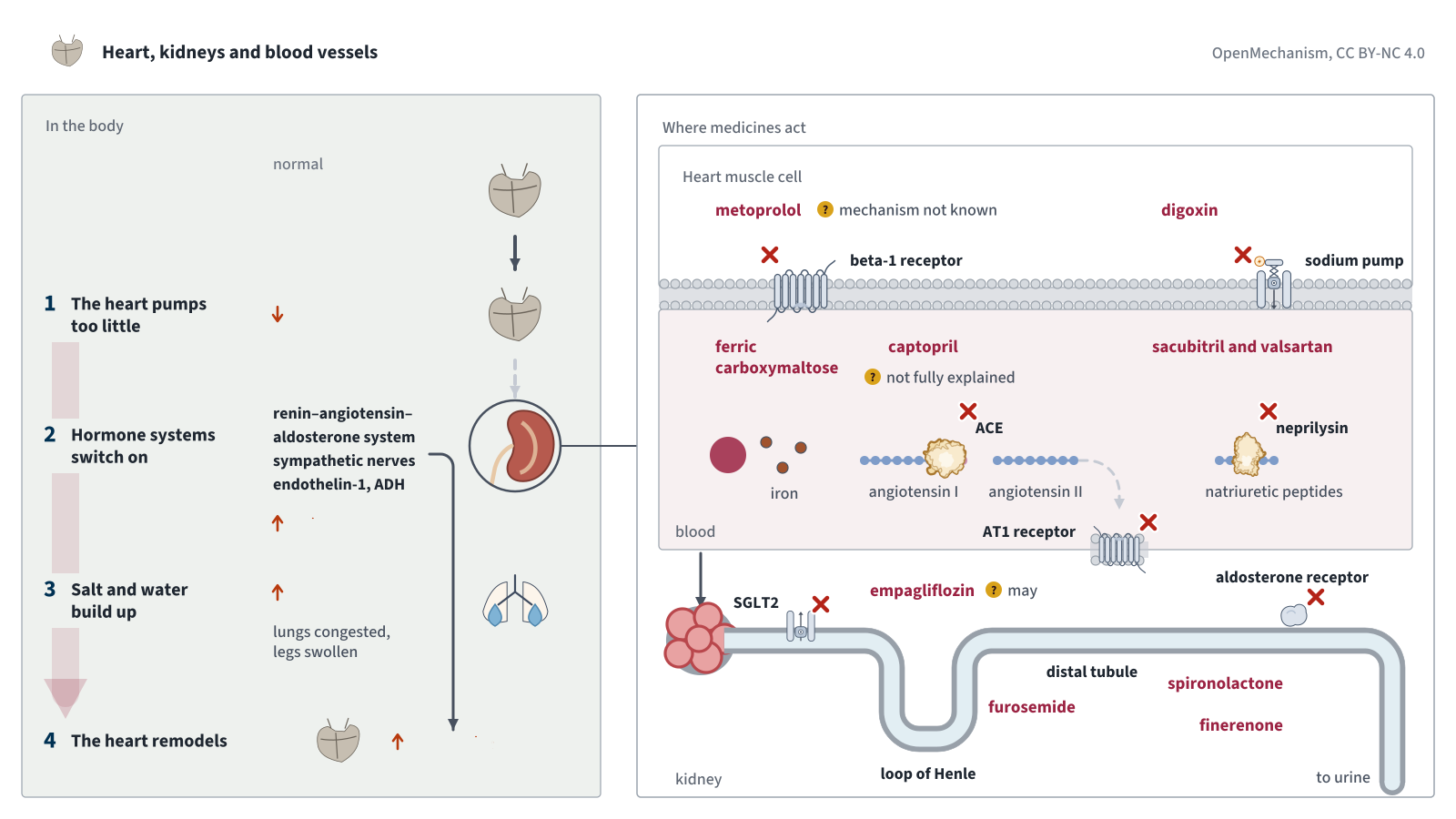
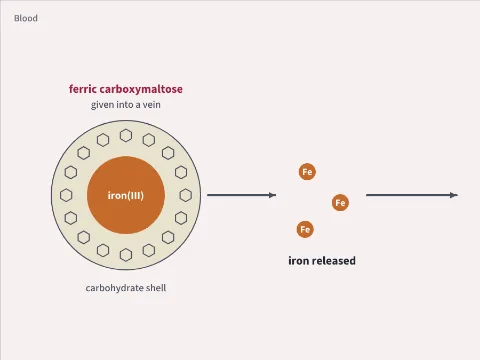
In heart failure the heart pumps too little blood; the low output switches on hormone systems that make the body keep salt and water, and kept on, they can remodel the heart. Medicines act on the heart, on the hormone systems and in the kidneys, and iron is given for iron deficiency.
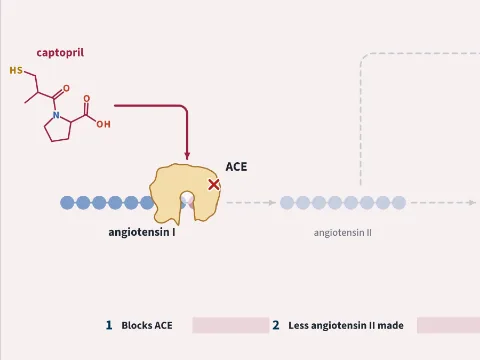
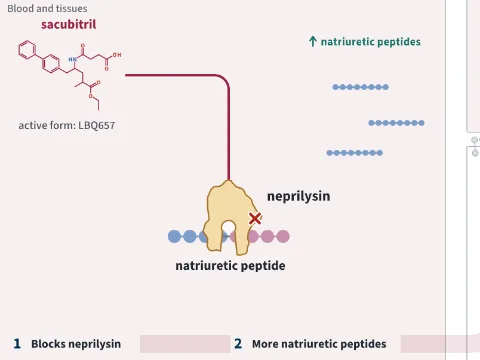
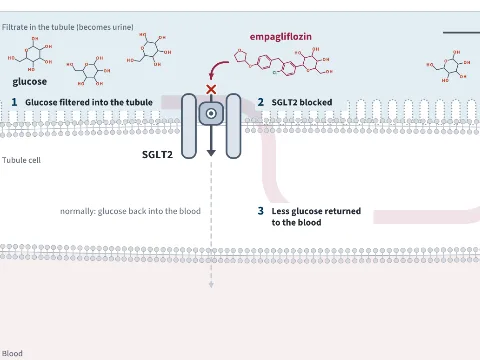
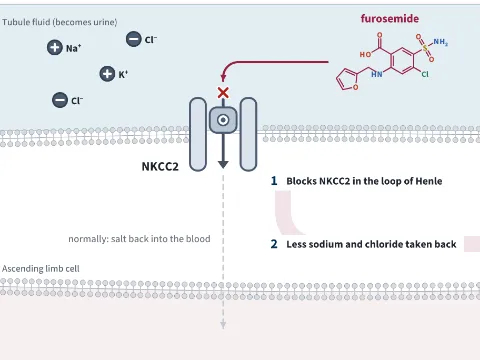
What goes wrong in heart failure, and where medicines act. Schematic, not to scale. ACE outline from the structure with lisinopril. Neprilysin outline from the structure with LBQ657, the active form of sacubitril. License CC BY-NC 4.0.
?Mechanism not known
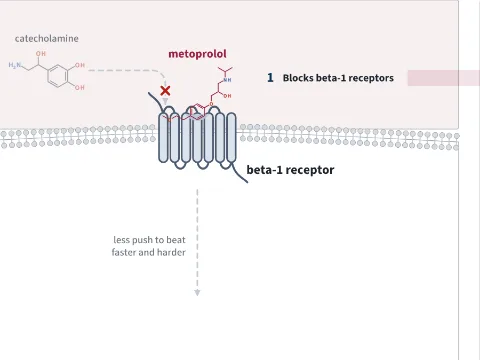
The Toprol-XL (metoprolol) label says: The precise mechanism for the beneficial effects of beta-blockers in heart failure has not been elucidated.
Clinical study: In a 1996 double-blind, placebo-controlled program of four treatment protocols in 1094 people with chronic heart failure and an ejection fraction of 35% or less who stayed on digoxin, diuretics and an ACE inhibitor, followed for 6 months (12 months if their heart failure was mild), carvedilol, another beta-blocker, lowered deaths against placebo, and that result led the study's safety monitoring board to recommend stopping it early; it measured outcomes, not how beta-blockers work: The overall mortality rate was 7.8 percent in the placebo group and 3.2 percent in the carvedilol group; the reduction in risk attributable to carvedilol was 65 percentPacker M et al., N Engl J Med 1996 (PMID 8614419)
?Not fully explained
The captopril label says: The mechanism of action of captopril tablets have not yet been fully elucidated. Its beneficial effects in hypertension and heart failure appear to result primarily from suppression of the renin-angiotensin-aldosterone system.
Clinical study: In a 1991 double-blind trial of 2569 people with chronic heart failure and an ejection fraction of 35% or less, followed for 41.4 months on average, enalapril, another ACE inhibitor, at 2.5 to 20 mg a day, was compared with placebo; the trial measured deaths and hospital stays, not how ACE inhibitors work: The addition of enalapril to conventional therapy significantly reduced mortality and hospitalizations for heart failure in patients with chronic congestive heart failure and reduced ejection fractions.SOLVD Investigators et al., N Engl J Med 1991 (PMID 2057034)
?May
The Jardiance (empagliflozin) label says: Empagliflozin also reduces sodium reabsorption and increases the delivery of sodium to the distal tubule. This may influence several physiological functions including, but not restricted to, increasing tubuloglomerular feedback and reducing intraglomerular pressure, lowering both pre- and afterload of the heart and downregulating sympathetic activity.
Clinical study: In a 2020 double-blind trial in 3730 people with class II, III or IV heart failure and an ejection fraction of 40% or less, followed for a median of 16 months, empagliflozin 10 mg once daily or placebo was added to recommended therapy; the trial measured death from cardiovascular causes or hospital stays for heart failure, not these effects: Among patients receiving recommended therapy for heart failure, those in the empagliflozin group had a lower risk of cardiovascular death or hospitalization for heart failure than those in the placebo group, regardless of the presence or absence of diabetes.Packer M et al., N Engl J Med 2020 (PMID 32865377)
Hormone systems switch on. The low output and low kidney blood flow switch on the renin-angiotensin-aldosterone system, the sympathetic nervous system, and (vasopressin).1
What the source says
“HF is characterized by activation of neurohormonal factors including renin-angiotensin-aldosterone system (RAAS), sympathetic nervous system (SNS), endothelin-1 (ET-1), and anti-diuretic hormone (ADH) due to reduced cardiac output (CO) and renal perfusion.”
Salt and water build up. Kept switched on, they make the body keep salt and water and narrow the vessels; the fluid often shows as congestion in the lungs, swollen legs, breathlessness and tiredness.1
What the source says
“Persistent activation of these systems results in deleterious effects on both the kidneys and the heart, including sodium and water retention, vasoconstriction, increased central venous pressure (CVP)”
The heart remodels. Sustained activation of these systems can remodel the ventricles step by step and make the heart failure worse.2
What the source says
“sustained and chronic activation of these systems, as occurs in congestive heart failure (CHF), can cause progressive ventricular remodeling and worsening heart failure.”
“TOPROL-XL, metoprolol succinate, is a beta 1 -selective (cardioselective) adrenoceptor blocking agent, for oral administration, available as extended-release tablets.”
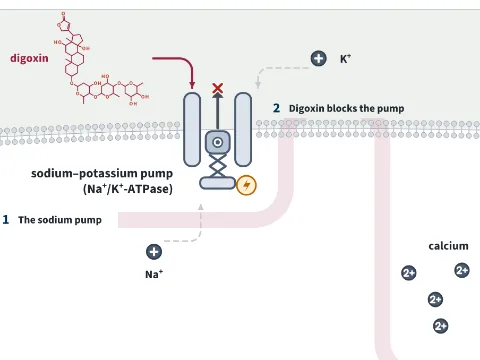
Blocks the sodium pump (Na-K ATPase), so more calcium is available in heart muscle and it contracts more strongly.4
Used forMild to moderate heart failure: adults, where possible with a diuretic and an ACE inhibitor; it improves symptoms and means fewer heart failure hospital stays, with no effect on deaths
What the label says
“All of digoxin’s actions are mediated through its effects on Na-K ATPase. This enzyme, the “sodium pump,” is responsible for maintaining the intracellular milieu throughout the body by moving sodium ions out of and potassium ions into cells.”
“By inhibiting Na-K ATPase, digoxin causes increased availability of intracellular calcium in the myocardium and conduction system, with consequent increased inotropy”
“LANOXIN increases left ventricular ejection fraction and improves heart failure symptoms, as evidenced by improved exercise capacity and decreased heart failure-related hospitalizations and emergency care, while having no effect on mortality. Where possible, LANOXIN should be used in combination with a diuretic and an angiotensin-converting enzyme (ACE) inhibitor.”
Blocks , so less is made; its benefit in heart failure appears to come mainly from damping the renin-angiotensin-aldosterone system.6
Used forCongestive heart failure: usually with diuretics and digitalis
What the label says
“specific competitive inhibitor of angiotensin I-converting enzyme (ACE), the enzyme responsible for the conversion of angiotensin I to angiotensin II.”
Sacubitril, through its active form, blocks neprilysin, so the peptides it breaks down, such as natriuretic peptides, rise; valsartan blocks the .7
Used forChronic heart failure: adults, to lower the risk of cardiovascular death and hospitalization for heart failure, with the clearest benefit when the ejection fraction is below normalSymptomatic heart failure with systemic left ventricular systolic dysfunction: children 1 year and older
What the label says
“ENTRESTO inhibits neprilysin (neutral endopeptidase; NEP) via LBQ657, the active metabolite of the prodrug sacubitril, and blocks the angiotensin II type-1 (AT 1 ) receptor via valsartan.”
“to reduce the risk of cardiovascular death and hospitalization for heart failure in adult patients with chronic heart failure. Benefits are most clearly evident in patients with left ventricular ejection fraction (LVEF) below normal.”
“The cardiovascular and renal effects of ENTRESTO in heart failure patients are attributed to the increased levels of peptides that are degraded by neprilysin, such as natriuretic peptides, by LBQ657, and the simultaneous inhibition of the effects of angiotensin II by valsartan.”
“ENTRESTO is indicated for the treatment of symptomatic heart failure with systemic left ventricular systolic dysfunction in pediatric patients aged one year and older.”
“This may influence several physiological functions including, but not restricted to, increasing tubuloglomerular feedback and reducing intraglomerular pressure, lowering both pre- and afterload of the heart and downregulating sympathetic activity.”
Holds back mainly the absorption of sodium and chloride, in the loop of Henle and in the proximal and distal tubules too.9
Used forEdema in congestive heart failure
What the label says
“It has been demonstrated that LASIX inhibits primarily the absorption of sodium and chloride not only in the proximal and distal tubu but also in the loop of Henle.”
“LASIX is indicated in adults and pediatric patients for the treatment of edema associated with congestive heart failure, cirrhosis of the liver, and renal disease, including the nephrotic syndrome.”
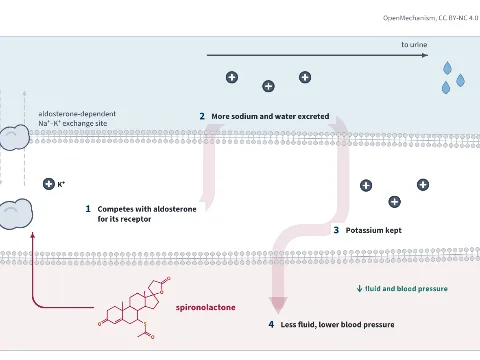
Spironolactonetargets the mineralocorticoid (aldosterone) receptor in the distal tubule
Competes with for its receptors, mainly in the kidney's distal tubule, so more sodium and water leave in the urine while potassium is kept.10
Used forHeart failure: NYHA class III–IV with reduced ejection fraction, to increase survival, manage edema and reduce the need for hospitalization for heart failure, usually with other heart failure treatment
What the label says
“Spironolactone and its active metabolites are specific pharmacologic antagonists of aldosterone, acting primarily through competitive binding of receptors at the aldosterone-dependent sodium-potassium exchange site in the distal convoluted renal tubule. Spironolactone causes increased amounts of sodium and water to be excreted, while potassium is retained.”
“The treatment of NYHA Class III–IV heart failure and reduced ejection fraction to increase survival, manage edema, and to reduce the need for hospitalization for heart failure”
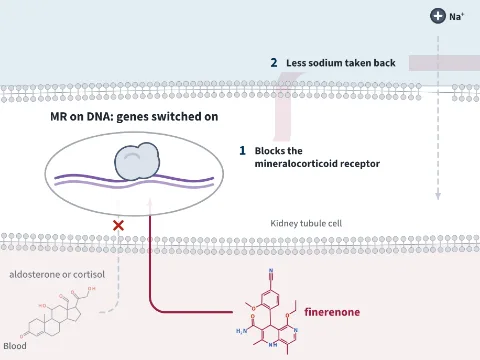
Finerenonetargets the mineralocorticoid (aldosterone) receptor
Blocks the , which aldosterone activates, in the kidney and also in the heart and blood vessels.11
Used forHeart failure: adults, ejection fraction 40% or more, to lower the risk of cardiovascular death, hospitalization for heart failure and urgent heart failure visits
What the label says
“Finerenone is a nonsteroidal, selective antagonist of the mineralocorticoid receptor (MR), which is activated by aldosterone and cortisol and regulates gene transcription.”
“Finerenone blocks MR mediated sodium reabsorption and MR overactivation in both epithelial (e.g., kidney) and nonepithelial (e.g., heart, and blood vessels) tissues.”
“reduce the risk of cardiovascular death, hospitalization for heart failure, and urgent heart failure visits in adults with heart failure with left ventricular ejection fraction (LVEF) ≥ 40%.”
text 58bb9756fca7…; drawings b1fdff1427cb…; notes 7a719f91218e…
AI source check
Claude Opus 5.5 (AI source check), 29 October 2026: 74 statements compared with their sources, 13 flagged for the reviewer. An automated check, not a medical review.
Conflict of interest
Spironolactone: Pfizer, the reviewer's former employer, makes or markets this medicine. Dobutamine: Pfizer, the reviewer's former employer, makes or markets this medicine. Milrinone: Pfizer, the reviewer's former employer, makes or markets this medicine. Details
Key terms
Definitions reworded since this review: SGLT2. Definitions are shared across pages, so a later rewording does not take the review line off (what a review covers).
Next review due
29 April 2028
Cite this page
Tran D. Heart failure [Internet]. OpenMechanism; 2026 [updated 2026 Oct 29; cited 2026 Oct 29]. Available from: https://openmechanism.com/conditions/heart-failure