Obesity
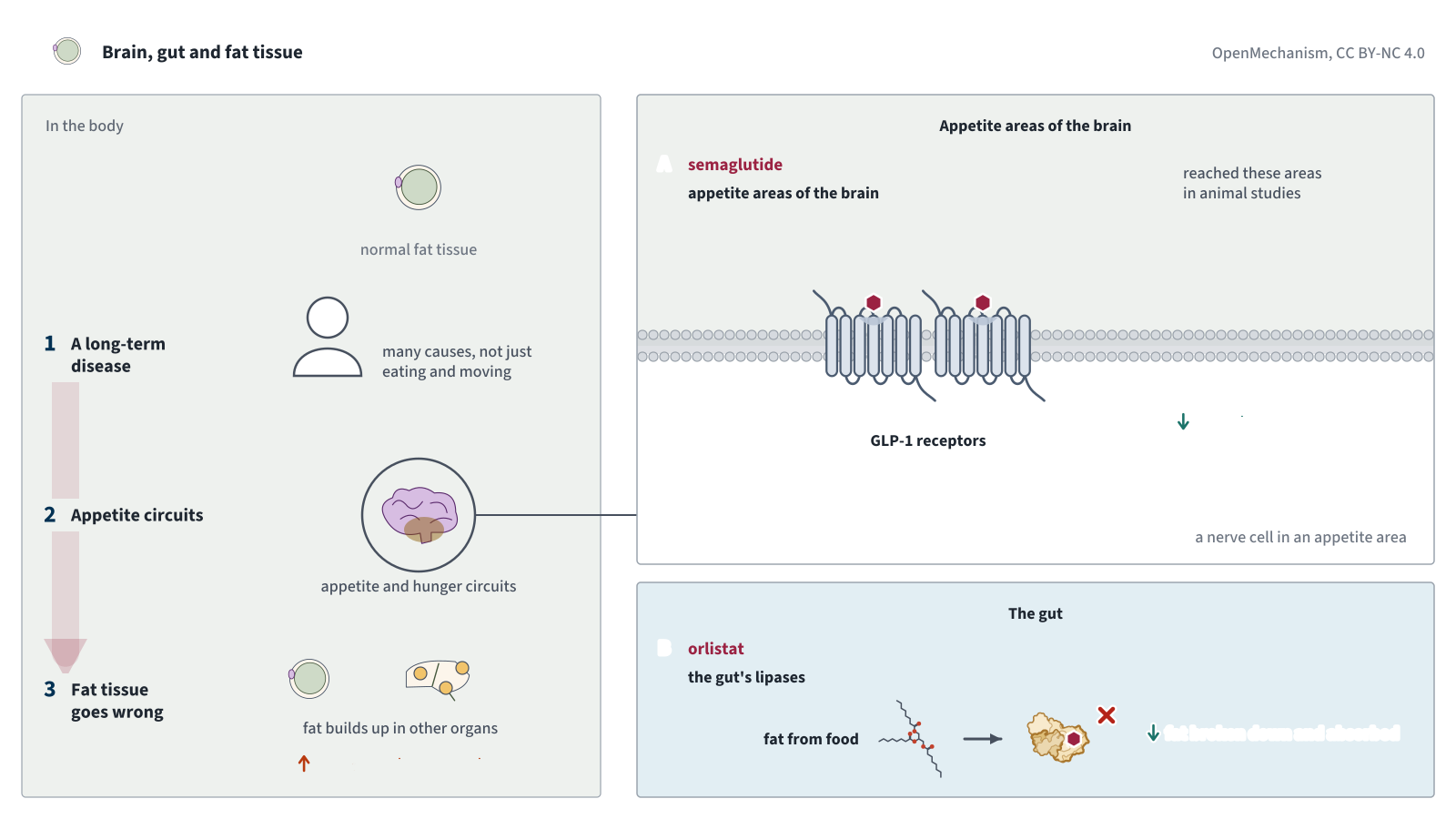
Obesity is recognized as a complex, long-term disease, not simply eating too much and moving too little. The brain's appetite circuits are involved, and when fat tissue, a hormone organ, goes wrong, fat builds up in other organs and low-grade inflammation drives metabolic diseases. Semaglutide works like GLP-1, which regulates appetite through the brain; orlistat blocks the gut's fat-digesting enzymes.
- Where
- Brain, gut and fat tissue
- Body system
- Hormones & metabolism
- Medicines
- 2 medicines
For teachers: download this drawing.
Key terms in this drawing
- GLP-1
- Glucagon-like peptide-1. A gut hormone that increases insulin release when blood glucose is normal or high.
What goes wrong
A long-term disease. Obesity is recognized as a complex long-term disease with many causes, not simply eating too much and moving too little.1
What the source says
“Obesity is currently recognized as a complex, multifactorial chronic disease, marking a significant shift from the historical, simplistic view of mere voluntary behavior”
Source 1Appetite circuits. Its causes include the brain and hormone circuits that control appetite and hunger.1
What the source says
“It involves complex neuroendocrine circuitries that regulate appetite, including homeostatic, hedonic, and emerging microbiota-driven hunger mechanisms.”
Source 1Fat tissue goes wrong. Fat tissue works as a hormone organ; when it goes wrong, fat builds up in other organs and low-grade inflammation drives related metabolic diseases.1
What the source says
“Adipose tissue functions as a vital endocrine organ, and its dysfunction-often involving inflammation, oxidative stress, and mitochondrial impairment-lead to ectopic lipid accumulation and chronic low-grade inflammation, driving associated metabolic comorbidities.”
Source 1
Where medicines act
- A
Semaglutide: appetite signals
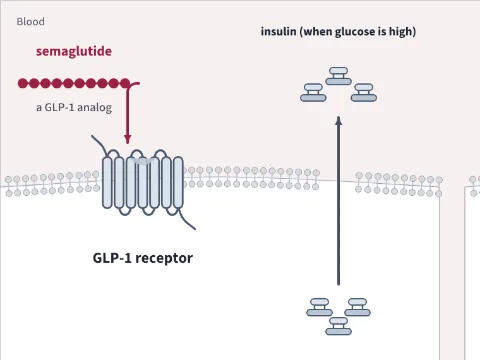
Semaglutide works like , which regulates appetite and calorie intake through receptors in the brain's appetite areas; in animals it reached and activated these brain areas. With diet and activity, it lowers excess body weight and keeps it down.2
What the source says
“GLP-1 is a physiological regulator of appetite and caloric intake, and the GLP-1 receptor is present in several areas of the brain involved in appetite regulation.”
Source 2“Animal studies show that semaglutide distributed to and activated neurons in brain regions involved in regulation of food intake.”
Source 2“to reduce excess body weight and maintain weight reduction long term in:”
Source 2“Adults and pediatric patients aged 12 years and older with obesity”
Source 2“Adults with overweight in the presence of at least one weight-related comorbid condition.”
Source 2 - B
Orlistat: less fat absorbed
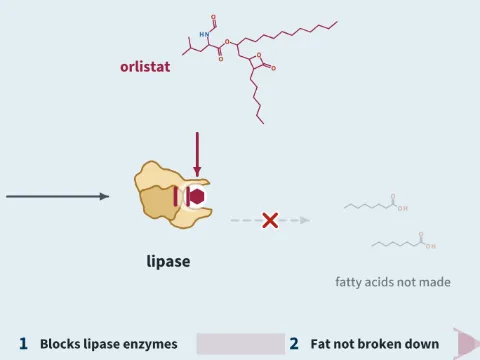
Orlistat blocks the gut's fat-digesting enzymes (lipases), so dietary fat is not broken down and absorbed; it is used with a reduced-calorie diet for weight loss and weight maintenance.3
What the source says
“Orlistat is a reversible inhibitor of gastrointestinal lipases.”
Source 3“The inactivated enzymes are thus unavailable to hydrolyze dietary fat in the form of triglycerides into absorbable free fatty acids and monoglycerides.”
Source 3“XENICAL is indicated for obesity management including weight loss and weight maintenance when used in conjunction with a reduced-calorie diet.”
Source 3
See also
Body system: hormones & metabolism.
Related medicines: phentermine.
Other conditions: type 2 diabetes.
Side effects: why GLP-1 medicines slow the stomach.
Sources
- 1Why obesity is a disease: pathogenesis and diagnosisBallesteros-Pomar MD, Barazzoni R. Clin Nutr ESPEN 2026 (abstract). Saved copy
- 2Wegovy (semaglutide): FDA label1 Indications and Usage; 12.1 Mechanism of Action. Saved copy
- 3Xenical (orlistat): FDA label1 Indications and Usage; 12.1 Mechanism of Action. Saved copy
- 4Human pancreatic lipase with colipase and an inhibitor in its active sitePDB 1LPB; Egloff, M.P. et al. Biochemistry 1995;34:2751-2762. The lipase outline in the drawing is traced from this structure. Saved copy
Notes and limits
- Body mass index alone cannot tell muscle from fat or show where the fat is.1
- Genes, a disrupted body clock, chronic stress and the environment all shape it; the drawing shows only some of the causes.1
- Semaglutide's action in the brain was shown in animal studies.2
Notes that apply to every page are on How to read a page.
Spotted a mistake? Report an error (hello@openmechanism.com). Since launch, every published error we fix is listed on the corrections page.
Cite this page
Tran D. Obesity [Internet]. OpenMechanism; 2026 [updated 2026 Oct 20; cited 2026 Oct 20]. Available from: https://openmechanism.com/conditions/obesity