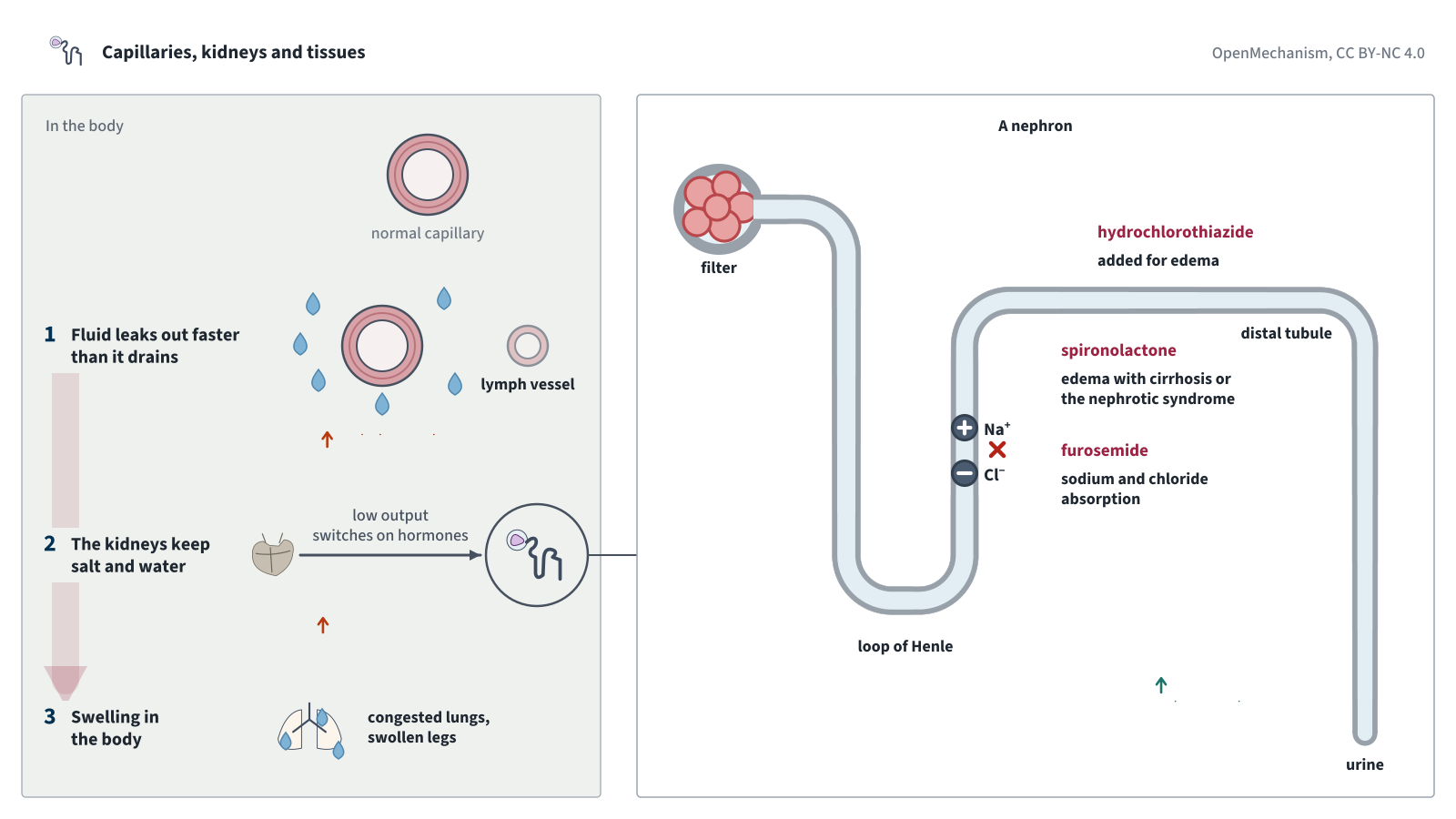
Edema is fluid gathering in the tissues because more leaves the capillaries than the lymph vessels can drain. Generalized edema comes with diseases of the heart, liver and kidneys; in heart failure, hormone systems make the kidneys keep salt and water; long-lasting swelling of the legs alone often comes from the veins. Diuretics make the kidneys excrete more salt and water.
Nephron. One of the kidney's filtering units: a glomerulus, which filters the blood, and the tubule the filtrate runs into.
What goes wrong
Fluid leaks out faster than it drains. Edema is fluid gathering in the space between cells when more leaves the capillaries than the lymph vessels can drain.1
What the source says
“Edema is an accumulation of fluid in the interstitial space that occurs as the capillary filtration exceeds the limits of lymphatic drainage, producing noticeable clinical signs and symptoms.”
The kidneys keep salt and water. In heart failure, the heart's low output and low kidney blood flow switch on hormone systems; kept switched on, they make the kidneys keep salt and water.2
What the source says
“Furthermore, HF is characterized by activation of neurohormonal factors including renin-angiotensin-aldosterone system (RAAS), sympathetic nervous system (SNS), endothelin-1 (ET-1), and anti-diuretic hormone (ADH) due to reduced cardiac output (CO) and renal perfusion. Persistent activation of these systems results in deleterious effects on both the kidneys and the heart, including sodium and water retention”
Swelling in the body. Generalized edema comes with diseases of the whole body; in heart failure it often shows as congestion in the lungs and swelling of the legs. Long-lasting swelling of the legs alone often comes from the veins.1,2
What the source says
“The rapid development of generalized pitting edema associated with systemic disease requires timely diagnosis and management.”
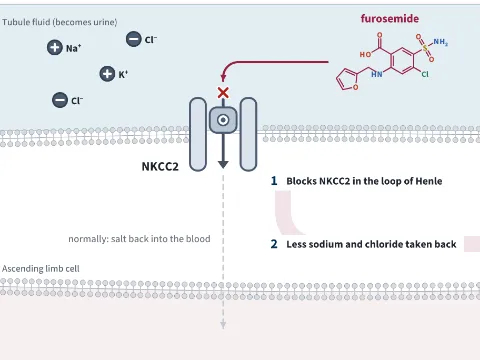
Furosemide blocks mainly the absorption of sodium and chloride, in the loop of Henle and in the proximal and distal tubules too; it treats edema with heart failure, liver cirrhosis and kidney disease.3
What the source says
“LASIX inhibits primarily the absorption of sodium and chloride not only in the proximal and distal tubu but also in the loop of Henle.”
“LASIX is indicated in adults and pediatric patients for the treatment of edema associated with congestive heart failure, cirrhosis of the liver, and renal disease, including the nephrotic syndrome.”
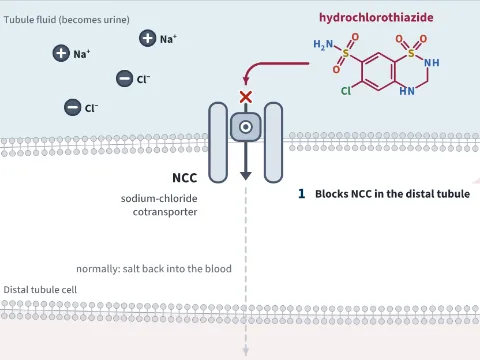
Hydrochlorothiazide is used alongside other treatment for edema with heart failure, liver cirrhosis, and corticosteroid or estrogen treatment.4
What the source says
“Hydrochlorothiazide tablets USP are indicated as adjunctive therapy in edema associated with congestive heart failure, hepatic cirrhosis, and corticosteroid and estrogen therapy.”
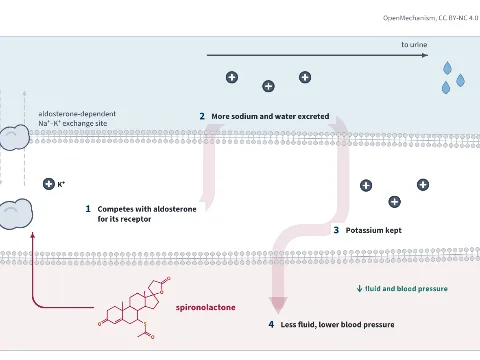
Spironolactone works mainly by competing with for its receptors in the distal tubule, so more sodium and water leave in the urine while potassium is kept; raised aldosterone is usually involved in the edema of heart failure, liver cirrhosis and the nephrotic syndrome. It treats edema in adults with liver cirrhosis, and in the nephrotic syndrome, when other measures are not enough.5
What the source says
“The management of edema in adult patients who are cirrhotic when edema is not responsive to fluid and sodium restrictions and in the setting of nephrotic syndrome when treatment of the underlying disease, restriction of fluid and sodium intake, and the use of other diuretics produce an inadequate response”
“Spironolactone and its active metabolites are specific pharmacologic antagonists of aldosterone, acting primarily through competitive binding of receptors at the aldosterone-dependent sodium-potassium exchange site in the distal convoluted renal tubule. Spironolactone causes increased amounts of sodium and water to be excreted, while potassium is retained.”
“Increased levels of the mineralocorticoid, aldosterone, are present in primary and secondary hyperaldosteronism. Edematous states in which secondary aldosteronism is usually involved include congestive heart failure, hepatic cirrhosis, and nephrotic syndrome.”
Claude Opus 5.5 (AI source check), 29 October 2026: 26 statements compared with their sources, 9 flagged for the reviewer. An automated check, not a medical review.
Conflict of interest
Spironolactone: Pfizer, the reviewer's former employer, makes or markets this medicine. Details
Next review due
29 April 2028
Cite this page
Tran D. Fluid retention [Internet]. OpenMechanism; 2026 [updated 2026 Oct 29; cited 2026 Oct 29]. Available from: https://openmechanism.com/conditions/fluid-retention