Digoxin and diuretics
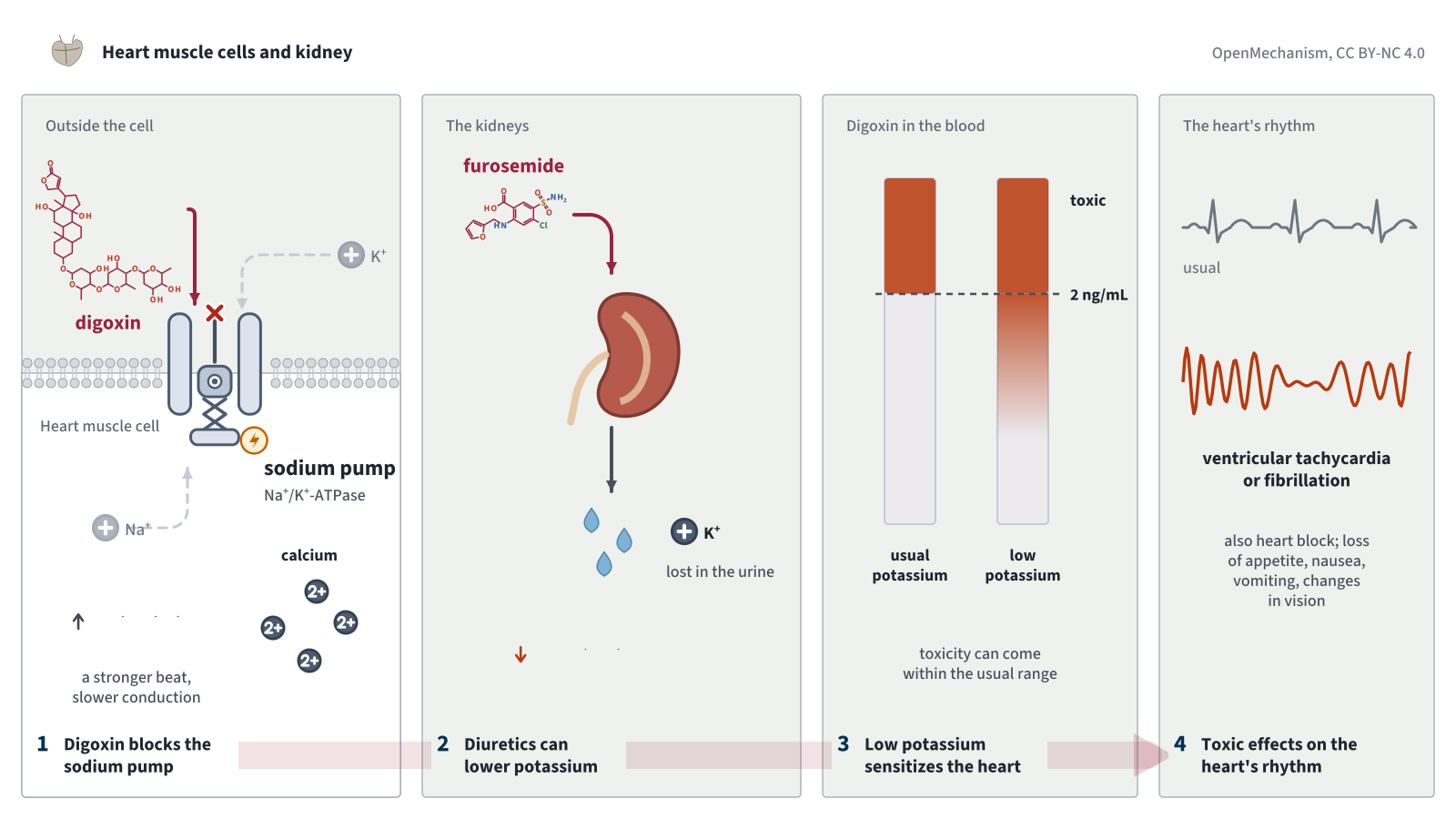
Digoxin works by blocking the sodium pump in heart muscle cells. Diuretics such as furosemide and hydrochlorothiazide can lower blood potassium, and the labels say low potassium sensitizes the heart to digoxin, so its toxic effects, including dangerous heart rhythms, can appear even at digoxin levels in the usual range.
- Kind
- Interaction
- Medicines
- Digoxin, Furosemide
- Sources
- 4
For teachers: download this drawing.
Step by step
Digoxin blocks the sodium pump. Digoxin acts through the sodium pump (Na⁺/K⁺-ATPase), which moves sodium out of cells and potassium into them. By blocking it in the heart, digoxin leaves more calcium available inside the muscle cells, so the heart contracts more strongly, its cells fire more readily and electrical conduction slows.1
What the source says
“All of digoxin’s actions are mediated through its effects on NaK–ATPase.”
Source 1“This enzyme, the “sodium pump,” is responsible for maintaining the intracellular milieu throughout the body by moving sodium ions out of and potassium ions into cells.”
Source 1“causes increased availability of intracellular calcium in the myocardium and conduction system, with consequent increased inotropy, increased automaticity, and reduced conduction velocity”
Source 1Diuretics can lower potassium. Furosemide and hydrochlorothiazide can lower blood potassium (hypokalemia), and the digoxin label counts people taking diuretics among those at high risk of it.1,2,3
What the source says
“Hypokalemia may develop with LASIX, especially with brisk diuresis”
Source 2“Hypokalemia may develop, especially with brisk diuresis, when severe cirrhosis is present or after prolonged therapy.”
Source 3“Serum potassium levels should be carefully monitored when digoxin is given to patients at high risk of hypokalemia”
Source 1“those receiving diuretics, corticosteroids, or other drugs that commonly lead to potassium loss”
Source 1Low potassium sensitizes the heart. With low potassium (or low magnesium), digoxin's toxic effects can appear at blood levels within the usual range, because the loss sensitizes the heart muscle to digoxin. The hydrochlorothiazide label says low potassium can exaggerate the heart's response to digitalis medicines' toxic effects, and the furosemide label that digitalis may exaggerate low potassium's metabolic effects, especially on the heart.1,2,3
What the source says
“In patients with hypokalemia or hypomagnesemia, toxicity may occur at concentrations within therapeutic range because potassium or magnesium depletion sensitizes the myocardium to digoxin.”
Source 1“may also sensitize or exaggerate the response of the heart to the toxic effects of digitalis (e.g., increased ventricular irritability)”
Source 3“Digitalis therapy may exaggerate metabolic effects of hypokalemia, especially myocardial effects.”
Source 2Toxic effects on the heart's rhythm. Signs of digoxin toxicity include loss of appetite, nausea, vomiting, changes in vision and heart rhythm problems, from heart block to ventricular tachycardia and ventricular fibrillation. Toxicity usually comes with digoxin levels above 2 ng/mL, though symptoms can come at lower levels.4
What the source says
“Signs and symptoms of digoxin toxicity include anorexia, nausea, vomiting, visual changes and cardiac arrhythmias”
Source 4“third-degree heart block (including asystole)”
Source 4“ventricular tachycardia; and ventricular fibrillation”
Source 4“Toxicity is usually associated with digoxin levels greater than 2 ng/mL although symptoms may also occur at lower levels.”
Source 4
See also
Medicine pages: digoxin and furosemide.
Also part of this interaction: hydrochlorothiazide (“Hypokalemia may cause cardiac arrhythmia and may also sensitize or exaggerate the response of the heart to the toxic effects of digitalis (e.g., increased ventricular irritability).”3).
Other interactions (heart & circulation): ACE inhibitors and spironolactone; ACE inhibitors with ARBs or aliskiren; amiodarone and warfarin; atorvastatin and medicines that block CYP3A4; digoxin and P-glycoprotein blockers; grapefruit juice and simvastatin; nitrates and PDE5 inhibitors such as sildenafil; simvastatin and clarithromycin; verapamil with beta-blockers; why beta-blockers can hide low blood sugar; and all 40 interactions.
Side effects: why diuretics can lower potassium; and why insulin and albuterol can lower potassium.
Conditions: heart failure, atrial fibrillation and digoxin toxicity.
Sources
- 1Digoxin oral solution: FDA label5.6 Use in Patients with Electrolyte Disorders; 12.1 Mechanism of Action. Saved copy
- 2Lasix (furosemide) tablets: FDA labelPrecautions. Saved copy
- 3Hydrochlorothiazide tablets: FDA labelPrecautions. Saved copy
- 4Lanoxin (digoxin): FDA label5.3 Digoxin Toxicity. Saved copy
Notes and limits
- The labels' doses and management advice are left out: this page explains the mechanism, not what to do.
- The labels do not say how low potassium sensitizes the heart to digoxin.
- Diuretics are not the only cause of low potassium the digoxin label names: corticosteroids, diarrhea and vomiting are others. The Lanoxin label also names older age, low body weight, weaker kidneys, high calcium and low magnesium as making toxicity more likely.1,4
Notes that apply to every page are on How to read a page.
Spotted a mistake? Report an error (hello@openmechanism.com). Since launch, every published error we fix is listed on the corrections page.
Cite this page
Tran D. Digoxin and diuretics [Internet]. OpenMechanism; 2026 [updated 2026 Oct 20; cited 2026 Oct 20]. Available from: https://openmechanism.com/explained/digoxin-and-diuretics