Digoxin toxicity
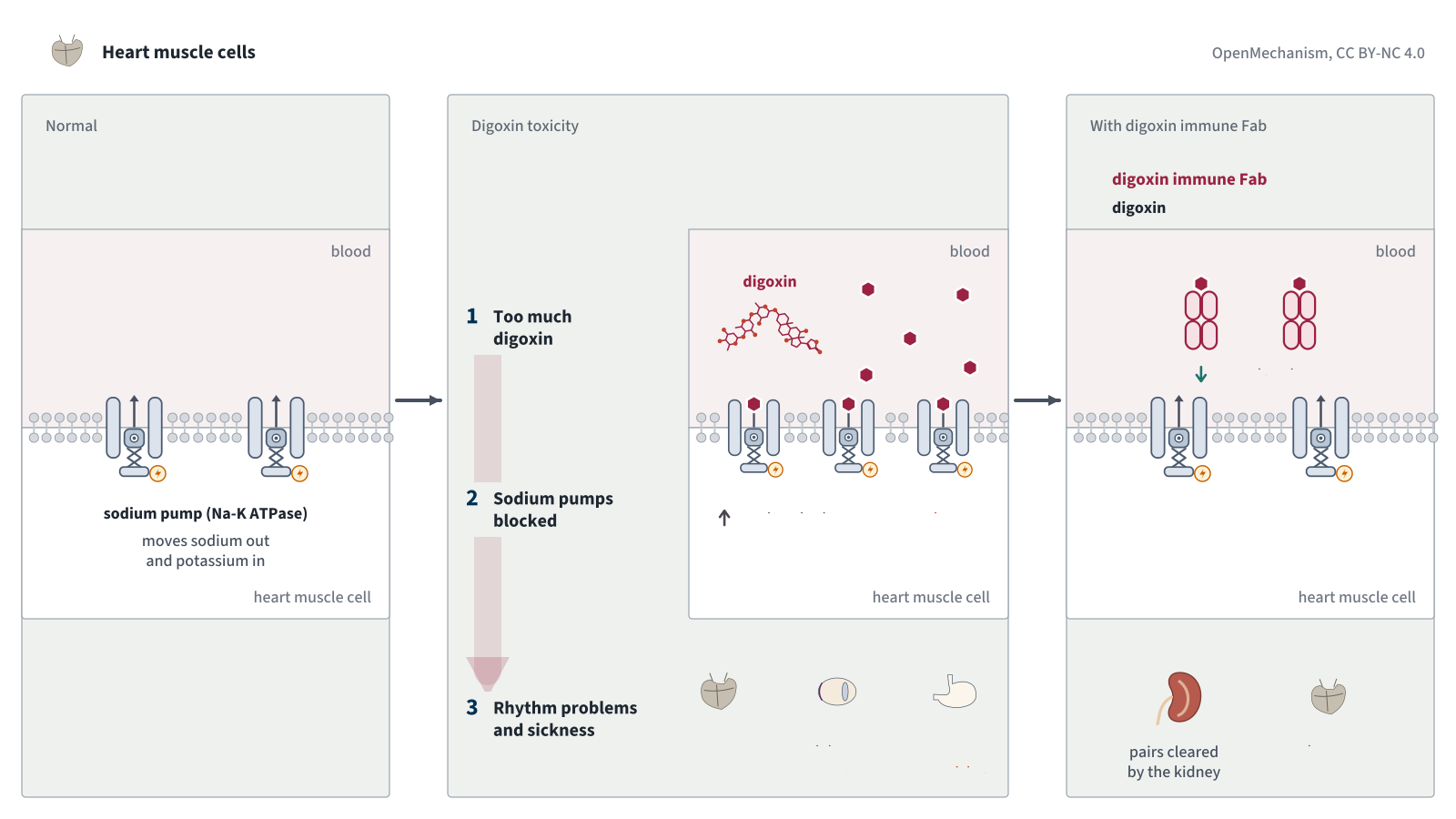
Digoxin works by blocking the sodium pump, Na-K ATPase. Toxicity usually comes with blood levels above 2 ng/mL, and older age, weak kidneys or low potassium may make it more likely; its signs include nausea, vomiting, vision changes and heart rhythm problems. Digoxin immune Fab binds digoxin more tightly than the pump does.
- Where
- Heart muscle cells
- Body system
- Heart, vessels & cholesterol
- Medicines
- 1 medicine
For teachers: download this drawing.
What goes wrong
Too much digoxin. Toxicity usually comes with digoxin levels above 2 ng/mL, though symptoms may come at lower levels. Low body weight, older age, poor kidney function, and low potassium, high calcium or low magnesium in the blood may make it more likely.1
What the source says
“Toxicity is usually associated with digoxin levels greater than 2 ng/mL although symptoms may also occur at lower levels.”
Source 1“Low body weight, advanced age or impaired renal function, hypokalemia, hypercalcemia, or hypomagnesemia may predispose to digoxin toxicity.”
Source 1Sodium pumps blocked. All of digoxin's actions come through the sodium pump, Na-K ATPase. Blocking it raises the calcium inside heart muscle; at higher concentrations, potassium also leaves the cells, and blood potassium rises.1
What the source says
“All of digoxin’s actions are mediated through its effects on Na-K ATPase.”
Source 1“By inhibiting Na-K ATPase, digoxin causes increased availability of intracellular calcium in the myocardium and conduction system”
Source 1“allows (at higher concentrations) progressive efflux of intracellular potassium, with consequent increase in serum potassium levels.”
Source 1Rhythm problems and sickness. Its signs include loss of appetite, nausea, vomiting, changes in vision and heart rhythm problems, from heart block to ventricular tachycardia and fibrillation. In infants and children, rhythm problems are the earliest and most frequent sign.1
What the source says
“Signs and symptoms of digoxin toxicity include anorexia, nausea, vomiting, visual changes and cardiac arrhythmias [first-degree, second-degree (Wenckebach), or third-degree heart block (including asystole); atrial tachycardia with block; AV dissociation; accelerated junctional (nodal) rhythm; unifocal or multiform ventricular premature contractions (especially bigeminy or trigeminy); ventricular tachycardia; and ventricular fibrillation].”
Source 1“The earliest and most frequent manifestation of digoxin toxicity in infants and children is the appearance of cardiac arrhythmias, including sinus bradycardia.”
Source 1
Where medicines act
In the blood
- A
Digoxin immune fab targets Digoxin
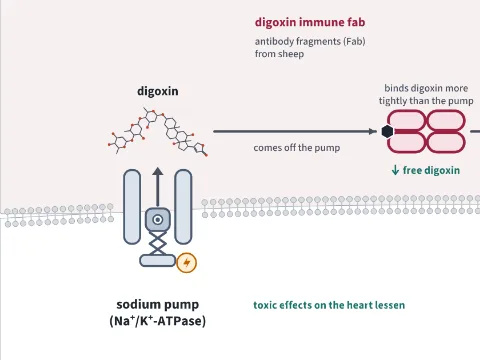
Binds digoxin more tightly than the sodium pump does, so digoxin comes off the pumps and is cleared.2
Used forLife-threatening digoxin toxicity or overdose: or potentially life-threatening
What the label says
“DigiFab is indicated for the treatment of patients with life-threatening or potentially life-threatening digoxin toxicity or overdose.”
Source 2“DigiFab has an affinity for digoxin in the range of 10 9 to 10 10 M -1 , which is greater than the affinity of digoxin for its sodium pump receptor, the presumed receptor for its therapeutic and toxic effects.”
Source 2“When administered to the intoxicated patient, DigiFab binds to molecules of digoxin reducing free digoxin levels, which results in a shift in the equilibrium away from binding to the receptors, thereby reducing cardio-toxic effects.”
Source 2“Fab-digoxin complexes are then cleared by the kidney and reticuloendothelial system.”
Source 2“Assessing all manifestations of toxicity, investigators classified 7 out of the 15 patients (47%) studied as having complete resolution of digoxin toxicity within 4 hours of DigiFab administration, and 14 patients (93%) were classified as having resolved their digoxin toxicity by 20 hours.”
Source 2
See also
Body system: heart, vessels & cholesterol.
Can raise or cause it: digoxin (“Digoxin toxicity: Indicated by nausea, vomiting, visual disturbances, and cardiac arrhythmias.”1).
Other conditions: heart failure, atrial fibrillation, high blood potassium and low blood potassium (hypokalemia).
Interactions: digoxin immune Fab and digoxin; digoxin and diuretics; and digoxin and P-glycoprotein blockers.
Sources
- 1Lanoxin (digoxin): FDA label5.3 Digoxin Toxicity; 12.1 Mechanism of Action. Saved copy
- 2DigiFab (digoxin immune Fab): FDA labelIndications and Usage; Clinical Pharmacology. Saved copy
Notes and limits
- Digoxin immune Fab is not meant for milder digitalis toxicity: human experience is limited, and the effects of repeated exposure are unknown.2
- Adults with heart failure have some symptoms in common with digoxin toxicity, so the two may be hard to tell apart.1
Notes that apply to every page are on How to read a page.
Spotted a mistake? Report an error (hello@openmechanism.com). Since launch, every published error we fix is listed on the corrections page.
Cite this page
Tran D. Digoxin toxicity [Internet]. OpenMechanism; 2026 [updated 2026 Oct 20; cited 2026 Oct 20]. Available from: https://openmechanism.com/conditions/digoxin-toxicity