Kinds of medicine
From small molecules to engineered cells.
Small molecules
The largest group on this site. ChEMBL, a public database of medicines, classes these as small molecules.
- AtorvastatinBlocks the liver's cholesterol-making enzyme
- MetforminLowers blood glucose without raising insulin
- CaptoprilBlocks angiotensin II production (ACE inhibitor)
- ClopidogrelBlocks a platelet activation receptor
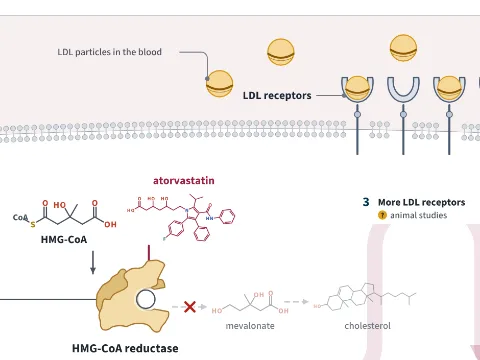
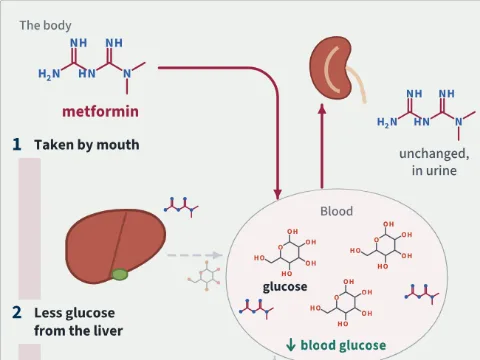
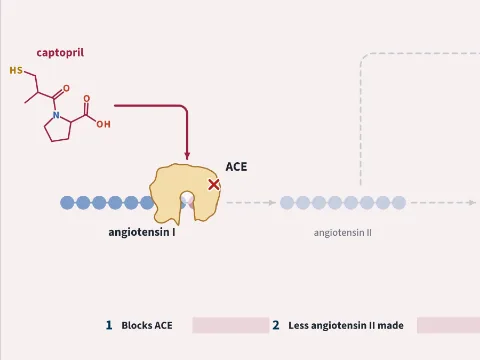
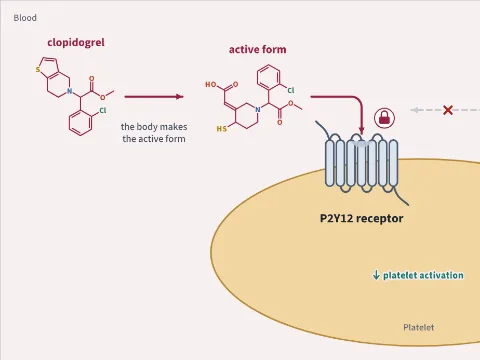
And 340 more on the medicines page.
Proteins and peptides
Hormones, enzymes and other proteins and peptides that ChEMBL classes as proteins rather than antibodies.
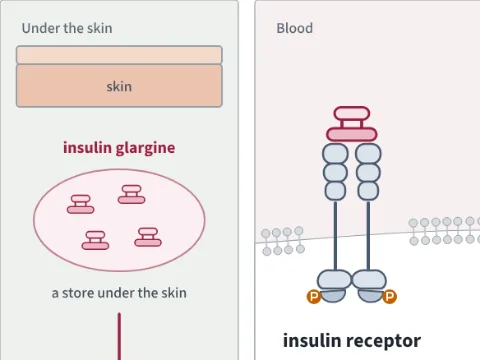
- Insulin glargineSlow-release insulin that lowers blood glucose
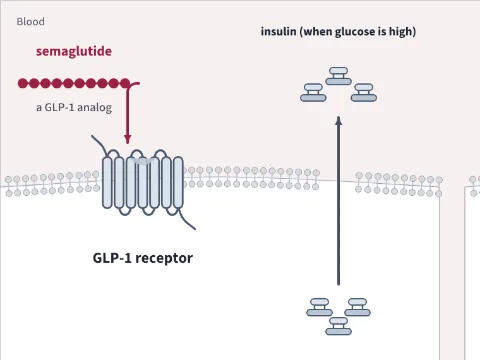
- SemaglutideMimics the GLP-1 hormone
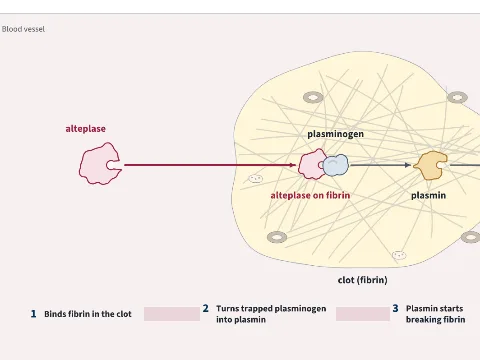
- AlteplaseDissolves a blood clot from within
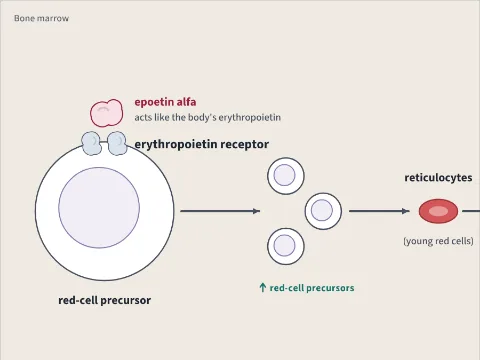
- Epoetin alfaBoosts red blood cell production
And 29 more on the medicines page.
Monoclonal antibodies
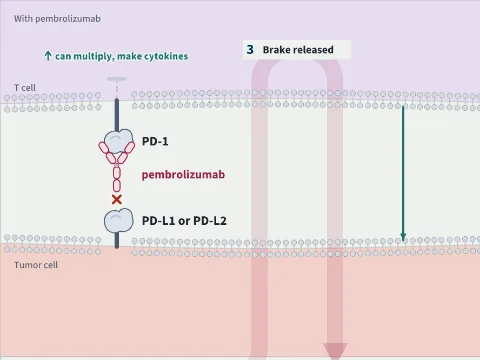
“Pembrolizumab is a monoclonal antibody that binds to the PD-1 receptor and blocks its interaction with PD-L1 and PD-L2”
From the pembrolizumab label
- PembrolizumabReleases a brake on T cells (PD-1)
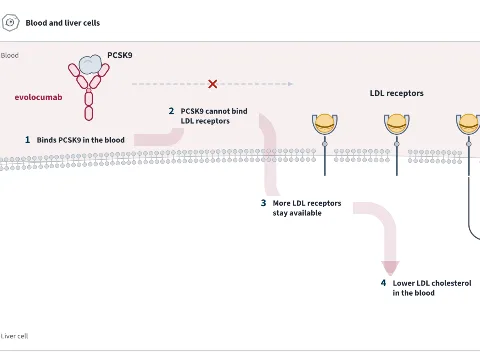
- EvolocumabSaves LDL receptors from PCSK9
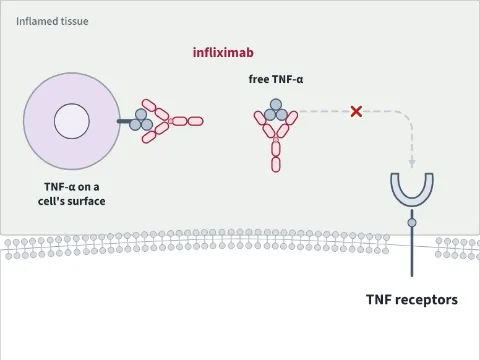
- InfliximabNeutralizes the inflammatory signal TNF
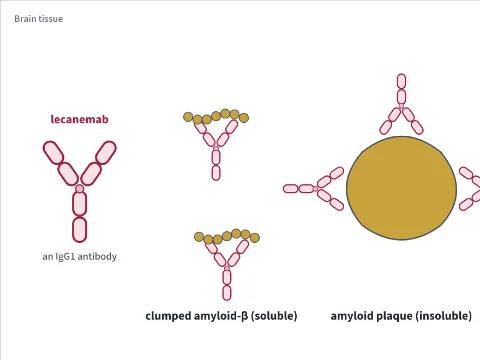
- LecanemabAntibody that targets amyloid in the brain
And 19 more on the medicines page.
Antibody-drug conjugates
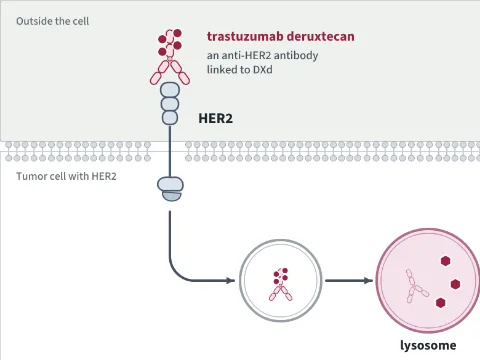
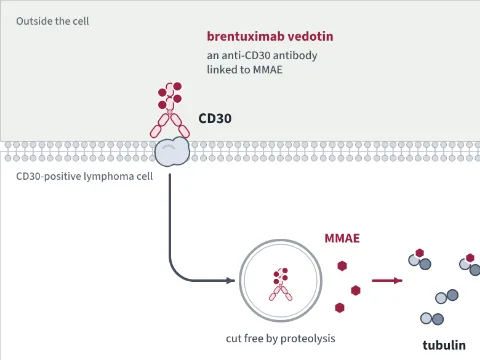
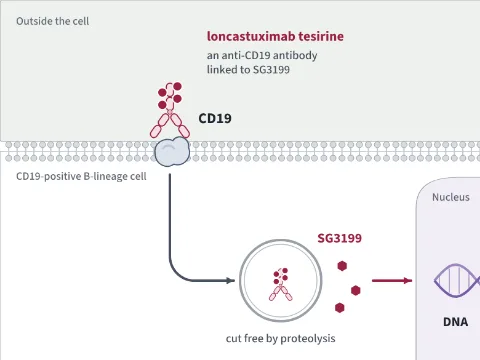
“Fam-trastuzumab deruxtecan-nxki is a HER2-directed antibody-drug conjugate.”
From the trastuzumab deruxtecan label
Bispecific T-cell engagers
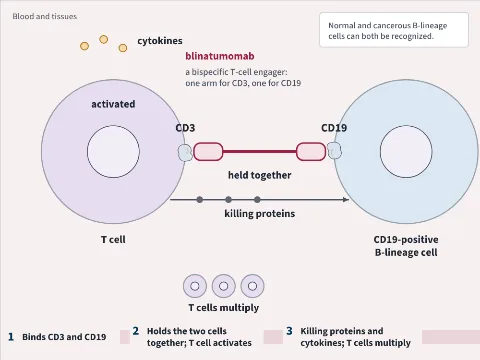
“Blinatumomab is a bispecific CD19-directed CD3 T-cell engager that binds to CD19 expressed on the surface of cells of B-lineage origin and CD3 expressed on the surface of T-cells.”
From the blinatumomab label
siRNA medicines
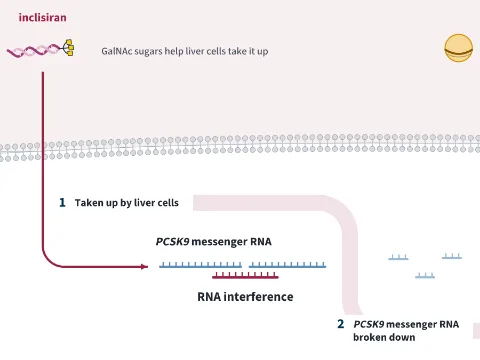
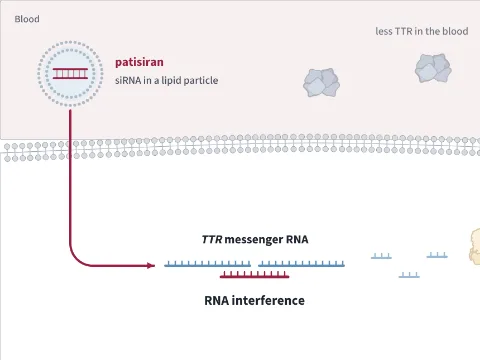
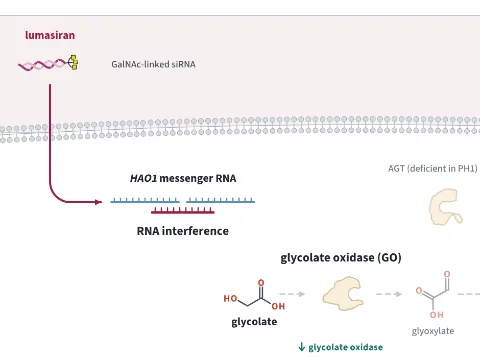
“Patisiran is a double-stranded siRNA that causes degradation of mutant and wild-type TTR mRNA through RNA interference”
From the patisiran label
Transcript
Hereditary ATTR amyloidosis is an inherited disease: a transport protein made by the liver misfolds and deposits in the nerves, the heart and other organs. This film shows how patisiran, a small interfering RNA, lowers that protein at its source.
The protein is transthyretin, TTR. Liver cells make most of it and secrete it into the blood, where four identical copies lock together into a tetramer that carries thyroxine and vitamin A. In the hereditary form, a single amino-acid change destabilizes the tetramer: the copies grip each other less tightly and the complex comes apart more often. A copy on its own cannot hold its shape; it refolds into a sticky form. Coming apart is the rate-limiting step.
Sticky copies stack into amyloid fibrils, insoluble fibers that build up outside cells, in nerves, heart muscle and elsewhere.
Damage begins in the longest nerves, so the first symptoms are in the feet: numbness, pain and weakness that climb over the years. Autonomic nerves fail too. Untreated, the disease is progressive and fatal.
Because the liver makes most of the TTR in the blood, the supply can be cut at the factory. Patisiran does this by RNA interference: it removes the instructions for making the protein.
Patisiran is a short double-stranded RNA carried inside a lipid nanoparticle, a droplet of fats built to deliver RNA into liver cells. In the bloodstream the particle picks up apolipoprotein E, a protein the body uses to send fats to the liver. Liver cells recognize it through their LDL receptors and pull the particle inside, into a pouch called an endosome. The cell acidifies that pouch. At blood pH the particle's key lipid carries no charge; in acid it becomes protonated, picking up a hydrogen ion and a positive charge. The now cationic lipid pairs with the negatively charged lipids of the pouch's membrane, the membrane loses its structure, and the siRNA slips out into the cytoplasm.
There the siRNA is loaded into RISC, the RNA-induced silencing complex: the cell's own machinery for switching genes off, which the medicine borrows. The passenger strand is cut and discarded; the guide strand stays bound to the cutting enzyme, Argonaute 2. Argonaute 2 scans messenger RNAs, the working copies of genes, for a match to its guide. Patisiran's guide matches a stretch of the TTR message that is identical in every variant and in the normal gene, so one medicine works for every family. When the match forms, Argonaute 2 cuts.
A cut message is degraded and never translated into protein. The complex lets go and finds the next copy: one guide directs many cuts.
With its message gone, each liver cell makes less transthyretin and the blood level falls. In clinical studies, serum TTR fell by about 80 percent within two weeks of a single dose and stayed about 84 percent lower at 18 months. Less TTR in the blood means less raw material reaching nerves and heart, and tissue deposits decline.
Does that change the disease? In the APOLLO trial, 225 adults with the polyneuropathy were randomized two to one to patisiran or placebo for 18 months. The primary measure was mNIS+7, a nerve-impairment score; higher means worse. On placebo the score worsened by 28 points. On patisiran it improved by 6: a difference of 34 points, with a confidence interval that excluded no effect.
Quality of life on the Norfolk questionnaire, where higher also means worse, moved the same way: a difference of 21 points in patisiran's favor.
Cutting the supply did not merely slow the nerve damage; on average the score improved.
Patisiran does not repair the gene or stabilize the protein. It works one step earlier, by removing the message: silencing TTR at its source.
Sources for the video
- 1
- 2
- 3
- 4Akinc A, et al. Nat Nanotechnol 2019;14:1084–87PMID 31802031. Saved copy
- 5Akinc A, et al. Mol Ther 2010;18:1357–64PMID 20461061. Saved copy
- 6
- 7Matranga C, et al. Cell 2005;123:607–20PMID 16271386. Saved copy
- 8Liu J, et al. Science 2004;305:1437–41PMID 15284456. Saved copy
- 9Hutvágner G, Zamore PD. Science 2002;297:2056–60PMID 12154197. Saved copy
- 10Hammarström P, et al. Science 2003;299:713–16PMID 12560553. Saved copy
- 11
- 12Ruberg FL, et al. JAMA 2024PMID 38441582. Saved copy
- 13Ando Y, et al. Orphanet J Rare Dis 2013;8:31PMID 23425518. Saved copy
- 14Johnson SM, et al. Acc Chem Res 2005;38:911–21PMID 16359163. Saved copy
- 15
- 16
- 17
- 18Wan C, et al. Drug Deliv Transl Res 2014;4:74–83PMID 25786618. Saved copy
- 19Hafez IM, et al. Gene Ther 2001;8:1188–96PMID 11509950. Saved copy
- 20Zhang X, et al. J Clin Pharmacol 2020;60:37–49PMID 31322739. Saved copy
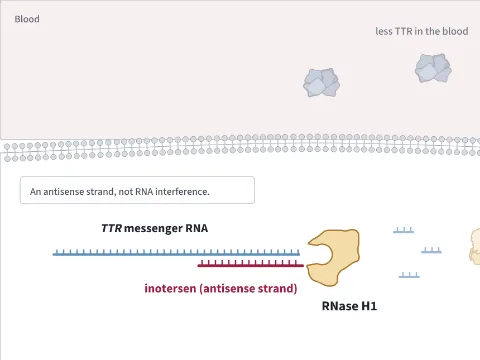
Antisense oligonucleotides
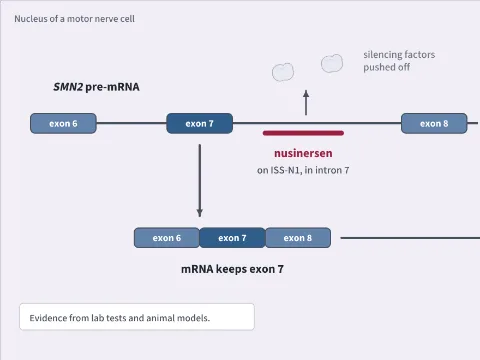
“SPINRAZA is an antisense oligonucleotide (ASO) designed to treat SMA caused by mutations in chromosome 5q that lead to SMN protein deficiency.”
From the nusinersen label
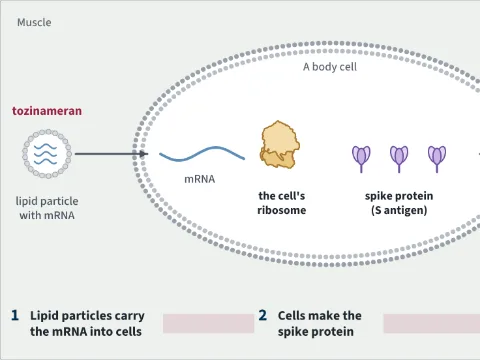
mRNA vaccines
“nucleoside-modified messenger RNA (modRNA) encoding the viral spike glycoprotein (S) of SARS-CoV-2”
From the tozinameran (mRNA COVID-19 vaccine) label
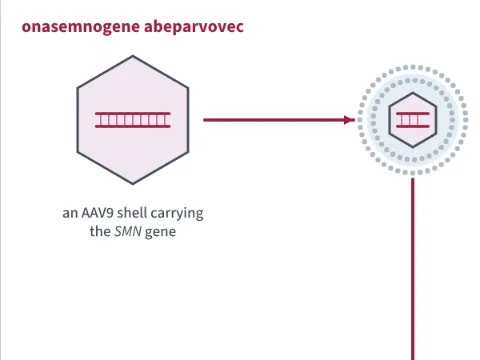
Gene therapies
“ZOLGENSMA is a recombinant AAV9-based gene therapy designed to deliver a copy of the gene encoding the human SMN protein”
From the onasemnogene abeparvovec label
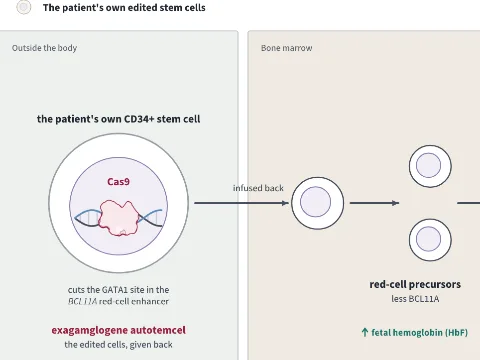
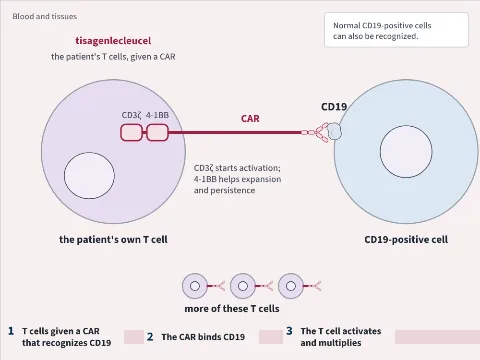
CAR-T cell therapies
“KYMRIAH is a CD19-directed genetically modified autologous T cell immunotherapy which involves reprogramming a patient’s own T cells with a transgene encoding a chimeric antigen receptor (CAR)”
From the tisagenlecleucel label
Not in a kind above: bleomycin, colesevelam, enoxaparin, ferric carboxymaltose, heparin, hepatitis B vaccine (HBsAg), icodextrin, iobenguane I131, OnabotulinumtoxinA, patiromer, poractant alfa, protamine, sucralfate, sugammadex and talimogene laherparepvec.
Spotted a mistake? Report an error (hello@openmechanism.com). Since launch, every published error we fix is listed on the corrections page.