Acute lymphoblastic leukemia is a cancer of immature lymphoid cells that develops in both children and adults, with new cases peaking between ages 1 and 4; chromosome and gene changes disturb how they mature and multiply. Blinatumomab turns T cells against cells carrying CD19; tisagenlecleucel is a person's own T cells, reprogrammed to find and kill cells carrying CD19; pegaspargase removes asparagine, which some leukemia cells need; methotrexate blocks a folate enzyme; imatinib blocks BCR-ABL in Philadelphia chromosome-positive ALL.
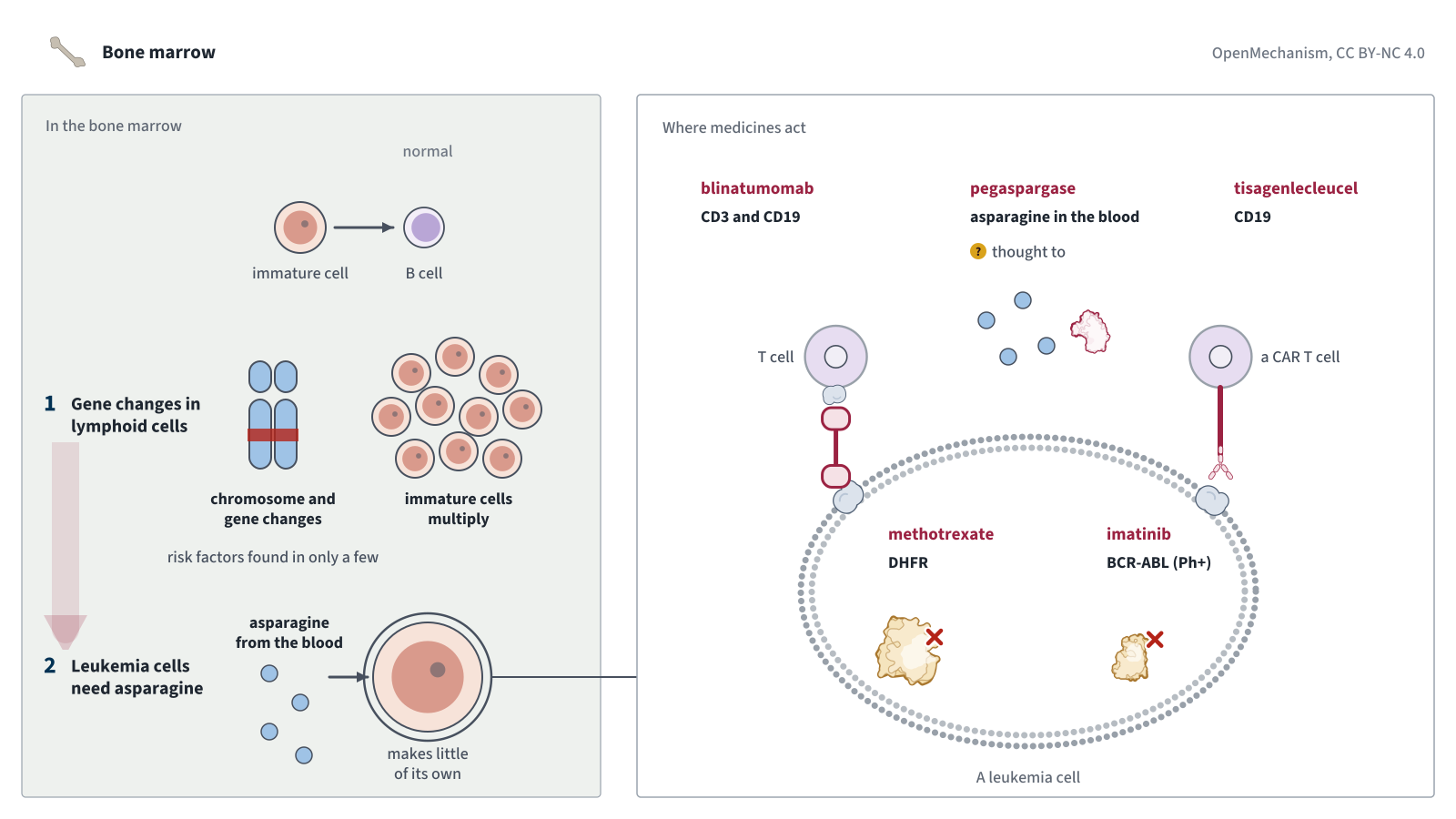
What goes wrong in acute lymphoblastic leukemia, and where medicines act. Schematic, not to scale. BCR-ABL outline from the ABL kinase domain. License CC BY-NC 4.0.
?Thought to
The Oncaspar (pegaspargase) label says: The pharmacological effect of ONCASPAR is thought to be based on the killing of leukemic cells due to depletion of plasma asparagine.
Clinical study: In a 2002 randomized trial in 118 children with newly diagnosed standard-risk acute lymphoblastic leukemia, pegaspargase was compared with native asparaginase; the trial measured how fast leukemia cells cleared and how far asparagine fell, not whether one causes the other: Patients treated with pegaspargase had more rapid clearance of lymphoblasts from day 7 and day 14 bone marrow aspirates and more prolonged asparaginase activity than those treated with native asparaginase. … There was correlation between asparaginase enzymatic activity and depletion of asparagine or glutamine in serum.Avramis VI et al., Blood 2002 (PMID 11877270)
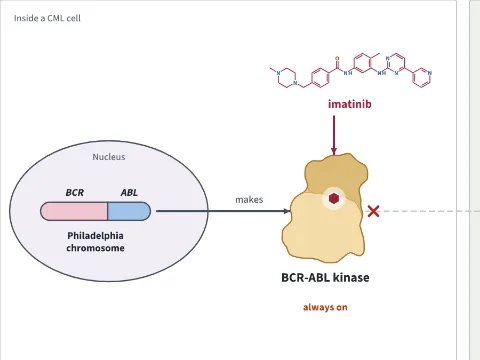
BCR-ABL fusion protein. An always-on enzyme made from a joined gene, found in some leukemia cells.
CAR
Chimeric antigen receptor. A man-made receptor added to a patient's T cells so they recognize a chosen target.
CD19
CD19. A protein on the surface of B cells and other cells of B-lineage origin.
CD3
CD3. Part of the T-cell receptor complex on the surface of T cells; it helps switch T cells on.
DHFR
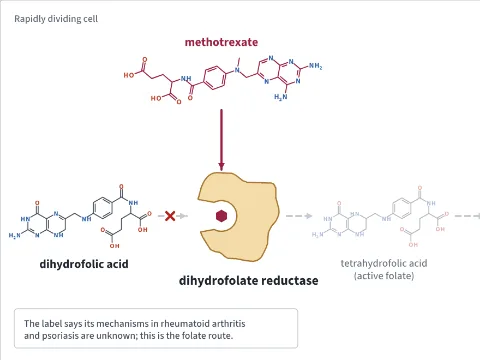
Dihydrofolate reductase. The enzyme that makes tetrahydrofolic acid from dihydrofolic acid; tetrahydrofolic acid helps make the building blocks of nucleic acids.
T cell
T lymphocyte. A white blood cell of the immune system.
What goes wrong
Gene changes in lymphoid cells. Chromosome and gene changes disturb how immature lymphoid cells mature and multiply; most cases arise in healthy people, and inherited or environmental risk factors have been found in only a few patients.1
What the source says
“Most acute lymphoblastic leukaemia arises in healthy individuals, and predisposing factors such as inherited genetic susceptibility or environmental exposure have been identified in only a few patients. It is characterised by chromosomal abnormalities and genetic alterations involved in differentiation and proliferation of lymphoid precursor cells.”
Leukemia cells need asparagine. Some leukemia cells also make little asparagine themselves and depend on asparagine from the blood to survive.2
What the source says
“Leukemic cells with low expression of asparagine synthetase have a reduced ability to synthesize asparagine, and therefore depend on an exogenous source of asparagine for survival.”
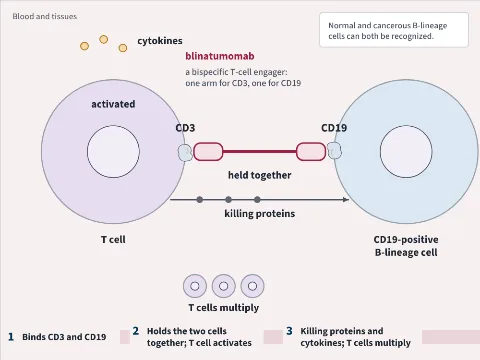
Blinatumomab binds on B-lineage cells, normal and cancerous, and on , connecting them so the T cells attack. It treats CD19-positive B-cell precursor ALL in adults and children one month and older: in first or second complete remission with minimal residual disease (MRD) of 0.1% or more; when it has come back or not responded; and, when Philadelphia chromosome-negative, in the consolidation phase of multiphase chemotherapy.3
What the source says
“Blinatumomab is a bispecific CD19-directed CD3 T-cell engager that binds to CD19 expressed on the surface of cells of B-lineage origin and CD3 expressed on the surface of T-cells. It activates endogenous T-cells by connecting CD3 in the T-cell receptor (TCR) complex with CD19 on benign and malignant B-cells.”
“BLINCYTO is indicated for the treatment of CD19-positive B-cell precursor acute lymphoblastic leukemia (ALL) in first or second complete remission with minimal residual disease (MRD) greater than or equal to 0.1% in adult and pediatric patients one month and older.”
“BLINCYTO is indicated for the treatment of relapsed or refractory CD19-positive B-cell precursor acute lymphoblastic leukemia (ALL) in adult and pediatric patients one month and older.”
“BLINCYTO is indicated for the treatment of CD19-positive Philadelphia chromosome-negative B-cell precursor acute lymphoblastic leukemia (ALL) in the consolidation phase of multiphase chemotherapy in adult and pediatric patients one month and older.”
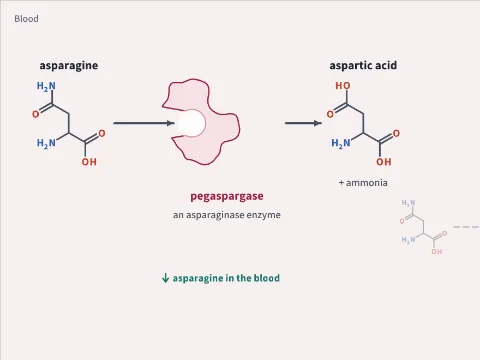
Pegaspargase breaks down asparagine in the blood, which is thought to kill leukemia cells that make little of their own. It is part of combination chemotherapy for ALL in children and adults: as a first treatment, or when the person has hypersensitivity to native forms of L-asparaginase.2
What the source says
“The pharmacological effect of ONCASPAR is thought to be based on the killing of leukemic cells due to depletion of plasma asparagine.”
“ONCASPAR is indicated as a component of a multi-agent chemotherapeutic regimen for the treatment of pediatric and adult patients with ALL and hypersensitivity to native forms of L-asparaginase.”
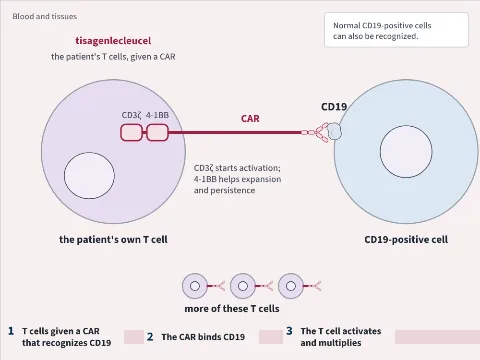
Tisagenlecleucel is a person's own T cells, reprogrammed with a that finds and kills cells carrying CD19, cancer cells and normal cells alike. It treats B-cell precursor ALL in people up to 25 years that has not responded or has come back two or more times.4
What the source says
“KYMRIAH is a CD19-directed genetically modified autologous T cell immunotherapy which involves reprogramming a patient’s own T cells with a transgene encoding a chimeric antigen receptor (CAR) to identify and eliminate CD19-expressing malignant and normal cells.”
Methotrexate blocks dihydrofolate reductase, an enzyme cells need to make building blocks, so it interferes with DNA making and cell division. Actively dividing tissues, such as cancer cells and bone marrow, are in general more sensitive. It is part of combination maintenance chemotherapy for ALL in adults and children.5
“Dihydrofolates must be reduced to tetrahydrofolates by this enzyme before they can be utilized as carriers of one-carbon groups in the synthesis of purine nucleotides and thymidylate.”
“Actively proliferating tissues such as malignant cells, bone marrow, fetal cells, buccal and intestinal mucosa, and cells of the urinary bladder are in general more sensitive to this effect of methotrexate.”
Imatinib blocks , the abnormal, always-on kinase made by the Philadelphia chromosome. It treats Philadelphia chromosome-positive ALL: newly diagnosed in children, with chemotherapy, and in adults when it has come back or not responded.6
What the source says
“Imatinib mesylate is a protein-tyrosine kinase inhibitor that inhibits the BCR-ABL tyrosine kinase, the constitutive abnormal tyrosine kinase created by the Philadelphia chromosome abnormality in CML.”
The National Cancer Institute's treatment summaries for acute lymphoblastic leukemia in children (updated 21 April 2025) and in adults (updated 17 March 2025) describe these combinations. For the lettered medicines above, the page gives only the uses their own labels list. The quotes may name medicines, combinations or groups of patients that a medicine's own label does not list, and may leave out its label's limits.
Newly diagnosed childhood ALL, remission induction chemotherapy: “Induction chemotherapy typically consists of the following drugs, with or without an anthracycline (either doxorubicin or daunorubicin): Vincristine. Corticosteroid (either prednisone or dexamethasone). Asparaginase. Intrathecal chemotherapy.”14
Childhood ALL, postinduction maintenance therapy: “The backbone of maintenance therapy in most protocols includes daily oral mercaptopurine and weekly oral or parenteral methotrexate.”14
Untreated ALL in adults, remission induction therapy: “Appropriate initial treatment, usually consisting of a regimen that includes the combination of vincristine, prednisone, and an anthracycline, with or without asparaginase, results in a complete response rate of up to 80%. In patients with Ph-positive ALL, the remission rate is generally greater than 90% when standard induction regimens are combined with BCR::ABL1 tyrosine kinase inhibitors. In the largest study published to date of Ph-positive ALL patients, 1,913 adult patients with ALL had a 5-year overall survival (OS) rate of 39%. Patients who experience a relapse after remission usually die within 1 year, even if a second complete remission is achieved.”15
Also used for it: cyclophosphamide (“Cyclophosphamide Tablets is indicated for the treatment of: … acute lymphoblastic (stem-cell) leukemia (cyclophosphamide given during remission is effective in prolonging its duration)”7); doxorubicin (“Doxorubicin Hydrochloride Injection is indicated for the treatment of … acute lymphoblastic leukemia”8); vincristine (“Vincristine Sulfate Injection is indicated in acute leukemia.”9); mercaptopurine (for maintenance treatment with other anticancer medicines: “MERCAPTOPURINE is indicated for the treatment of patients with acute lymphoblastic leukemia (ALL) as part of a combination chemotherapy maintenance regimen.”10); prednisone (for palliative management: “Acute leukemia of childhood”11); and dexamethasone (by injection when oral therapy is not feasible, for palliative management: “Acute leukemia of childhood”12).
Escherichia coli L-asparaginasePDB 3ECA; Swain, A.L. et al. Proc.Natl.Acad.Sci.USA 1993;90:1474-1478. The asparaginase outline in the drawing is traced from this structure. Saved copy
Human ABL kinase domain with imatinibPDB 2HYY; Cowan-Jacob, S.W. et al. ACTA CRYSTALLOGR.,SECT.D 2007;63:80-93. The BCR-ABL outline in the drawing is traced from this structure. Saved copy
Notes and limits
A 2020 review says outcomes remain poor for adults aged 40 or older and when the leukemia comes back or does not respond.1
The sources don't link the gene changes in step 1 to some leukemia cells making little asparagine in step 2.
The combinations quoted from the National Cancer Institute are examples of how these medicines are given together. They are not a full list of regimens, and nothing here is advice on choosing a treatment. The words are from the two summaries' versions of 21 April 2025 (children) and 17 March 2025 (adults), and the summaries may have changed since. Each summary says: “It is intended as a resource to inform and assist clinicians in the care of their patients. It does not provide formal guidelines or recommendations for making health care decisions.”14,15
text 6ecc368b6b20…; drawings c1c52b0133f9…; notes 4c7988e7ec76…
AI source check
Claude Opus 5.5 (AI source check), 14 November 2026: 56 statements compared with their sources, 7 flagged for the reviewer. An automated check, not a medical review.
Conflict of interest
Doxorubicin: Pfizer, the reviewer's former employer, makes or markets this medicine. Vincristine: Pfizer, the reviewer's former employer, makes or markets this medicine. Details
Next review due
16 May 2028
Cite this page
Tran D. Acute lymphoblastic leukemia [Internet]. OpenMechanism; 2026 [updated 2026 Nov 15; cited 2026 Nov 15]. Available from: https://openmechanism.com/conditions/acute-lymphoblastic-leukemia