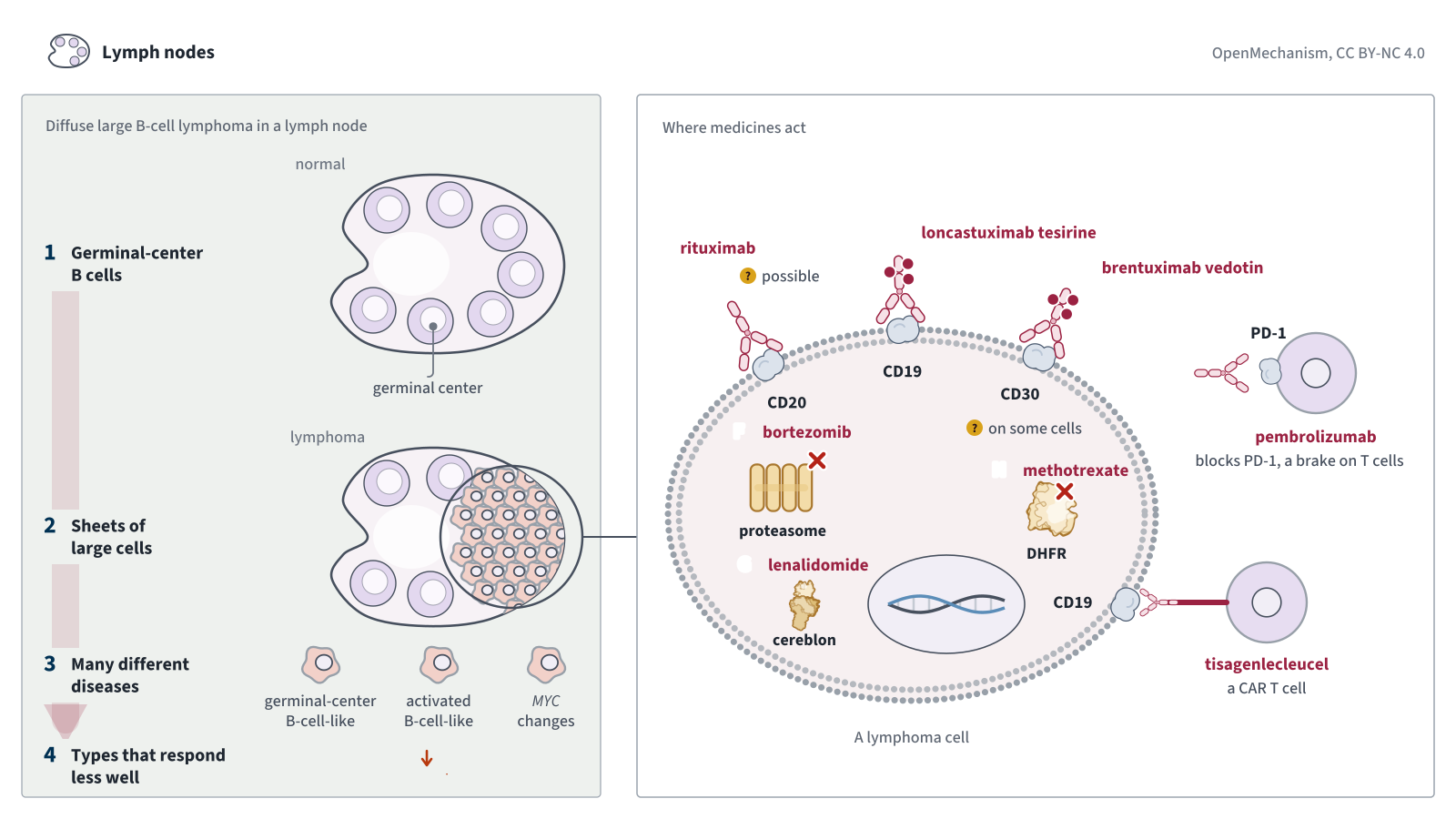
Diffuse large B-cell lymphoma, the most common aggressive non-Hodgkin lymphoma in a 2019 review, starts from germinal-center B cells; sheets of large cells break up the structure of the follicle center. Eight medicines drawn on this page act on B-cell lymphomas, each on the types its label names: on markers at the cell surface, through T cells, or inside the cell.
What goes wrong in diffuse large B-cell lymphoma, and where medicines act on B-cell lymphomas. Schematic, not to scale. License CC BY-NC 4.0.
?Possible
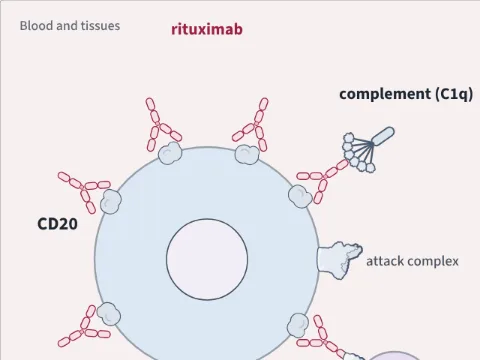
The Rituxan (rituximab) label says: Possible mechanisms of cell lysis include complement dependent cytotoxicity (CDC) and antibody dependent cell mediated cytotoxicity (ADCC).
Clinical study: In a 2002 randomized trial in 399 people aged 60 to 80 with untreated diffuse large B-cell lymphoma, eight cycles of CHOP chemotherapy every three weeks were given with or without rituximab on day 1 of each cycle, and people were followed for a median of two years; the trial measured response and survival, not how rituximab kills the cells: The addition of rituximab to the CHOP regimen increases the complete-response rate and prolongs event-free and overall survival in elderly patients with diffuse large-B-cell lymphoma. Coiffier B et al., N Engl J Med 2002 (PMID 11807147)
?On some cells
The Adcetris (brentuximab vedotin) label says: Nonclinical data suggest that the anticancer activity of ADCETRIS is due to the binding of the ADC to CD30-expressing cells.
Clinical study: In a 2013 study of a cohort of 903 patients with de novo diffuse large B-cell lymphoma, CD30 was found on the lymphoma cells of about one in seven: CD30 was expressed in ∼14% of DLBCL patients.Hu S et al., Blood 2013 (PMID 23343832) The label's large B-cell lymphoma use sets no CD30 condition.
Chimeric antigen receptor. A man-made receptor added to a patient's T cells so they recognize a chosen target.
CD19
CD19. A protein on the surface of B cells and other cells of B-lineage origin.
CD20
CD20 antigen. A molecule on the surface of B cells that rituximab targets.
CD30
CD30. A receptor in the tumor necrosis factor receptor family, found on the surface of some lymphoma cells.
cereblon
Cereblon. Part of an enzyme complex that tags proteins for destruction; lenalidomide works through it.
DHFR
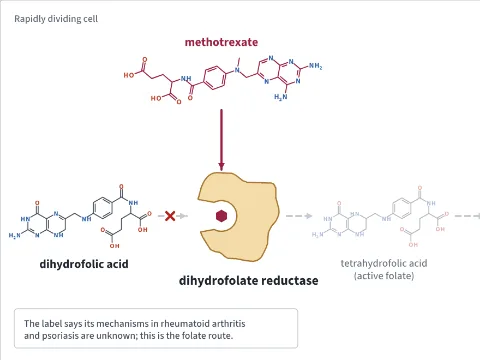
Dihydrofolate reductase. The enzyme that makes tetrahydrofolic acid from dihydrofolic acid; tetrahydrofolic acid helps make the building blocks of nucleic acids.
germinal center
Germinal center. The site that diffuse large B-cell lymphoma originates from.
MYC
MYC oncogene. A cancer-driving gene (oncogene).
PD-1
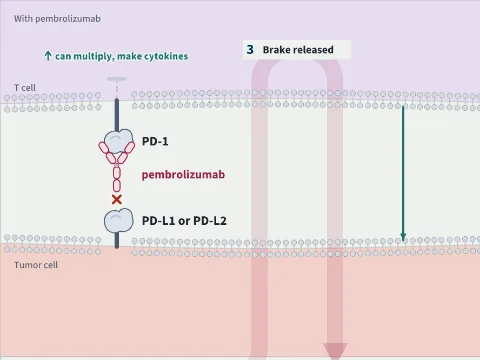
Programmed cell death protein 1. A receptor on T cells that acts as a brake when PD-L1 or PD-L2 binds it.
proteasome
26S proteasome. The cell’s machine for breaking down proteins that have been tagged for destruction.
What goes wrong
Germinal-center B cells. In a 2019 review, diffuse large B-cell lymphoma is the most common aggressive and starts from B cells.1
What the source says
“Diffuse large B-cell lymphoma (DLBCL) is the most common type of aggressive non-Hodgkin lymphoma originating from the germinal center”
Sheets of large cells. Large cells in sheets break up the structure of the follicle center and carry B-cell markers such as and CD79a.1
What the source says
“shows sheets of large cells that disrupt the underlying structural integrity of the follicle center and stain positive for pan-B-cell antigens, such as CD20 and CD79a.”
Many different diseases. It is a varied group of diseases, told apart by clinical features, cell of origin, molecular features and, most recently, recurring mutations.1
What the source says
“it represents a heterogeneous group of diseases with variable outcomes that are differentially characterized by clinical features, cell of origin (COO), molecular features, and most recently, frequently recurring mutations.”
Types that respond less well. Non-germinal-center B-cell-like disease (activated B-cell-like or unclassifiable) responds less well to first chemoimmunotherapy than germinal-center B-cell-like disease, and disease with changes, alone or with BCL2 or BCL6 translocations, responds poorly to first chemoimmunotherapy and to a transplant of the patient’s own stem cells at relapse, particularly when the MYC translocation partner is immunoglobulin.1
What the source says
“DLBCL patients with non-germinal center B-cell (GCB)-like DLBCL (activated B-cell like and unclassifiable) have a poorer response to up-front chemoimmunotherapy (CI) compared to patients with GCB-like DLBCL.”
“Those with c-MYC-altered disease alone and in combination with translocations in BCL2 and/or BCL6 (particularly when the MYC translocation partner is immunoglobulin) respond poorly to up-front CI and salvage autologous stem cell transplant at relapse”
Binds CD20 on B cells and kills them; possible mechanisms include and antibody-dependent cell-mediated killing ().2
Used for (CD20-positive disease)Large B-cell: first treatment, with CHOP or other anthracycline-based chemotherapy (adults), or with chemotherapy (children 6 months and older, advanced stage)Follicular: first treatment, with chemotherapy, then on its own as maintenance after a complete or partial response (adults)Follicular or low-grade ↺ come back or not responded, on its own (adults)Low-grade ↺ not growing after first CVP chemotherapy, on its own (adults)
What the label says
“Rituximab is a monoclonal antibody that targets the CD20 antigen expressed on the surface of pre-B and mature B-lymphocytes. Upon binding to CD20, rituximab mediates B-cell lysis.”
“Previously untreated diffuse large B-cell, CD20-positive NHL in combination with (cyclophosphamide, doxorubicin, vincristine, and prednisone) (CHOP) or other anthracycline-based chemotherapy regimens.”
“RITUXAN is indicated for the treatment of pediatric patients aged 6 months and older with: Previously untreated, advanced stage, CD20-positive diffuse large B-cell lymphoma (DLBCL), Burkitt lymphoma (BL), Burkitt-like lymphoma (BLL) or mature B-cell acute leukemia (B-AL) in combination with chemotherapy.”
“Previously untreated follicular, CD20-positive, B-cell NHL in combination with first line chemotherapy and, in patients achieving a complete or partial response to a rituximab product in combination with chemotherapy, as single-agent maintenance therapy.”
“Non-progressing (including stable disease), low-grade, CD20-positive, B-cell NHL as a single agent after first-line cyclophosphamide, vincristine, and prednisone (CVP) chemotherapy.”
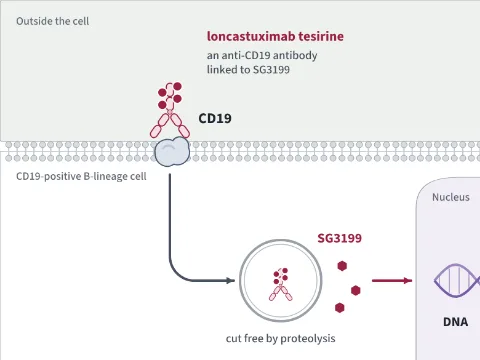
An antibody that carries a DNA-damaging compound to ; inside the cell it cross-links .3
Used for (adults)Large B-cell ↺ after 2 or more treatments
What the label says
“Upon binding to CD19, loncastuximab tesirine-lpyl is internalized followed by release of SG3199 via proteolytic cleavage. The released SG3199 binds to the DNA minor groove and forms highly cytotoxic DNA interstrand crosslinks, subsequently inducing cell death.”
“ZYNLONTA is indicated for the treatment of adult patients with relapsed or refractory large B-cell lymphoma after two or more lines of systemic therapy”
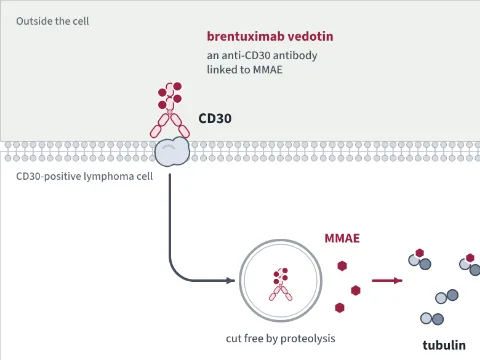
An antibody against joined to , a cell poison that breaks up .4
Used for (adults)Large B-cell ↺ after 2 or more treatments, with lenalidomide and rituximab, when not eligible for a transplant of their own stem cells (auto-HSCT) or CAR T-cell therapy
What the label says
“Brentuximab vedotin is an antibody-drug conjugate (ADC).”
“Binding of MMAE to tubulin disrupts the microtubule network within the cell, subsequently inducing cell cycle arrest and apoptotic death of the cells.”
“Adult patients with relapsed or refractory large B-cell lymphoma (LBCL), including diffuse large B-cell lymphoma (DLBCL) NOS, DLBCL arising from indolent lymphoma, or high-grade B-cell lymphoma (HGBL), after two or more lines of systemic therapy who are not eligible for auto-HSCT or CAR T-cell therapy, in combination with lenalidomide and a rituximab product”
“Pembrolizumab is a monoclonal antibody that binds to the PD-1 receptor and blocks its interaction with PD-L1 and PD-L2, releasing PD-1 pathway-mediated inhibition of the immune response, including the anti-tumor immune response.”
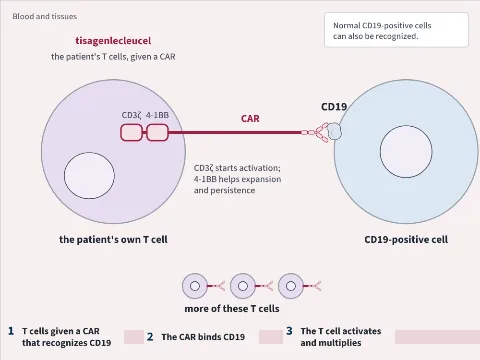
A person’s own T cells, given a that finds and kills cells carrying CD19, cancer cells and normal cells alike.6
Used for (adults)Large B-cell ↺ after 2 or more treatments, not for primary central nervous system lymphomaFollicular ↺ after 2 or more treatments
What the label says
“KYMRIAH is a CD19-directed genetically modified autologous T cell immunotherapy which involves reprogramming a patient’s own T cells with a transgene encoding a chimeric antigen receptor (CAR) to identify and eliminate CD19-expressing malignant and normal cells.”
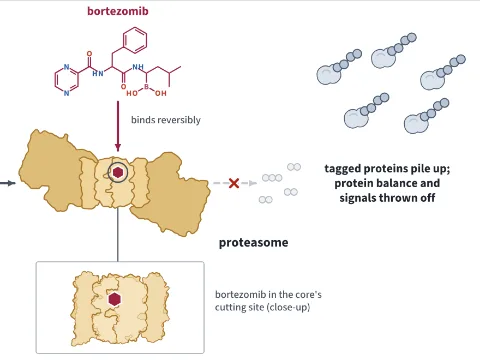
Reversibly blocks the chymotrypsin-like activity of the , the cell’s machine for breaking down tagged proteins.7
Used for (adults)Mantle cell
What the label says
“Bortezomib is a reversible inhibitor of the chymotrypsin-like activity of the 26S proteasome in mammalian cells. The 26S proteasome is a large protein complex that degrades ubiquitinated proteins.”
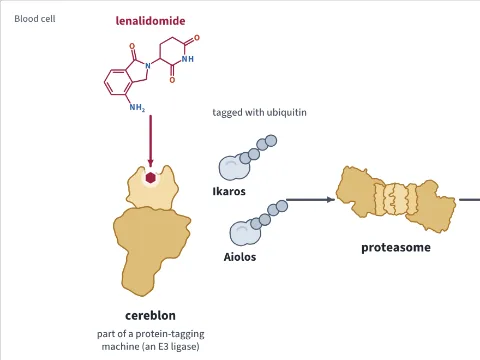
Works through , part of an enzyme complex that tags proteins for destruction; in lab studies (in vitro), with lenalidomide present, proteins such as Aiolos and Ikaros are tagged and broken down.8
Used for (adults)Follicular and marginal zone ↺ with rituximab, after treatmentMantle cell ↺ after 2 treatments, one of them bortezomib
What the label says
“Cellular activities of lenalidomide are mediated through its target cereblon, a component of a cullin ring E3 ubiquitin ligase enzyme complex.”
“In vitro, in the presence of drug, substrate proteins (including Aiolos, Ikaros, and CK1α) are targeted for ubiquitination and subsequent degradation leading to direct cytotoxic and immunomodulatory effects.”
“REVLIMID in combination with a rituximab product, is indicated for the treatment of adult patients with previously treated marginal zone lymphoma (MZL).”
“REVLIMID is indicated for the treatment of adult patients with mantle cell lymphoma (MCL) whose disease has relapsed or progressed after two prior therapies, one of which included bortezomib.”
“Dihydrofolates must be reduced to tetrahydrofolates by this enzyme before they can be utilized as carriers of one-carbon groups in the synthesis of purine nucleotides and thymidylate.”
● named for a first treatment, or with no condition. ↺ named only for disease that has already been treated: it has come back, not responded or had earlier treatment. From each label’s indication section.
Combinations in practice
The National Cancer Institute's treatment summaries for aggressive B-cell non-Hodgkin lymphoma (updated 12 May 2025), indolent B-cell non-Hodgkin lymphoma (updated 14 May 2025) and mantle cell lymphoma (updated 12 May 2025) describe these combinations. For the lettered medicines above, the page gives only the uses their own labels list. The quotes may name medicines, combinations or groups of patients that a medicine's own label does not list, and may leave out its label's limits.
Aggressive, noncontiguous stage II/III/IV B-cell non-Hodgkin lymphoma: “Pola-R-CHP: polatuzumab vedotin + rituximab + cyclophosphamide + doxorubicin + prednisone. R-CHOP: rituximab + cyclophosphamide + doxorubicin + vincristine + prednisone. … Treatment options for aggressive, noncontiguous stage II/III/IV B-cell NHL include: Pola-R-CHP (for National Comprehensive Cancer Network International Prognostic Index [IPI] score of 2 to 5). R-CHOP. Radiation therapy consolidation to sites of bulky disease (under clinical evaluation).”15
Indolent, noncontiguous stage II/III/IV B-cell non-Hodgkin lymphoma: “Treatment options for indolent, noncontiguous stage II/III/IV B-cell NHL include: Watchful waiting for asymptomatic patients. Rituximab alone or in combination with cytotoxic agents used in front-line therapy. Lenalidomide and rituximab. Maintenance rituximab. Obinutuzumab alone or in combination with cytotoxic agents used in front-line therapy. Because none of the therapies listed above are curative for advanced-stage disease, innovative approaches are under clinical evaluation. … Combinations include the following: R-bendamustine: rituximab + bendamustine. … R-CVP: rituximab + cyclophosphamide + vincristine + prednisone. R-CHOP: rituximab + cyclophosphamide + doxorubicin + vincristine + prednisone. A Cochrane meta-analysis could not identify any OS benefit of adding doxorubicin to chemotherapy regimens with rituximab or to chemotherapy regimens without rituximab.”16
Mantle cell lymphoma: “The following agents, alone or in combination, represent targeted biological therapy options that may enable chemotherapy-free treatment strategies for most patients with MCL: BTK inhibitors: acalabrutinib, zanubrutinib, ibrutinib, and pirtobrutinib. Anti-CD20 monoclonal antibodies: rituximab and obinutuzumab. BCL-2 inhibitor: venetoclax. Immune stimulator: lenalidomide. Chemoimmunotherapy with BR (bendamustine and rituximab) or with R-CHOP (rituximab, cyclophosphamide, doxorubicin, vincristine, and prednisone)/R-DHAP (rituximab, dexamethasone, high-dose cytarabine, and cisplatin) is still considered a standard option for younger fit patients.”17
Also used for it: cyclophosphamide (“Cyclophosphamide Tablets is indicated for the treatment of: … malignant lymphomas (Stages III and IV of the Ann Arbor staging system), Hodgkin’s disease, lymphocytic lymphoma (nodular or diffuse), mixed-cell type lymphoma, histiocytic lymphoma, Burkitt’s lymphoma”10); doxorubicin (“Doxorubicin Hydrochloride Injection is indicated for the treatment of … non-Hodgkin lymphoma (NHL)”11); vincristine (“Vincristine Sulfate Injection has also been shown to be useful in combination with other oncolytic agents in Hodgkin's disease, non–Hodgkin's malignant lymphomas, rhabdomyosarcoma, neuroblastoma, and Wilms' tumor.”12); prednisone (“For palliative management of: Leukemias and lymphomas in adults”13); and dexamethasone (by injection when oral therapy is not feasible: “For palliative management of: Leukemias and lymphomas in adults”14).
The disease steps come from one review abstract on diffuse large B-cell lymphoma; the other types appear only through the medicines’ labels and the combinations quoted from the National Cancer Institute.1
The lymph nodes are the place the review gives for diffuse large B-cell lymphoma; the page's place, and the lymph node its drawing shows, rest on that review alone.1
The Adcetris label describes binding to CD30-expressing cells; its large B-cell lymphoma indication sets no CD30 condition, so the drawing marks CD30 as on some cells.4
The steps are in the order that explains them; one step is said to cause the next only where a source says so.
The Zynlonta label says loncastuximab tesirine's large B-cell lymphoma use is approved under accelerated approval, based on overall response rate, and the Kymriah label says tisagenlecleucel's follicular lymphoma use is approved under accelerated approval, based on response rate and how long responses lasted; each says continued approval may depend on confirmatory trials.3,6
The combinations quoted from the National Cancer Institute are examples of how these medicines are given together. They are not a full list of regimens, and nothing here is advice on choosing a treatment. The words are from the three summaries' versions of 12 May 2025 (aggressive B-cell non-Hodgkin lymphoma and mantle cell lymphoma) and 14 May 2025 (indolent B-cell non-Hodgkin lymphoma), and the summaries may have changed since. Each summary says: “It is intended as a resource to inform and assist clinicians in the care of their patients. It does not provide formal guidelines or recommendations for making health care decisions.”15,16,17
text 448cdcab8011…; drawings cd1eda15ca65…; notes 1c60d1b5447d…
AI source check
Claude Opus 5.5 (AI source check), 14 November 2026: 105 statements compared with their sources, 19 flagged for the reviewer. An automated check, not a medical review.
Conflict of interest
Brentuximab vedotin: Seagen, now part of Pfizer, makes this medicine. The reviewer completed a postdoctoral fellowship at Seagen and later worked at Pfizer. Doxorubicin: Pfizer, the reviewer's former employer, makes or markets this medicine. Vincristine: Pfizer, the reviewer's former employer, makes or markets this medicine. Details
Key terms
Definitions reworded since this review: ADCC, CD30, microtubule and non-Hodgkin lymphoma. Definitions are shared across pages, so a later rewording does not take the review line off (what a review covers).
Next review due
16 May 2028
Cite this page
Tran D. B-cell lymphomas [Internet]. OpenMechanism; 2026 [updated 2026 Nov 15; cited 2026 Nov 15]. Available from: https://openmechanism.com/conditions/b-cell-lymphomas