Bipolar disorder is a recurrent, chronic illness of shifting mood and energy, with episodes of mania or hypomania and of depression, which dominates its course. It affects about 40 million people worldwide, a 2025 review says, and how it arises is unknown. Mood stabilizers such as lithium work in ways their labels call unknown, unclear or not established; antipsychotics act on dopamine and , though their labels call the mechanism unclear or say only what it could be.
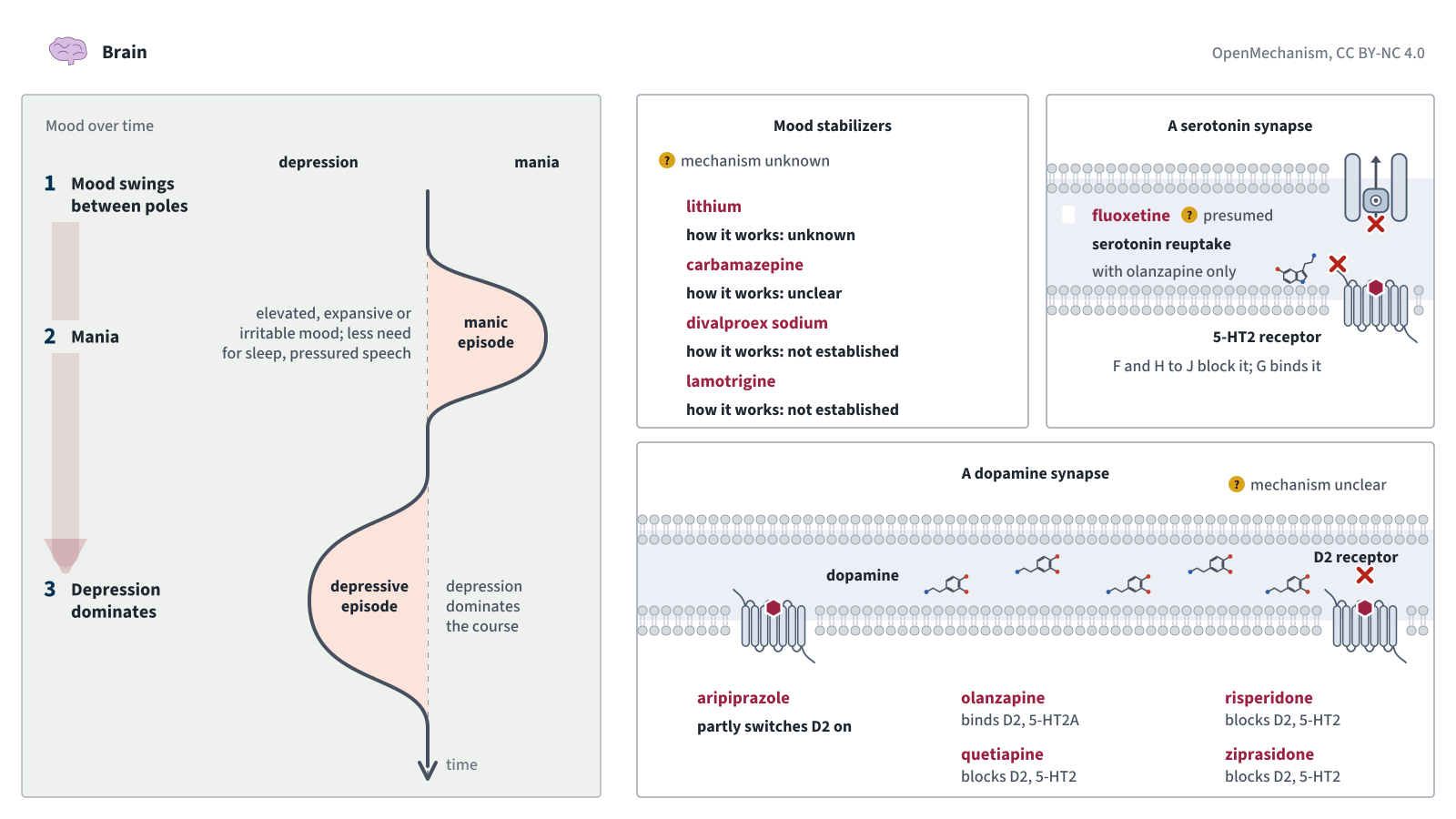
What goes wrong in bipolar disorder, and where medicines act. Schematic, not to scale. License CC BY-NC 4.0.
?Mechanism unknown
None of the four labels says how its medicine works in bipolar disorder; the lithium label says: The mechanism of action of lithium as a mood stabilizing agent is unknown.
Clinical study: In Geddes and colleagues' 2004 meta-analysis of five randomized trials comparing lithium with placebo as long-term treatment, in 770 people with bipolar disorder; the trials measured relapses, not how lithium works: Lithium treatment reduces the risk of relapse in bipolar disorder. The preventive effect is clear for manic episodes, although it is equivocal for depressive episodes.Geddes JR et al., Am J Psychiatry 2004 (PMID 14754766)
?Presumed
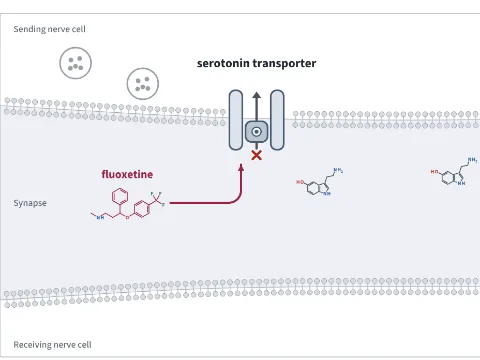
The Prozac (fluoxetine) label says: Although the exact mechanism of PROZAC is unknown, it is presumed to be linked to its inhibition of CNS neuronal uptake of serotonin.
Clinical study: In Tohen and colleagues' 2003 randomized, double-blind trial lasting 8 weeks, of olanzapine (5 to 20 mg a day), olanzapine with fluoxetine (olanzapine and fluoxetine 6 and 25, 6 and 50, or 12 and 50 mg a day; 86 people) or placebo, in 833 adults with bipolar I depression; the trial measured depressive symptoms, not how fluoxetine works: Olanzapine is more effective than placebo, and combined olanzapine-fluoxetine is more effective than olanzapine and placebo in the treatment of bipolar I depression without increased risk of developing manic symptoms.Tohen M et al., Arch Gen Psychiatry 2003 (PMID 14609883)
?Mechanism unclear
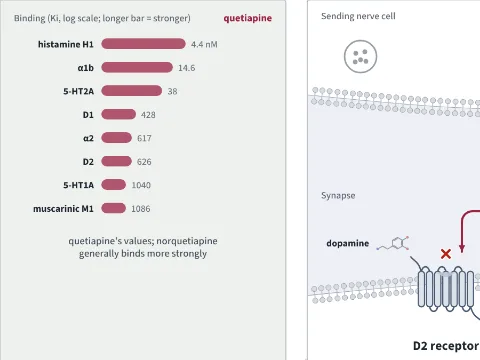
Each label hedges how its medicine works; the Seroquel (quetiapine) label says: The mechanism of action of quetiapine in the listed indications is unclear. However, the efficacy of quetiapine in these indications could be mediated through a combination of dopamine type 2 (D 2 ) and serotonin type 2 (5HT 2 ) antagonism.
Clinical study: In Cipriani and colleagues' 2011 multiple-treatments meta-analysis of 68 randomized trials of medicines at therapeutic doses in 16,073 adults with acute mania; the trials measured mania rating scales and dropouts at 3 weeks, not how the medicines work: ten of the 13 medicines, among them lithium, carbamazepine, valproate and the five antipsychotics on this page, were significantly more effective than placebo, whereas gabapentin, lamotrigine, and topiramate were not.Cipriani A et al., Lancet 2011 (PMID 21851976)
Serotonin (5-hydroxytryptamine, 5-HT) receptors. Receptors that serotonin acts on; they come in several subtypes, such as 5-HT1A and 5-HT2A.
5-HT2A receptor
Serotonin 2A receptor. One of the serotonin receptors; olanzapine binds it strongly.
D2 receptor
Dopamine D2 receptor. A dopamine receptor; in Parkinson disease, ropinirole's effect is thought to be related to its ability to stimulate D2 receptors in the caudate-putamen of the brain.
reuptake
Reuptake. Nerve cells taking a messenger such as serotonin back up, which helps end its signal.
What goes wrong
Mood swings between poles. Bipolar disorder is a recurrent, chronic disorder of fluctuating mood and energy. Bipolar I disorder is defined by a full manic episode; bipolar II disorder by a hypomanic episode and a major depressive episode.1,2
What the source says
“Bipolar disorder is a recurrent chronic disorder characterised by fluctuations in mood state and energy.”
“Bipolar disorders are a complex group of severe and chronic disorders that includes bipolar I disorder, defined by the presence of a syndromal, manic episode, and bipolar II disorder, defined by the presence of a syndromal, hypomanic episode and a major depressive episode.”
Mania. Mania or hypomania is the hallmark. A manic episode is a distinct period of abnormally and persistently elevated, expansive or irritable mood; typical symptoms include pressured speech, overactivity, less need for sleep, flight of ideas, grandiosity, poor judgment, aggressiveness and possible hostility.3,4
What the source says
“The hallmark of bipolar disorder is hypomania or mania, and the predominant phase of illness is depression.”
“Typical symptoms of mania include pressure of speech, motor hyperactivity, reduced need for sleep, flight of ideas, grandiosity, poor judgment, aggressiveness, and possible hostility.”
Depression dominates. Yet depression is the predominant phase: depressive episodes and symptoms dominate the long-term course and account for a disproportionate share of illness and deaths. The illness most often begins with a depressive episode that looks like ordinary (unipolar) depression, which makes it hard to diagnose.1,2,3
What the source says
“The hallmark of bipolar disorder is hypomania or mania, and the predominant phase of illness is depression.”
“Although mania defines bipolar I disorder, depressive episodes and symptoms dominate the longitudinal course of, and disproportionately account for morbidity and mortality in, bipolar disorders.”
“Accurate diagnosis of bipolar disorder is difficult in clinical practice because onset is most commonly a depressive episode and looks similar to unipolar depression.”
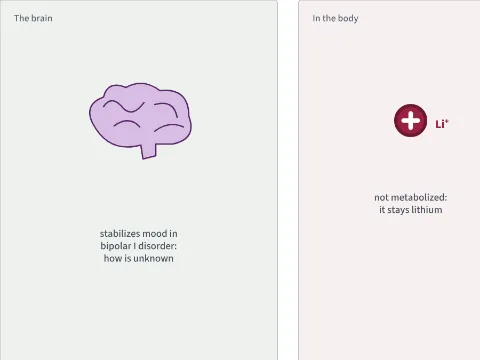
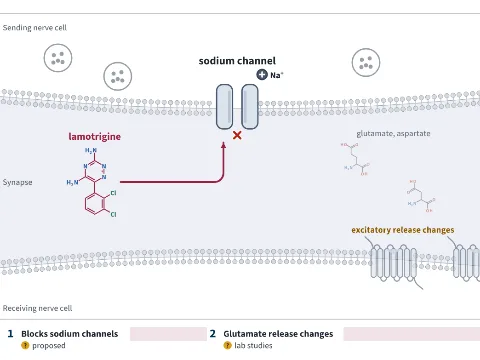
Stabilizes mood; its label says how it does so is unknown.5
Used forManic and mixed episodes of bipolar I disorder: acute treatment, alone, age 7 and olderBipolar I disorder: maintenance, alone, age 7 and older
What the label says
“Lithium is a mood-stabilizing agent indicated as monotherapy for the treatment of bipolar I disorder: • Treatment of acute manic and mixed episodes in patients 7 years and older [see Clinical Studies ( 14 )] • Maintenance treatment in patients 7 years and older”
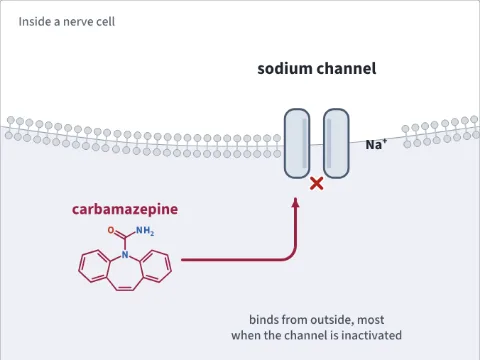
Stabilizes mood in acute mania; the label calls the mechanism unclear.6
Used forManic or mixed episodes of bipolar I disorder: acute treatment (Equetro extended-release capsules; not established in children)
What the label says
“EQUETRO (carbamazepine) is a mood stabilizer available for oral administration as 100 mg, 200 mg, and 300 mg extended-release capsules of carbamazepine, USP.”
“The safety and effectiveness of Depakote for long-term use in mania, i.e., more than 3 weeks, has not been demonstrated in controlled clinical trials.”
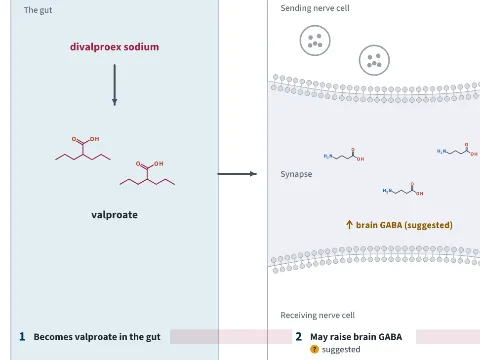
“Divalproex sodium dissociates to the valproate ion in the gastrointestinal tract. The mechanisms by which valproate exerts its therapeutic effects have not been established.”
Delays new mood episodes as maintenance; its label says how it works in bipolar disorder has not been established.7
Used forBipolar I disorder: maintenance, to delay mood episodes after standard treatment of an acute episode
What the label says
“LAMICTAL is indicated for the maintenance treatment of bipolar I disorder to delay the time to occurrence of mood episodes (depression, mania, hypomania, mixed episodes) in patients treated for acute mood episodes with standard therapy”
“PROZAC monotherapy is not indicated for the treatment of depressive episodes associated with Bipolar I Disorder or the treatment of treatment resistant depression.”
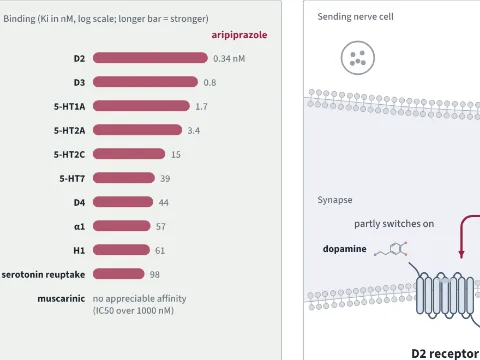
“However, the efficacy of aripiprazole in the listed indications could be mediated through a combination of partial agonist activity at D 2 and 5-HT 1A receptors and antagonist activity at 5-HT 2A receptors.”
Binds D2 and 5-HT2A receptors among others; the label calls its mechanism unclear.11
Used forManic or mixed episodes of bipolar I disorder: acute treatment, alone (adults and ages 13 to 17) or with valproate or lithium (adults)Bipolar I disorder: maintenance, alone, adultsDepressive episodes of bipolar I disorder: with fluoxetine only
What the label says
“Oral olanzapine is indicated for the acute treatment of manic or mixed episodes associated with bipolar I disorder and maintenance treatment of bipolar I disorder. Efficacy was established in three clinical trials in adult patients with manic or mixed episodes of bipolar I disorder: two 3- to 4-week trials and one monotherapy maintenance trial. In adolescent patients with manic or mixed episodes associated with bipolar I disorder (ages 13 to 17), efficacy was established in one 3-week trial”
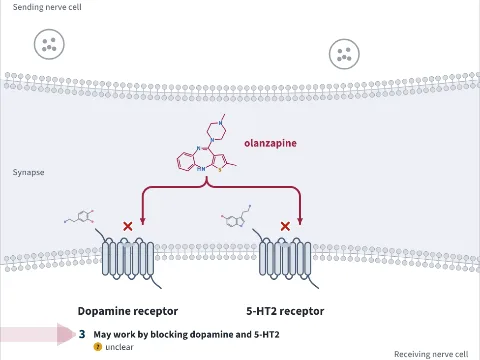
“Olanzapine binds with high affinity to the following receptors: serotonin 5HT 2A/2C , 5HT 6 (K i =4, 11, and 5 nM, respectively), dopamine D 1-4 (K i =11-31 nM), histamine H 1 (K i =7 nM), and adrenergic α 1 receptors (K i =19 nM).”
Could work by blocking D2 and serotonin type 2 receptors; the label calls the mechanism unclear.12
Used forManic episodes of bipolar I disorder: acute treatment, alone (adults and ages 10 to 17) or with lithium or divalproex (adults)Depressive episodes of bipolar disorder: acute treatment, alone, adultsBipolar I disorder: maintenance, with lithium or divalproex, adults
What the label says
“SEROQUEL is indicated for the acute treatment of manic episodes associated with bipolar I disorder, both as monotherapy and as an adjunct to lithium or divalproex. Efficacy was established in two 12-week monotherapy trials in adults, in one 3-week adjunctive trial in adults, and in one 3-week monotherapy trial in pediatric patients (10-17 years)”
“SEROQUEL is indicated as monotherapy for the acute treatment of depressive episodes associated with bipolar disorder. Efficacy was established in two 8-week monotherapy trials in adult patients with bipolar I and bipolar II disorder”
“SEROQUEL is indicated for the maintenance treatment of bipolar I disorder, as an adjunct to lithium or divalproex. Efficacy was established in two maintenance trials in adults.”
“However, the efficacy of quetiapine in these indications could be mediated through a combination of dopamine type 2 (D 2 ) and serotonin type 2 (5HT 2 ) antagonism.”
Blocks D2 and serotonin type 2 receptors among others; how this helps in mania is not stated.13
Used forManic or mixed episodes of bipolar I disorder: acute treatment, alone (adults and ages 10 to 17) or with lithium or valproate (adults)
What the label says
“As monotherapy or adjunctive therapy with lithium or valproate, for the treatment of acute manic or mixed episodes associated with Bipolar I Disorder”
“RISPERDAL adjunctive therapy with lithium or valproate is indicated for the treatment of acute manic or mixed episodes associated with Bipolar I Disorder. Efficacy was established in one short-term trial in adults”
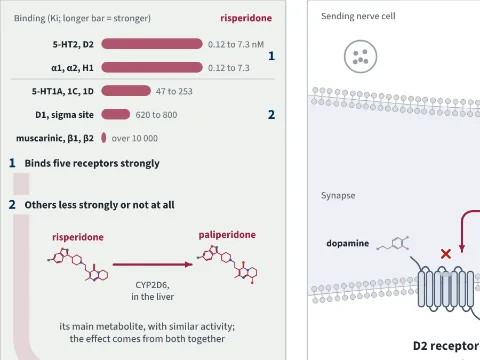
“Risperidone is a monoaminergic antagonist with high affinity (Ki of 0.12 to 7.3 nM) for the serotonin Type 2 (5HT 2 ), dopamine Type 2 (D 2 ), α 1 and α 2 adrenergic, and H 1 histaminergic receptors.”
“The drug's therapeutic activity in schizophrenia could be mediated through a combination of dopamine Type 2 (D 2 ) and serotonin Type 2 (5HT 2 ) receptor antagonism.”
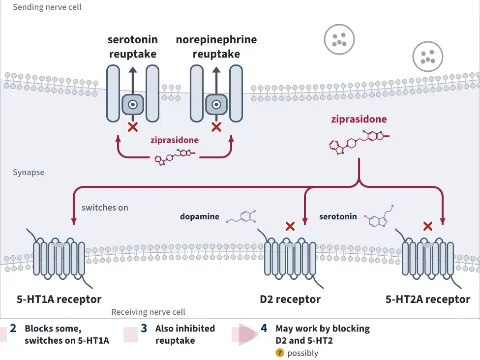
Could work by blocking D2 and serotonin type 2 receptors, its label says.14
Used forManic or mixed episodes of bipolar I disorder: acute treatment, alone, adultsBipolar I disorder: maintenance, with lithium or valproate, adults
What the label says
“GEODON is indicated as monotherapy for the acute treatment of adults with manic or mixed episodes associated with bipolar I disorder”
“The mechanism of action of ziprasidone in the treatment of the listed indications could be mediated through a combination of dopamine type 2 (D2) and serotonin type 2 (5HT2) antagonism.”
A 2020 review says how bipolar disorder arises is unknown; it names disturbances in nerve and glial cell plasticity, monoamine signaling, inflammatory balance, cell metabolism and mitochondrial function, and puts its heritability high, at about 70%. A 2025 review says recent work has identified multigene risk and possible infectious and mitochondrial causes.2,3
A 2016 review found no valid biomarkers for the disorder, so clinical assessment remained key.1
A 2020 review says antipsychotics are effective in mania, but few have proven effective in bipolar depression, and that antidepressants are widely prescribed despite little compelling evidence for their short-term or long-term efficacy and are linked in many cases to mood destabilization, especially in maintenance treatment.2
Every label hedges: it calls its medicine's mechanism unknown, unclear or not established, or says only what it could be.4,5,12,14
The Depakote label's section 1.4 names a risk to the fetus of decreased IQ, neurodevelopmental disorders, neural tube defects and other major birth defects, which may occur very early in pregnancy.4
The Geodon label's indications section notes ziprasidone's greater capacity to prolong the QT/QTc interval compared with several other antipsychotics, and says whether it will cause torsade de pointes or increase the rate of sudden death is not yet known.14
text f12e42ae3409…; drawings c13d25ed2f39…; notes 6217717baac8…
AI source check
Claude Opus 5.5 (AI source check), 3 November 2026: 79 statements compared with their sources, 12 flagged for the reviewer. An automated check, not a medical review.
Conflict of interest
Ziprasidone: Pfizer, the reviewer's former employer, makes or markets this medicine. Details
Key terms
Definitions reworded since this review: D2 receptor. Definitions are shared across pages, so a later rewording does not take the review line off (what a review covers).
Next review due
4 May 2028
Cite this page
Tran D. Bipolar disorder [Internet]. OpenMechanism; 2026 [updated 2026 Nov 3; cited 2026 Nov 3]. Available from: https://openmechanism.com/conditions/bipolar-disorder