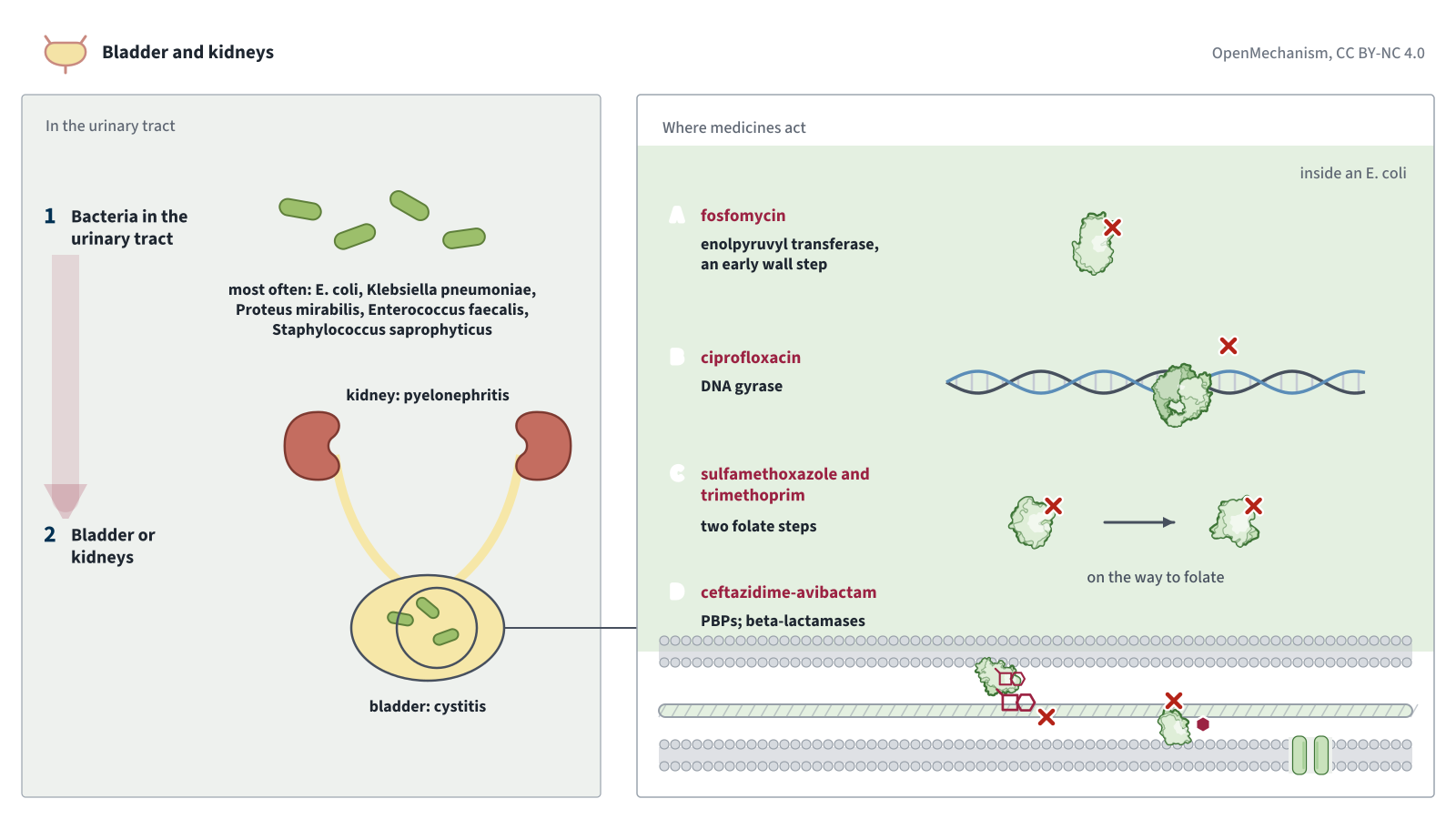
Urinary tract infections (UTIs), a serious public health problem, are caused by a range of pathogens, most commonly E. coli and four other bacteria; they affect the bladder (cystitis) or the kidneys (pyelonephritis). They often come back, and antibiotic resistance is rising. Fosfomycin blocks an early step in building the bacterial wall; ciprofloxacin blocks DNA gyrase; sulfamethoxazole and trimethoprim block folate making; ceftazidime-avibactam treats complicated urinary tract infections caused by susceptible Gram-negative bacteria.
What goes wrong in urinary tract infections, and where medicines act. Schematic, not to scale. Enolpyruvyl transferase outline from a crystal structure with fosfomycin. DNA gyrase outline from a Staphylococcus aureus structure. Dihydropteroate synthase outline from a crystal structure. Bacterial dihydrofolate reductase (DHFR) outline from an Escherichia coli structure. Penicillin-binding protein outline from pneumococcal PBP2x, as an example. Beta-lactamase outline from KPC-2, as an example. License CC BY-NC 4.0.
Deoxyribonucleic acid. The molecule that stores genes.
PBP
Penicillin-binding protein. A bacterial enzyme that builds the cell wall; beta-lactam antibiotics, such as penicillins and cephalosporins, bind it.
What goes wrong
Bacteria in the urinary tract. UTIs are a serious public health problem: they often come back, and resistance among the bacteria that cause them is rising. They are caused by a range of pathogens, most commonly the bacteria E. coli, Klebsiella pneumoniae, Proteus mirabilis, Enterococcus faecalis and Staphylococcus saprophyticus.1
What the source says
“Urinary tract infections (UTIs) are a severe public health problem and are caused by a range of pathogens, but most commonly by Escherichia coli, Klebsiella pneumoniae, Proteus mirabilis, Enterococcus faecalis and Staphylococcus saprophyticus. High recurrence rates and increasing antimicrobial resistance among uropathogens threaten to greatly increase the economic burden of these infections.”
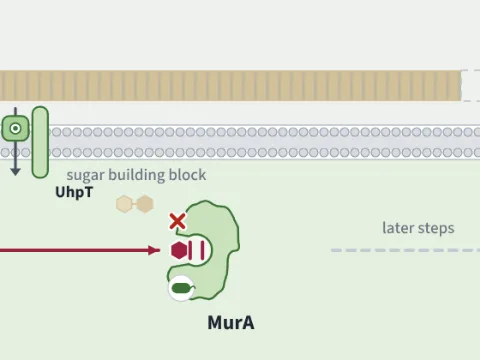
Fosfomycin inactivates the enzyme enolpyruvyl transferase, blocking one of the first steps in building the bacterial cell wall. It treats only uncomplicated bladder infections (acute cystitis) in women, caused by susceptible strains of E. coli and Enterococcus faecalis; its label says it is not indicated for pyelonephritis.2
What the source says
“The bactericidal action of fosfomycin is due to its inactivation of the enzyme enolpyruvyl transferase”
“Fosfomycin Tromethamine is indicated only for the treatment of uncomplicated urinary tract infections (acute cystitis) in women due to susceptible strains of Escherichia coli and Enterococcus faecalis. Fosfomycin Tromethamine Granules for Oral Solution is not indicated for the treatment of pyelonephritis or perinephric abscess.”
Ciprofloxacin blocks gyrase and , which bacteria need to copy, read and repair their DNA. It treats urinary tract infections caused by susceptible bacteria in adults; for simple bladder infections in women (acute uncomplicated cystitis), its label reserves it for patients with no other treatment option.4
What the source says
“The bactericidal action of ciprofloxacin results from inhibition of the enzymes topoisomerase II (DNA gyrase) and topoisomerase IV (both Type II topoisomerases), which are required for bacterial DNA replication, transcription, repair, and recombination.”
“CIPRO is a fluoroquinolone antibacterial indicated in adults (18 years of age and older) with the following infections caused by designated, susceptible bacteria and in pediatric patients where indicated”
“CIPRO is indicated in adult female patients for treatment of acute uncomplicated cystitis caused by Escherichia coli or Staphylococcus saprophyticus. Because fluoroquinolones, including CIPRO, have been associated with serious adverse reactions [see Warnings and Precautions ( 5 .1-5.16)] and for some patients acute uncomplicated cystitis is self-limiting, reserve CIPRO for treatment of acute uncomplicated cystitis in patients who have no alternative treatment options.”
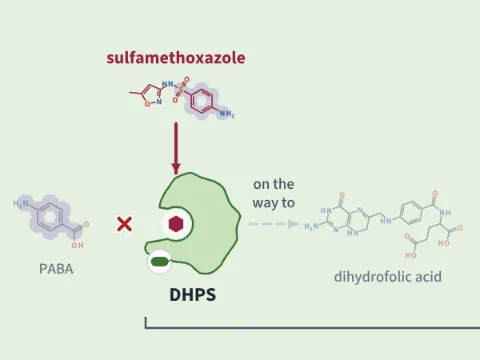
The two medicines block two steps in a row on the bacteria's path to folate, which many bacteria need to make nucleic acids and proteins. It treats urinary tract infections caused by susceptible bacteria.5
What the source says
“Thus, sulfamethoxazole and trimethoprim blocks two consecutive steps in the biosynthesis of nucleic acids and proteins essential to many bacteria.”
Ceftazidime binds essential (PBPs); avibactam disarms certain beta-lactamases that would break down ceftazidime. It treats complicated urinary tract infections, including kidney infection, caused by susceptible Gram-negative bacteria in adults and children (at least 31 weeks' gestational age).3,6
What the source says
“The bactericidal action of ceftazidime is mediated through binding to essential penicillin-binding proteins (PBPs).”
“The commonly used β-lactam antibiotics target bacterial penicillin-binding proteins (PBPs) and inhibit crosslinking of peptidoglycan strands that comprise the bacterial cell wall mesh, initiating a cascade of effects leading to bacterial cell death.”
“AVYCAZ (ceftazidime and avibactam) is indicated for the treatment of complicated urinary tract infections (cUTI) including pyelonephritis in adult and pediatric patients (at least 31 weeks gestational age) caused by the following susceptible gram-negative microorganisms”
Also used for it: nitrofurantoin (“Macrobid is indicated only for the treatment of acute uncomplicated urinary tract infections (acute cystitis) caused by susceptible strains of Escherichia coli or Staphylococcus saprophyticus. Nitrofurantoin is not indicated for the treatment of pyelonephritis or perinephric abscesses.”7); amoxicillin (“Infections of the Genitourinary Tract: Amoxicillin capsules are indicated in the treatment of infections due to susceptible (ONLY β-lactamase–negative) isolates of Escherichia coli, Proteus mirabilis, or Enterococcus faecalis.”8); amoxicillin and clavulanate (“AUGMENTIN is indicated for the treatment of infections in adults and pediatric patients, due to susceptible isolates of the designated bacteria in the conditions listed below: … Urinary Tract Infections - caused by beta‑lactamase–producing isolates of E. coli, Klebsiella species, and Enterobacter species. … When susceptibility test results show susceptibility to amoxicillin, indicating no beta-lactamase production, AUGMENTIN should not be used.”9); cephalexin (“Cephalexin capsules USP are indicated for the treatment of genitourinary tract infections, including acute prostatitis, caused by susceptible isolates of Escherichia coli, Proteus mirabilis, and Klebsiella pneumoniae.”10); doxycycline (“Doxycycline is indicated for treatment of infections caused by the following gram-negative bacteria, when bacteriologic testing indicates appropriate susceptibility to the drug: … Respiratory tract and urinary tract infections caused by Klebsiella species.”11); gentamicin (“Clinical studies have shown Gentamicin Sulfate Injection, USP to be effective in bacterial neonatal sepsis; bacterial septicemia; and serious bacterial infections of the central nervous system (meningitis), urinary tract, respiratory tract, gastrointestinal tract (including peritonitis), skin, bone and soft tissue (including burns). Aminoglycosides, including gentamicin, are not indicated in uncomplicated initial episodes of urinary tract infections unless the causative organisms are susceptible to these antibiotics and are not susceptible to antibiotics having less potential for toxicity.”12); and ceftriaxone (“Ceftriaxone for injection, USP is indicated for the treatment of the following infections when caused by susceptible organisms: … Urinary Tract Infections (complicated and uncomplicated) Caused by Escherichia coli, Proteus mirabilis, Proteus vulgaris, Morganella morganii or Klebsiella pneumoniae.”13).
The Cipro label reserves ciprofloxacin for simple bladder infections (acute uncomplicated cystitis) in patients with no other treatment option, because fluoroquinolones have been associated with serious adverse reactions and, for some patients, these infections clear on their own.4
The Bactrim label recommends treating first episodes of uncomplicated urinary tract infections with a single effective antibacterial rather than the combination of sulfamethoxazole and trimethoprim.5
Claude Opus 5.5 (AI source check), 6 November 2026: 43 statements compared with their sources, 11 flagged for the reviewer. An automated check, not a medical review.
Conflict of interest
Gentamicin: Pfizer, the reviewer's former employer, makes or markets this medicine. Ceftriaxone: Pfizer, the reviewer's former employer, makes or markets this medicine. Details
Next review due
7 May 2028
Cite this page
Tran D. Urinary tract infections [Internet]. OpenMechanism; 2026 [updated 2026 Nov 6; cited 2026 Nov 6]. Available from: https://openmechanism.com/conditions/urinary-tract-infections