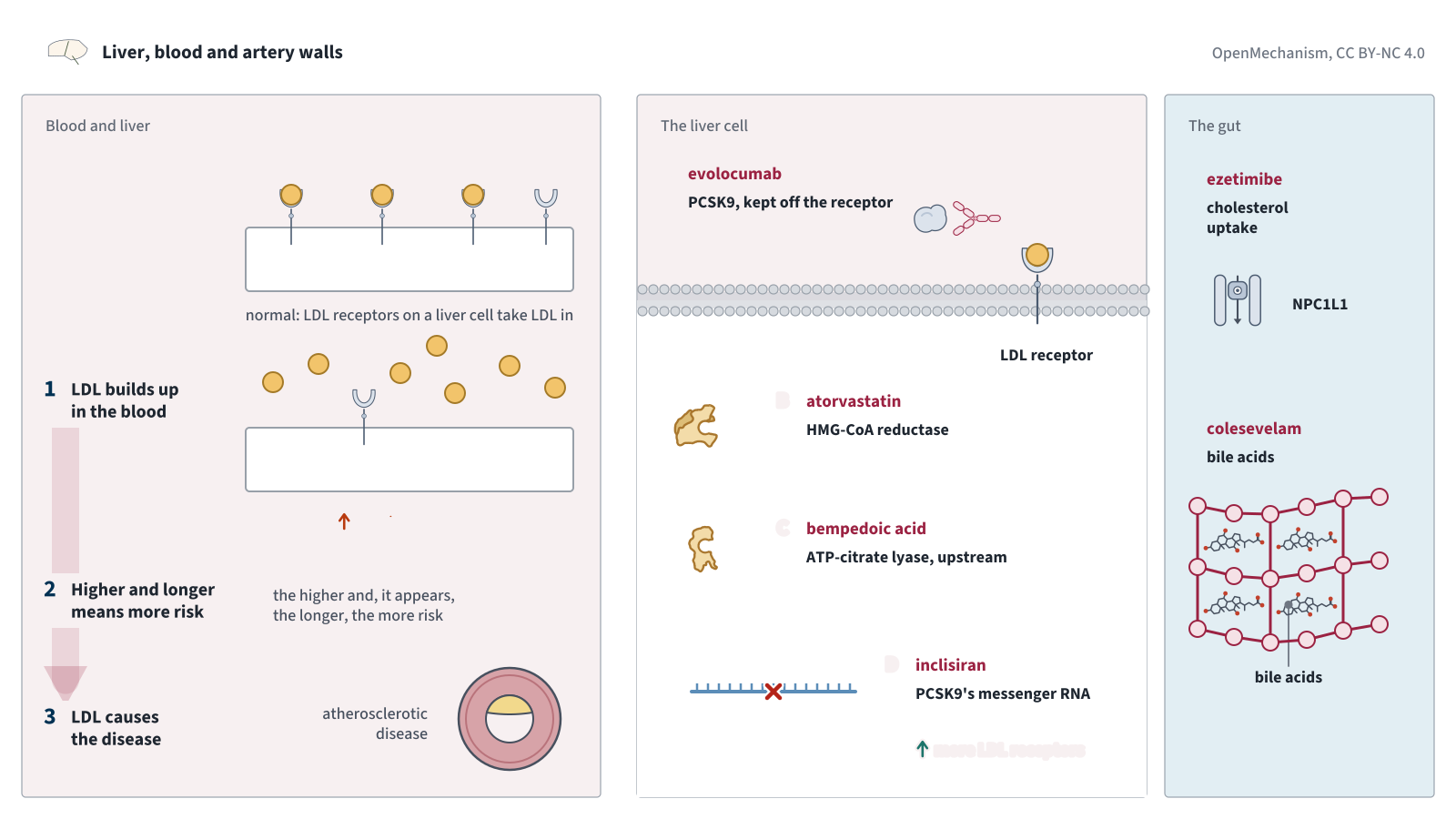
When the liver's LDL receptors work less, as in rare genetic changes, LDL cholesterol builds up in the blood. The higher the LDL and, it appears, the longer the arteries are exposed to it, the higher the risk of atherosclerotic cardiovascular disease: LDL causes it, and lowering LDL by any route should lower the risk. Medicines act in the gut, the liver and the blood to lower LDL. The labels of atorvastatin, evolocumab and bempedoic acid also list a lower risk of heart attack and stroke in some adults; those of inclisiran, ezetimibe and colesevelam list lowering LDL cholesterol.
ATP-citrate lyase. An enzyme in the cholesterol-making pathway, upstream of (earlier than) HMG-CoA reductase; bempedoic acid blocks it.
HMG-CoA
3-hydroxy-3-methylglutaryl coenzyme A. A building block the liver turns into mevalonate on the way to making cholesterol.
HMG-CoA reductase
3-hydroxy-3-methylglutaryl-coenzyme A reductase. The enzyme that turns HMG-CoA into mevalonate, an early step in making cholesterol.
LDL
Low-density lipoprotein. Particles that carry cholesterol in the blood ('LDL cholesterol').
LDL receptor
Low-density lipoprotein receptor. A receptor on liver cells that takes LDL particles out of the blood.
mRNA
Messenger RNA. A copy of a gene that a cell reads to make a protein.
NPC1L1
Niemann-Pick C1-like 1 protein. A transporter involved in the gut's uptake of cholesterol.
PCSK9
Proprotein convertase subtilisin/kexin type 9. A protein that binds LDL receptors and sends them to be broken down.
RNA
Ribonucleic acid. A molecule copied from DNA; messenger RNA carries a gene's instructions.
What goes wrong
LDL builds up in the blood. When the that clear work less, as in rare genetic changes, LDL cholesterol in the blood rises markedly and so does the risk of atherosclerotic cardiovascular disease.1
What the source says
“Rare genetic mutations that cause reduced LDL receptor function lead to markedly higher LDL-C and a dose-dependent increase in the risk of ASCVD”
Higher and longer means more risk. The more LDL cholesterol the arteries are exposed to, the higher the risk, and the risk appears to grow the longer they are exposed.1
What the source says
“a remarkably consistent dose-dependent log-linear association between the absolute magnitude of exposure of the vasculature to LDL-C and the risk of ASCVD; and this effect appears to increase with increasing duration of exposure to LDL-C.”
LDL causes atherosclerotic disease. Clinical and genetic studies establish that LDL causes atherosclerotic cardiovascular disease, and lowering LDL particles by any route should lower the risk in proportion.1
What the source says
“Consistent evidence from numerous and multiple different types of clinical and genetic studies unequivocally establishes that LDL causes ASCVD.”
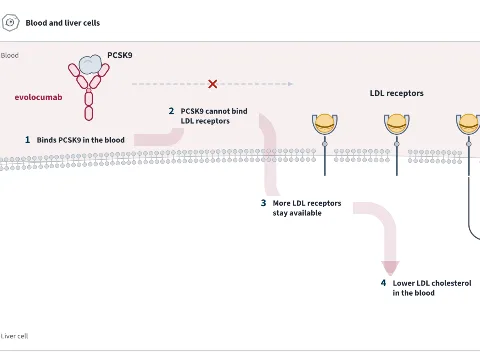
Evolocumab, an antibody, stops binding LDL receptors, so more receptors are left to clear LDL from the blood.2
What the source says
“By inhibiting the binding of PCSK9 to LDLR, evolocumab increases the number of LDLRs available to clear LDL from the blood, thereby lowering LDL-C levels.”
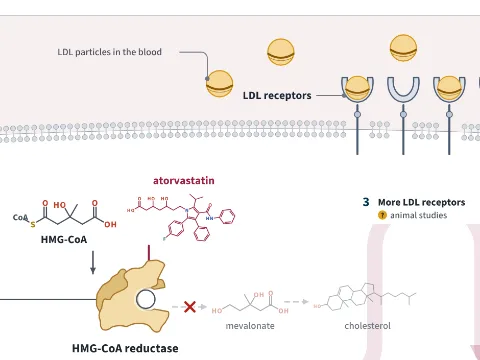
Atorvastatin blocks , the rate-limiting enzyme in cholesterol synthesis; in animal models, the liver makes more LDL receptors and takes up more LDL.3
What the source says
“LIPITOR is a selective, competitive inhibitor of HMG-CoA reductase, the rate-limiting enzyme that converts 3-hydroxy-3-methylglutaryl-coenzyme A to mevalonate, a precursor of sterols, including cholesterol.”
“In animal models, LIPITOR lowers plasma cholesterol and lipoprotein levels by inhibiting HMG-CoA reductase and cholesterol synthesis in the liver and by increasing the number of hepatic LDL receptors on the cell surface to enhance uptake and catabolism of LDL”
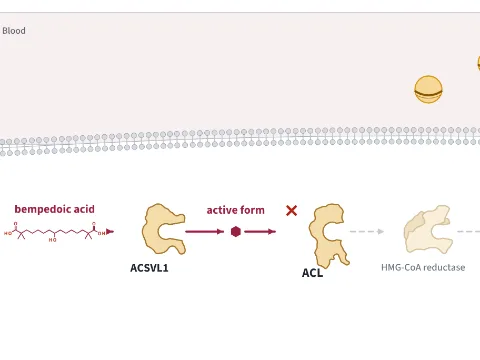
Bempedoic acid blocks , an enzyme upstream of HMG-CoA reductase, and lowers cholesterol synthesis in the liver; the liver then makes more LDL receptors, which lowers LDL in the blood.4
What the source says
“Bempedoic acid is an adenosine triphosphate-citrate lyase (ACL) inhibitor that lowers LDL-C by inhibition of cholesterol synthesis in the liver.”
“Inhibition of ACL by ETC-1002-CoA results in decreased cholesterol synthesis in the liver and lowers LDL-C in blood via upregulation of low-density lipoprotein receptors.”
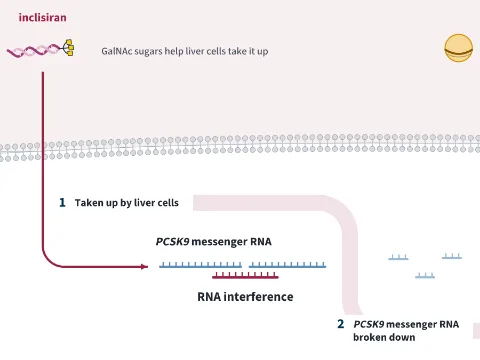
Inclisiran, a (siRNA) taken up by liver cells, directs the breakdown of the for PCSK9, so more LDL receptors recycle to the cell surface and take up more LDL from the blood.5
What the source says
“LEQVIO is a small interfering RNA (siRNA) directed to proprotein convertase subtilisin kexin type 9 (PCSK9) mRNA”
“This increases LDL-C receptor recycling and expression on the hepatocyte cell surface, which increases LDL-C uptake and lowers LDL-C levels in the circulation.”
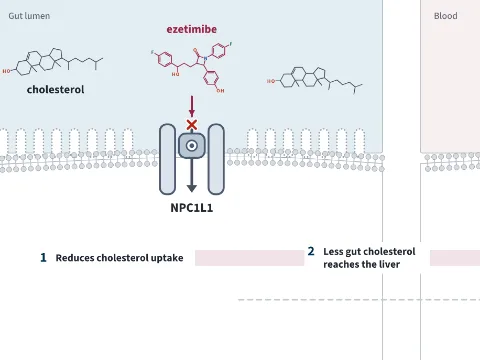
Ezetimibe blocks the sterol transporter in the small intestine, so less cholesterol from the gut reaches the liver, liver cells make more LDL receptors, and more cholesterol is cleared from the blood.6
What the source says
“Ezetimibe reduces blood cholesterol by inhibiting the absorption of cholesterol by the small intestine.”
“Ezetimibe localizes at the brush border of the small intestine and inhibits the absorption of cholesterol, leading to a decrease in the delivery of intestinal cholesterol to the liver. This causes a reduction of hepatic cholesterol stores and an increase in LDL receptors, resulting in clearance of cholesterol from the blood.”
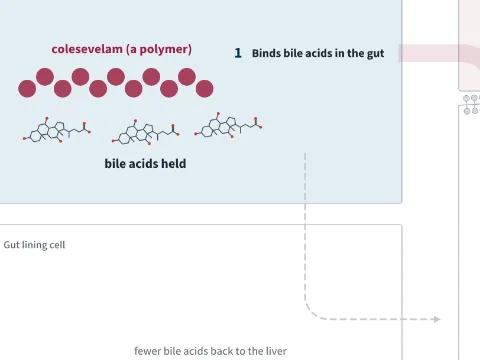
Colesevelam binds bile acids in the gut so fewer are reabsorbed; the liver turns more cholesterol into bile acids, makes more LDL receptors and clears more LDL from the blood.7
What the source says
“is a non-absorbed, lipid-lowering polymer that binds bile acids in the intestine, impeding their reabsorption. As the bile acid pool becomes depleted, the hepatic enzyme, cholesterol 7-α-hydroxylase, is upregulated, which increases the conversion of cholesterol to bile acids. This causes an increased demand for cholesterol in the liver cells, resulting in the dual effect of increasing transcription and activity of the cholesterol biosynthetic enzyme, HMG-CoA reductase, and increasing the number of hepatic LDL receptors. These compensatory effects result in increased clearance of LDL-C from the blood, resulting in decreased serum LDL-C levels.”
Any way of lowering LDL particles should lower risk, provided that the fall in LDL cholesterol matches the fall in LDL particles and the medicine has no harmful off-target effects that work against the benefit.1
Claude Opus 5.5 (AI source check), 29 October 2026: 43 statements compared with their sources, 8 flagged for the reviewer. An automated check, not a medical review.
Conflict of interest
Atorvastatin: Pfizer, the reviewer's former employer, used to market this medicine as Lipitor. The label this site cites is from Viatris. Details
Next review due
29 April 2028
Cite this page
Tran D. High LDL cholesterol [Internet]. OpenMechanism; 2026 [updated 2026 Oct 29; cited 2026 Oct 29]. Available from: https://openmechanism.com/conditions/high-ldl-cholesterol