Acid reflux (GERD)
Gastroesophageal reflux disease (GERD) means recurrent, troublesome heartburn and regurgitation, or its complications; it affects about 1 in 5 adults in high-income countries. It is linked to a higher risk of esophagitis, strictures, Barrett esophagus and esophageal cancer. Obesity, smoking and genes raise the risk of GERD. Omeprazole blocks the stomach's acid pump; an antacid relieves heartburn.
- Where
- Esophagus and stomach
- Body system
- Stomach, gut & liver
- Medicines
- 2 medicines
For teachers: download this drawing.
What goes wrong
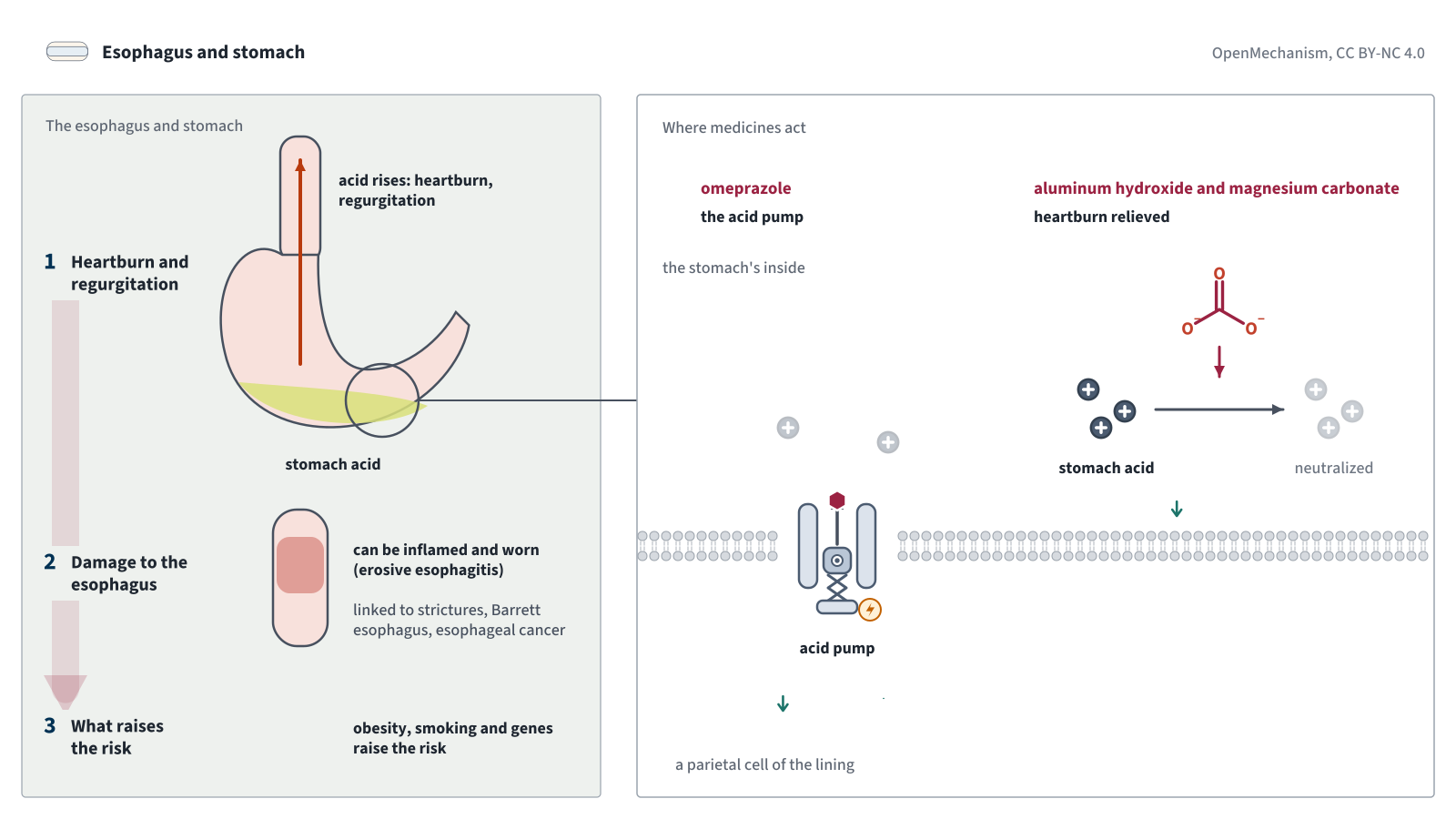
Heartburn and regurgitation. GERD means recurrent, troublesome heartburn and regurgitation, or its complications; it affects about 20% of adults in high-income countries.1
What the source says
“Gastroesophageal reflux disease (GERD) is defined by recurrent and troublesome heartburn and regurgitation or GERD-specific complications and affects approximately 20% of the adult population in high-income countries.”
Source 1Damage to the esophagus. Acid-driven GERD can inflame and wear the esophagus (erosive esophagitis), and GERD is linked to a higher risk of strictures, Barrett esophagus and esophageal cancer.1,2
What raises the risk. Obesity, smoking and genetic predisposition raise the risk of GERD.1
What the source says
“Obesity, tobacco smoking, and genetic predisposition increase the risk of developing GERD.”
Source 1
Where medicines act
- A
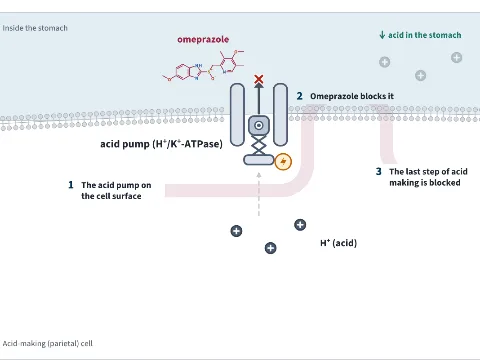
Omeprazole: the acid pump blocked
Omeprazole blocks the acid pump of the stomach's parietal cells, the final step of acid production. It treats symptomatic GERD.2
- B
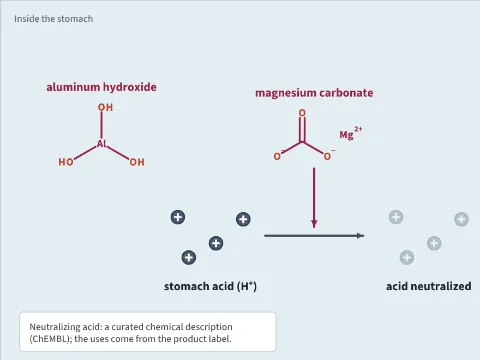
Antacid: heartburn relieved
An antacid of aluminum hydroxide and magnesium carbonate relieves heartburn and acid indigestion.3
What the source says
“relieves heartburn acid indigestion sour stomach upset stomach associated with these symptoms”
Source 3
See also
Body system: stomach, gut & liver.
Zoom in: stomach acid.
Also used for it: metoclopramide (“Treatment for 4 to 12 weeks of symptomatic, documented gastroesophageal reflux in adults who fail to respond to conventional therapy.”4).
Related medicines: pantoprazole, esomeprazole and famotidine.
Other conditions: cough; Zollinger-Ellison syndrome; peptic ulcers; chemotherapy nausea and vomiting; methemoglobinemia; and tardive dyskinesia.
Interactions: clopidogrel and omeprazole.
Side effects: why PPIs and metformin can lower vitamin B12.
Sources
- 1Gastroesophageal reflux disease: a reviewMaret-Ouda J et al. JAMA 2020 (abstract). Saved copy
- 2Prilosec (omeprazole): FDA label1 Indications and Usage; 12.1 Mechanism of Action. Saved copy
- 3
- 4Reglan (metoclopramide) tablets: FDA label1 Indications and Usage. Saved copy
Notes and limits
- Observational studies have suggested harms from long-term acid-pump inhibitors, but these need confirming.1
Notes that apply to every page are on How to read a page.
Spotted a mistake? Report an error (hello@openmechanism.com). Since launch, every published error we fix is listed on the corrections page.
Cite this page
Tran D. Acid reflux (GERD) [Internet]. OpenMechanism; 2026 [updated 2026 Oct 20; cited 2026 Oct 20]. Available from: https://openmechanism.com/conditions/gastroesophageal-reflux-disease