The stomach and esophagus, normal stomach
For teachers: download this drawing.
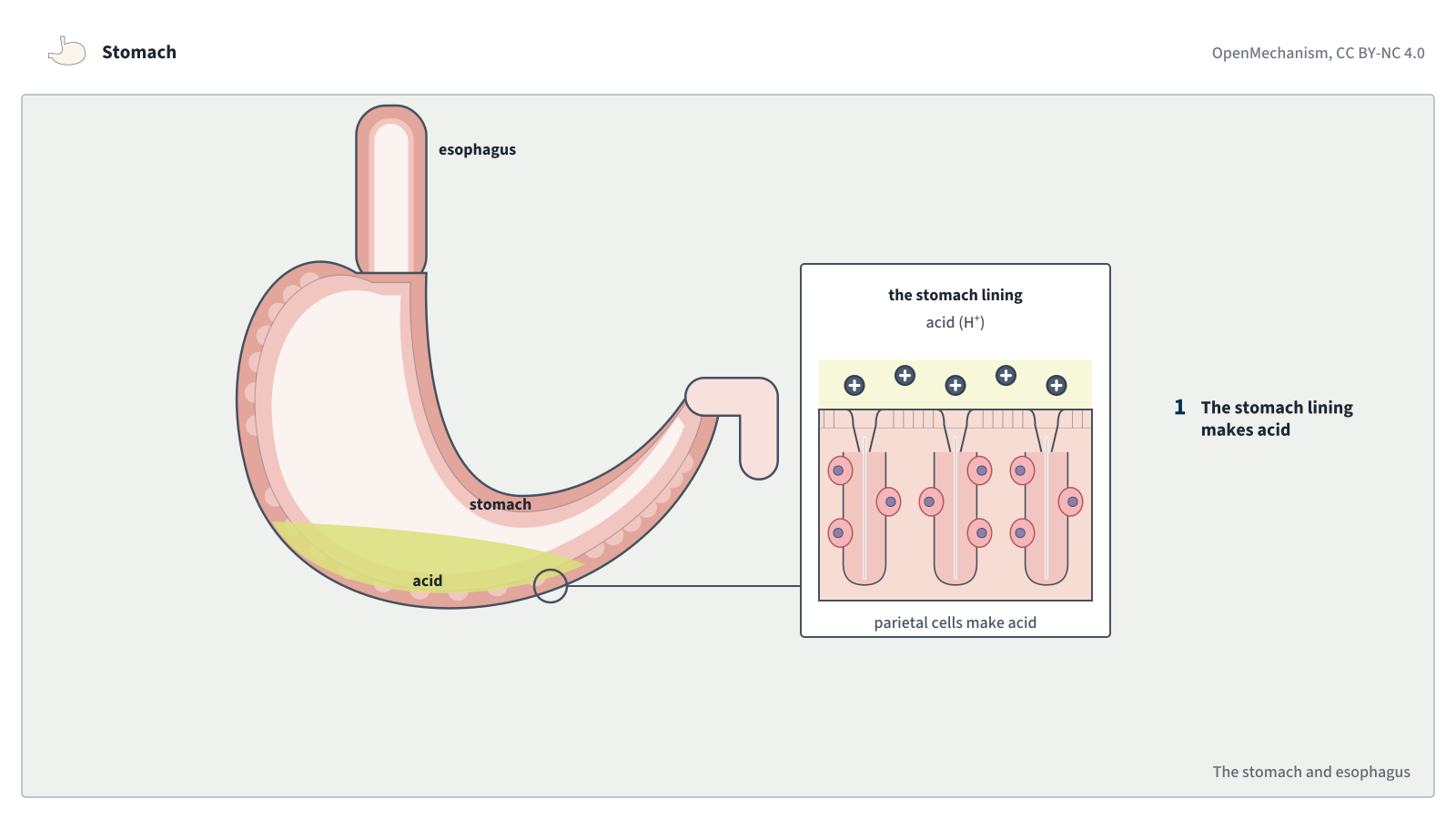
The stomach lining makes acid. Parietal cells in the stomach lining (the gastric mucosa) secrete acid through the acid (proton) pump.1
We’re looking for volunteer reviewers in pharmacy, medicine and pharmacology. How to volunteerWe’re looking for volunteer reviewers.
From the stomach down to the acid pump: normal acid, in acid reflux disease, and with omeprazole.
For teachers: download this drawing.
The stomach lining makes acid. Parietal cells in the stomach lining (the gastric mucosa) secrete acid through the acid (proton) pump.1
For teachers: download this drawing.
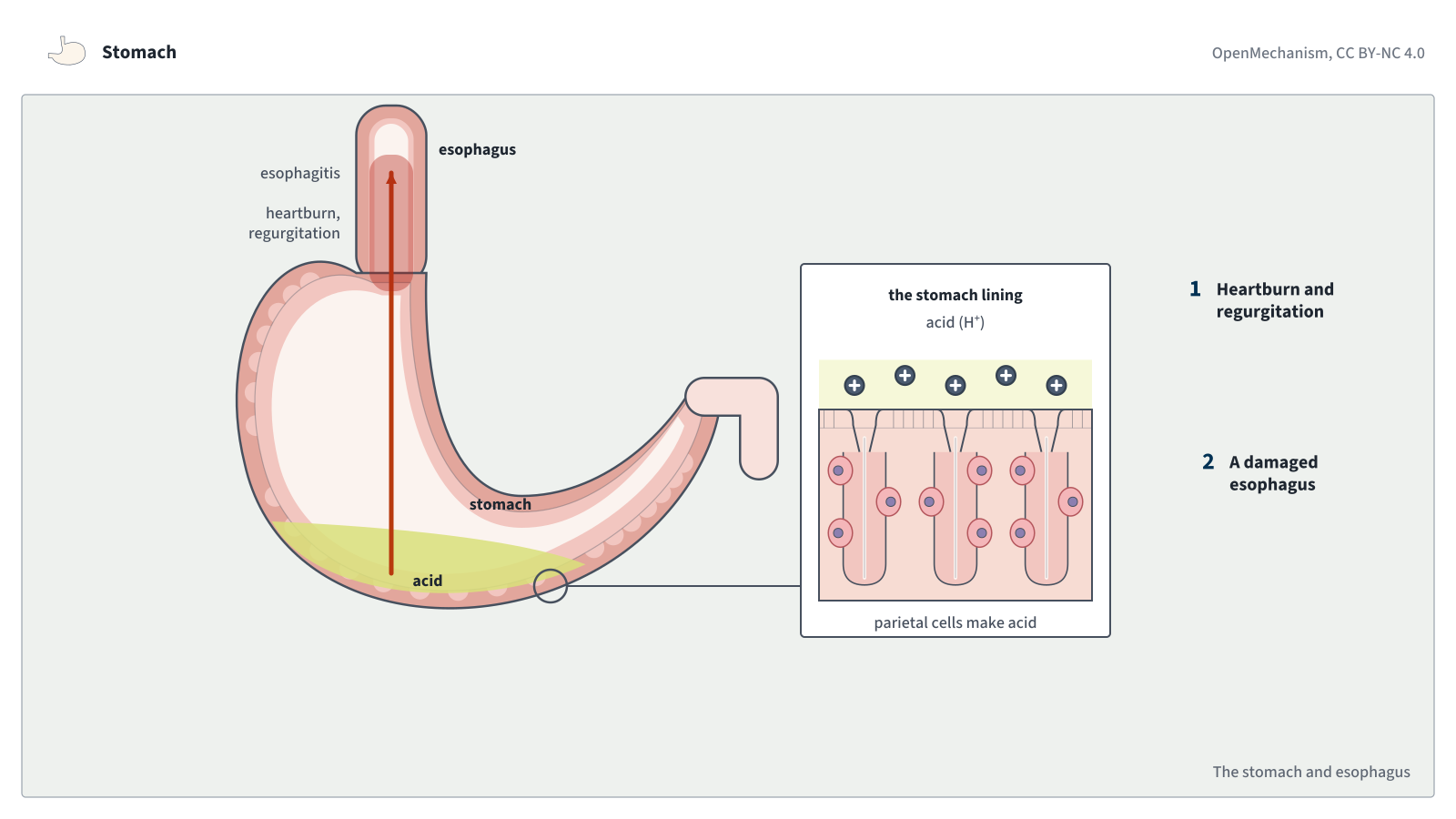
Heartburn and regurgitation. In acid reflux disease (GERD), troublesome heartburn and regurgitation keep coming back; it affects about 20% of adults in high-income countries.2
“Gastroesophageal reflux disease (GERD) is defined by recurrent and troublesome heartburn and regurgitation or GERD-specific complications and affects approximately 20% of the adult population in high-income countries.”
Source 2
A damaged esophagus. GERD is linked to a higher risk of esophagitis, narrowing, Barrett esophagus and esophageal cancer.2
“is associated with an increased risk of esophagitis, esophageal strictures, Barrett esophagus, and esophageal adenocarcinoma.”
Source 2
More on the condition: acid reflux (GERD).
For teachers: download this drawing.
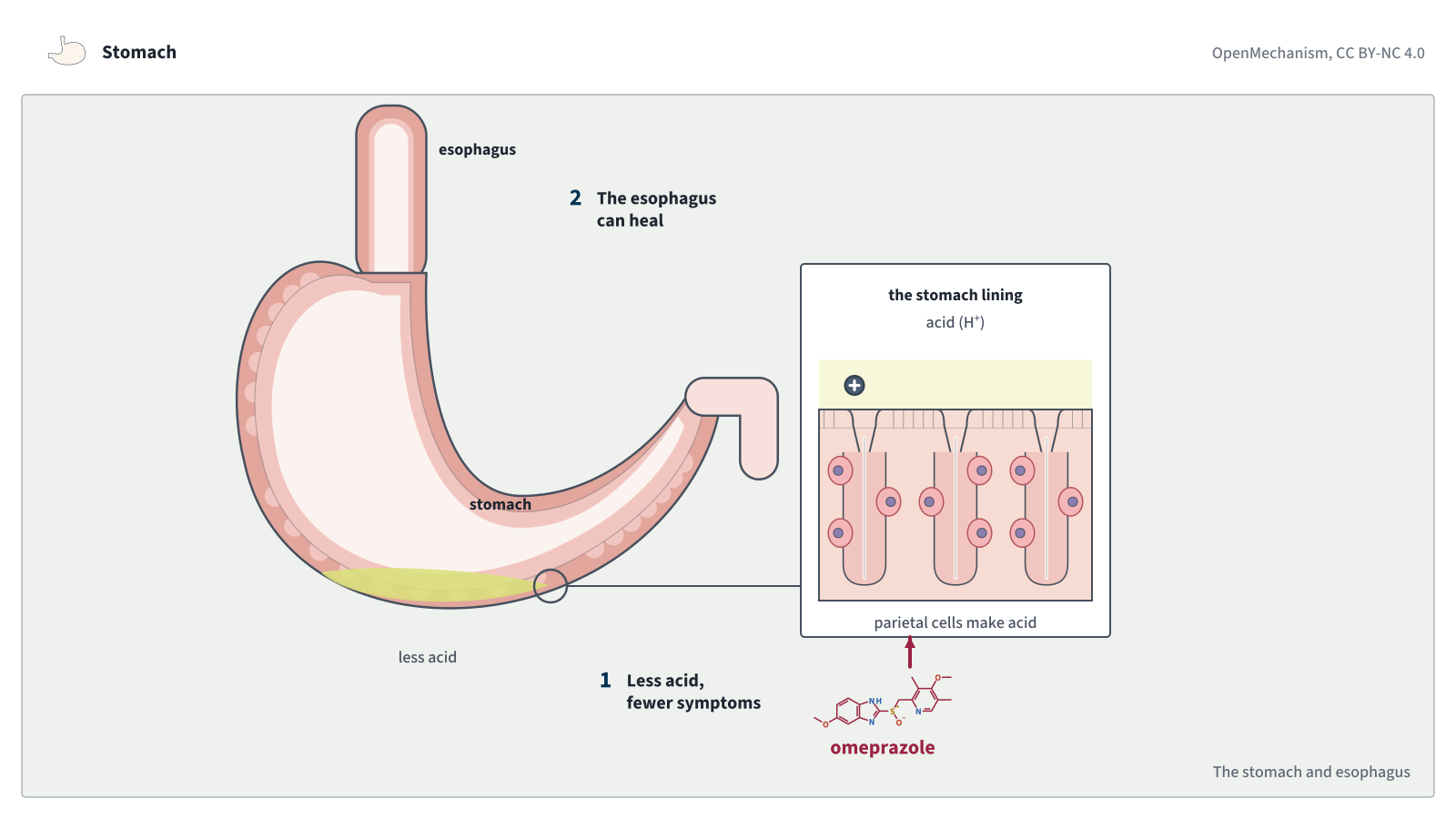
Less acid, fewer symptoms. Omeprazole treats symptomatic acid reflux disease.1
“Treatment of symptomatic gastroesophageal reflux disease (GERD) in patients 1 year of age and older”
Source 1
The esophagus can heal. It treats erosive esophagitis caused by acid and keeps it healed.1
More on the medicine: omeprazole.
For teachers: download this drawing.
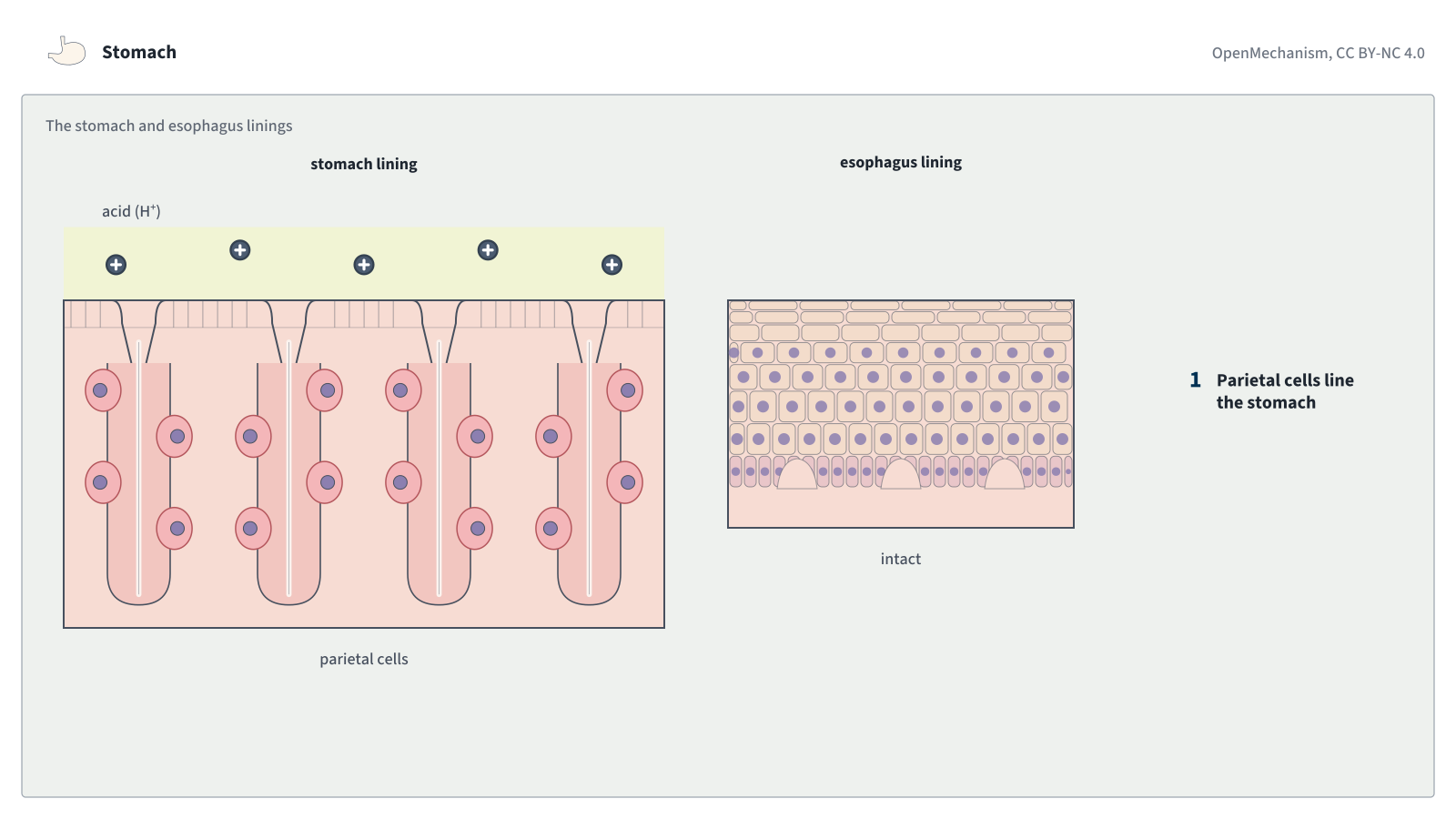
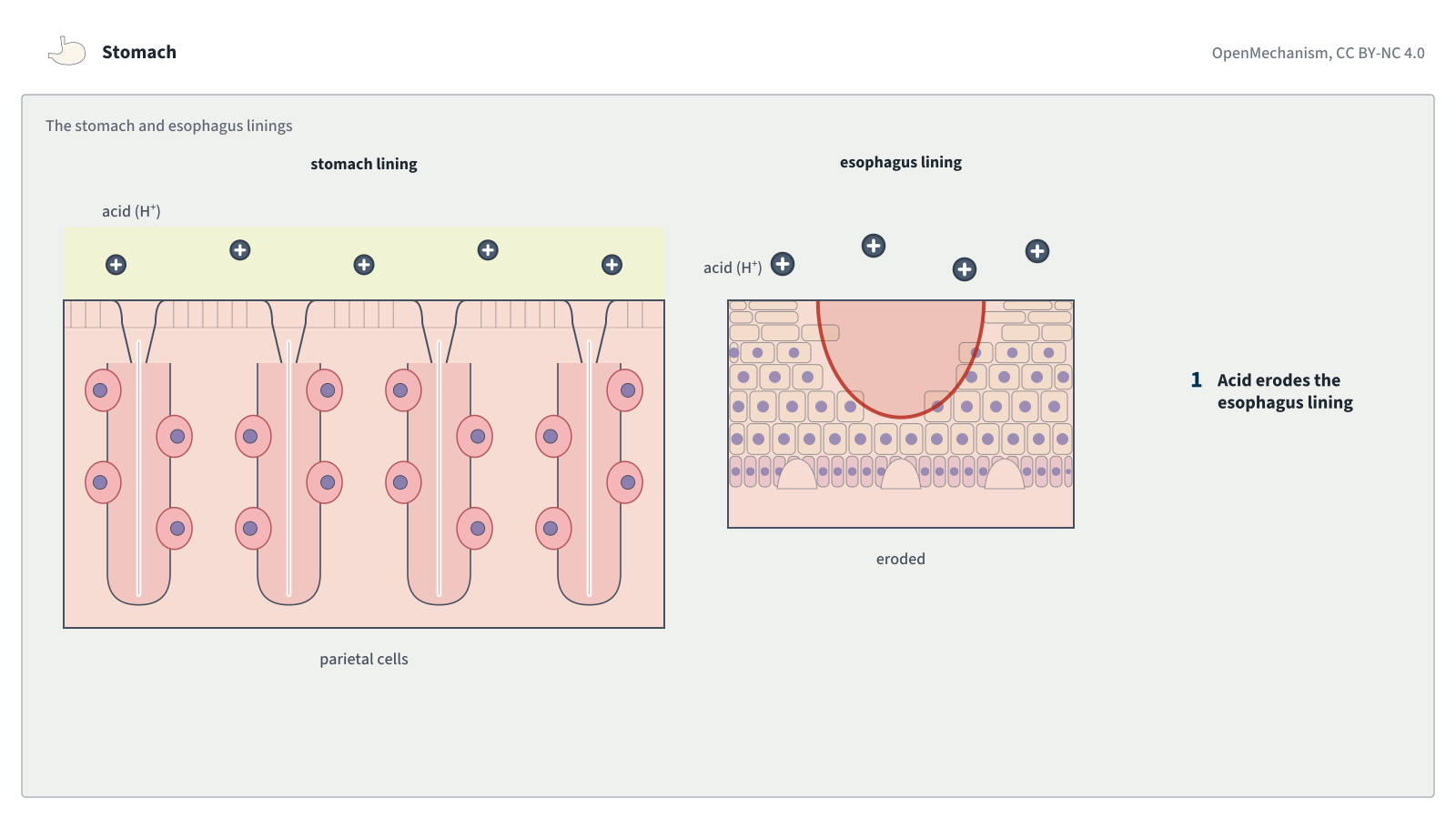
Parietal cells line the stomach. Acid-making parietal cells sit in the stomach lining, with their acid pumps at the secretory surface.1
For teachers: download this drawing.
Acid erodes the esophagus lining. In acid-driven GERD, the lining of the esophagus can be eroded (erosive esophagitis).1,2
More on the condition: acid reflux (GERD).
For teachers: download this drawing.
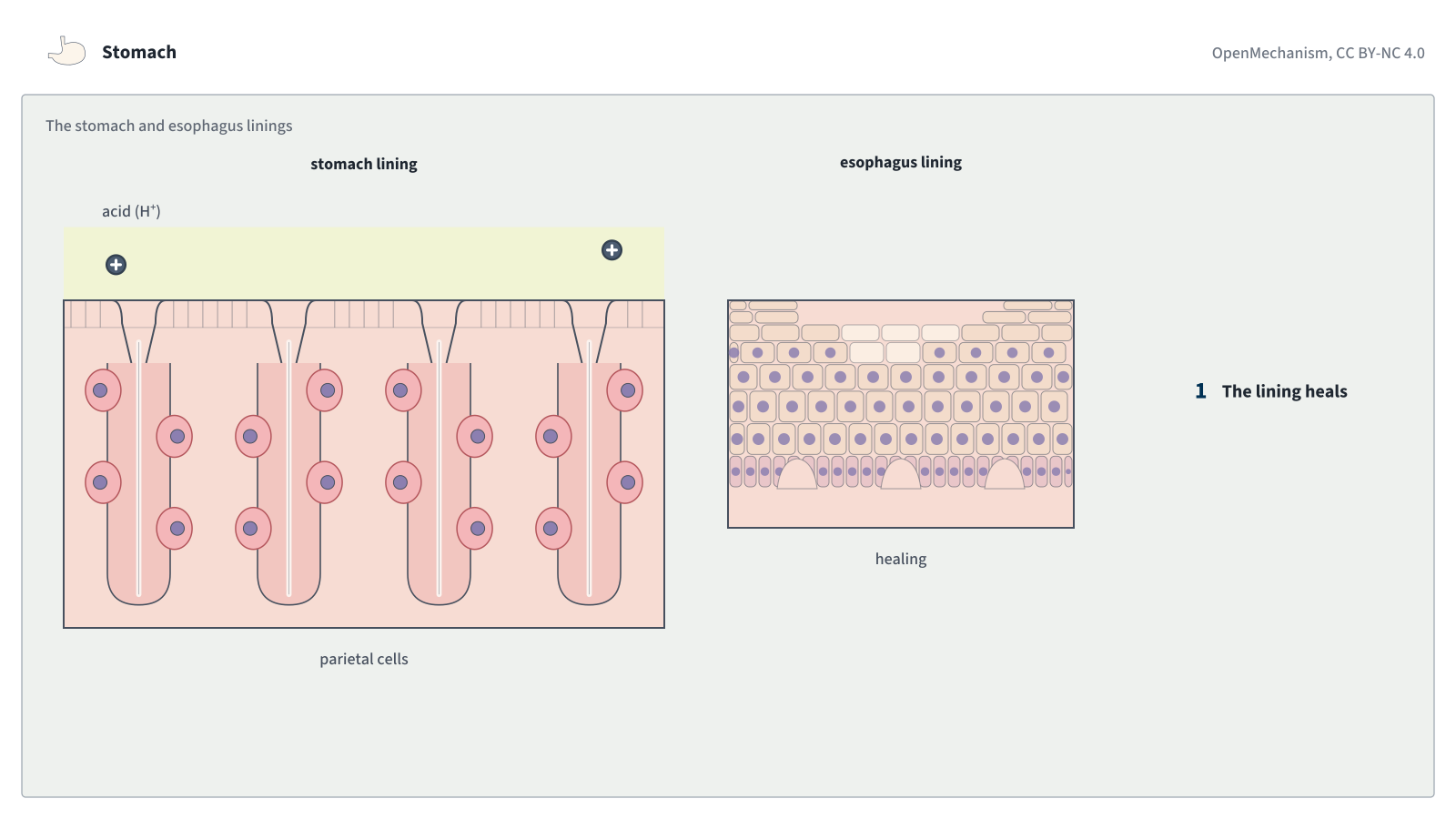
The lining heals. With less acid, erosive esophagitis heals, and healing can be kept.1
More on the medicine: omeprazole.
For teachers: download this drawing.
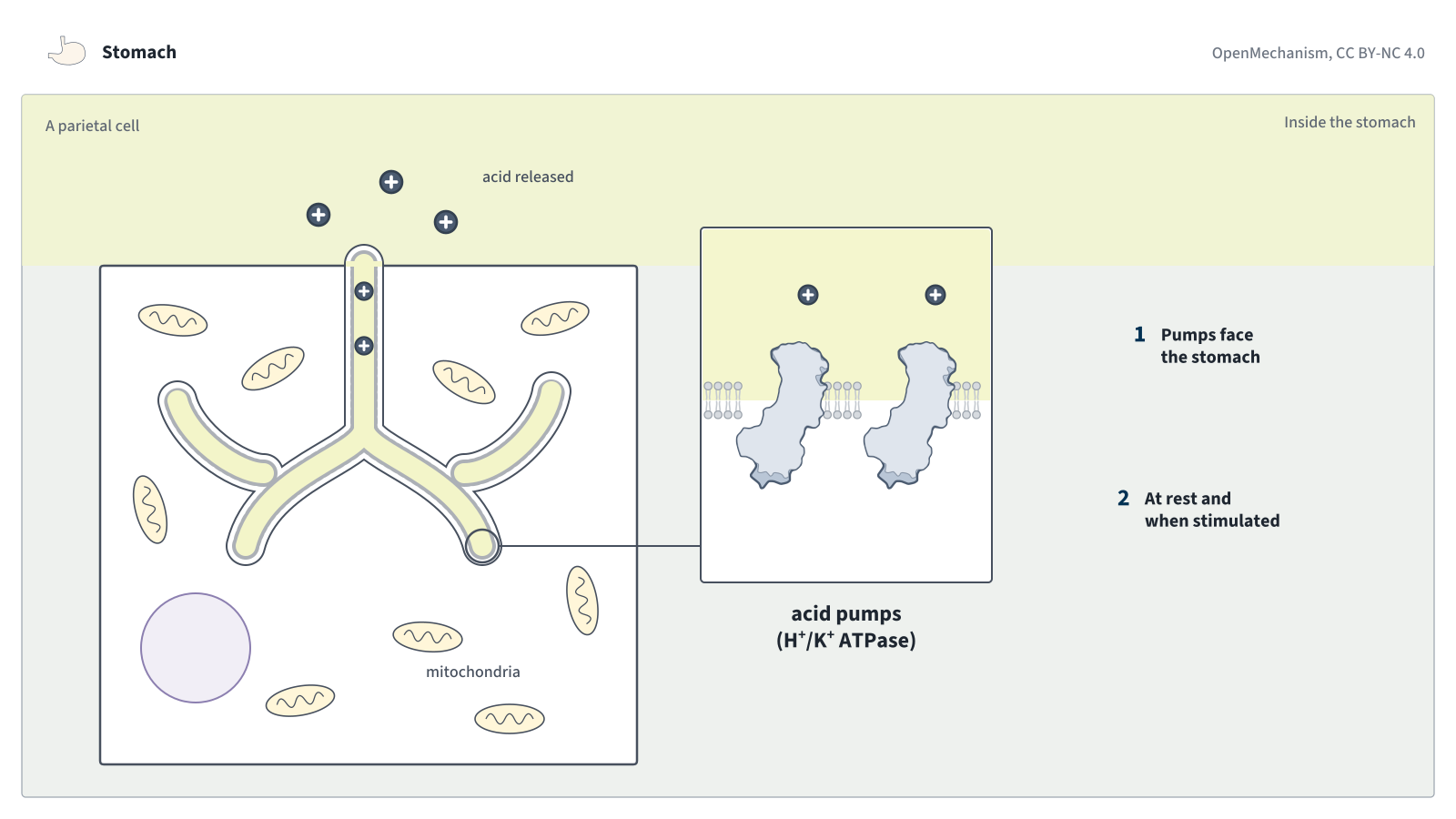
Pumps face the stomach. Each parietal cell has acid pumps (H+/K+ ATPase) at its secretory surface, facing the inside of the stomach.1
“the H + /K + ATPase enzyme system at the secretory surface of the gastric parietal cell.”
Source 1
At rest and when stimulated. The cell secretes acid at rest (basal secretion) and more when stimulated.1
“basal and stimulated acid secretion”
Source 1
For teachers: download this drawing.
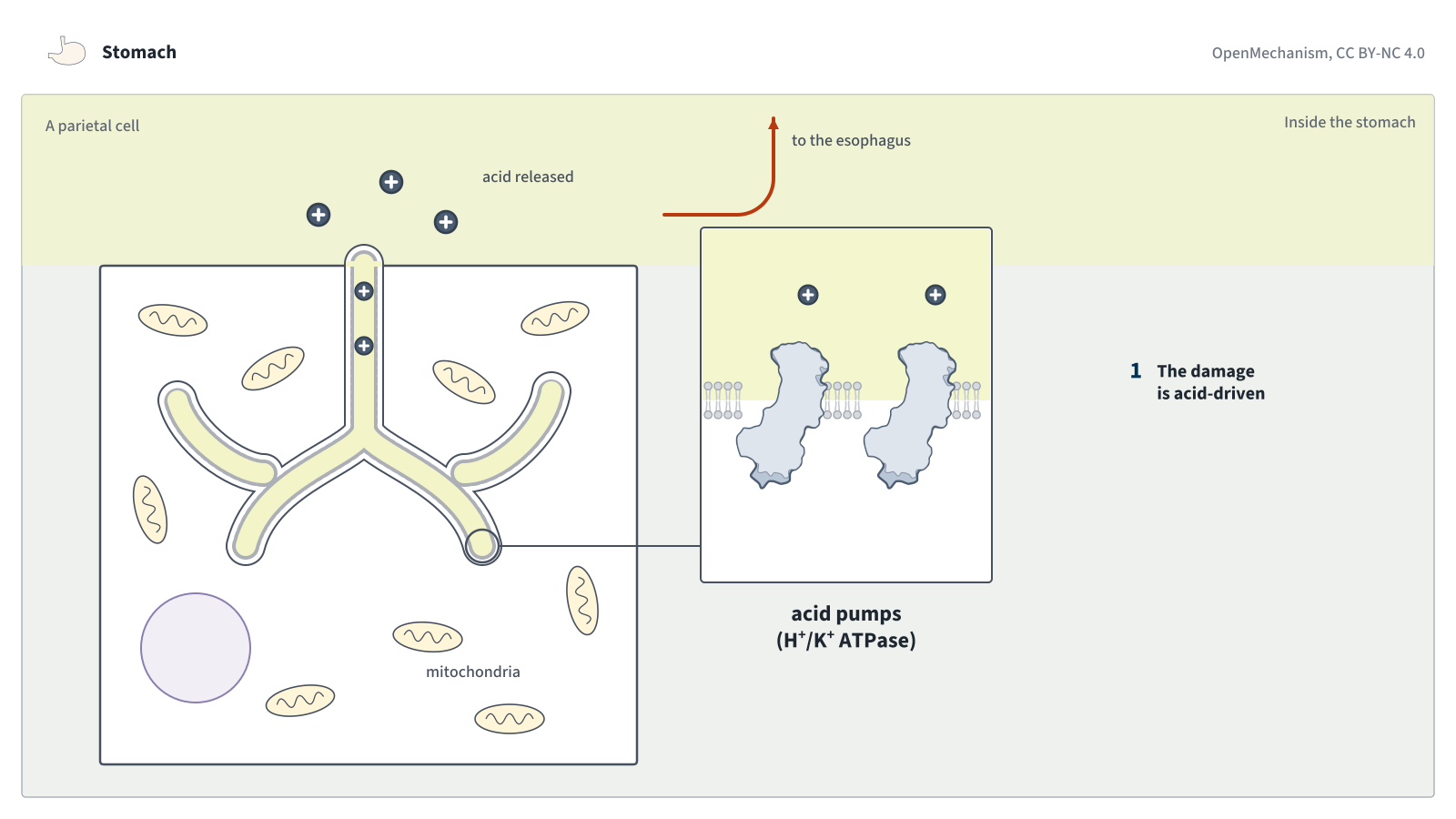
The damage is acid-driven. Erosive esophagitis in GERD is acid-mediated: the harm comes from stomach acid.1
“Treatment of erosive esophagitis (EE) due to acid-mediated GERD”
Source 1
More on the condition: acid reflux (GERD).
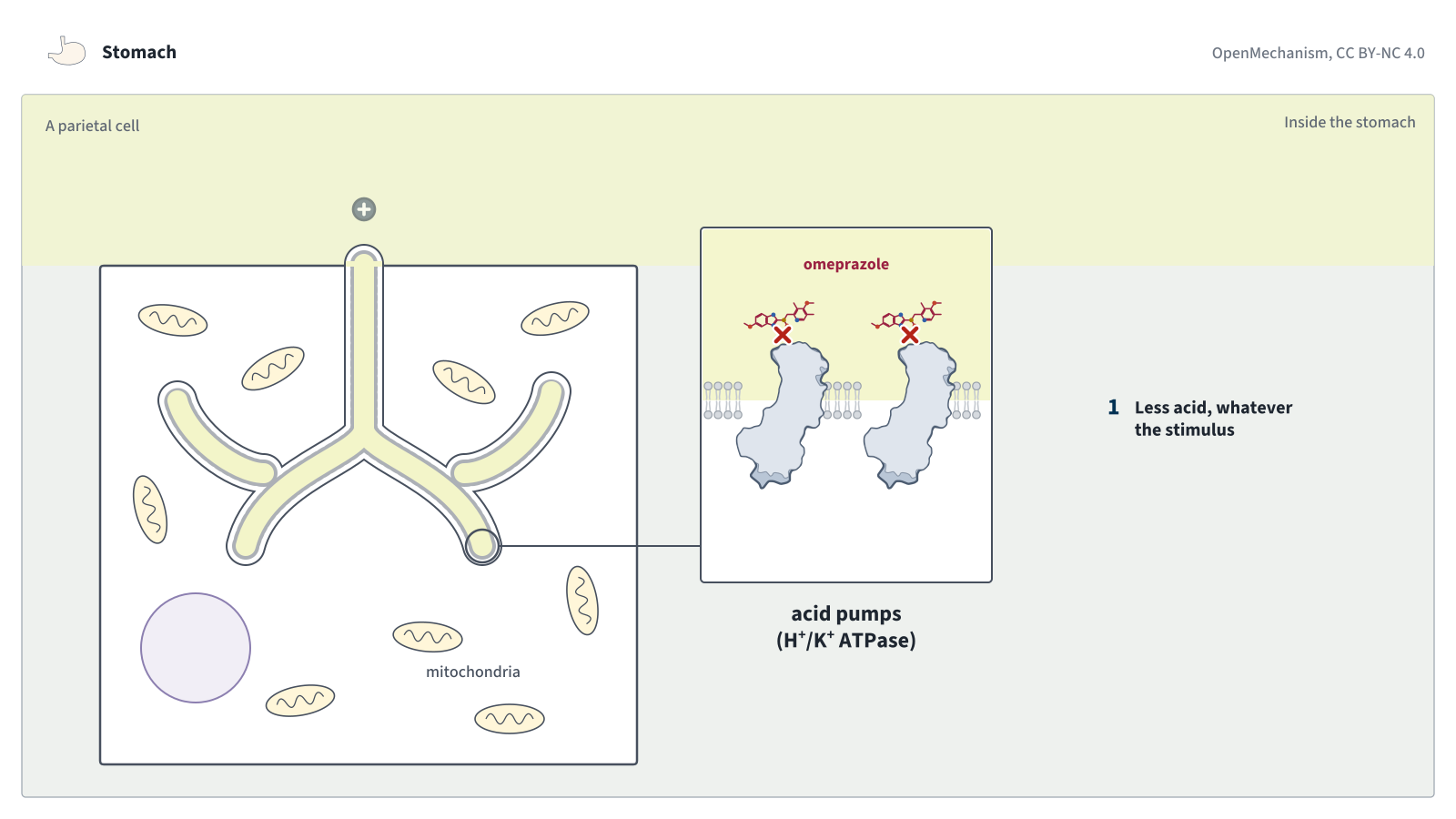
For teachers: download this drawing.
Less acid, whatever the stimulus. Omeprazole lowers both basal and stimulated acid secretion, whatever the stimulus.1
“leads to inhibition of both basal and stimulated acid secretion irrespective of the stimulus.”
Source 1
More on the medicine: omeprazole.
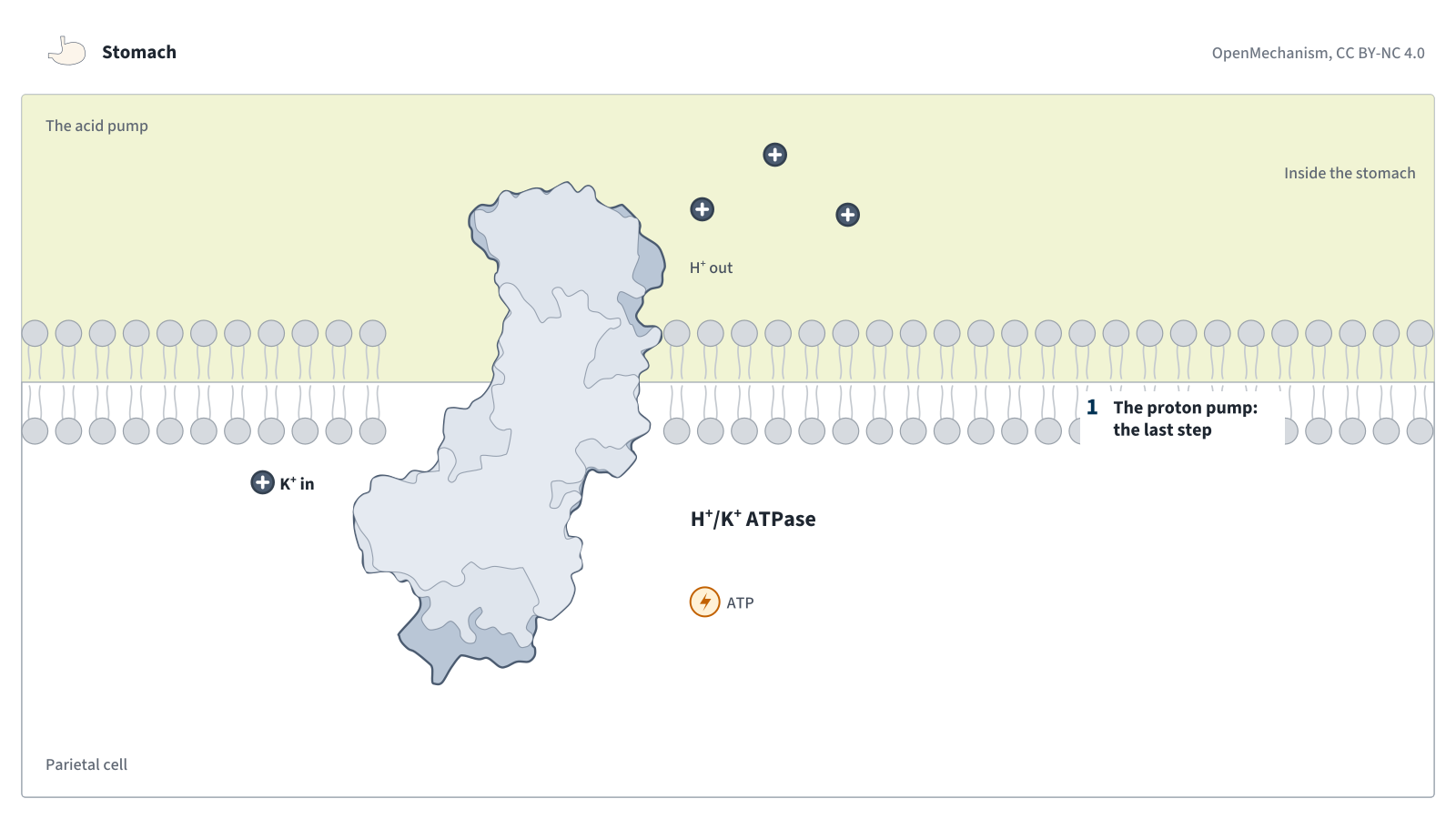
For teachers: download this drawing.
The proton pump: the last step. The H+/K+ ATPase, the acid (proton) pump, carries out the final step of acid production.1
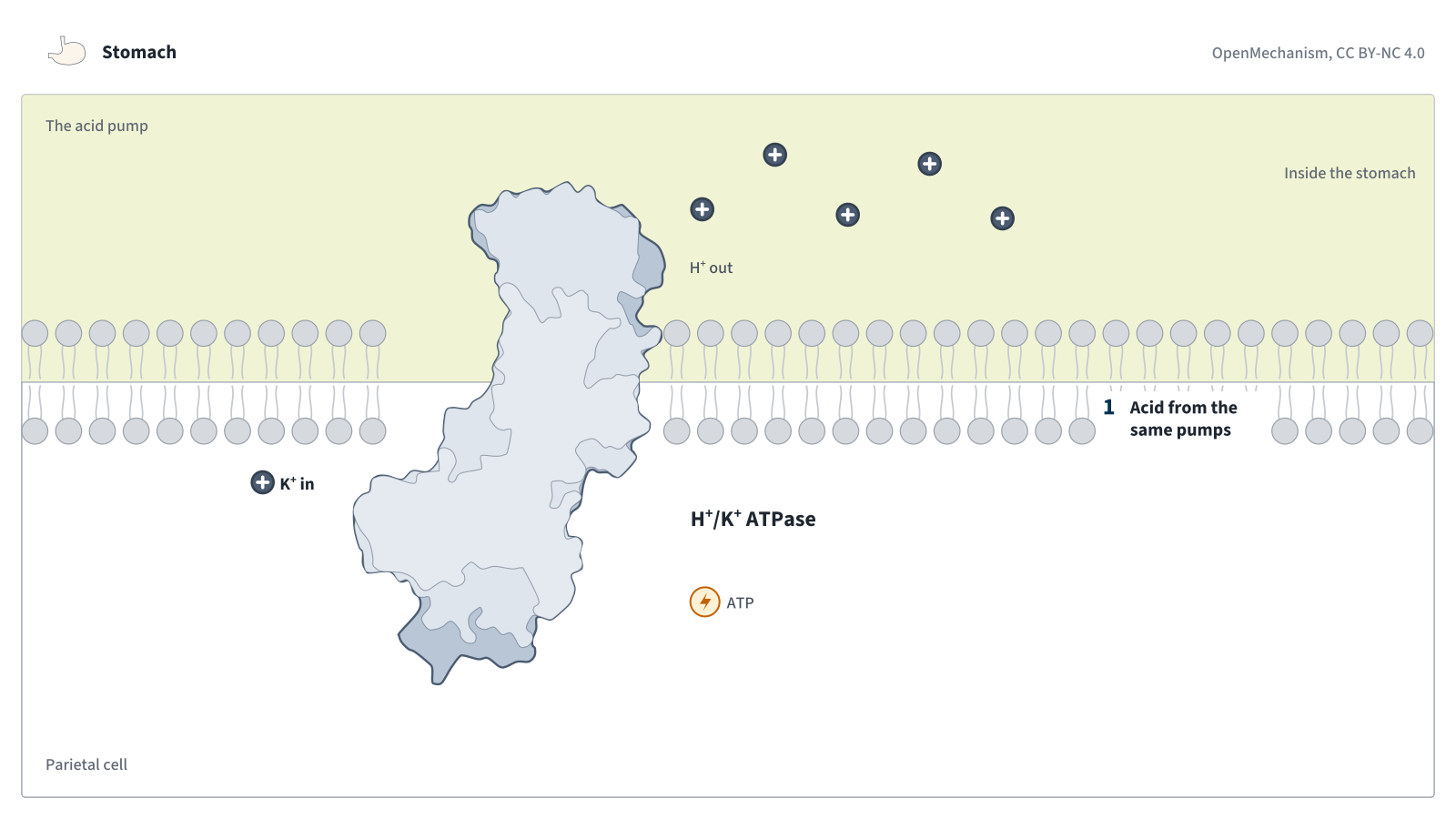
For teachers: download this drawing.
Acid from the same pumps. The acid in acid-mediated GERD is made by these pumps, the final step of acid production.1
More on the condition: acid reflux (GERD).
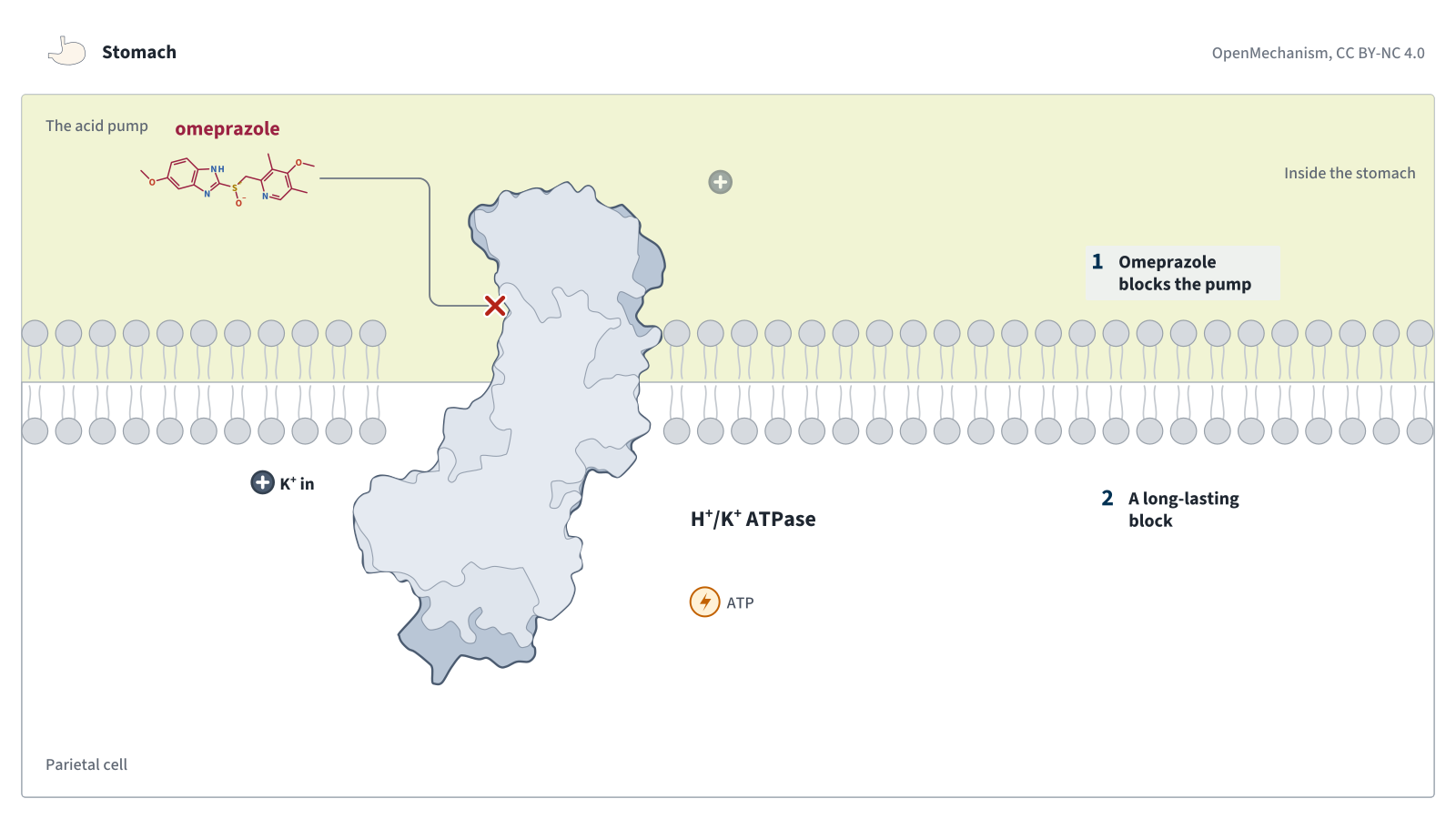
For teachers: download this drawing.
Omeprazole blocks the pump. Omeprazole is an acid-pump inhibitor: it blocks the final step of acid production.1
“omeprazole has been characterized as a gastric acid-pump inhibitor, in that it blocks the final step of acid production.”
Source 1
A long-lasting block. Its effect lasts far longer than its plasma of under an hour, apparently because it stays bound to the pump; acid secretion returns over 3 to 5 days after stopping.1
“The antisecretory effect thus lasts far longer than would be expected from the very short (less than one hour) plasma half-life, apparently due to prolonged binding to the parietal H + /K + ATPase enzyme.”
Source 1
“When the drug is discontinued, secretory activity returns gradually, over 3 to 5 days.”
Source 1
More on the medicine: omeprazole.
Key terms in these drawings
Spotted a mistake? Report an error (hello@openmechanism.com). Since launch, every published error we fix is listed on the corrections page.
Tran D. Stomach acid [Internet]. OpenMechanism; 2026 [updated 2026 Oct 16; cited 2026 Oct 16]. Available from: https://openmechanism.com/body/scales/digestive