Chronic sinusitis with nasal polyps
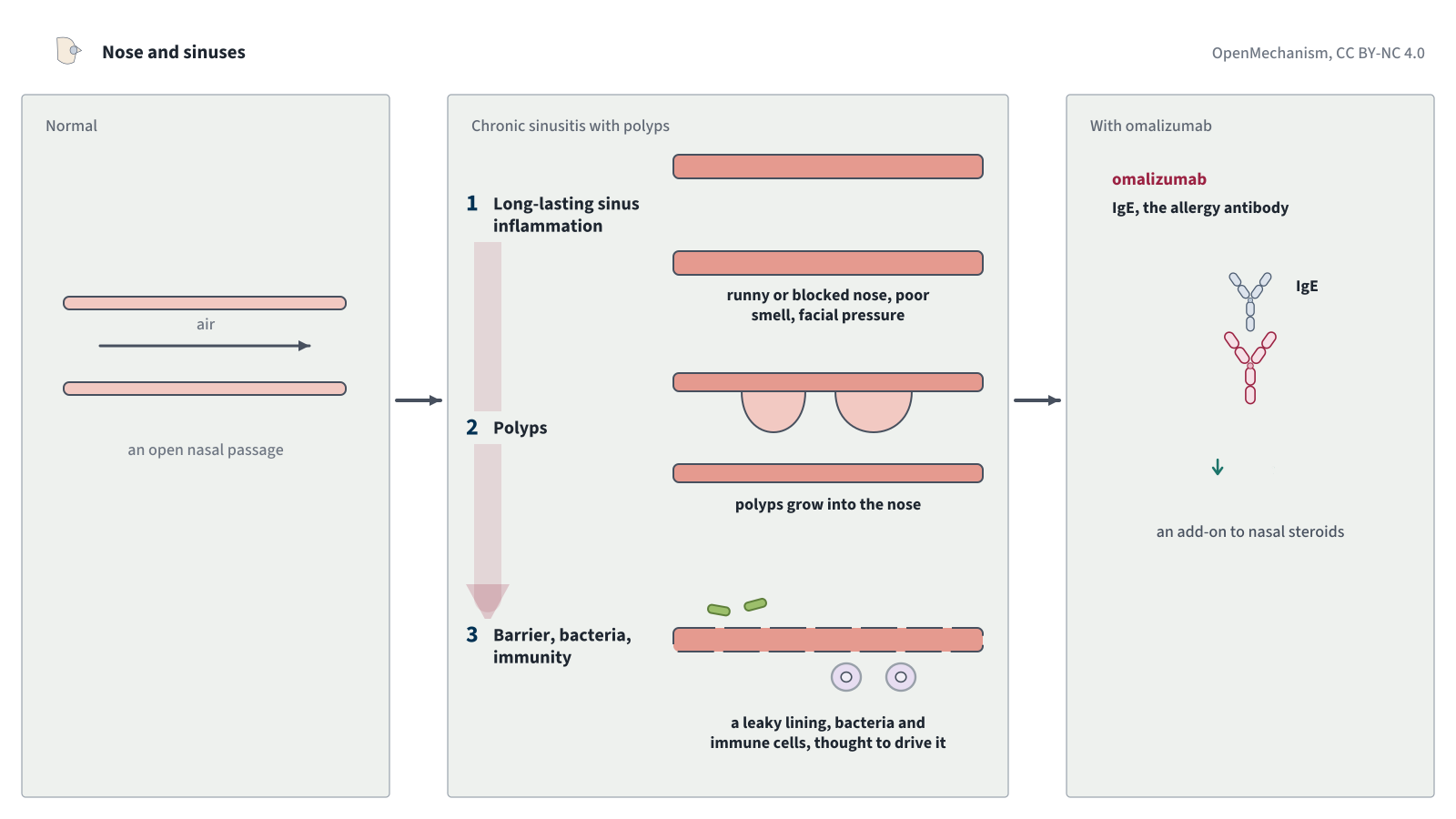
In chronic sinusitis with nasal polyps, the sinuses and nose stay inflamed for over 12 weeks, with a runny or blocked nose, poor smell and facial pressure, and polyps grow into the nose. A leaky lining, bacteria and an unbalanced immune response are thought to drive it; it often comes with asthma. Omalizumab, an add-on treatment, lowers free IgE.
- Where
- Nose and sinuses
- Body systems
- Lungs & airways, Immune system
- Medicines
- 1 medicine
For teachers: download this drawing.
Key terms in this drawing
- IgE
- Immunoglobulin E. A type of antibody involved in allergic reactions.
What goes wrong
Long-lasting sinus inflammation. The sinuses and nose stay inflamed: a runny or blocked nose, a poor sense of smell and facial pressure or pain lasting more than 12 weeks.1
What the source says
“Symptoms include anterior or posterior rhinorrhea, nasal congestion, hyposmia, and/or facial pressure or pain that last for a duration of more than 12 weeks.”
Source 1Polyps. Nasal polyps are inflamed swellings that grow into the nose, usually on both sides, from the ethmoid sinus.1
What the source says
“Nasal polyps are inflammatory lesions that project into the nasal airway, are typically bilateral, and originate from the ethmoid sinus.”
Source 1Barrier, bacteria, immunity. A leaky lining, more contact with bacteria and an unbalanced immune response are thought to drive it. It often comes with asthma and allergic rhinitis.1
What the source says
“Defects in the sinonasal epithelial cell barrier, increased exposure to pathogenic and colonized bacteria, and dysregulation of the host immune system are all thought to play prominent roles in disease pathogenesis.”
Source 1“CRSwNP is frequently associated with asthma and allergic rhinitis”
Source 1
Where medicines act
- A
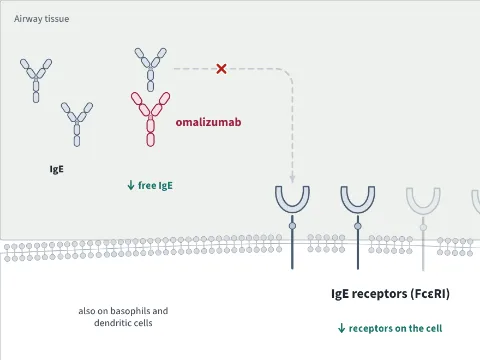
Omalizumab: free IgE lowered
Omalizumab binds , the allergy antibody, and lowers its free level. It is an add-on treatment for adults with nasal polyps not helped enough by nasal steroids.2
See also
Body systems: lungs & airways and immune system.
Related medicines: dupilumab.
Other conditions: asthma, chronic hives (urticaria), chronic obstructive pulmonary disease (COPD), eczema (atopic dermatitis), food allergy and ANCA vasculitis.
Sources
- 1Chronic rhinosinusitis with nasal polypsStevens WW et al. J Allergy Clin Immunol Pract 2016 (abstract). Saved copy
- 2Xolair (omalizumab): FDA label1 Indications and Usage; 12.1 Mechanism of Action. Saved copy
Notes and limits
- How the disease causes symptoms is not fully understood.1
Notes that apply to every page are on How to read a page.
Spotted a mistake? Report an error (hello@openmechanism.com). Since launch, every published error we fix is listed on the corrections page.
Cite this page
Tran D. Chronic sinusitis with nasal polyps [Internet]. OpenMechanism; 2026 [updated 2026 Oct 16; cited 2026 Oct 16]. Available from: https://openmechanism.com/conditions/nasal-polyps