C. difficile infection
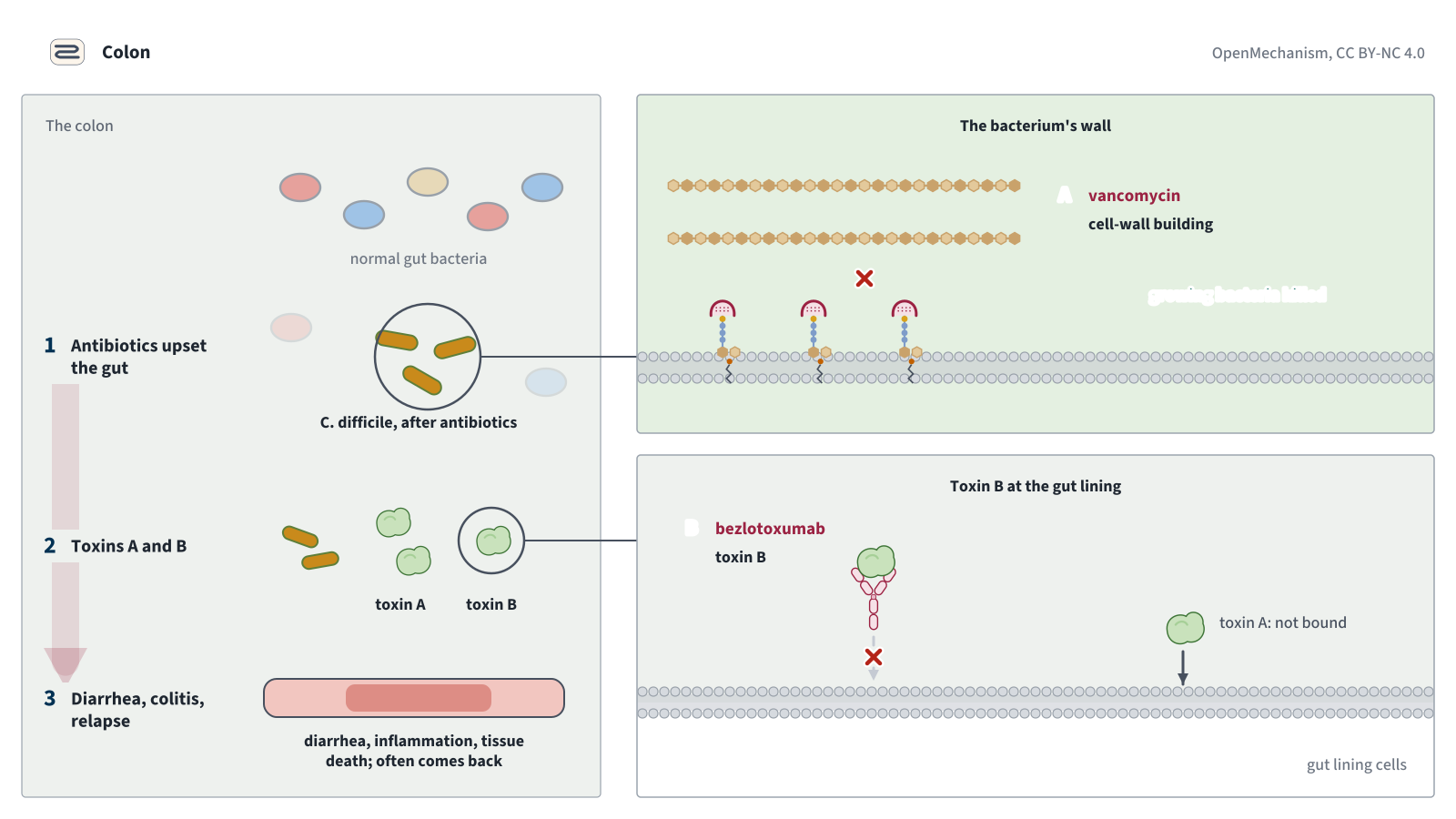
Clostridioides difficile infects the colon, most dangerously in older people and after antibiotics have upset the gut's bacteria. Its toxins A and B drive the inflammation, causing diarrhea, colitis and tissue death, and the infection often comes back. Vancomycin by mouth blocks the bacterium's cell-wall building; bezlotoxumab neutralizes toxin B.
- Where
- Colon
- Body systems
- Infections; Stomach, gut & liver
- Medicines
- 2 medicines
For teachers: download this drawing.
What goes wrong
Antibiotics upset the gut. C. difficile infection of the colon can be life-threatening, especially in older people and after antibiotics have upset the gut bacteria.1
What the source says
“Infection of the colon with the Gram-positive bacterium Clostridium difficile is potentially life threatening, especially in elderly people and in patients who have dysbiosis of the gut microbiota following antimicrobial drug exposure.”
Source 1Toxins A and B. Its large toxins A and B drive the inflammation.1
What the source says
“The primary mediators of inflammation in C. difficile infection (CDI) are large clostridial toxins, toxin A (TcdA) and toxin B (TcdB)”
Source 1Diarrhea, colitis, relapse. The toxins cause diarrhea, inflammation and tissue death; recurrences are common.1
Where medicines act
- A
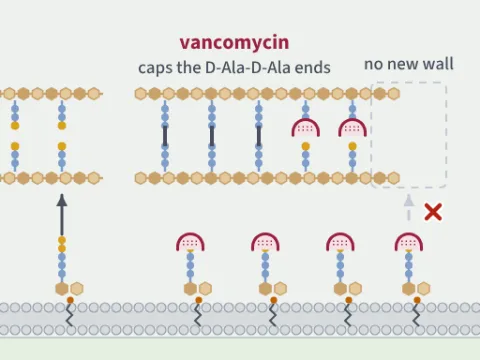
Vancomycin: cell-wall building blocked
Vancomycin kills growing C. difficile mainly by blocking cell-wall building. Capsules taken by mouth treat C. difficile diarrhea.2,3
What the source says
“The bactericidal action of vancomycin against Staphylococcus aureus and the vegetative cells of Clostridioides difficile results primarily from inhibition of cell-wall biosynthesis.”
Source 2“Vancomycin Hydrochloride Capsules are indicated for the treatment of C. difficile -associated diarrhea.”
Source 3 - B
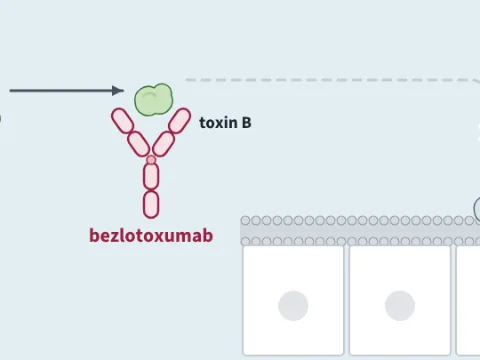
Bezlotoxumab: toxin B neutralized
Bezlotoxumab is an antibody that binds C. difficile toxin B and stops it acting on human cells; it does not bind toxin A.4
What the source says
“Bezlotoxumab inhibits the binding of toxin B and prevents its effects on mammalian cells. Bezlotoxumab does not bind to C. difficile toxin A.”
Source 4
See also
Body systems: infections; and stomach, gut & liver.
Related medicines: metronidazole.
Other conditions: skin and soft-tissue infections; giardiasis and amebiasis; antibiotic-resistant infections; bloodstream infections and endocarditis; trichomoniasis and bacterial vaginosis; and cryptosporidiosis.
Side effects: why antibiotics can cause C. difficile diarrhea.
Sources
- 1Clostridium difficile infectionSmits WK et al. Nat Rev Dis Primers 2016 (abstract). Saved copy
- 2Vancocin (vancomycin): FDA label12.4 Mechanism of Action. Saved copy
- 3Vancomycin hydrochloride capsules: FDA label1 Indications and Usage. Saved copy
- 4Zinplava (bezlotoxumab): FDA label12.1 Mechanism of Action. Saved copy
Notes and limits
- Why some C. difficile strains spread so widely is poorly understood.1
Notes that apply to every page are on How to read a page.
Spotted a mistake? Report an error (hello@openmechanism.com). Since launch, every published error we fix is listed on the corrections page.
Cite this page
Tran D. C. difficile infection [Internet]. OpenMechanism; 2026 [updated 2026 Oct 20; cited 2026 Oct 20]. Available from: https://openmechanism.com/conditions/c-difficile-infection