Trichomoniasis and bacterial vaginosis
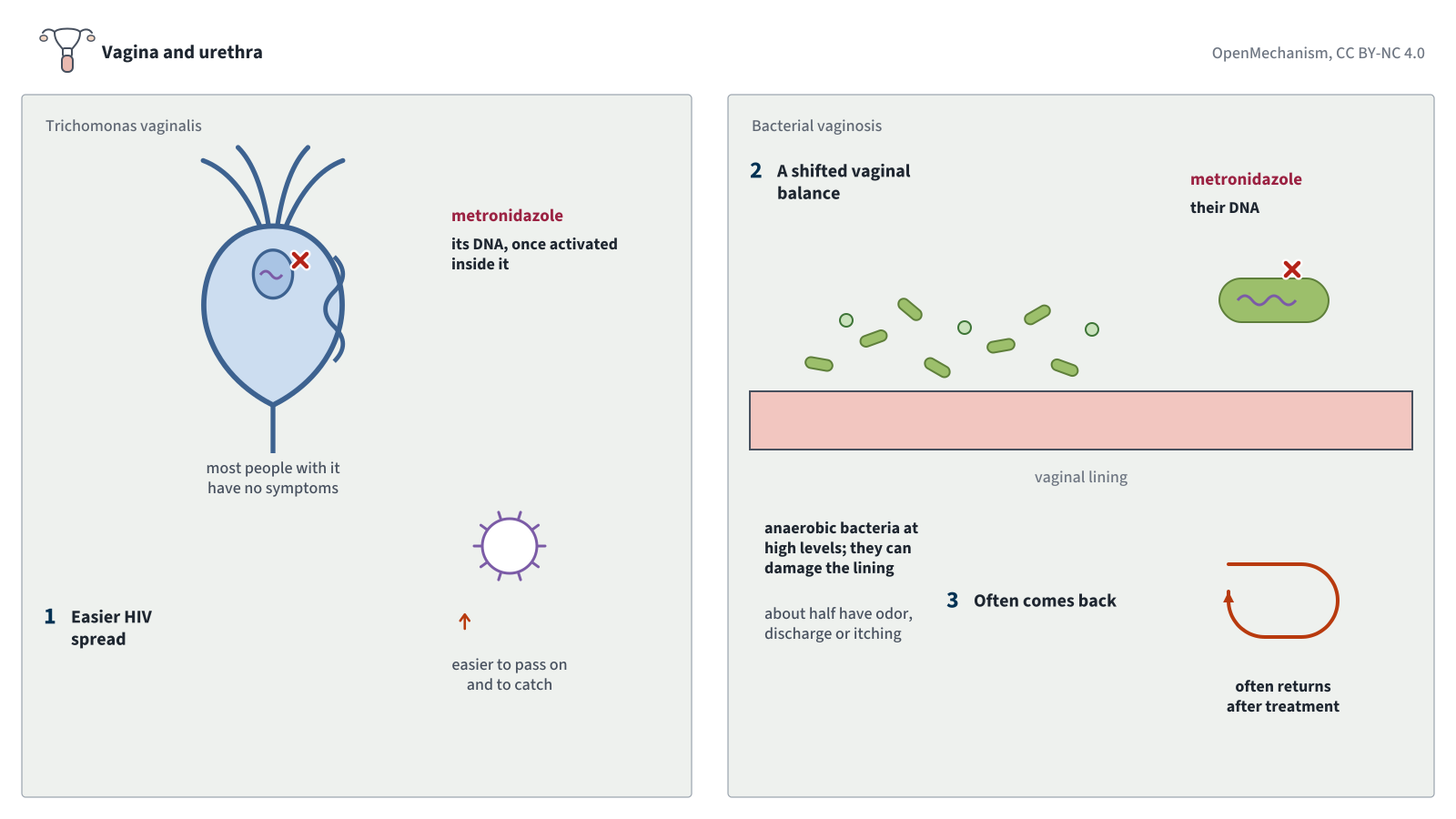
Trichomonas vaginalis is probably the most common non-viral sexually transmitted infection, mostly without symptoms, and it eases the spread of HIV. Bacterial vaginosis, the most common cause of vaginal symptoms, comes with high levels of anaerobic bacteria and often returns after treatment. Metronidazole, activated inside anaerobic microbes, damages their DNA; capsules treat trichomoniasis and a vaginal gel treats bacterial vaginosis.
- Where
- Vagina and urethra
- Body systems
- Infections, Bladder & reproductive organs
- Medicines
- 1 medicine
For teachers: download this drawing.
Key terms in this drawing
- DNA
- Deoxyribonucleic acid. The molecule that stores genes.
- HIV
- Human immunodeficiency virus. A virus that, left untreated, destroys CD4 T cells over time and raises the risk of infections and cancers.
What goes wrong
Easier HIV spread. Trichomonas vaginalis, which most people carry without symptoms, harms reproductive health and makes easier to pass on and to catch.1
A shifted vaginal balance. Bacterial vaginosis is the most common cause of vaginal symptoms; it comes with high levels of anaerobic bacteria that can damage the vaginal lining. About half of women with it have odor, discharge or itching.2
What the source says
“BV is the most common cause of vaginal symptoms among women of reproductive age.”
Source 2“BV is associated with high levels of anaerobic organisms which can damage the vaginal epithelium and increase the risk of HPV infection.”
Source 2“Approximately 50 % of women are symptomatic and experience vaginal malodor, discharge, itching and increased vaginal pH.”
Source 2Often comes back. Bacterial vaginosis often returns: about 80% within three months of effective treatment.2
What the source says
“BV recurrence rates are high, approximately 80 % three months after effective treatment.”
Source 2
Where medicines act
- A
Metronidazole: the microbe's DNA damaged
Metronidazole is activated inside anaerobic microbes, and its reduced form can damage their ; its label says the precise mechanism is unclear. Capsules treat lab-confirmed trichomoniasis in women and men, and a 2015 review says metronidazole has been the treatment of choice for women for decades; a vaginal gel treats bacterial vaginosis.1,3,4
What the source says
“Once metronidazole enters the organism by passive diffusion and activated in the cytoplasm of susceptible anaerobic bacteria, it is reduced”
Source 3“The reduced form of metronidazole and free radicals can interact with DNA leading to inhibition of DNA synthesis and DNA degradation”
Source 3“The precise mechanism of action of metronidazole is unclear.”
Source 3“FLAGYL 375 capsules are indicated for the treatment of T. vaginalis infection in females and males when the presence of the trichomonad has been confirmed by appropriate laboratory procedures”
Source 3“Metronidazole (MTZ) has been the treatment of choice for women for decades”
Source 1“Metronidazole Vaginal Gel is indicated in the treatment of bacterial vaginosis”
Source 4

See also
Body systems: infections and bladder & reproductive organs.
Other conditions: C. difficile infection; giardiasis and amebiasis; skin and soft-tissue infections; syphilis; thrush and vaginal yeast infections; and urinary tract infections.
Sources
- 1Trichomonas vaginalis: a review of epidemiologic, clinical and treatment issuesKissinger P. BMC Infect Dis 2015 (abstract). Saved copy
- 2Bacterial vaginosis: a brief synopsis of the literatureCoudray MS, Madhivanan P. Eur J Obstet Gynecol Reprod Biol 2020 (abstract). Saved copy
- 3Flagyl 375 (metronidazole): FDA labelIndications and Usage; Microbiology. Saved copy
- 4Metronidazole vaginal gel: FDA labelIndications and Usage. Saved copy
Notes and limits
- Many people still test positive after a single dose for trichomoniasis.1
- Treatments for bacterial vaginosis do not work well in the long term.2
Notes that apply to every page are on How to read a page.
Spotted a mistake? Report an error (hello@openmechanism.com). Since launch, every published error we fix is listed on the corrections page.
Cite this page
Tran D. Trichomoniasis and bacterial vaginosis [Internet]. OpenMechanism; 2026 [updated 2026 Nov 18; cited 2026 Nov 18]. Available from: https://openmechanism.com/conditions/trichomoniasis-and-bacterial-vaginosis