Hypoparathyroidism
In hypoparathyroidism the parathyroid glands make too little parathyroid hormone, so blood calcium falls and phosphate rises. Low calcium makes nerves and muscles too excitable: tingling, cramps and seizures. The most common cause is damage to the glands during neck surgery. Calcitriol, active vitamin D, helps the gut absorb calcium.
- Where
- Parathyroid glands
- Body systems
- Hormones & metabolism; Muscles, bones & joints
- Medicines
- 1 medicine
For teachers: download this drawing.
Key terms in this drawing
- PTH
- Parathyroid hormone. A hormone from the parathyroid glands that raises blood calcium.
What goes wrong
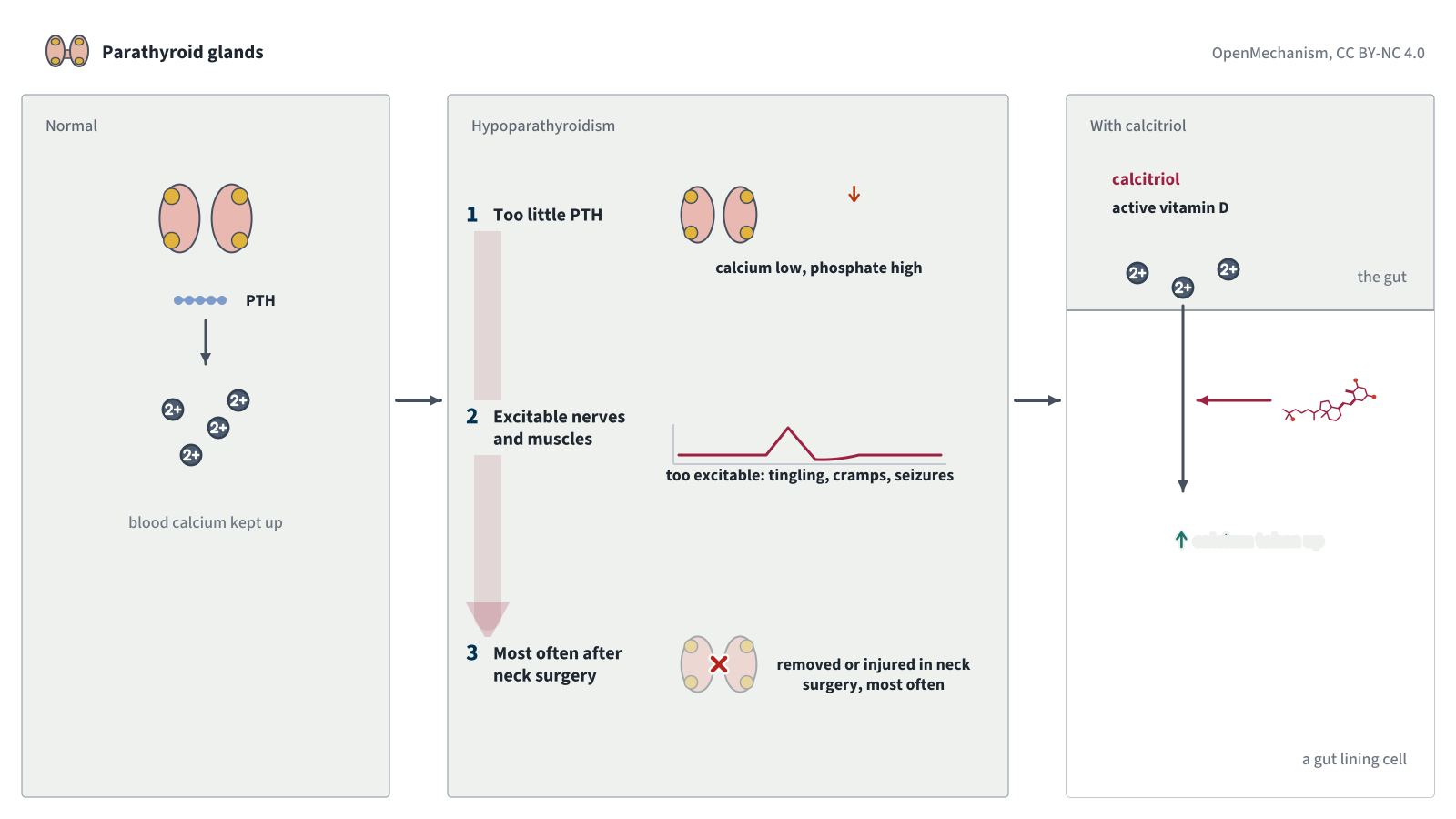
Too little PTH. The blood holds too little parathyroid hormone (), so calcium is low and phosphate is high.1
What the source says
“Hypoparathyroidism is a disease characterized by inadequately low circulating concentrations of parathyroid hormone (PTH) resulting in low calcium levels and increased phosphate levels in the blood.”
Source 1Excitable nerves and muscles. Low calcium makes nerves and muscles too excitable: tingling, muscle cramps and seizures.1
What the source says
“Symptoms of the disease result from increased neuromuscular irritability caused by hypocalcaemia and include tingling, muscle cramps and seizures.”
Source 1Most often after neck surgery. The most common cause is removal of or injury to the glands during neck surgery; genetic, unexplained and autoimmune causes follow.1
What the source says
“The most common cause of the disease is inadvertent removal of, or injury to, the parathyroid glands during neck surgery, followed by genetic, idiopathic and autoimmune aetiologies.”
Source 1
Where medicines act
- A
Calcitriol: active vitamin D
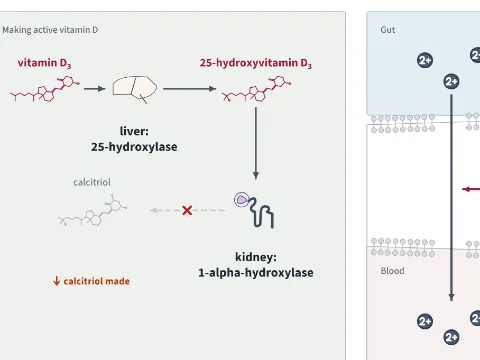
Calcitriol is a man-made active vitamin D that helps the gut absorb calcium. It manages low calcium in hypoparathyroidism after surgery, of unknown cause, and in pseudohypoparathyroidism; a 2017 review says conventional treatment includes active vitamin D, calcium supplements or both.1,2
What the source says
“Calcitriol oral solution is a synthetic vitamin D analog which is active in the regulation of the absorption of calcium from the gastrointestinal tract”
Source 2“Calcitriol is also indicated in the management of hypocalcemia and its clinical manifestations in patients with postsurgical hypoparathyroidism, idiopathic hypoparathyroidism, and pseudohypoparathyroidism.”
Source 2“Conventional treatment includes activated vitamin D and/or calcium supplements”
Source 1
See also
Body systems: hormones & metabolism; and muscles, bones & joints.
Related medicines: ergocalciferol (vitamin D2).
Other conditions: X-linked hypophosphatemia, secondary hyperparathyroidism, chronic kidney disease, growth hormone deficiency, Pompe disease and primary hyperparathyroidism.
Sources
- 1HypoparathyroidismMannstadt M et al. Nat Rev Dis Primers 2017 (abstract). Saved copy
- 2Calcitriol oral solution: FDA labelIndications and Usage; Description. Saved copy
Notes and limits
- Vitamin D and calcium do not fully replace PTH and can cause calcium swings, kidney stones and calcium deposits.1
Notes that apply to every page are on How to read a page.
Spotted a mistake? Report an error (hello@openmechanism.com). Since launch, every published error we fix is listed on the corrections page.
Cite this page
Tran D. Hypoparathyroidism [Internet]. OpenMechanism; 2026 [updated 2026 Nov 18; cited 2026 Nov 18]. Available from: https://openmechanism.com/conditions/hypoparathyroidism