Phentermine
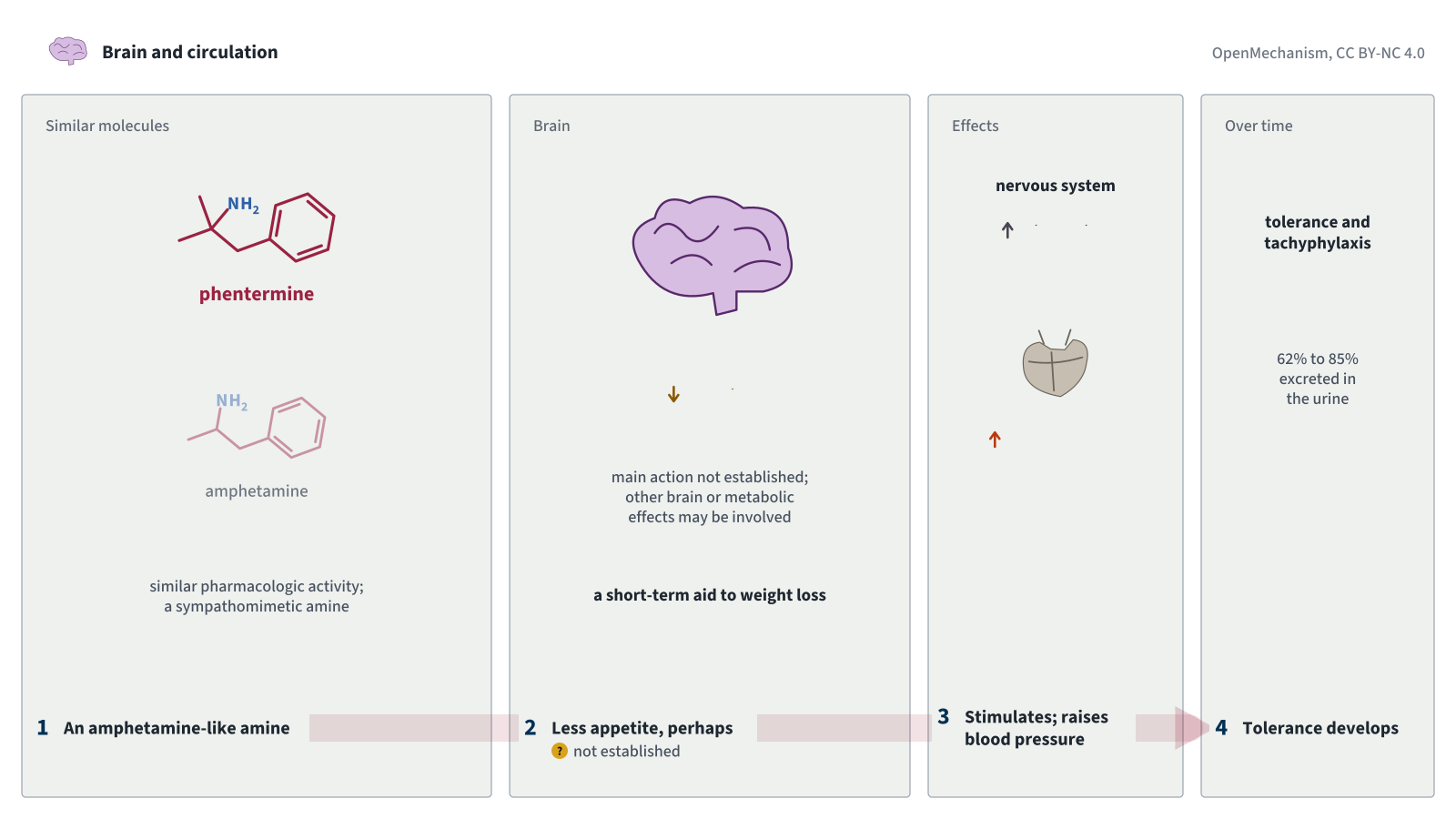
Phentermine is a sympathomimetic amine that acts like amphetamine. It is a short-term aid to weight loss; whether it works mainly by suppressing appetite has not been established, and other effects on the brain or on metabolism may be involved. Like amphetamines it stimulates the nervous system and raises blood pressure, and tolerance develops.
- Acts on
- Sympathomimetic amine (amphetamine-like)
- Where
- Brain and circulation
- Medicine type
- Small molecule
- Used for
- Hormones & metabolism
Also called Lomaira.
Step 2: not established
The Lomaira (phentermine) label says: It has not been established that the primary action of such drugs in treating obesity is one of appetite suppression since other central nervous system actions, or metabolic effects, may also be involved.
Clinical study: In a randomized, double-blind trial in 74 people with obesity, a controlled-release phentermine was compared with placebo for 12 weeks; the trial measured weight and metabolic measures, not appetite: Short-term phentermine DCR treatment resulted in significant reduction in weight and improvement of metabolic parameters
Kang JG et al., Diabetes Obes Metab 2010 (PMID 20920040)
This study was picked with a literature search and is not yet checked by our reviewer.
How it works
An amphetamine-like amine. Phentermine is a sympathomimetic amine whose pharmacologic activity is similar to amphetamine, the prototype of the medicines of this class used in obesity, which are known as anorectics.1
Less appetite, perhaps. It has not been established that the main action of these medicines in obesity is to suppress appetite; other effects on the central nervous system, or metabolic effects, may also be involved. Phentermine is a short-term (a few weeks) aid to weight loss together with exercise, behavior change and fewer calories.1
Stimulates; raises blood pressure. Typical actions of amphetamines include stimulation of the central nervous system and a rise in blood pressure.1
Tolerance develops. Tachyphylaxis and tolerance have been shown with all medicines of this class where they were looked for. The literature reports that 62% to 85% of phentermine is excreted in the urine.1
For teachers: download this drawing.
See also
Condition pages: obesity.
Body system: hormones & metabolism.
Sources
- 1Lomaira (phentermine hydrochloride) tablets: FDA labelIndications and Usage; Description; Clinical Pharmacology
- 2ChEMBL CHEMBL1574Target and action classification: Norepinephrine transporter releasing agent
- 3Randomized controlled trial to investigate the effects of a newly developed formulation of phentermine diffuse-controlled release for obesityKang JG et al. Diabetes Obes Metab 2010 (abstract)
Spotted a mistake? Report an error (hello@openmechanism.com). Since launch, every published error we fix is listed on the corrections page.
Notes and limits
- A schematic teaching drawing: not to scale, not exact structures, binding poses or a complete pathway, and not a guide to dosing, treatment or how a person will respond.
- The label says it has not been established that the primary action of such medicines in treating obesity is one of appetite suppression.
All recorded limits are on the evidence page, and notes that apply to every page are on How to read a page. Version 1.0.0, not yet medically reviewed.
Cite this page
Tran D. Phentermine [Internet]. OpenMechanism; 2026 [updated 2026 Oct 14; cited 2026 Oct 14]. Available from: https://openmechanism.com/medicines/phentermine