The brain, normal biology
For teachers: download this drawing.
We’re looking for volunteer reviewers in pharmacy, medicine and pharmacology. How to volunteerWe’re looking for volunteer reviewers.
From the whole brain down to single molecules: normal, in Parkinson disease, and with carbidopa and levodopa.
For teachers: download this drawing.
For teachers: download this drawing.
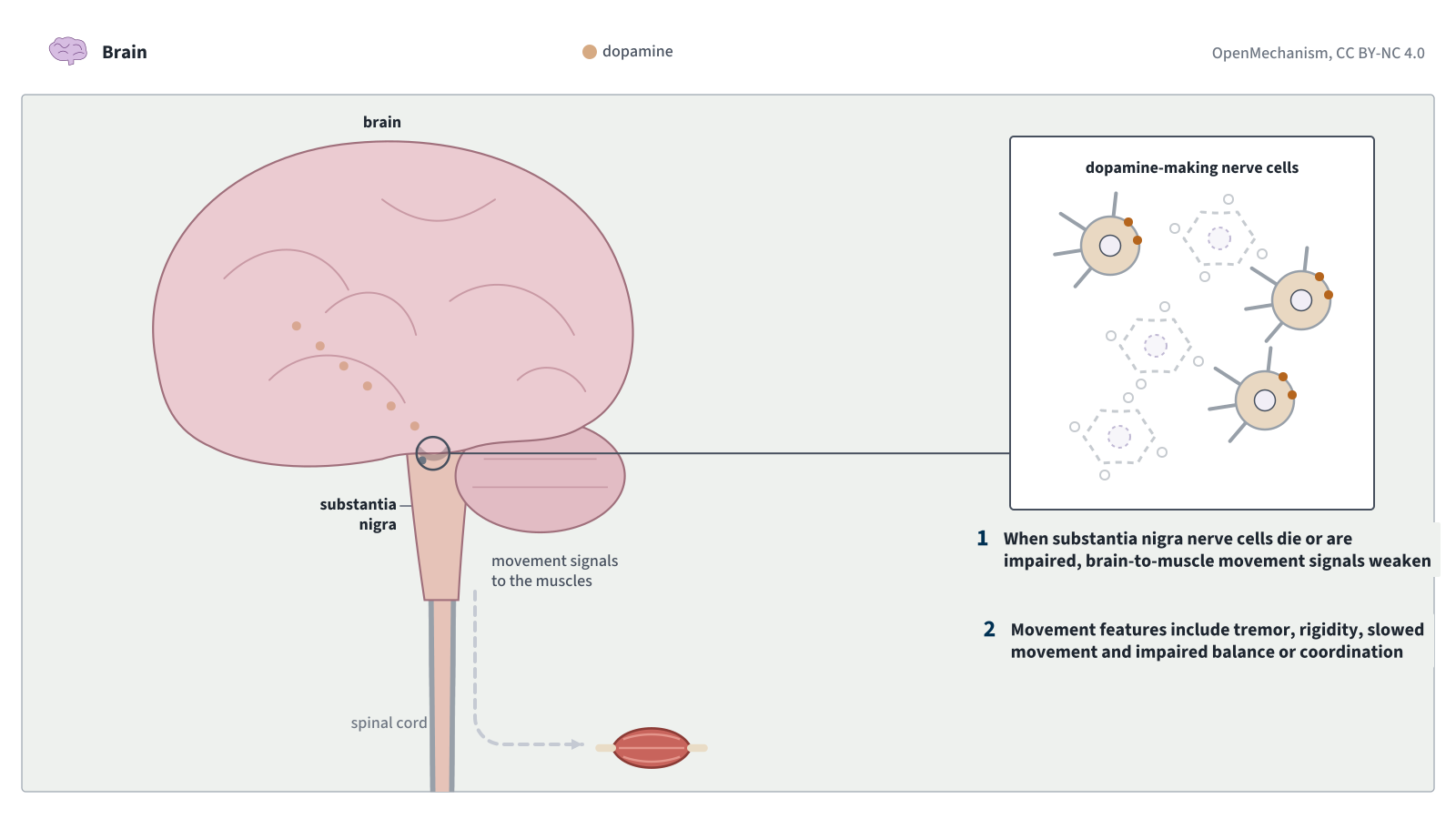
When substantia nigra nerve cells die or are impaired, brain-to-muscle movement signals weaken. Many Parkinson symptoms occur when substantia nigra neurons die or become impaired; brain-to-muscle movement communication weakens.1
Movement features include tremor, rigidity, slowed movement and impaired balance or coordination. Tremor, rigidity, slowed movement and impaired balance or coordination are selected Parkinson motor features.1
More on the condition: Parkinson disease.
For teachers: download this drawing.
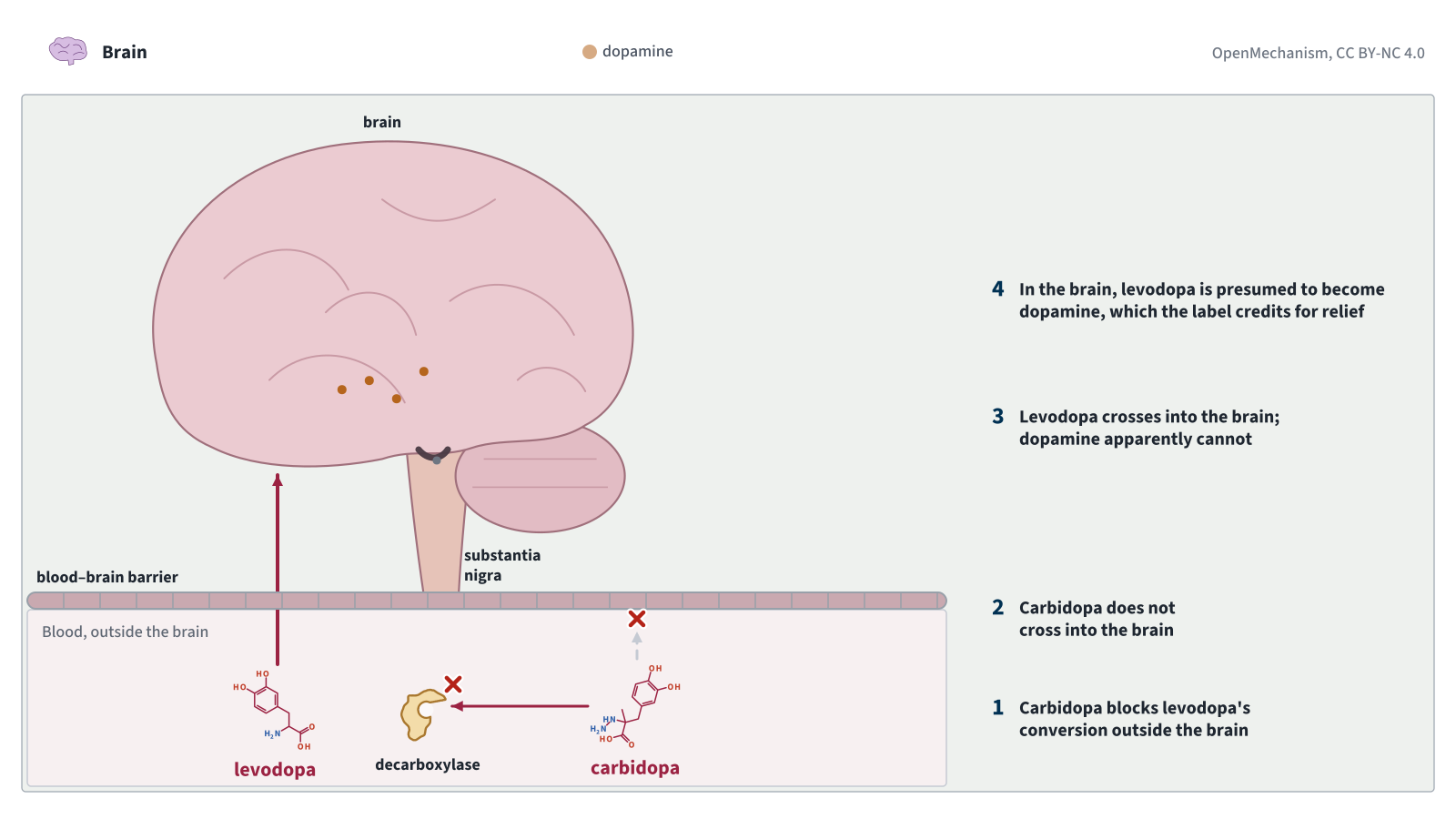
Carbidopa blocks levodopa's conversion outside the brain. Carbidopa inhibits peripheral aromatic amino-acid decarboxylation of levodopa.2
Carbidopa does not cross into the brain. Carbidopa does not cross the blood–brain barrier or alter levodopa metabolism.2
Levodopa crosses into the brain; dopamine apparently cannot. Levodopa crosses the blood–brain barrier; dopamine is described as apparently unable to do so.2
In the brain, levodopa is presumed to become dopamine, which the label credits for relief. The label presumes brain conversion of levodopa to dopamine and attributes symptomatic relief to this process.2
More on the medicine: carbidopa and levodopa.
For teachers: download this drawing.
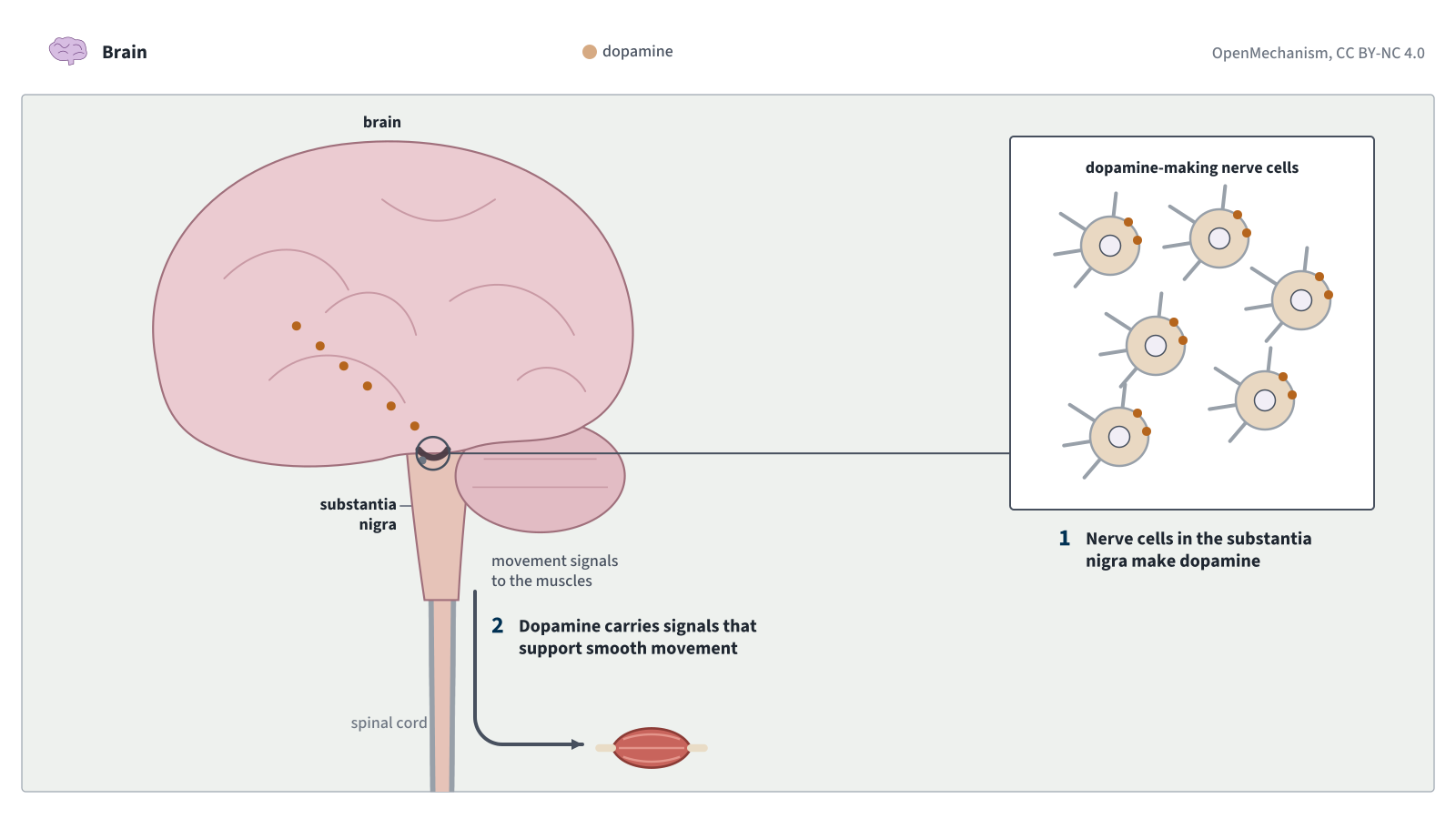
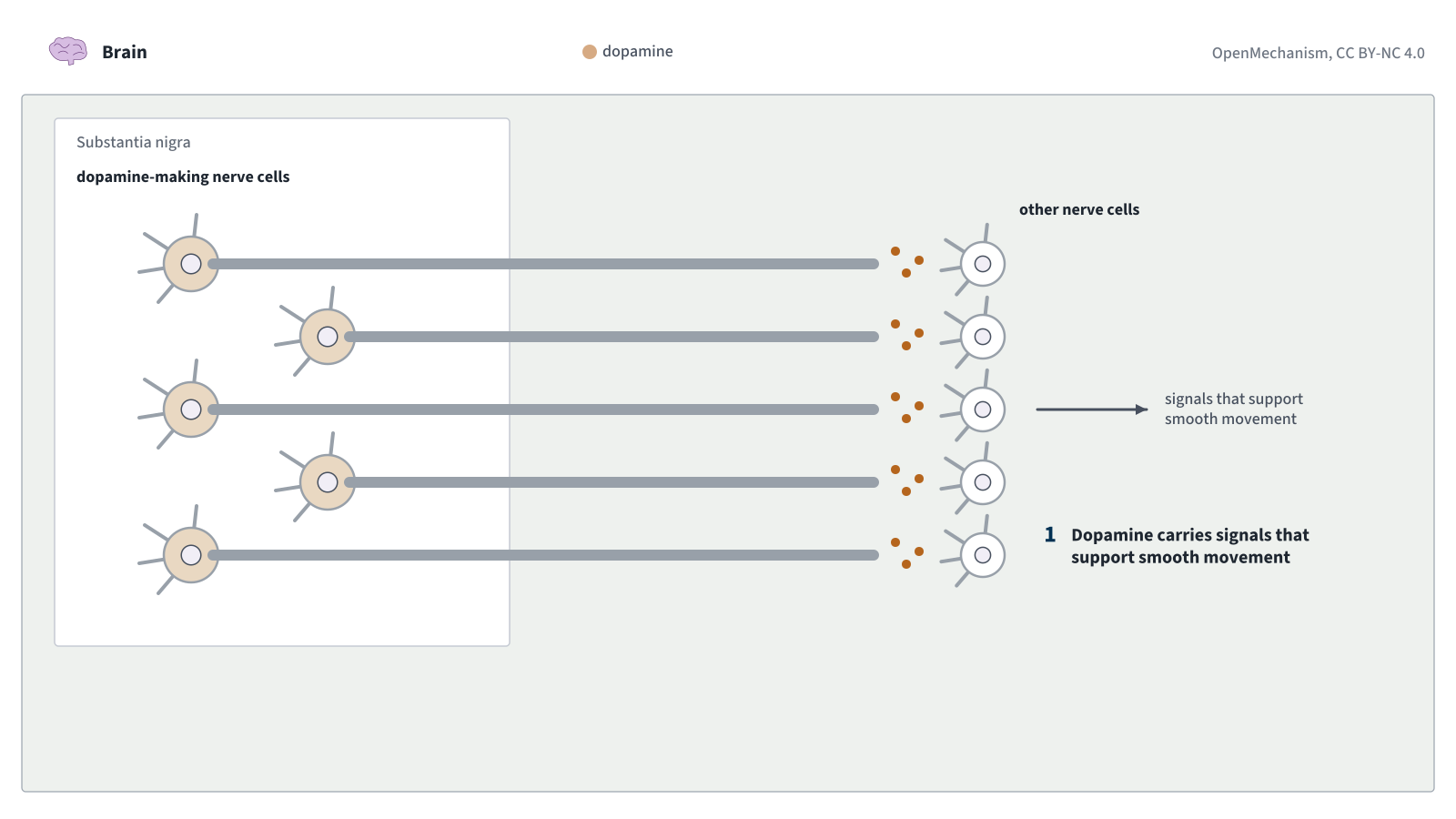
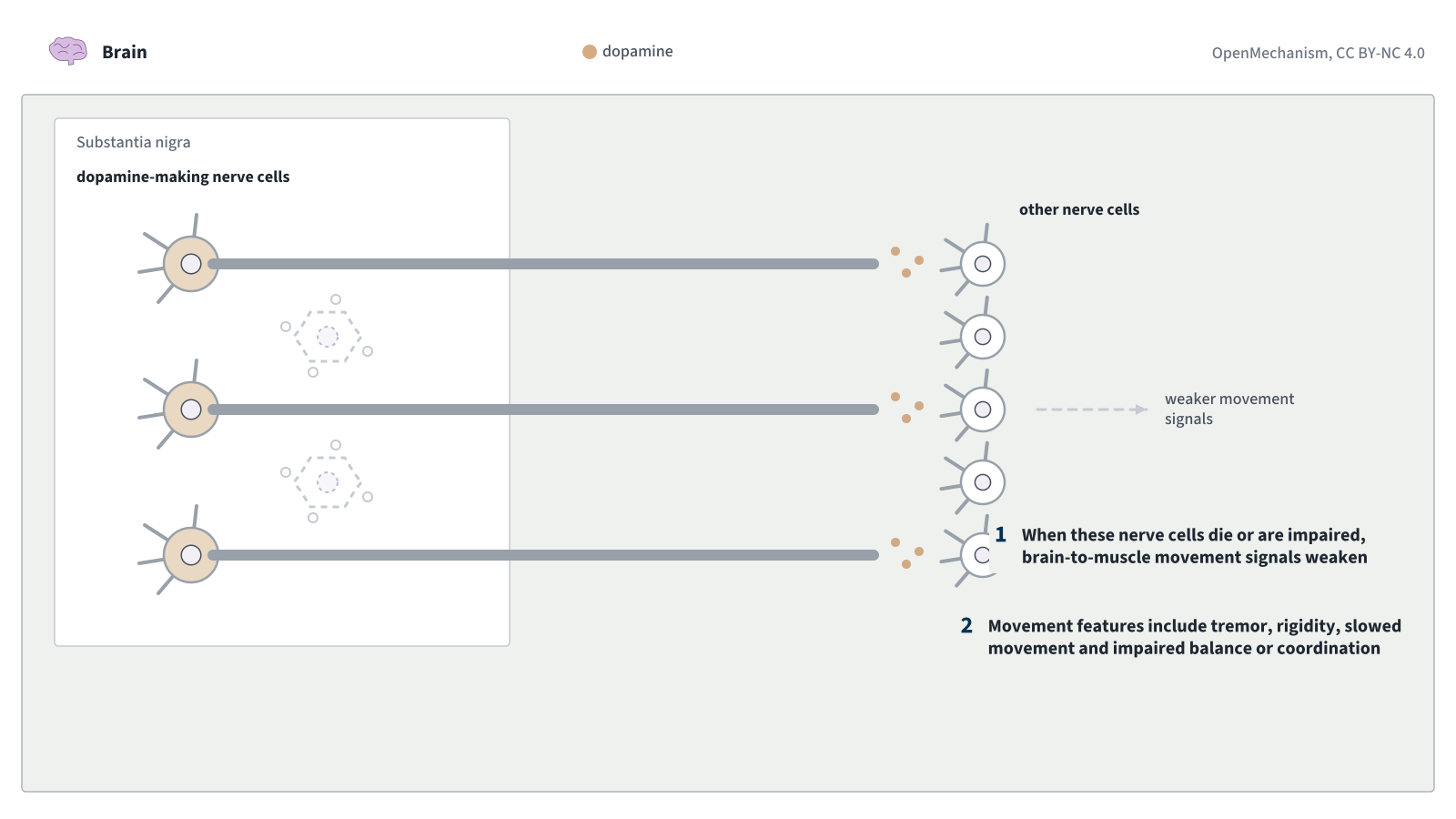
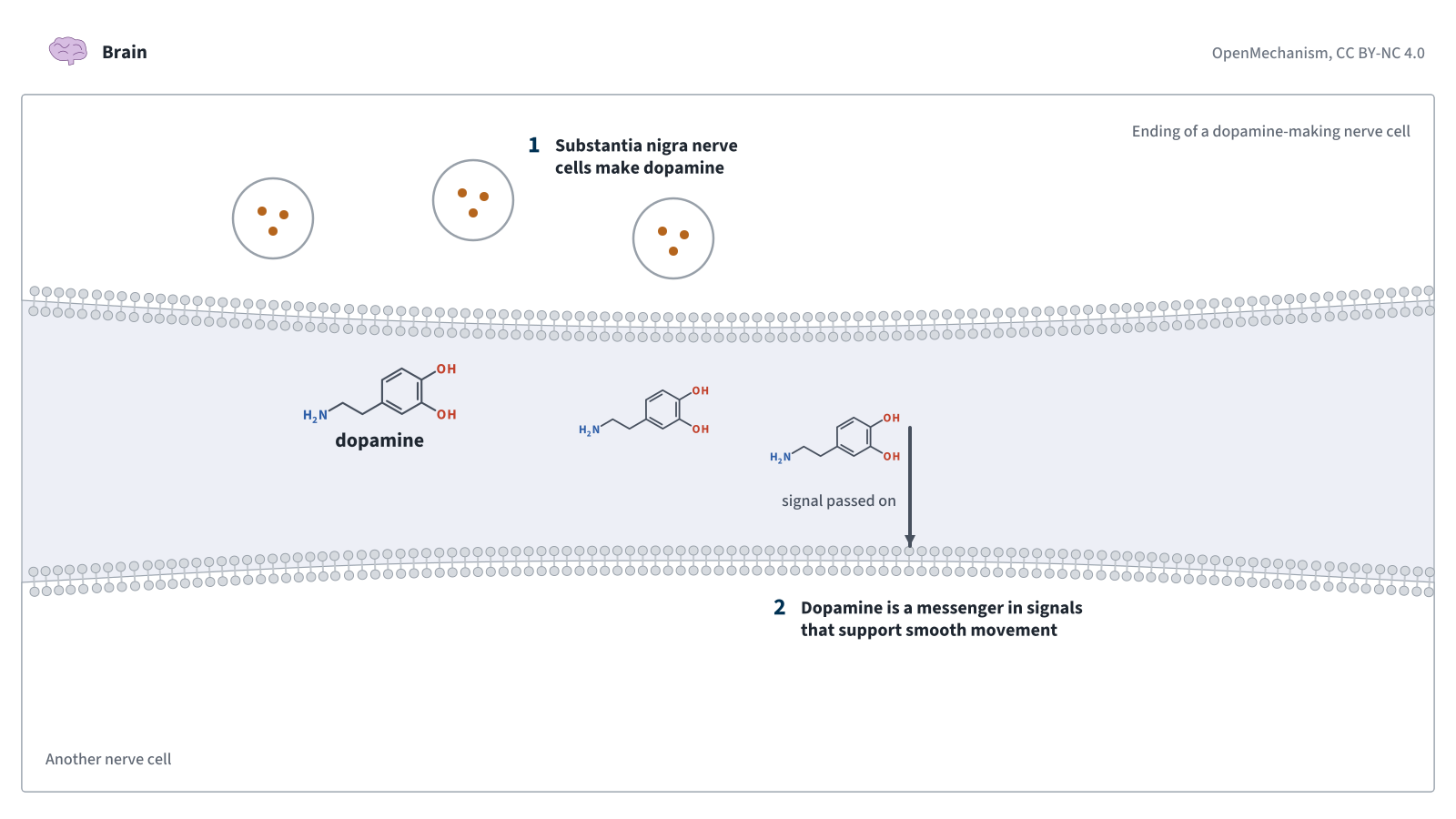
Dopamine carries signals that support smooth movement. Dopamine is a brain messenger involved in signals supporting smooth physical movement.1
For teachers: download this drawing.
When these nerve cells die or are impaired, brain-to-muscle movement signals weaken. Many Parkinson symptoms occur when substantia nigra neurons die or become impaired; brain-to-muscle movement communication weakens.1
Movement features include tremor, rigidity, slowed movement and impaired balance or coordination. Tremor, rigidity, slowed movement and impaired balance or coordination are selected Parkinson motor features.1
More on the condition: Parkinson disease.
For teachers: download this drawing.
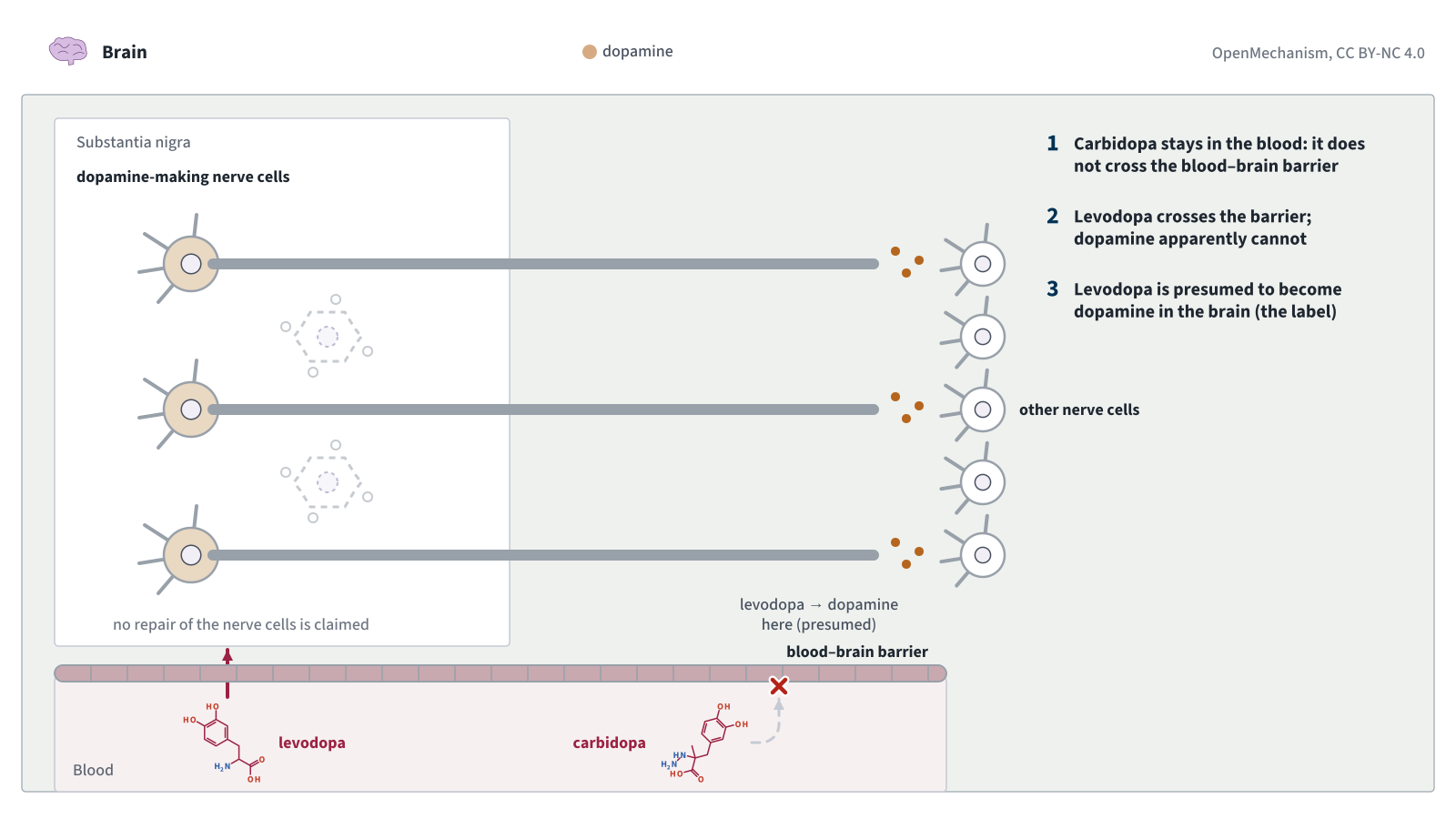
Carbidopa stays in the blood: it does not cross the blood–brain barrier. Carbidopa does not cross the blood–brain barrier or alter CNS levodopa metabolism.2
Levodopa crosses the barrier; dopamine apparently cannot. Levodopa crosses the blood–brain barrier; dopamine is described as apparently unable to do so.2
Levodopa is presumed to become dopamine in the brain (the label). The label presumes brain conversion of levodopa to dopamine and attributes symptomatic relief to this process.2
More on the medicine: carbidopa and levodopa.
For teachers: download this drawing.
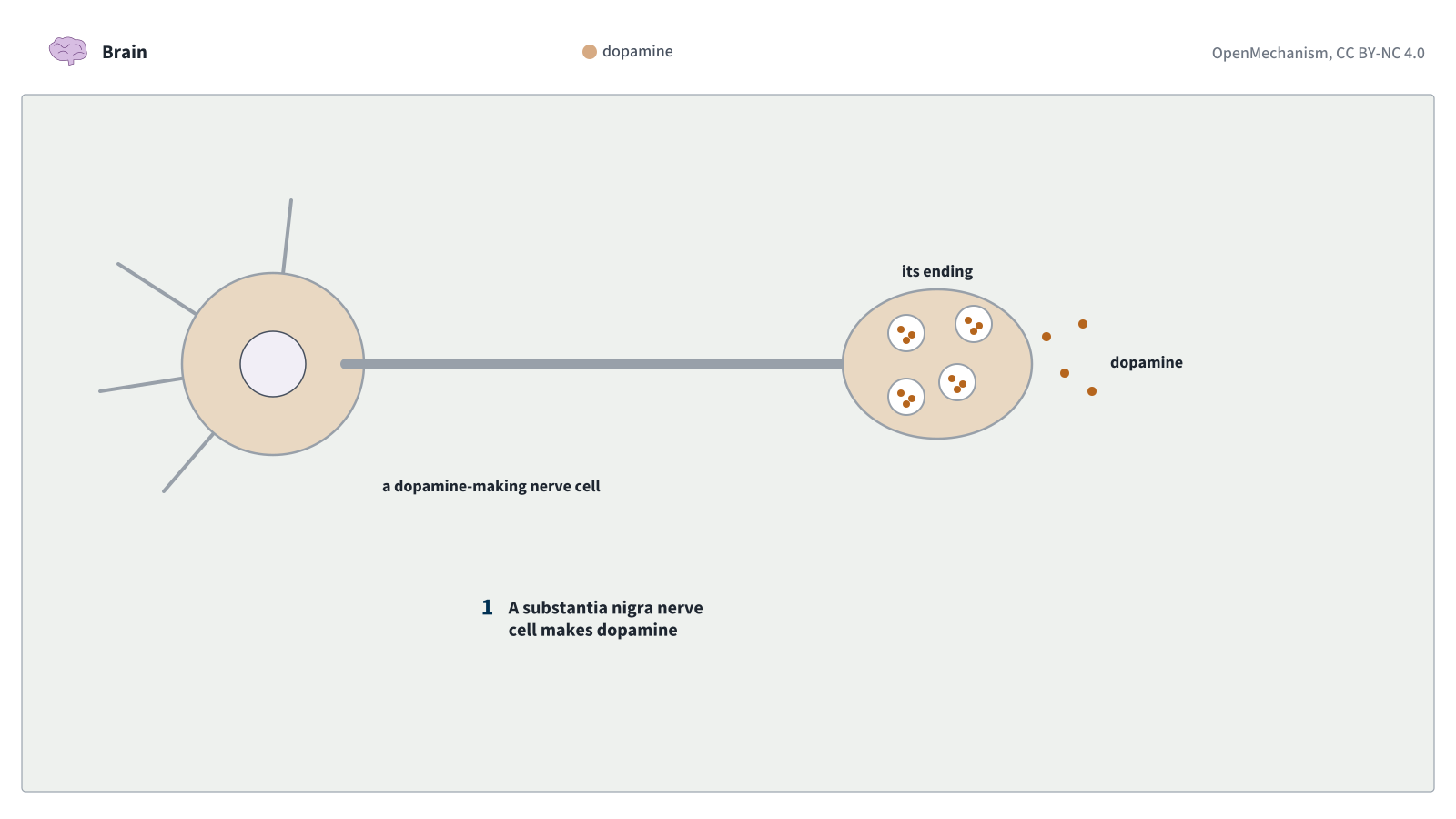
A substantia nigra nerve cell makes dopamine. Substantia nigra neurons normally produce dopamine.1
For teachers: download this drawing.
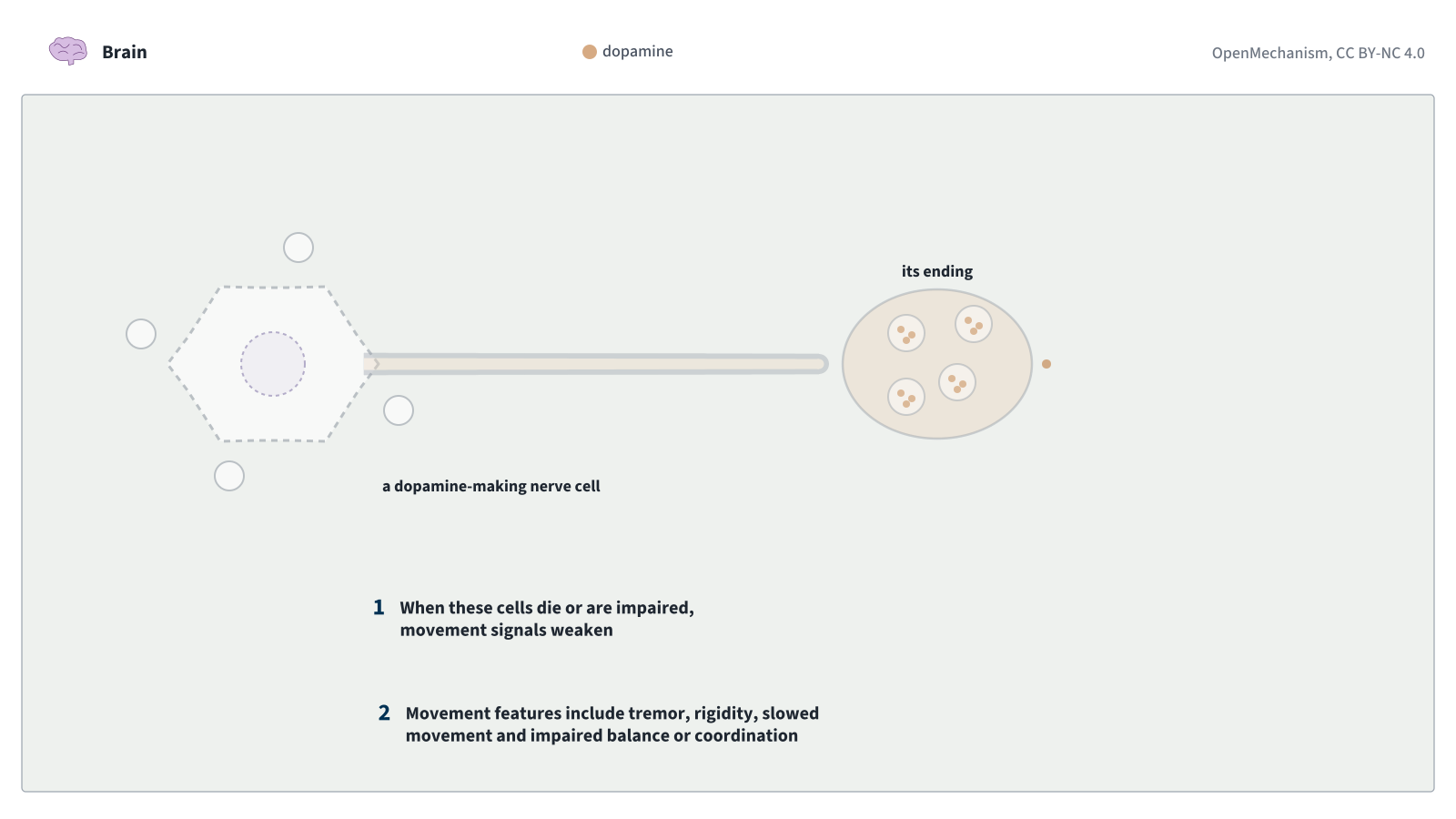
When these cells die or are impaired, movement signals weaken. Many Parkinson symptoms occur when substantia nigra neurons die or become impaired; brain-to-muscle movement communication weakens.1
Movement features include tremor, rigidity, slowed movement and impaired balance or coordination. Tremor, rigidity, slowed movement and impaired balance or coordination are selected Parkinson motor features.1
More on the condition: Parkinson disease.
For teachers: download this drawing.
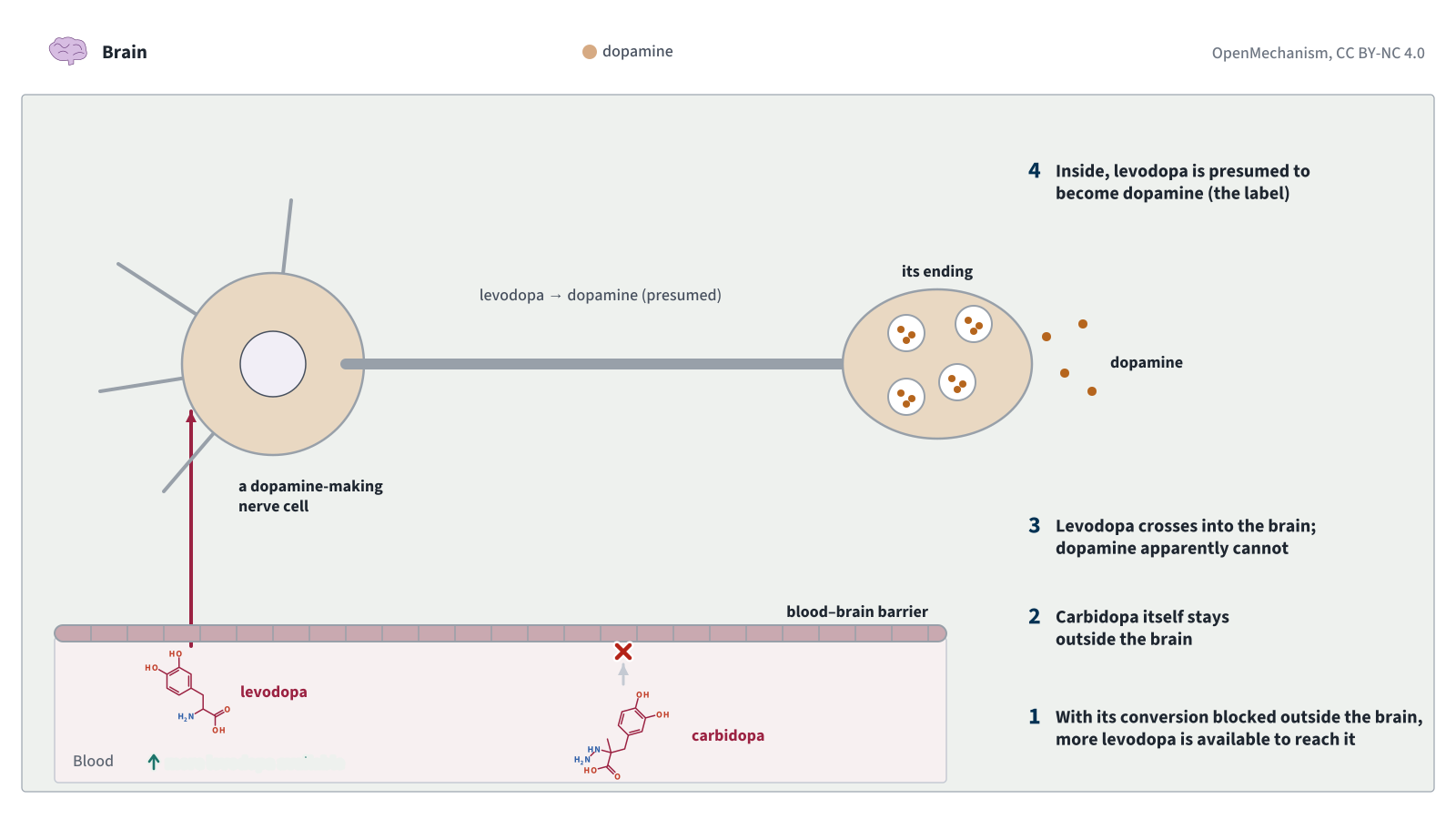
With its conversion blocked outside the brain, more levodopa is available to reach it. Peripheral decarboxylase inhibition leaves more levodopa available for transport to the brain.2
Carbidopa itself stays outside the brain. Carbidopa does not cross the blood–brain barrier or alter CNS levodopa metabolism.2
Levodopa crosses into the brain; dopamine apparently cannot. Levodopa crosses the blood–brain barrier; dopamine is described as apparently unable to do so.2
Inside, levodopa is presumed to become dopamine (the label). The label presumes brain conversion of levodopa to dopamine and attributes symptomatic relief to this process.2
More on the medicine: carbidopa and levodopa.
For teachers: download this drawing.
For teachers: download this drawing.
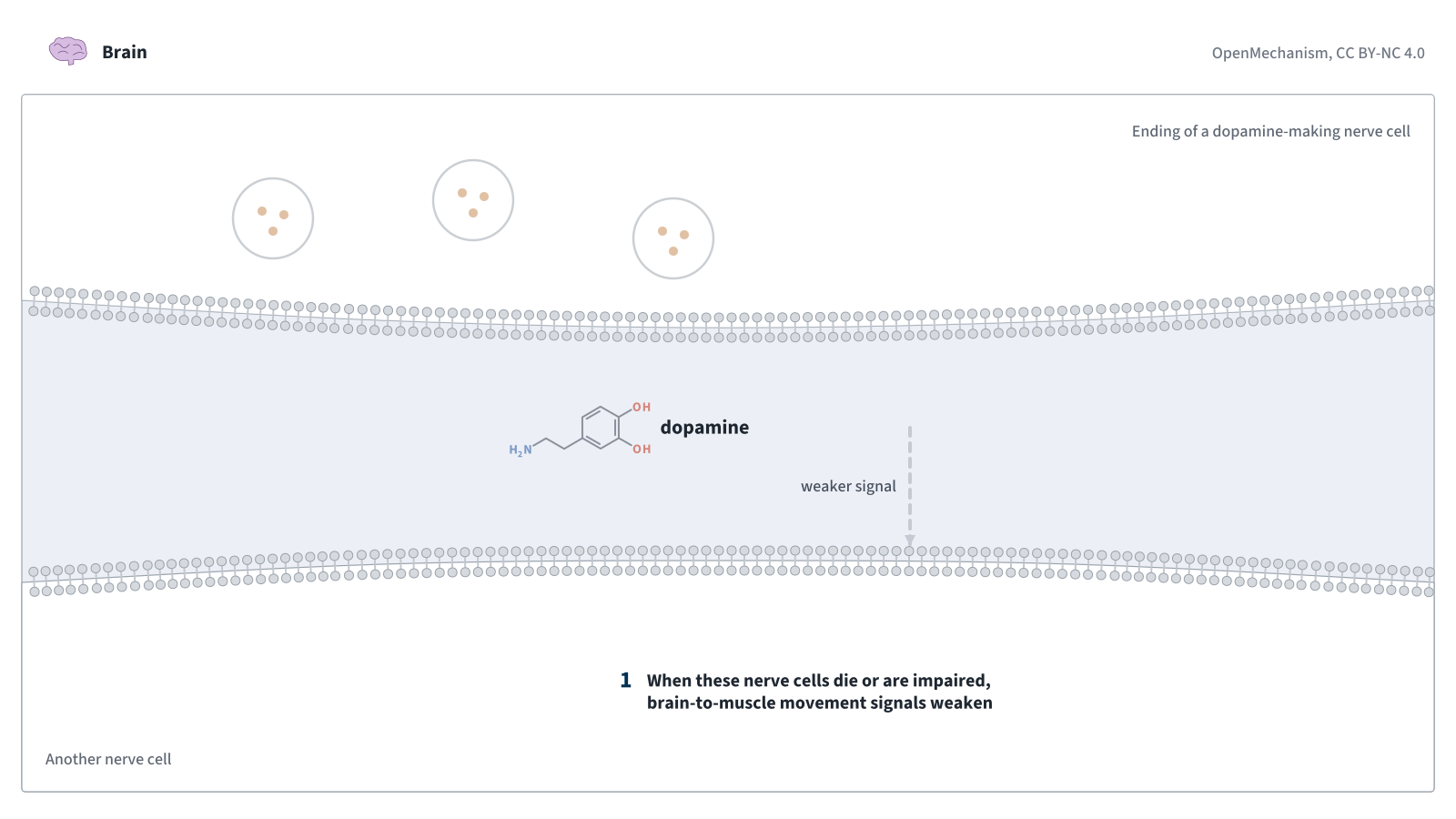
When these nerve cells die or are impaired, brain-to-muscle movement signals weaken. Many Parkinson symptoms occur when substantia nigra neurons die or become impaired; brain-to-muscle movement communication weakens.1
More on the condition: Parkinson disease.
For teachers: download this drawing.
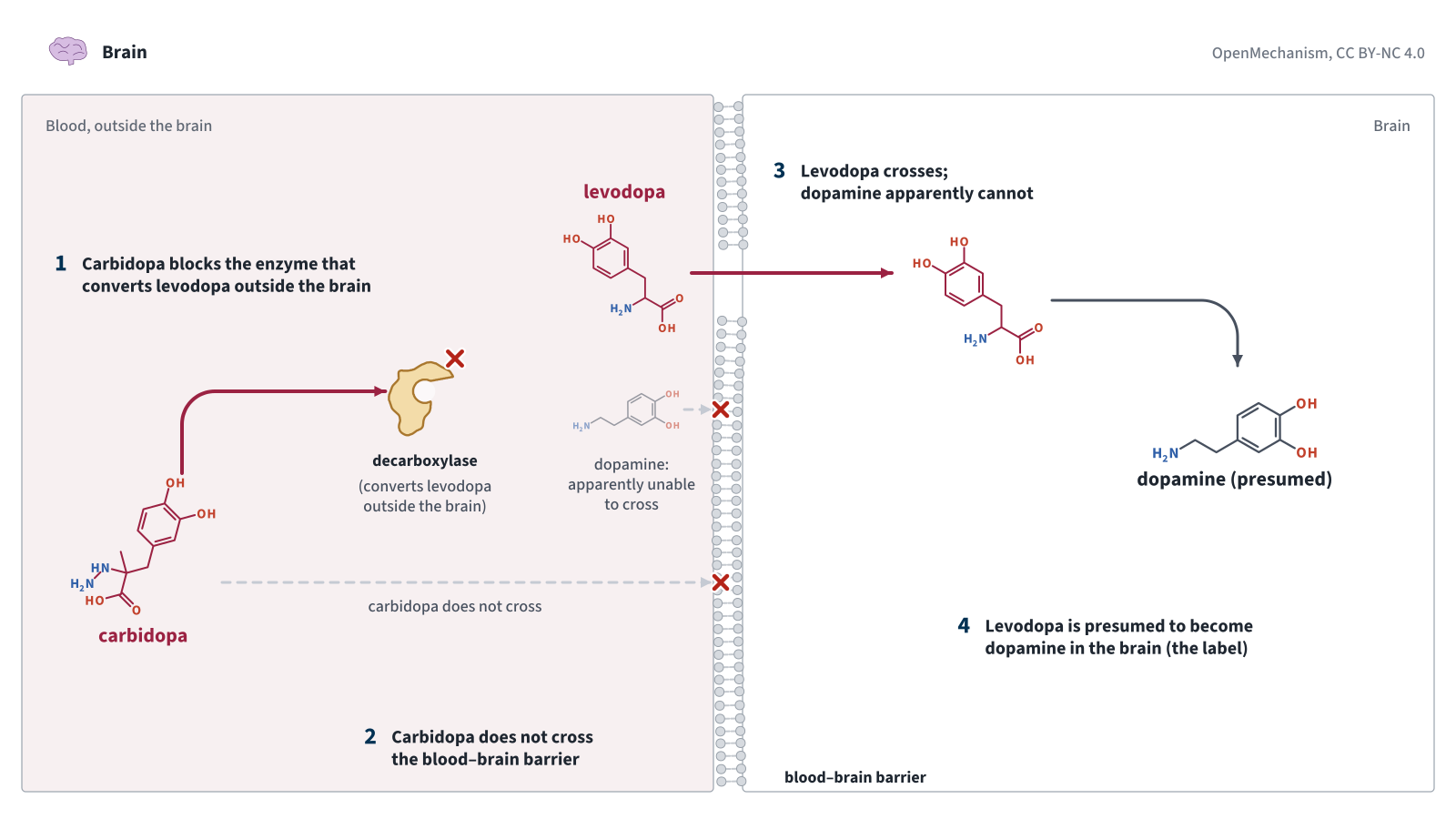
Carbidopa blocks the enzyme that converts levodopa outside the brain. Carbidopa inhibits peripheral aromatic amino-acid decarboxylation of levodopa.2
Carbidopa does not cross the blood–brain barrier. Carbidopa does not cross the blood–brain barrier or alter CNS levodopa metabolism.2
Levodopa crosses; dopamine apparently cannot. Levodopa crosses the blood–brain barrier; dopamine is described as apparently unable to do so.2
Levodopa is presumed to become dopamine in the brain (the label). The label presumes brain conversion of levodopa to dopamine and attributes symptomatic relief to this process.2
More on the medicine: carbidopa and levodopa.
Body system: brain & nerves.
Condition: Parkinson disease.
Medicine: carbidopa and levodopa.
Animations: levodopa in the brain.
Spotted a mistake? Report an error (hello@openmechanism.com). Since launch, every published error we fix is listed on the corrections page.
Tran D. Dopamine and movement [Internet]. OpenMechanism; 2026 [updated 2026 Oct 10; cited 2026 Oct 10]. Available from: https://openmechanism.com/body/scales/brain