Letrozole
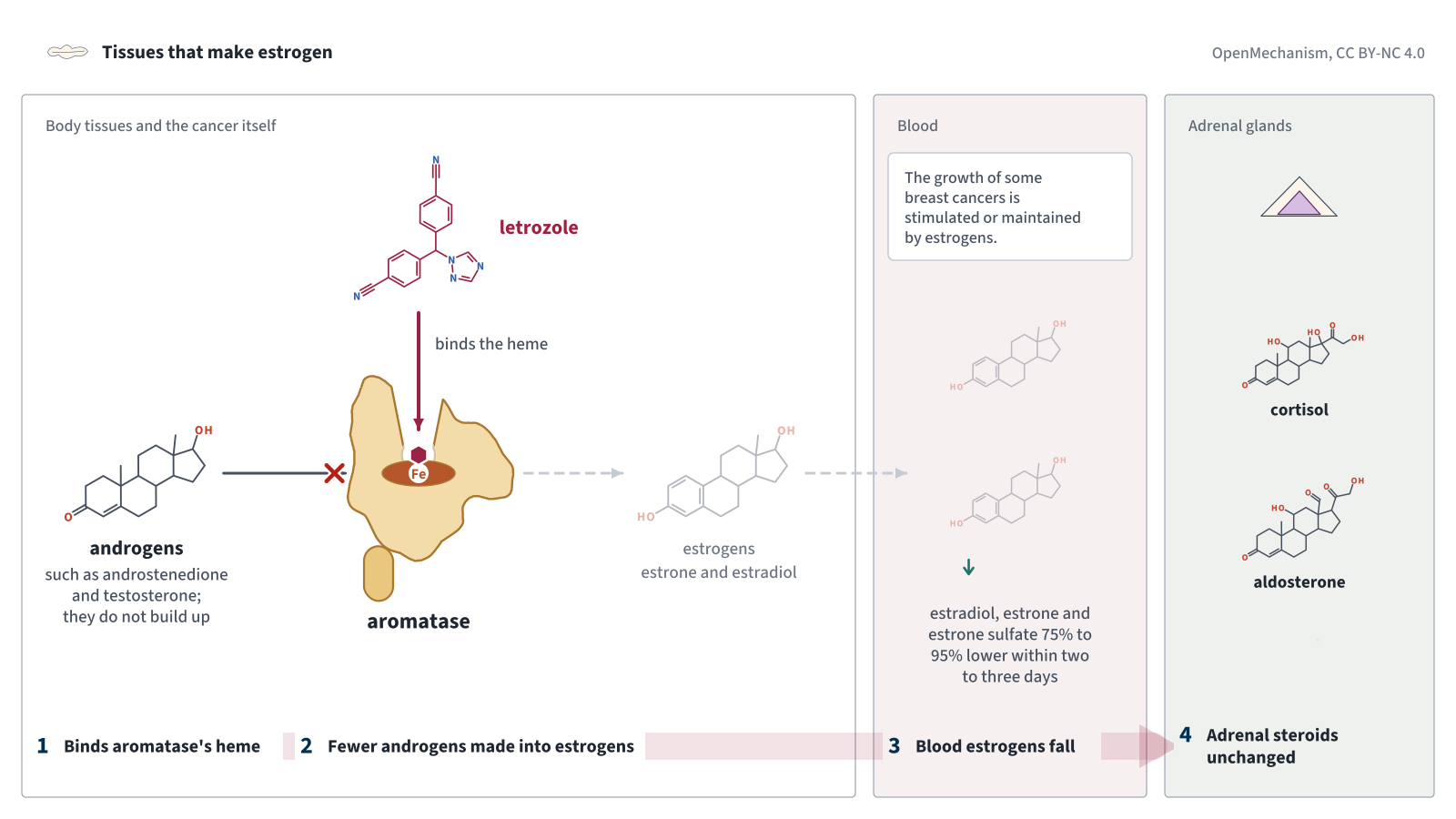
Letrozole binds the heme of aromatase, the enzyme that turns androgens such as androstenedione and testosterone into estrone and estradiol; in women after menopause, most estrogen comes from it. With the conversion blocked in all tissues, including the cancer itself, blood estrogens fall by 75% to 95% within two to three days. The growth of some breast cancers depends on estrogens. The adrenal glands' own steroids, such as cortisol and , are not changed.
- Acts on
- Aromatase (the cytochrome P450 enzyme that makes estrogens)
- Where
- Body tissues and the breast cancer itself
- Medicine type
- Small molecule
- Used for
- Cancer
- Drug class
- Aromatase inhibitors, Hormone therapies for cancer
Also called Femara.
Key terms in this drawing
- aldosterone
- Aldosterone. Released by the adrenal glands, it helps the body keep sodium and fluid; angiotensin II stimulates its release.
How it works
Binds aromatase's heme. Letrozole is a nonsteroidal, competitive inhibitor of the aromatase enzyme system: it binds the heme of the enzyme's cytochrome P450 subunit.1
Fewer androgens made into estrogens. In postmenopausal women, estrogens come mainly from aromatase, which converts adrenal androgens (mainly androstenedione and testosterone) into estrone and estradiol; letrozole inhibits this conversion, so less estrogen is made in all tissues, including the cancer tissue itself.1
Blood estrogens fall. In postmenopausal women with advanced breast cancer, letrozole lowers blood estradiol, estrone and estrone sulfate by 75% to 95% from baseline, with the full fall reached within two to three days; the growth of some breast cancers is stimulated or maintained by estrogens.1
Adrenal steroids unchanged. Letrozole has no significant effect on the adrenal glands' mineralocorticoid or glucocorticoid synthesis: in patients, blood cortisol and aldosterone showed no clinically relevant change.1
For teachers: download this drawing.
See also
Condition pages: breast cancer.
Other aromatase inhibitors: anastrozole.
Other hormone therapies for cancer: abiraterone acetate, enzalutamide, fulvestrant, leuprolide and tamoxifen.
Body system: cancer.
Sources
- 1Femara (letrozole): FDA label12.1 Mechanism of Action; 12.2 Pharmacodynamics
- 2ChEMBL CHEMBL1444Target and action classification: Cytochrome P450 19A1 inhibitor
Also used for the drawing
The aromatase outline is traced from the crystal structure below.
- 3Human aromatase with androstenedionePDB 3EQM; Ghosh, D. et al. Nature 2009; 457:219-223
Spotted a mistake? Report an error (hello@openmechanism.com). Since launch, every published error we fix is listed on the corrections page.
Notes and limits
- A schematic teaching drawing: not to scale, not exact structures, binding poses or a complete pathway, and not a guide to dosing, treatment or how a person will respond.
All recorded limits are on the evidence page, and notes that apply to every page are on How to read a page. Version 1.0.0, not yet medically reviewed.
Cite this page
Tran D. Letrozole [Internet]. OpenMechanism; 2026 [updated 2026 Oct 16; cited 2026 Oct 16]. Available from: https://openmechanism.com/medicines/letrozole