Iron-deficiency anemia
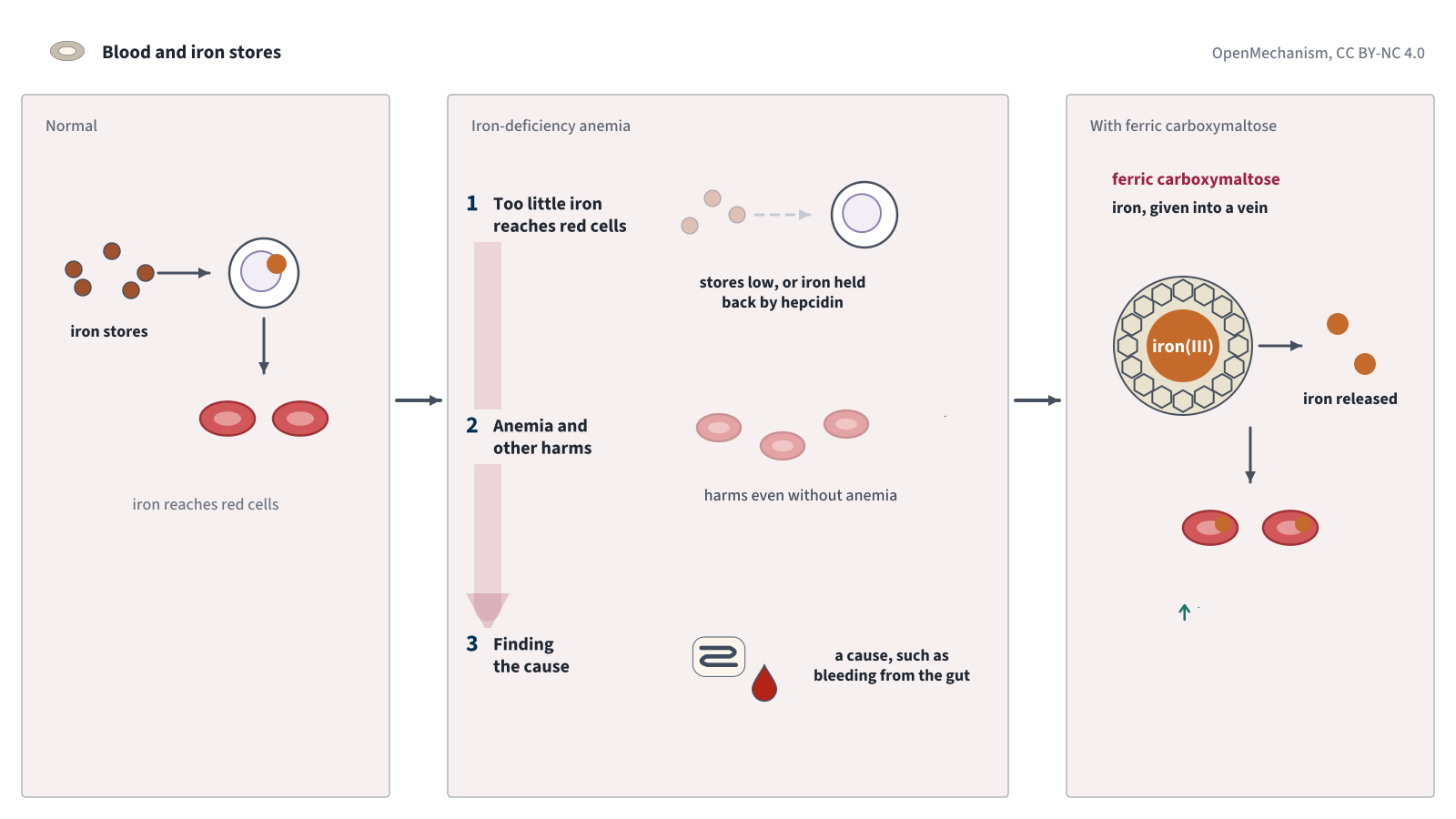
Iron deficiency is one of the leading causes of ill health worldwide. Red cell precursors run short of iron when iron stores are low or inflammation holds it back through hepcidin. Anemia is one result, but iron deficiency can harm health without it. Ferric carboxymaltose replaces iron through a vein when iron by mouth fails or is not tolerated.
- Where
- Blood and iron stores
- Body system
- Blood & clotting
- Medicines
- 1 medicine
For teachers: download this drawing.
What goes wrong
Too little iron reaches red cells. Red cell precursors run short of iron when the body's iron stores are low, or when inflammation holds iron back from the blood through hepcidin, the main regulator of iron.1
What the source says
“Iron deprivation from erythroblasts and other tissues occurs when total body stores of iron are low or when inflammation causes withholding of iron from the plasma, particularly through the action of hepcidin, the main regulator of systemic iron homoeostasis.”
Source 1Anemia and other harms. Anemia is one of many results; iron deficiency can impair health even without anemia.1
What the source says
“Anaemia is one of many consequences of iron deficiency, and clinical and functional impairments can occur in the absence of anaemia.”
Source 1Finding the cause. A 2021 review says a cause should be sought in everyone with iron deficiency, and that checking the gut for bleeding (endoscopy) is warranted in men and in women after menopause who have iron-deficiency anemia.1
Where medicines act
- A
Ferric carboxymaltose: iron through a vein
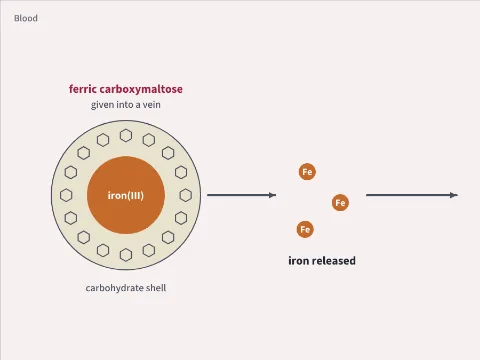
Ferric carboxymaltose is an iron complex that releases iron; it treats iron-deficiency anemia when oral iron does not work or is not tolerated, and in chronic kidney disease not on dialysis.2
See also
Body system: blood & clotting.
Other conditions: vitamin B12 and folate deficiency; chronic kidney disease; and heart failure.
Sources
- 1Iron deficiencyPasricha SR et al. Lancet 2021 (abstract). Saved copy
- 2Injectafer (ferric carboxymaltose): FDA label1 Indications and Usage; 12.1 Mechanism of Action. Saved copy
Notes and limits
- Iron by mouth is the first treatment in most cases; it does not have a page here.1
Notes that apply to every page are on How to read a page.
Spotted a mistake? Report an error (hello@openmechanism.com). Since launch, every published error we fix is listed on the corrections page.
Cite this page
Tran D. Iron-deficiency anemia [Internet]. OpenMechanism; 2026 [updated 2026 Nov 18; cited 2026 Nov 18]. Available from: https://openmechanism.com/conditions/iron-deficiency-anemia