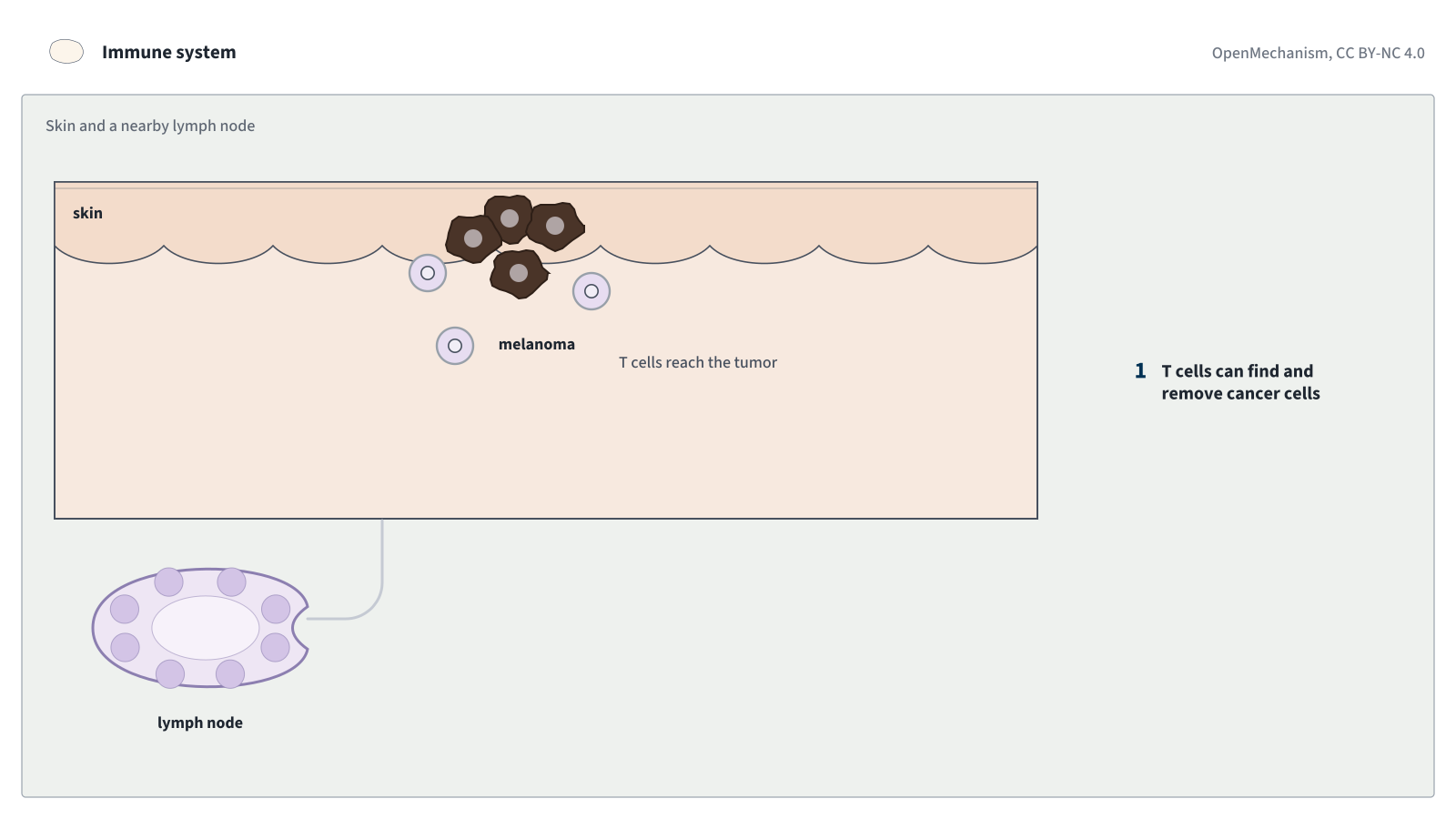
T cells can find and remove cancer cells. The changes that make a cell cancerous also let the immune system raise that recognize and remove cancer cells.1
What the source says
“The genetic and cellular alterations that define cancer provide the immune system with the means to generate T cell responses that recognize and eradicate cancer cells.”
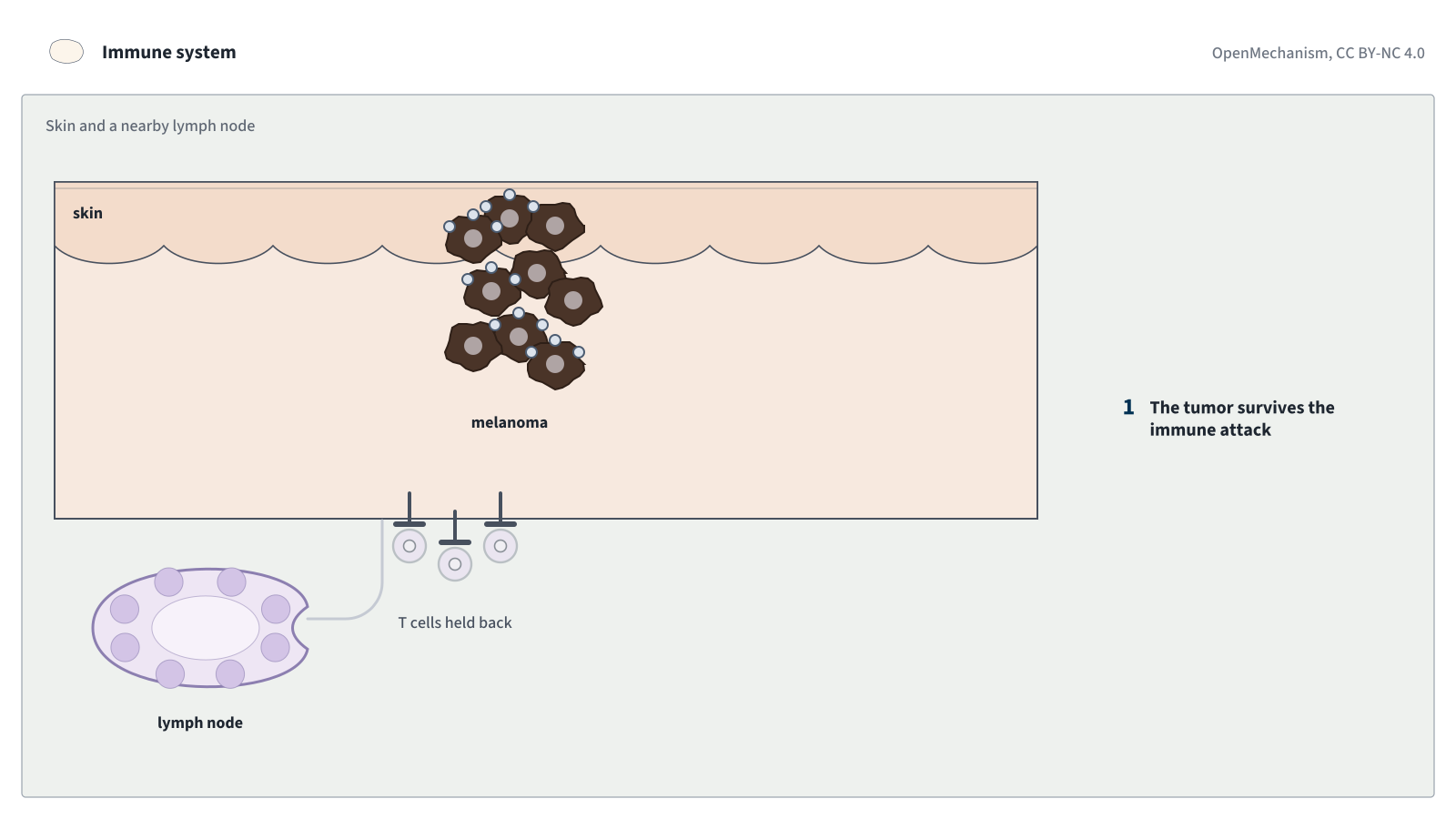
The tumor survives the immune attack. Tumors take over the pathway to dampen immunity against them and survive.2
What the source says
“The PD-1:PD-L pathway also has been usurped by microorganisms and tumors to attenuate antimicrobial or tumor immunity and facilitate chronic infection and tumor survival.”
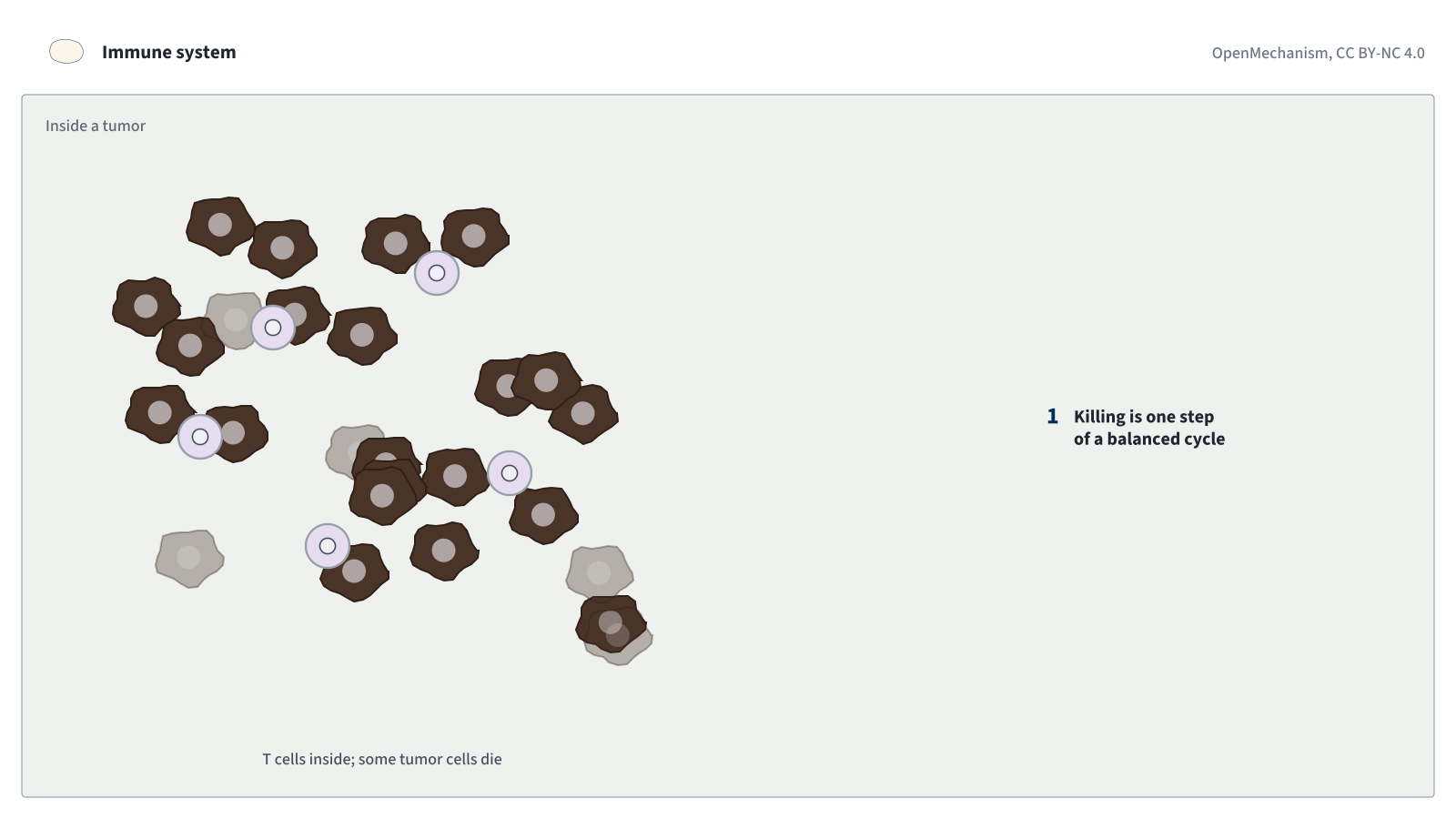
Killing is one step of a balanced cycle. Killing cancer cells is one step of a cycle that balances recognizing what is foreign against avoiding autoimmunity.1
What the source says
“elimination of cancer by T cells is only one step in the Cancer-Immunity Cycle, which manages the delicate balance between the recognition of nonself and the prevention of autoimmunity.”
The Keytruda (pembrolizumab) label says: Upregulation of PD-1 ligands occurs in some tumors and signaling through this pathway can contribute to inhibition of active T-cell immune surveillance of tumors.
Clinical study: In tumor samples from 46 people with metastatic melanoma, taken before and during pembrolizumab treatment, those who went on to respond had, before treatment: higher numbers of CD8-, PD-1- and PD-L1-expressing cells at the invasive tumour marginTumeh PC et al., Nature 2014 (PMID 25428505)
This study was picked with a literature search and is not yet checked by our reviewer.
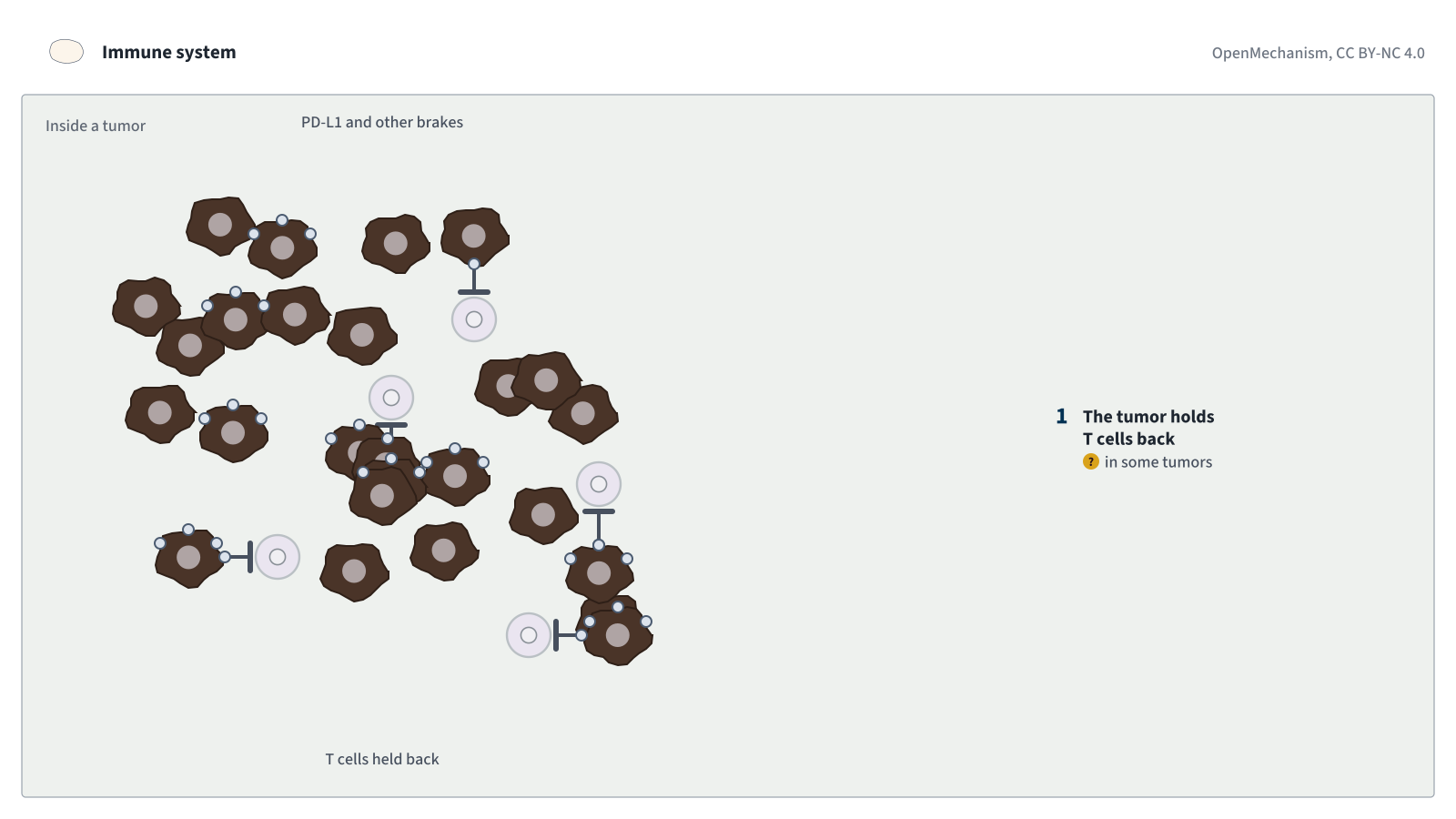
The tumor holds T cells back. Some tumors raise PD-1 , which can help hold back the T cells that watch for tumors; other factors in the tumor may also hold immunity back.1,3
What the source says
“Upregulation of PD-1 ligands occurs in some tumors and signaling through this pathway can contribute to inhibition of active T-cell immune surveillance of tumors.”
Chen and Mellman's review of the cancer-immunity cycle says: Identification of cancer cell T cell inhibitory signals, including PD-L1, has prompted the development of a new class of cancer immunotherapy that specifically hinders immune effector inhibition, reinvigorating and potentially expanding preexisting anticancer immune responses.
Clinical study: In tumor samples from 46 people with metastatic melanoma, taken before and during pembrolizumab treatment: patients responding to treatment showed proliferation of intratumoral CD8(+) T cells that directly correlated with radiographic reduction in tumour sizeTumeh PC et al., Nature 2014 (PMID 25428505)
This study was picked with a literature search and is not yet checked by our reviewer.
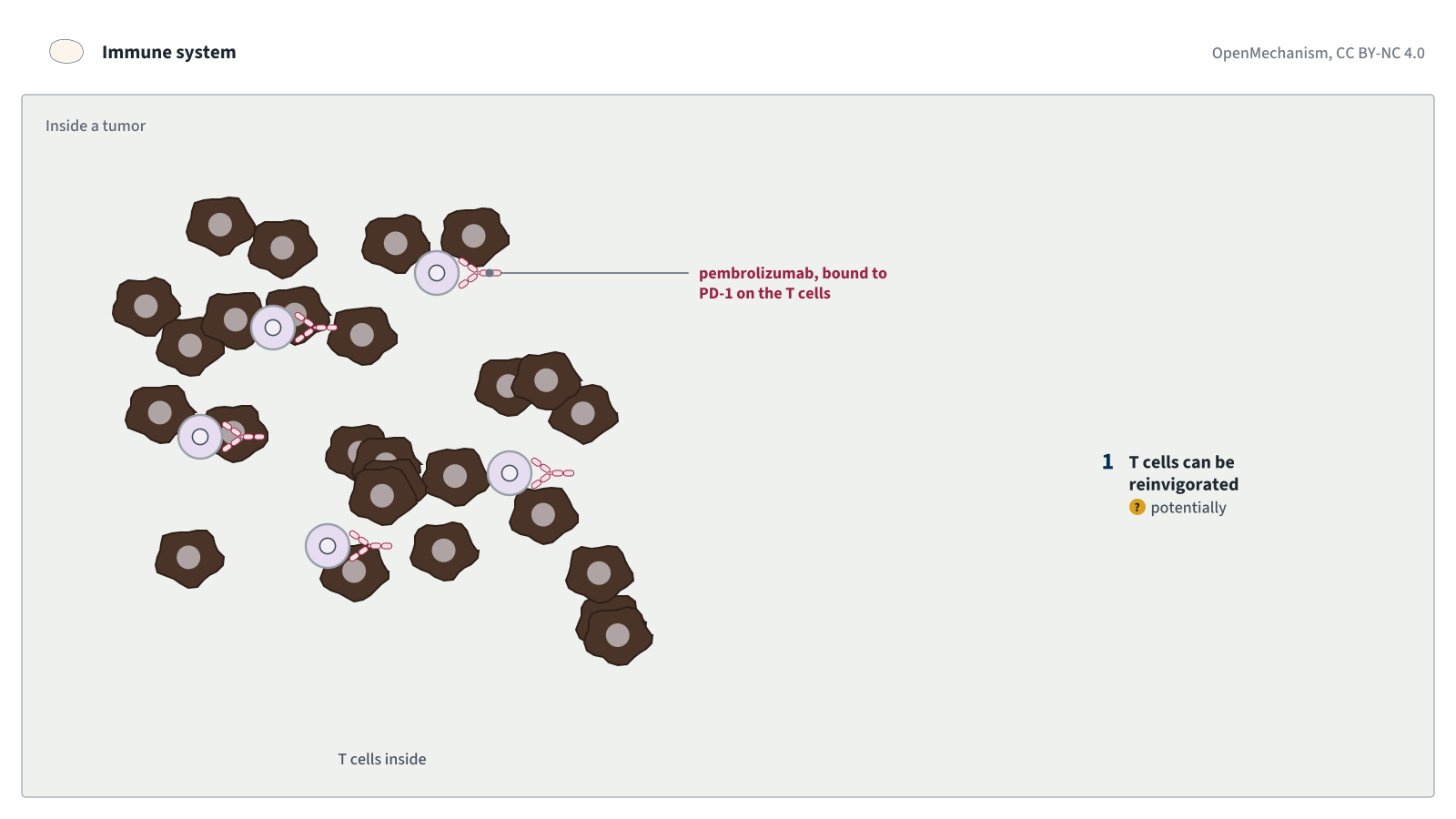
T cells can be reinvigorated. Blocking T-cell braking signals such as can reinvigorate, and perhaps expand, the anticancer immune response already there.1
What the source says
“Identification of cancer cell T cell inhibitory signals, including PD-L1, has prompted the development of a new class of cancer immunotherapy that specifically hinders immune effector inhibition, reinvigorating and potentially expanding preexisting anticancer immune responses.”
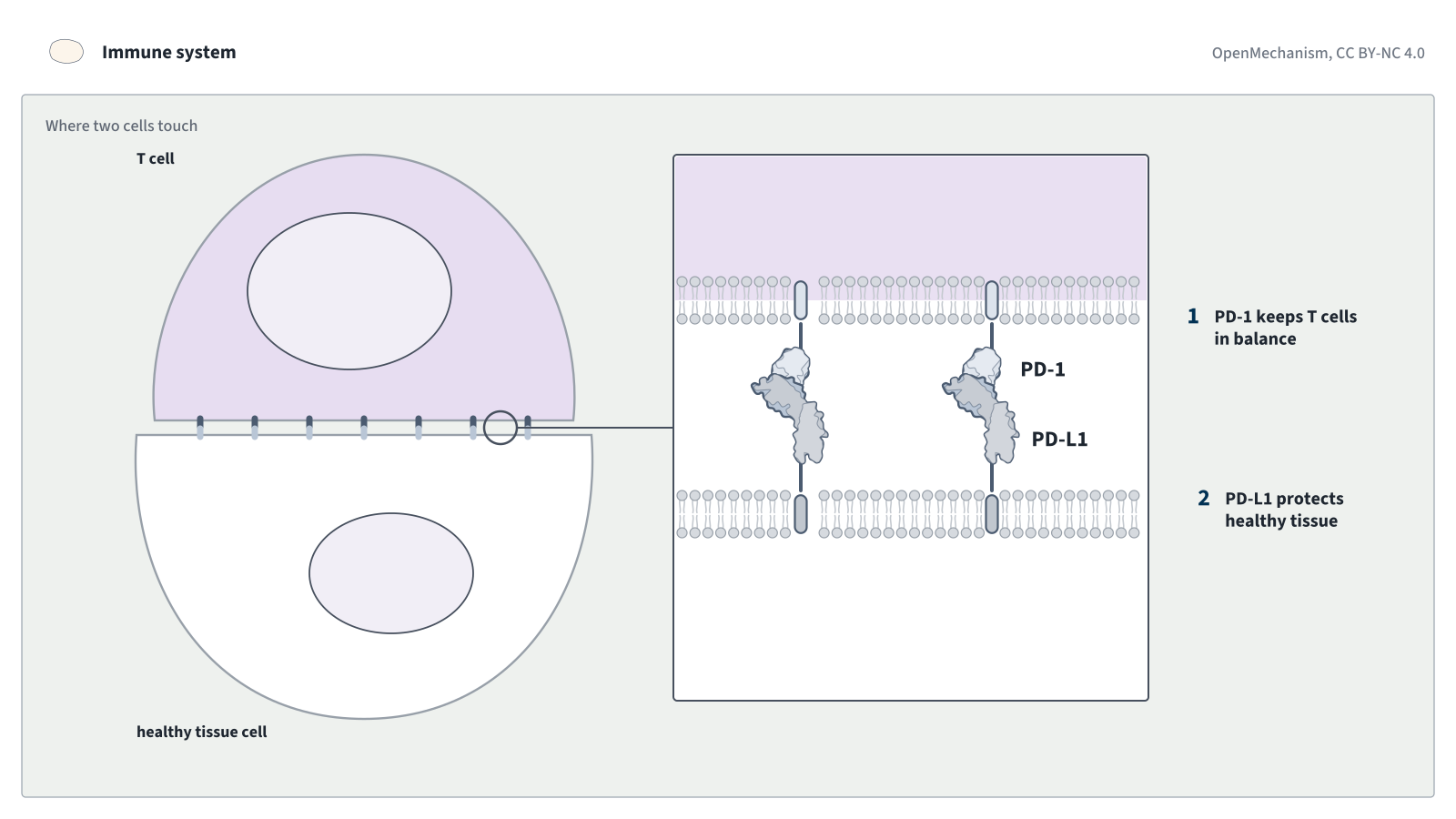
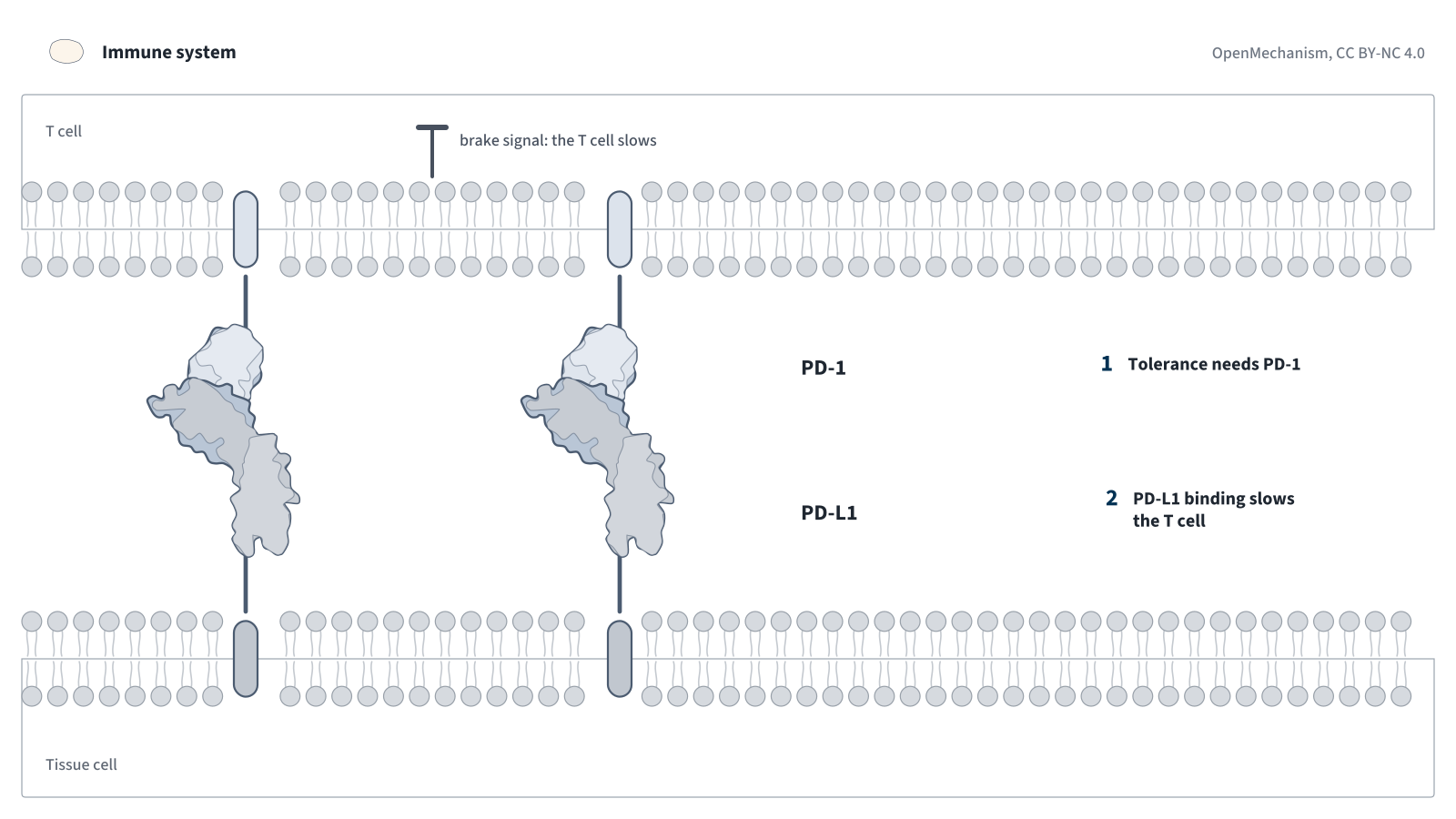
PD-1 keeps T cells in balance. PD-1 and its ligands PD-L1 and send braking signals that balance T-cell activation against tolerance and tissue damage.2
What the source says
“Programmed death 1 (PD-1) and its ligands, PD-L1 and PD-L2, deliver inhibitory signals that regulate the balance between T cell activation, tolerance, and immunopathology.”
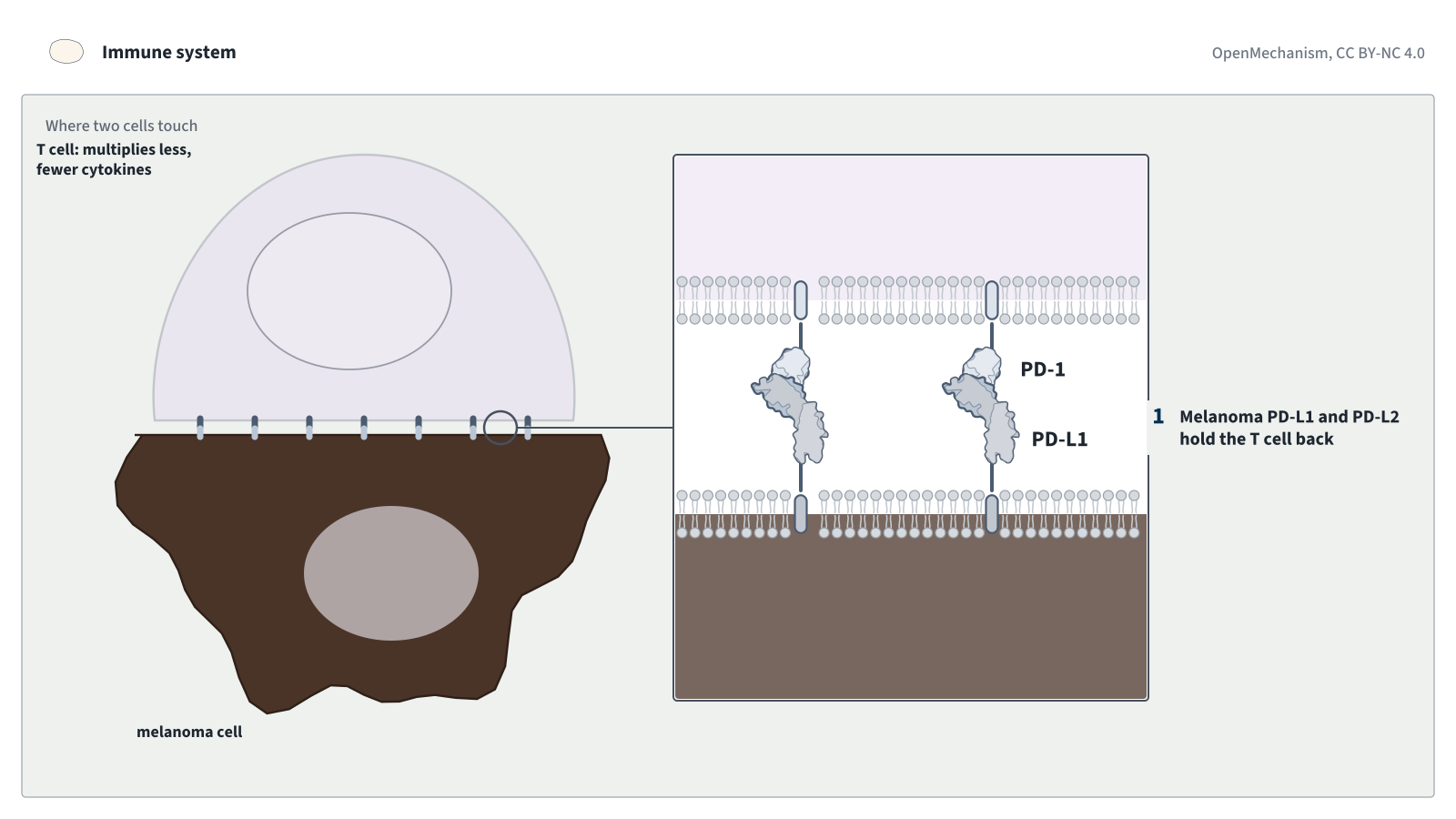
Melanoma PD-L1 and PD-L2 hold the T cell back. Melanoma cells carry PD-L1 and PD-L2; when these bind PD-1 on T cells, the T cells multiply less and make fewer .3,4
What the source says
“programmed cell death protein 1 ligand 1 (PDL1) and PDL2 are expressed by melanoma cells”
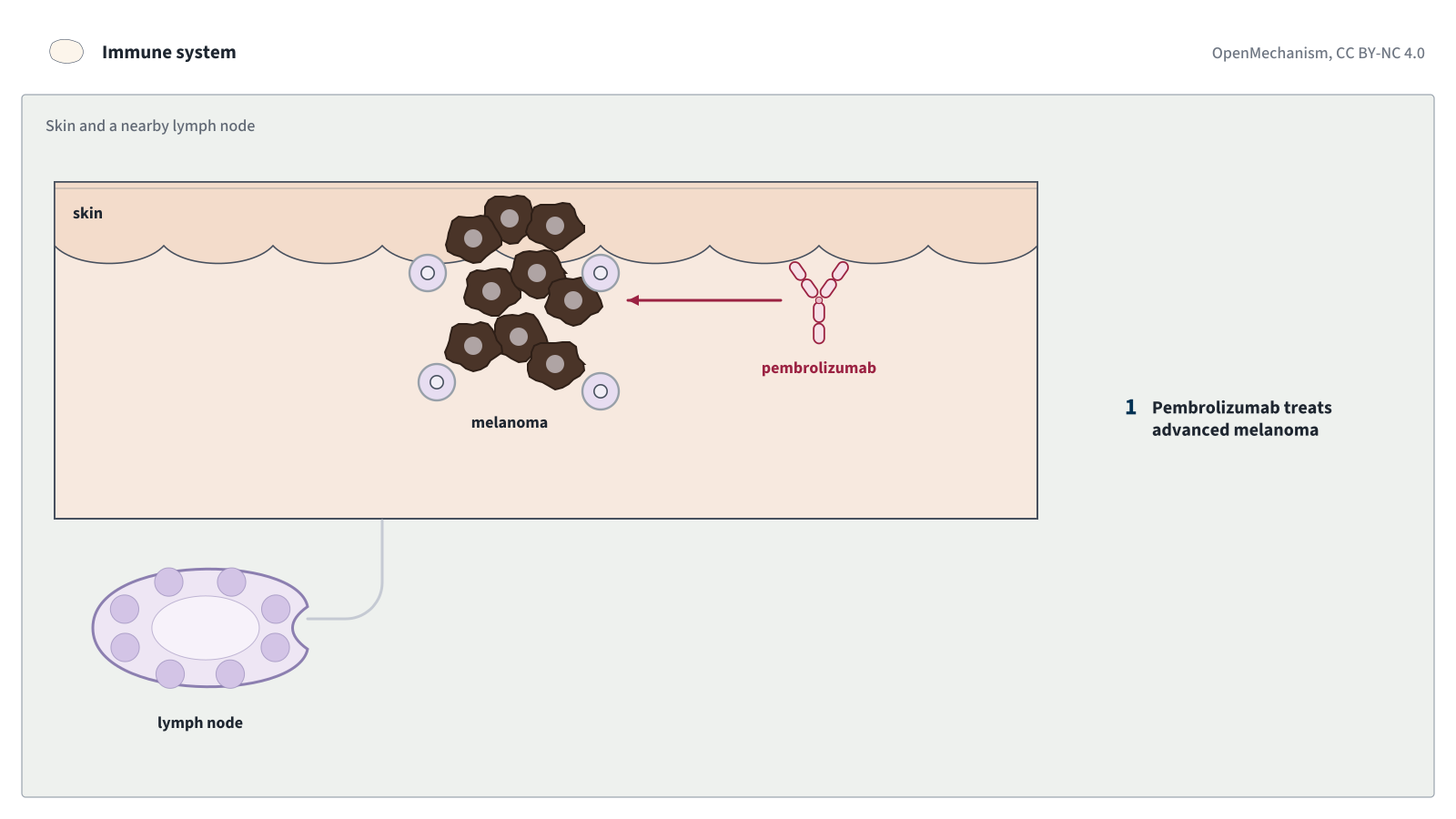
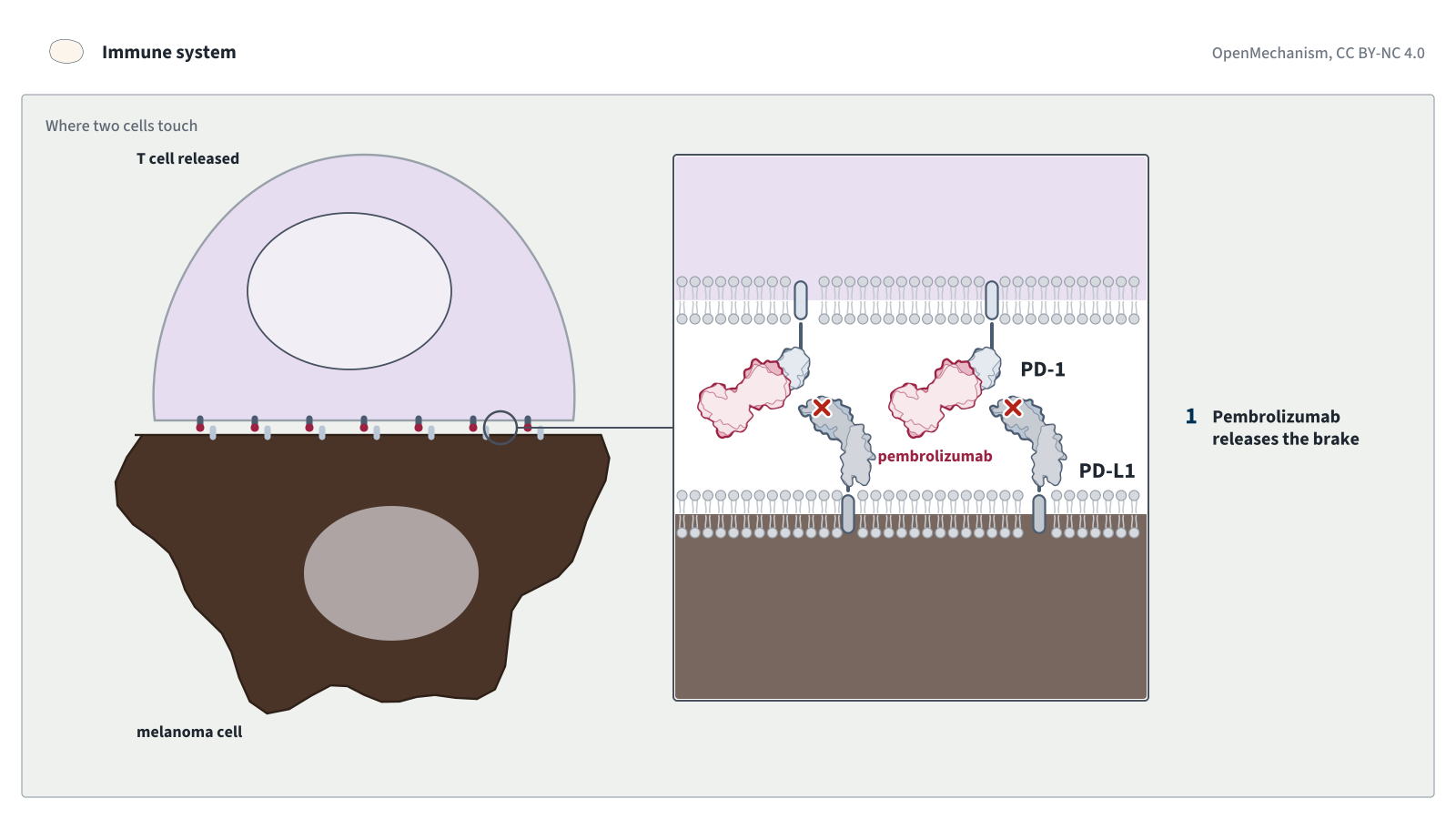
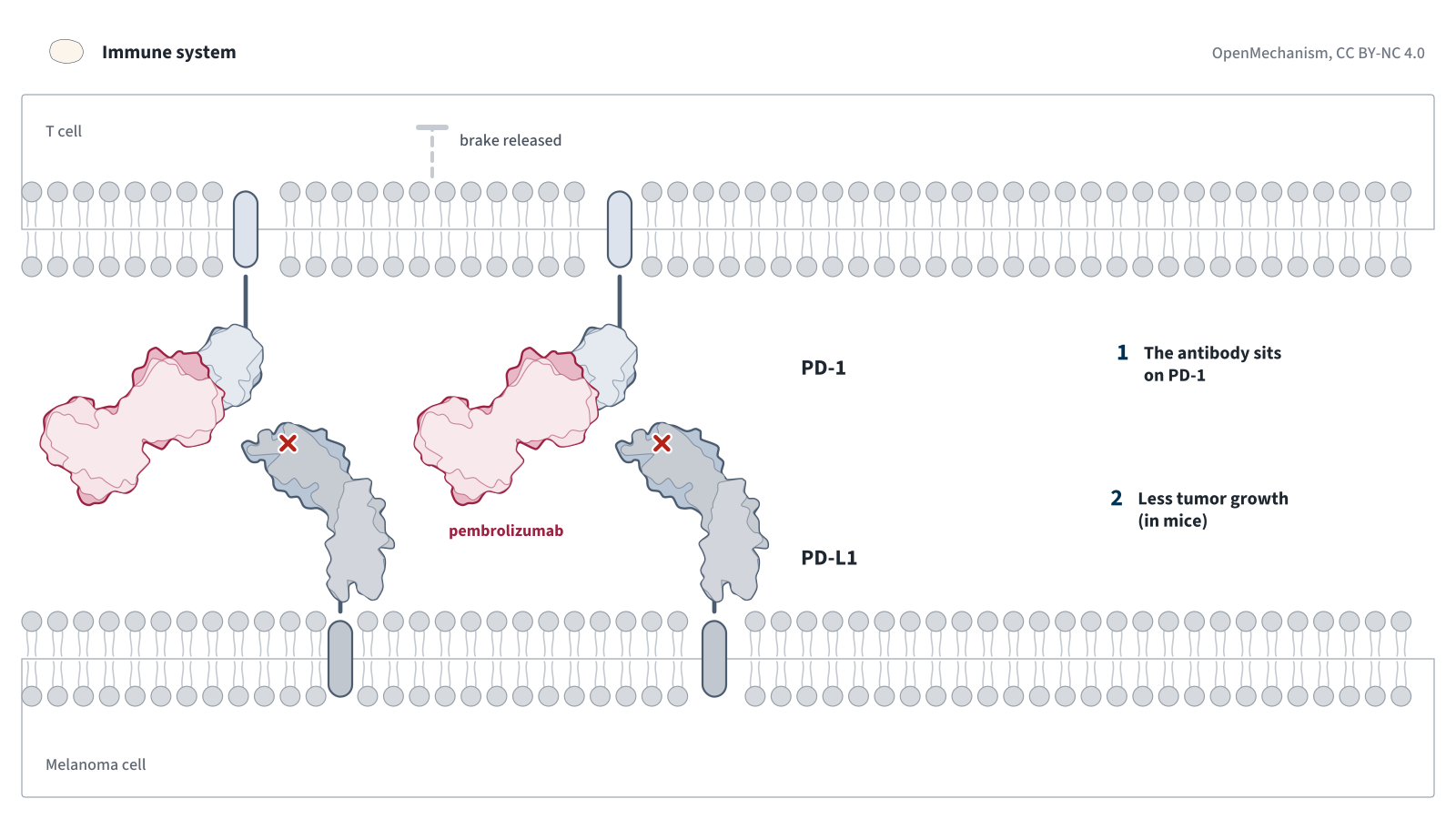
Pembrolizumab releases the brake. Pembrolizumab binds PD-1 and blocks PD-L1 and PD-L2, releasing the brake on the immune response against the tumor.3
What the source says
“Pembrolizumab is a monoclonal antibody that binds to the PD-1 receptor and blocks its interaction with PD-L1 and PD-L2, releasing PD-1 pathway-mediated inhibition of the immune response, including the anti-tumor immune response.”
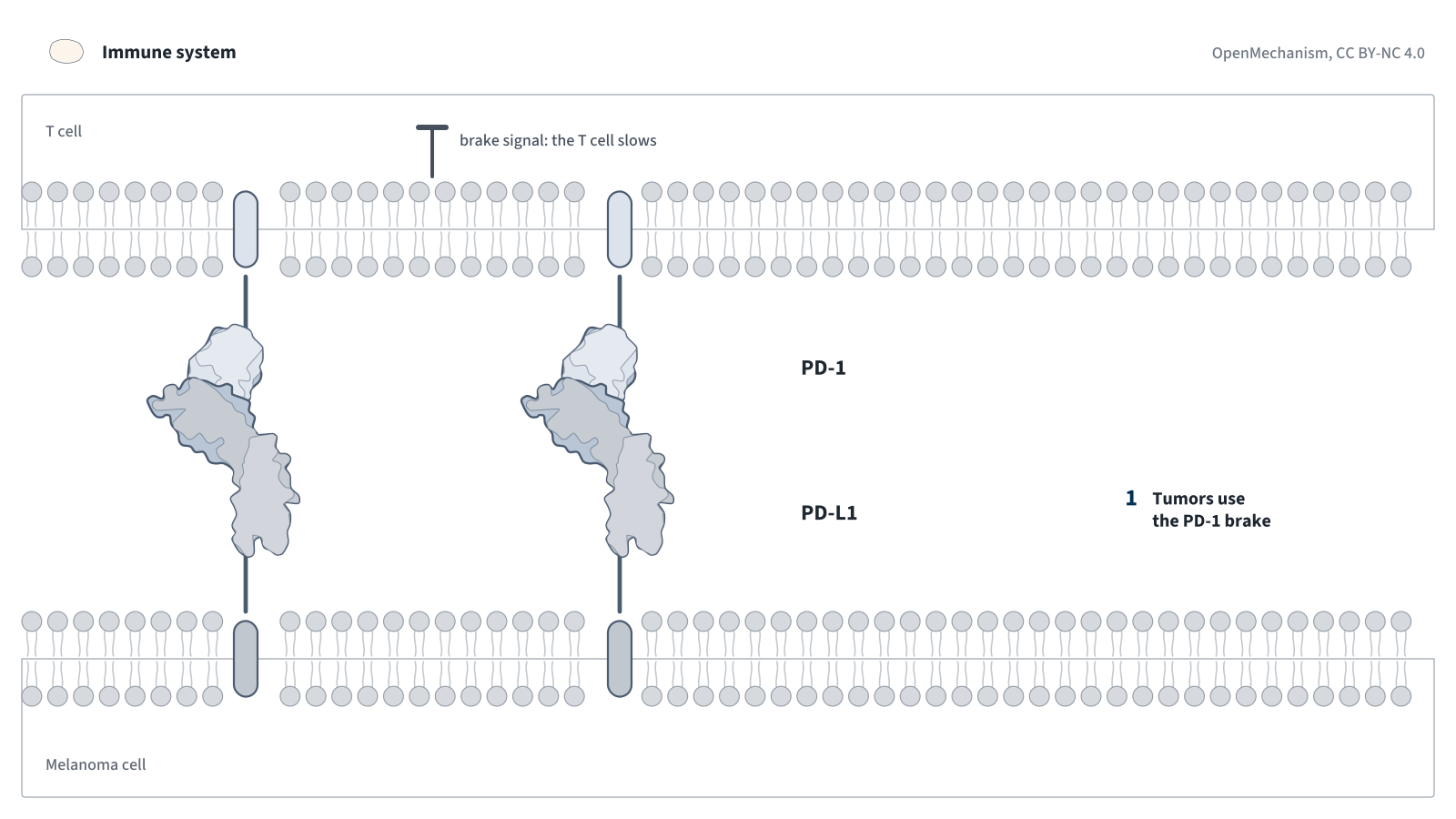
Tumors use the PD-1 brake. Tumors take over the PD-1 pathway to dampen immunity against them and survive.2
What the source says
“The PD-1:PD-L pathway also has been usurped by microorganisms and tumors to attenuate antimicrobial or tumor immunity and facilitate chronic infection and tumor survival.”
Cytokines. Signal molecules involved in inflammation, such as interleukin-2, interferon-γ, interleukin-4 and TNF-α, which T cells make.
PD-1
Programmed cell death protein 1. A receptor on T cells that acts as a brake when PD-L1 or PD-L2 binds it.
PD-L1
Programmed death-ligand 1. One of the two PD-1 ligands (PD-L1 and PD-L2): it binds PD-1 on T cells and holds them back, and some tumors make more of it.
PD-L2
PD-L2. One of the two PD-1 ligands (PD-L1 and PD-L2): it binds PD-1 on T cells and holds them back.
T cell
T lymphocyte. A white blood cell of the immune system.
Tran D. Immune attack on a tumor [Internet]. OpenMechanism; 2026 [updated 2026 Oct 19; cited 2026 Oct 19]. Available from: https://openmechanism.com/body/scales/immune