General anesthetics
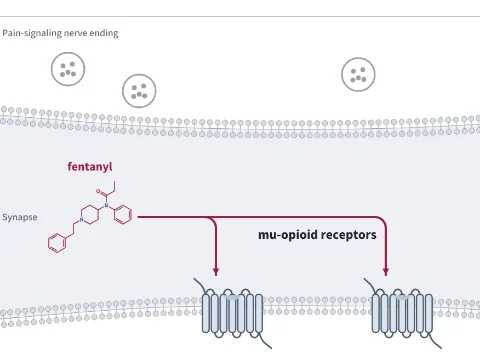
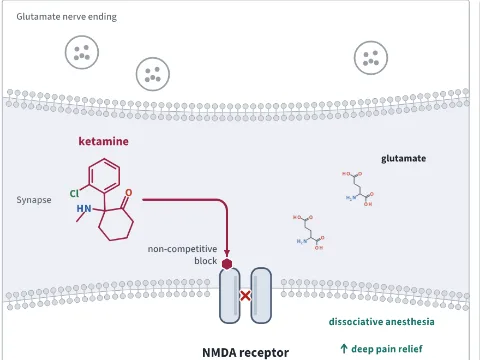
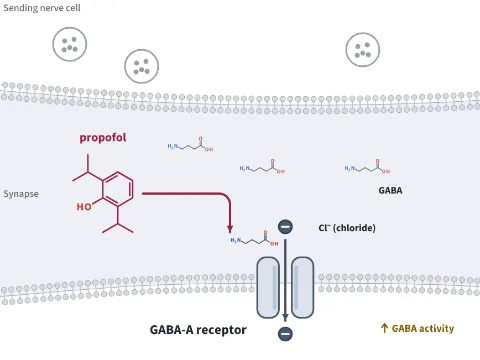
They bring on general anesthesia, by different actions: strengthening GABA-A receptors (thought to, for propofol), blocking NMDA receptors (ketamine) or switching on opioid receptors (opioid anesthetics such as fentanyl).
21 medicines in the Atlas share this group; 3 have a step-by-step page.
Step-by-step pages
Medicines in this class
| Medicine | Documented action | WHO ATC |
|---|---|---|
| AlfentanilMu opioid receptor agonist | Mu opioid receptor agonist | N01AH02 |
| AnileridineMu opioid receptor agonist; Kappa opioid receptor agonist | Mu opioid receptor agonist; Kappa opioid receptor agonist | N01AH05 |
| Chloroform withdrawn in some countries | N01AB02 | |
| DesfluraneGlycine receptor (alpha-1/beta) positive modulator; GABA-A receptor; anion channel positive allosteric modulator; Potassium channel subfamily K member 10 opener; Potassium channel subfamily K member 18 opener; Potassium channel subfamily K member 3 opener; Potassium channel subfamily K member 9 opener; Potassium channel subfamily K member 2 opener | Glycine receptor (alpha-1/beta) positive modulator; GABA-A receptor; anion channel positive allosteric modulator; Potassium channel subfamily K member 10 opener; Potassium channel subfamily K member 18 opener; Potassium channel subfamily K member 3 opener; Potassium channel subfamily K member 9 opener; Potassium channel subfamily K member 2 opener | N01AB07 |
| EnfluraneGlycine receptor (alpha-1/beta) positive modulator; GABA-A receptor; anion channel positive modulator; Potassium channel subfamily K member 10 opener; Potassium channel subfamily K member 18 opener; Potassium channel subfamily K member 3 opener; Potassium channel subfamily K member 9 opener; Potassium channel subfamily K member 2 opener | Glycine receptor (alpha-1/beta) positive modulator; GABA-A receptor; anion channel positive modulator; Potassium channel subfamily K member 10 opener; Potassium channel subfamily K member 18 opener; Potassium channel subfamily K member 3 opener; Potassium channel subfamily K member 9 opener; Potassium channel subfamily K member 2 opener | N01AB04 |
| EsketamineGlutamate [NMDA] receptor negative allosteric modulator | Glutamate [NMDA] receptor negative allosteric modulator | N01AX14, N06AX27 |
| EtomidateGABA-A receptor; anion channel positive modulator | GABA-A receptor; anion channel positive modulator | N01AX07 |
| Fentanyl step-by-step pageMu opioid receptor agonist | Mu opioid receptor agonist | N01AH01, N01AH51, N02AB03 |
| HalothaneGlycine receptor (alpha-1/beta) positive modulator; GABA-A receptor; anion channel positive allosteric modulator; Potassium channel subfamily K member 10 opener; Potassium channel subfamily K member 18 opener; Potassium channel subfamily K member 3 opener; Potassium channel subfamily K member 9 opener; Potassium channel subfamily K member 2 opener | Glycine receptor (alpha-1/beta) positive modulator; GABA-A receptor; anion channel positive allosteric modulator; Potassium channel subfamily K member 10 opener; Potassium channel subfamily K member 18 opener; Potassium channel subfamily K member 3 opener; Potassium channel subfamily K member 9 opener; Potassium channel subfamily K member 2 opener | N01AB01 |
| IsofluraneGlycine receptor (alpha-1/beta) positive modulator; GABA-A receptor; anion channel positive allosteric modulator; Potassium channel subfamily K member 10 opener; Potassium channel subfamily K member 18 opener; Potassium channel subfamily K member 3 opener; Potassium channel subfamily K member 9 opener; Potassium channel subfamily K member 2 opener | Glycine receptor (alpha-1/beta) positive modulator; GABA-A receptor; anion channel positive allosteric modulator; Potassium channel subfamily K member 10 opener; Potassium channel subfamily K member 18 opener; Potassium channel subfamily K member 3 opener; Potassium channel subfamily K member 9 opener; Potassium channel subfamily K member 2 opener | N01AB06 |
| Ketamine step-by-step pageGlutamate [NMDA] receptor negative allosteric modulatorAlso called Ketalar | Glutamate [NMDA] receptor negative allosteric modulator | N01AX03 |
| MethohexitalGABA-A receptor; anion channel positive allosteric modulator | GABA-A receptor; anion channel positive allosteric modulator | N01AF01, N05CA15 |
| Nitrous oxide | N01AX13, N01AX63 | |
| OxybateGABA-B receptor agonist | GABA-B receptor agonist | N01AX11, N07XX04 |
| Propanidid withdrawn in some countriesButyrylcholinesterase inhibitor; Acetylcholinesterase inhibitor | Butyrylcholinesterase inhibitor; Acetylcholinesterase inhibitor | N01AX04 |
| Propofol step-by-step pageGABA-A receptor; anion channel positive allosteric modulatorAlso called Diprivan | GABA-A receptor; anion channel positive allosteric modulator | N01AX10 |
| RemifentanilMu opioid receptor agonist | Mu opioid receptor agonist | N01AH06 |
| SevofluraneGlycine receptor (alpha-1/beta) positive modulator; GABA-A receptor; anion channel positive allosteric modulator; Potassium channel subfamily K member 10 opener; Potassium channel subfamily K member 18 opener; Potassium channel subfamily K member 3 opener; Potassium channel subfamily K member 9 opener; Potassium channel subfamily K member 2 opener | Glycine receptor (alpha-1/beta) positive modulator; GABA-A receptor; anion channel positive allosteric modulator; Potassium channel subfamily K member 10 opener; Potassium channel subfamily K member 18 opener; Potassium channel subfamily K member 3 opener; Potassium channel subfamily K member 9 opener; Potassium channel subfamily K member 2 opener | N01AB08 |
| SufentanilMu opioid receptor agonist | Mu opioid receptor agonist | N01AH03 |
| ThiopentalGABA-A receptor; anion channel positive allosteric modulator | GABA-A receptor; anion channel positive allosteric modulator | N01AF03, N05CA19 |
| XenonDiagnostic agent; MRI contrast agent | Diagnostic agent; MRI contrast agent | N01AX15, V04CX12, V09EX02 |
How this list is made
A medicine is listed when one of the medicine's WHO ATC codes is in N01A. “Withdrawn in some countries” comes from the ChEMBL withdrawn flag. Medicines are grouped by how they work; this is not a list of treatments or advice about which to use.
- ChEMBLMechanism-of-action records for each medicine (Atlas snapshot)
- WHO ATC classificationTherapeutic group codes used to narrow the list
Spotted a mistake? Report an error (hello@openmechanism.com). Since launch, every published error we fix is listed on the corrections page.