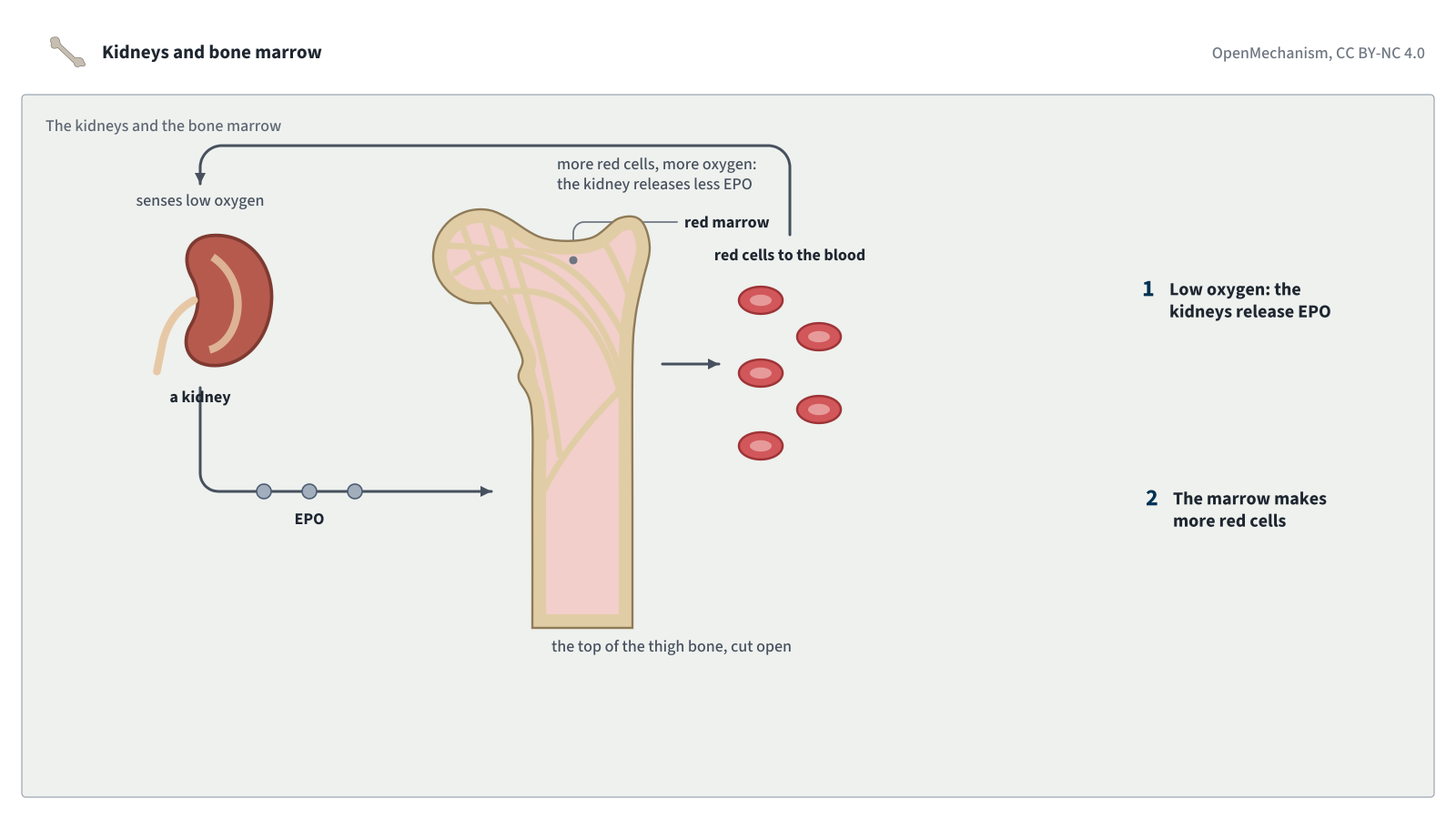
Low oxygen: the kidneys release EPO. When blood oxygen is low, less oxygen reaches the tissue fluid of the kidneys, and cells there, the interstitial fibroblasts, release the hormone (EPO) into the blood.1,2
What the source says
“In response to hypoxemia, less oxygen will exit the vessels supplying the kidney, resulting in hypoxia (low oxygen concentration) in the tissue fluid of the kidney where oxygen concentration is actually monitored.”
The marrow makes more red cells. EPO prompts the red bone marrow to make red blood cells, in adults mostly in the skull, pelvis, spine, breastbone and the tops of the thigh and upper arm bones. As oxygen rises again, the kidneys release less EPO: a negative-feedback loop.1,2
“in adults, the process is largely restricted to the cranial and pelvic bones, the vertebrae, the sternum, and the proximal epiphyses of the femur and humerus.”
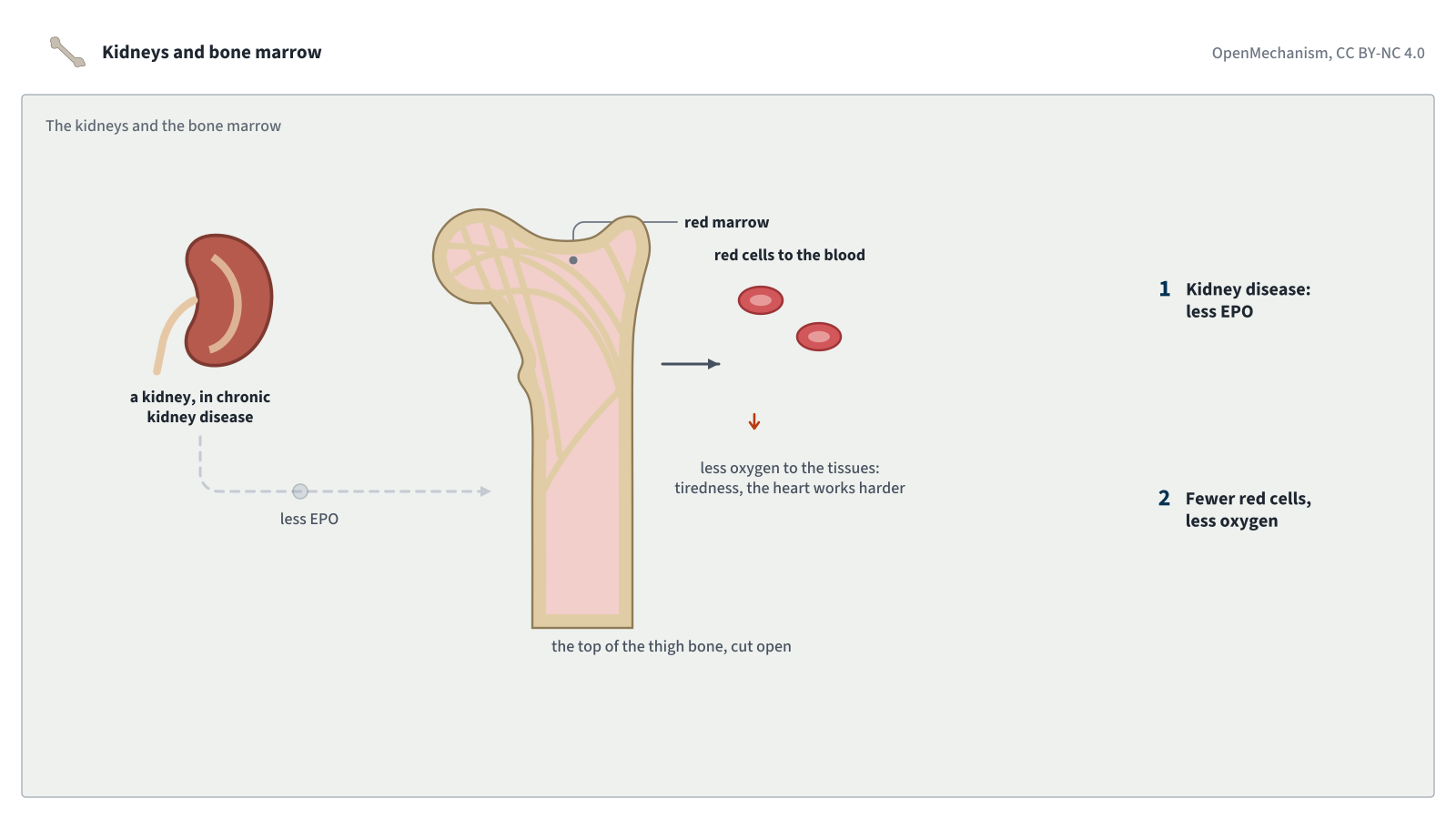
Kidney disease: less EPO. Anemia is common in chronic kidney disease. Its causes include the kidneys making less EPO, too little iron, and inflammation with more hepcidin.1,3
What the source says
“Anemia is a common complication in chronic kidney disease (CKD), and is associated with a reduced quality of life, and an increased morbidity and mortality.”
“They include a decrease in endogenous erythropoietin (EPO) production, absolute and/or functional iron deficiency, and inflammation with increased hepcidin levels, among others.”
Fewer red cells, less oxygen. With fewer red cells, less oxygen reaches the tissues: anemia brings tiredness and lethargy, and the heart and lungs work harder.1
What the source says
“The effects of the various anemias are widespread, because reduced numbers of RBCs or hemoglobin will result in lower levels of oxygen being delivered to body tissues.”
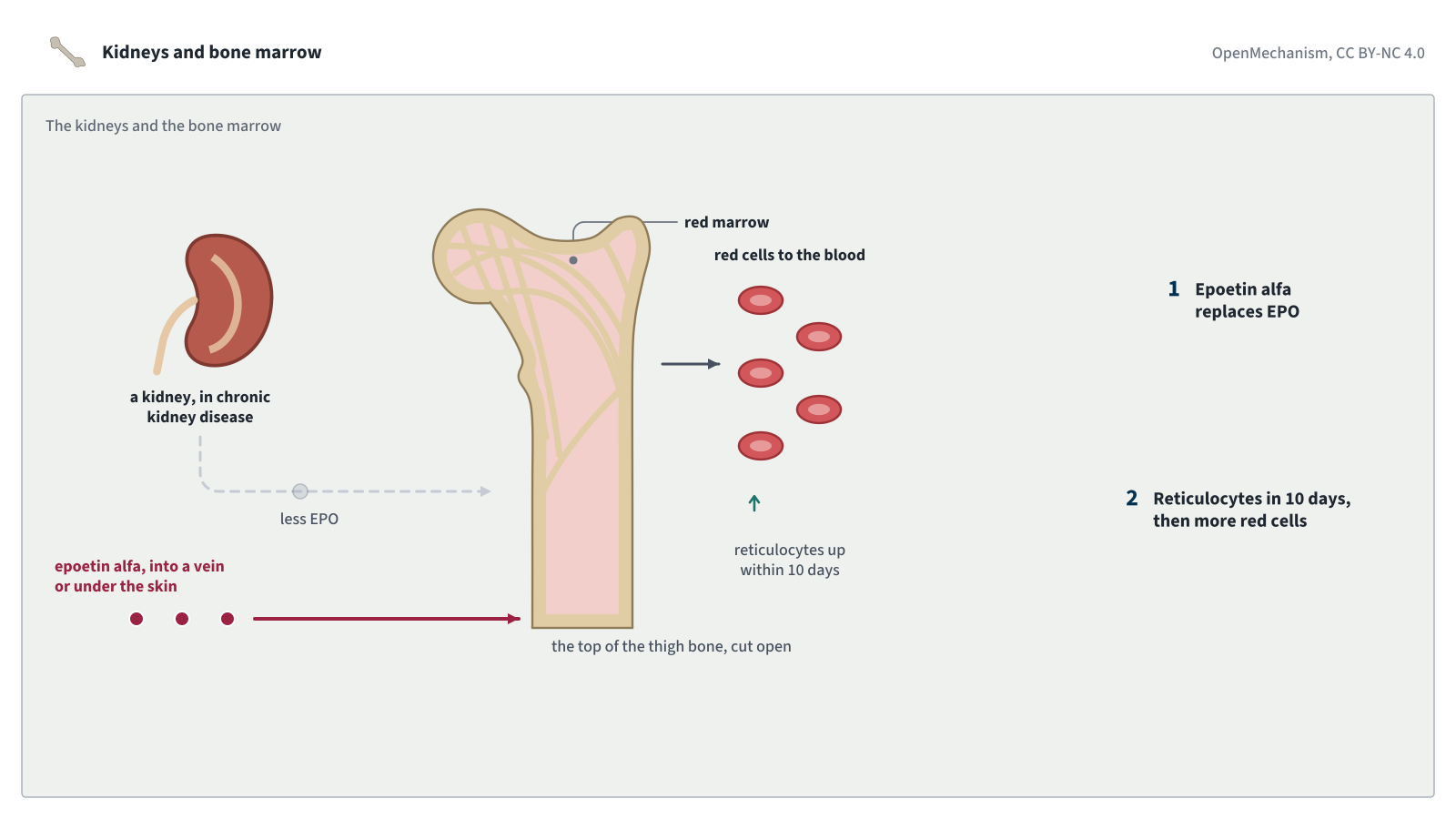
Epoetin alfa replaces EPO. Epoetin alfa is made by cells given the human erythropoietin gene and has the same amino acid sequence as natural erythropoietin. Given into a vein or under the skin, it treats the anemia of chronic kidney disease, on dialysis or not.4
What the source says
“is produced by mammalian cells into which the human erythropoietin gene has been introduced”
Reticulocytes in 10 days, then more red cells. It works by the same mechanism as the body's own erythropoietin: rise within 10 days, then the red cell count, hemoglobin and hematocrit, usually within 2 to 6 weeks.4
What the source says
“Epogen stimulates erythropoiesis by the same mechanism as endogenous erythropoietin.”
“Epogen increases the reticulocyte count within 10 days of initiation, followed by increases in the RBC count, hemoglobin, and hematocrit, usually within 2 to 6 weeks.”
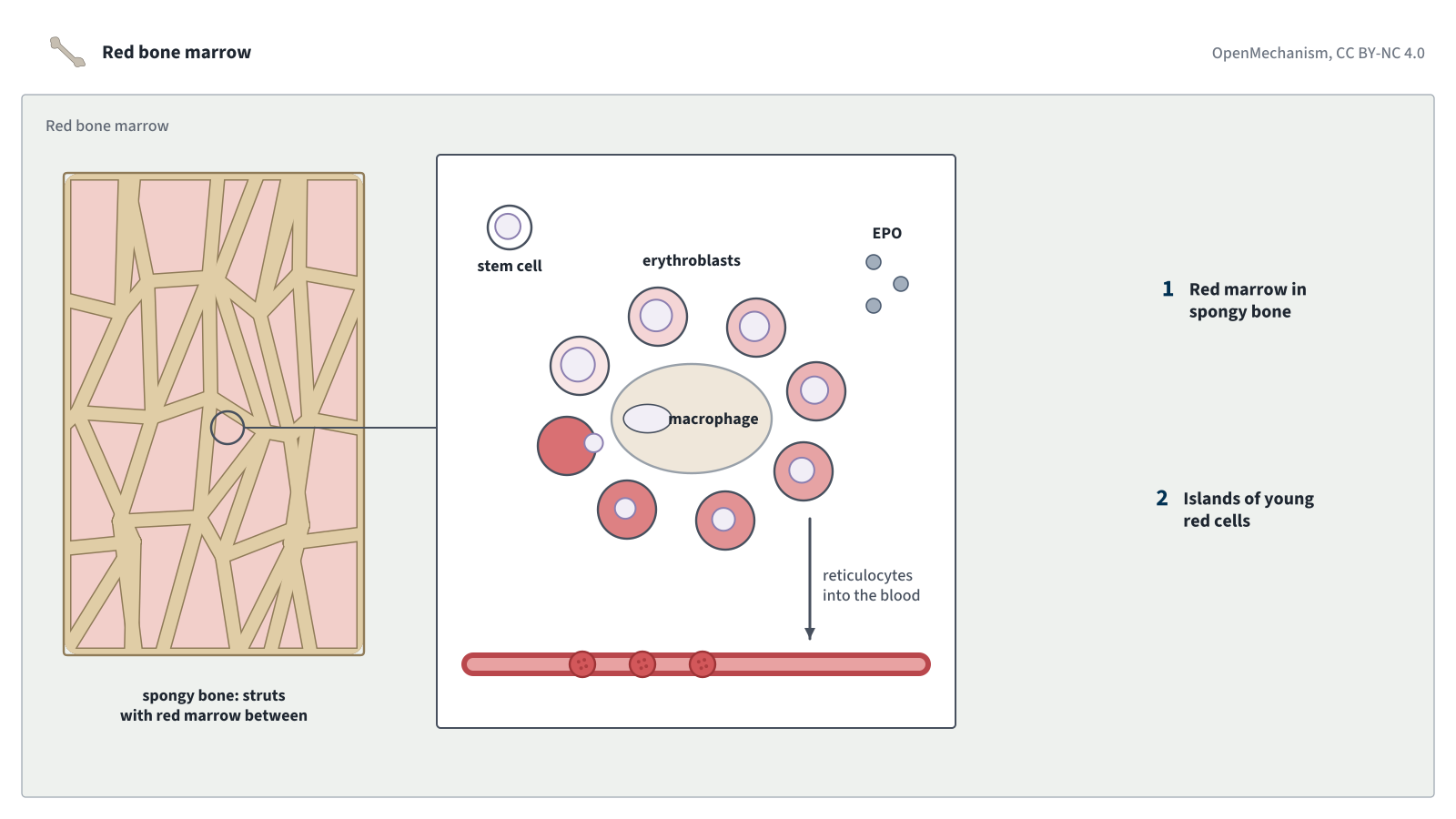
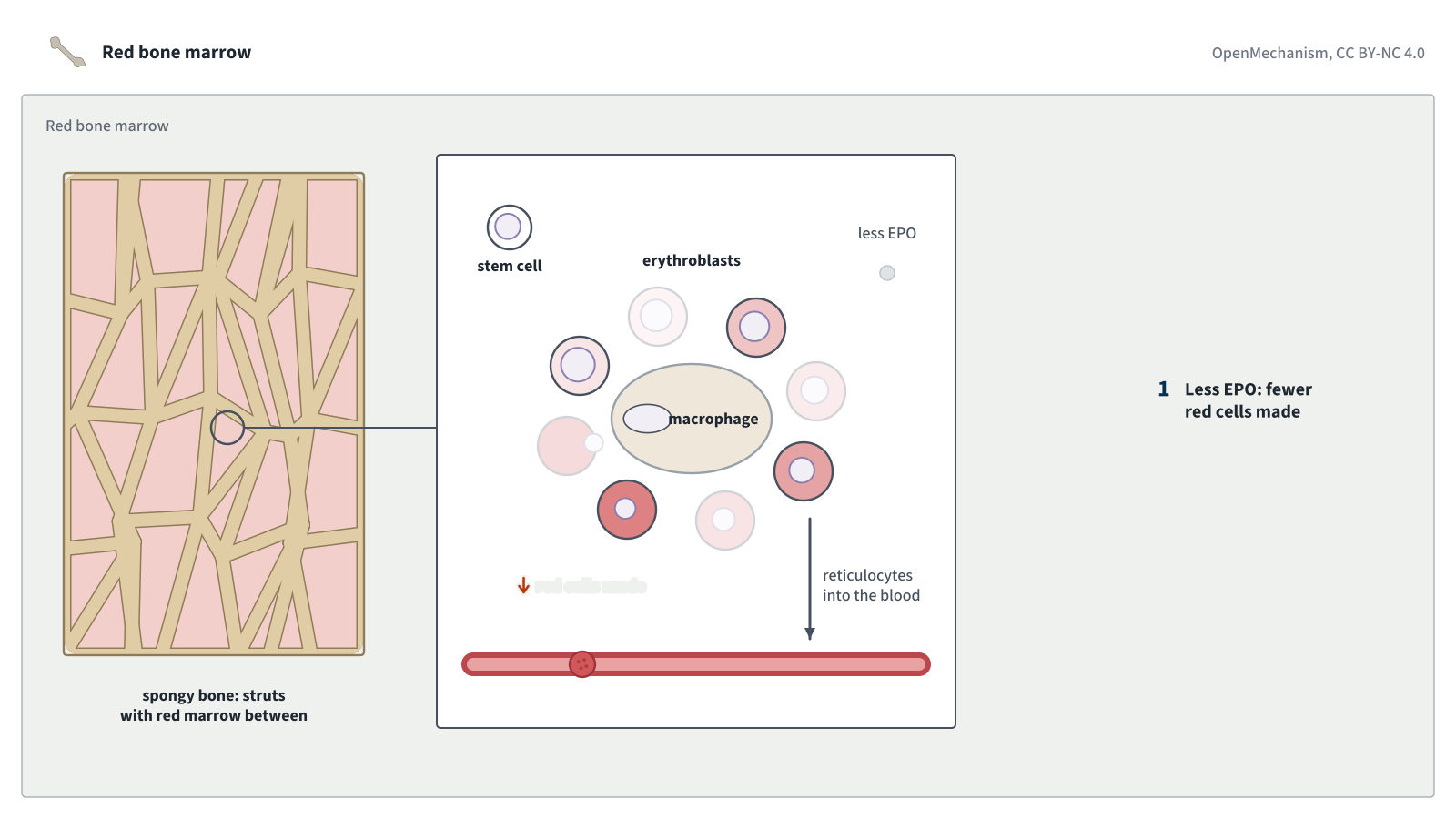
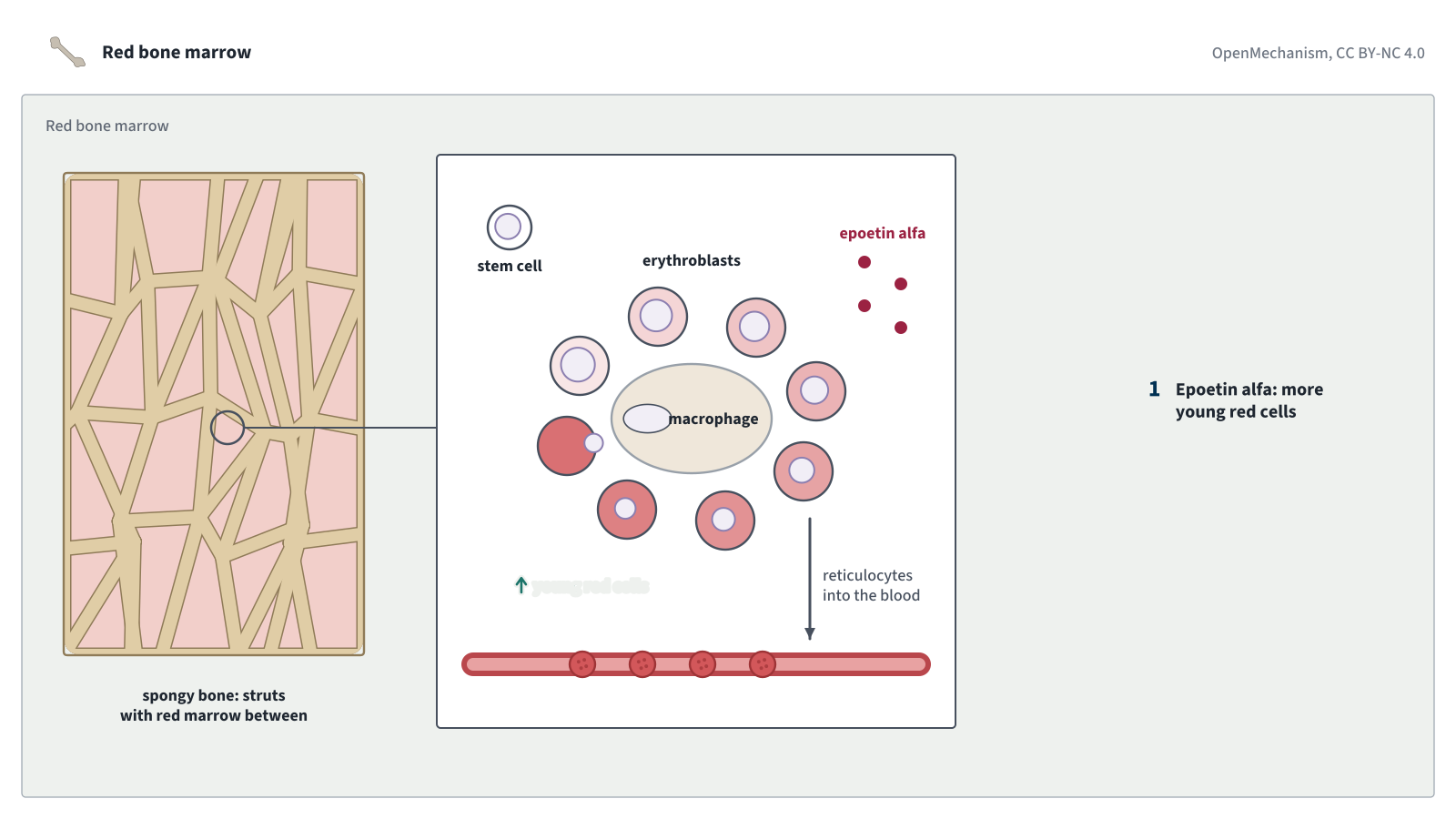
Red marrow in spongy bone. After birth, blood cells are made mostly in the red marrow, a connective tissue in the spaces of spongy bone. All of them come from its stem cells; myeloid stem cells give rise to the red cells.2
What the source says
“Following birth, most hemopoiesis occurs in the red marrow, a connective tissue within the spaces of spongy (cancellous) bone tissue.”
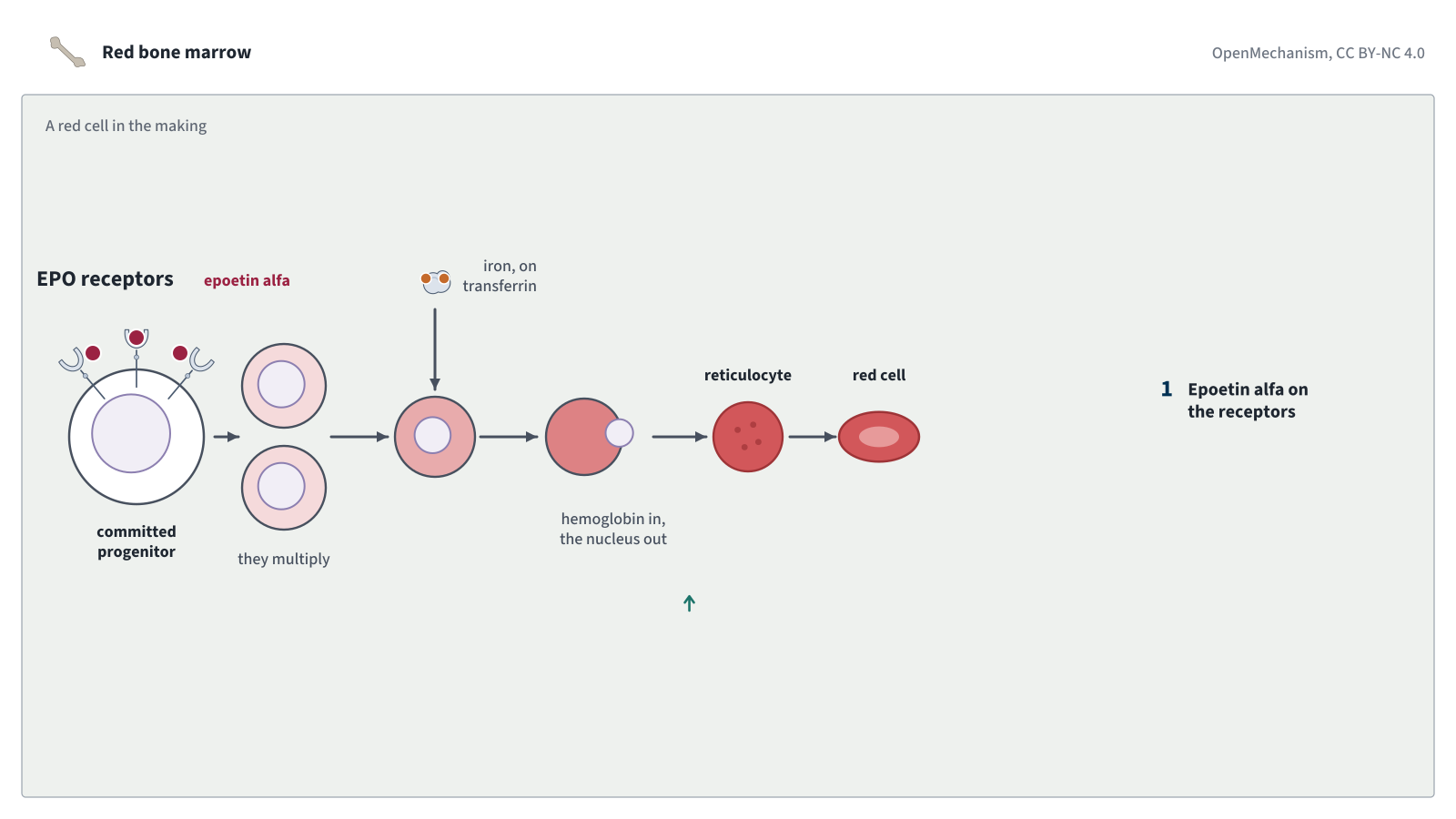
Islands of young red cells. Young red cells multiply, mature and lose their nucleus in erythroblastic islands, erythroblasts around a central macrophage; then, as reticulocytes, they pass into the blood.1,5
What the source says
“Erythroblastic islands, the specialized niches in which erythroid precursors proliferate, differentiate, and enucleate”
“During the first day or two that it is in the circulation, an immature erythrocyte, known as a reticulocyte, will still typically contain remnants of organelles.”
Epoetin alfa: more young red cells. Epoetin alfa, chemically identical or similar to the body's EPO and working by the same mechanism, reaches EPO receptors on committed red cell progenitors in the marrow, so they multiply and mature into red cells.4,6
What the source says
“A recombinant therapeutic agent which is chemically identical to or similar to the endogenous cytokine human erythropoietin (EPO).”
“circulating EPO binds to EPO receptors on the surface of committed erythroid progenitors in the bone marrow resulting in their replication and maturation into functional erythrocytes.”
Clinical study: In a combined phase I and II trial in 25 anemic people on hemodialysis, given recombinant human erythropoietin into a vein; the trial measured transfusions, the hematocrit and reticulocytes, not how it works: These results demonstrate that recombinant human erythropoietin is effective, can eliminate the need for transfusions with their risks of immunologic sensitization, infection, and iron overload, and can restore the hematocrit to normal in many patients with the anemia of end-stage renal disease.Eschbach JW et al., N Engl J Med 1987 (PMID 3537801)
This study was picked with a literature search and is not yet checked by our reviewer.
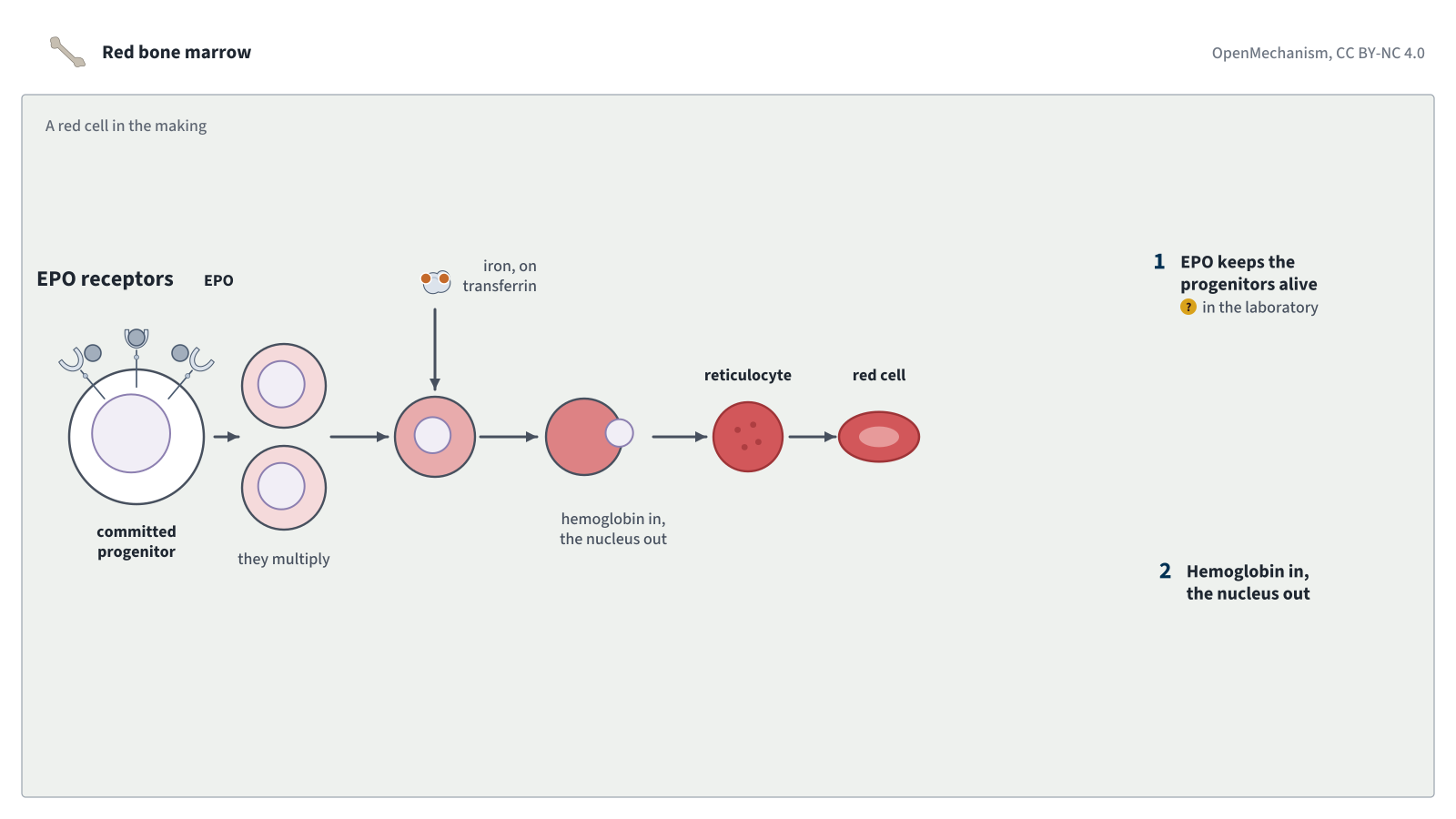
EPO keeps the progenitors alive. EPO binds receptors on committed red cell progenitors, which multiply and mature. In laboratory experiments, progenitor cells given erythropoietin survived and became reticulocytes; without it they died by programmed cell death (apoptosis).6,7
What the source says
“circulating EPO binds to EPO receptors on the surface of committed erythroid progenitors in the bone marrow resulting in their replication and maturation into functional erythrocytes.”
“In the absence of erythropoietin, erythroid progenitor cells accumulated DNA cleavage fragments characteristic of those found in programmed cell death (apoptosis) by 2 to 4 hours and began dying by 16 hours.”
Hemoglobin in, the nucleus out. Iron for hemoglobin comes to the marrow bound to transferrin and attaches to the precursors. Proerythroblasts become reticulocytes, which eject their nucleus and most other organelles before maturing into red cells.1,2
What the source says
“When EPO stimulates the production of erythrocytes, iron is released from storage, bound to transferrin, and carried to the red marrow where it attaches to erythrocyte precursors.”
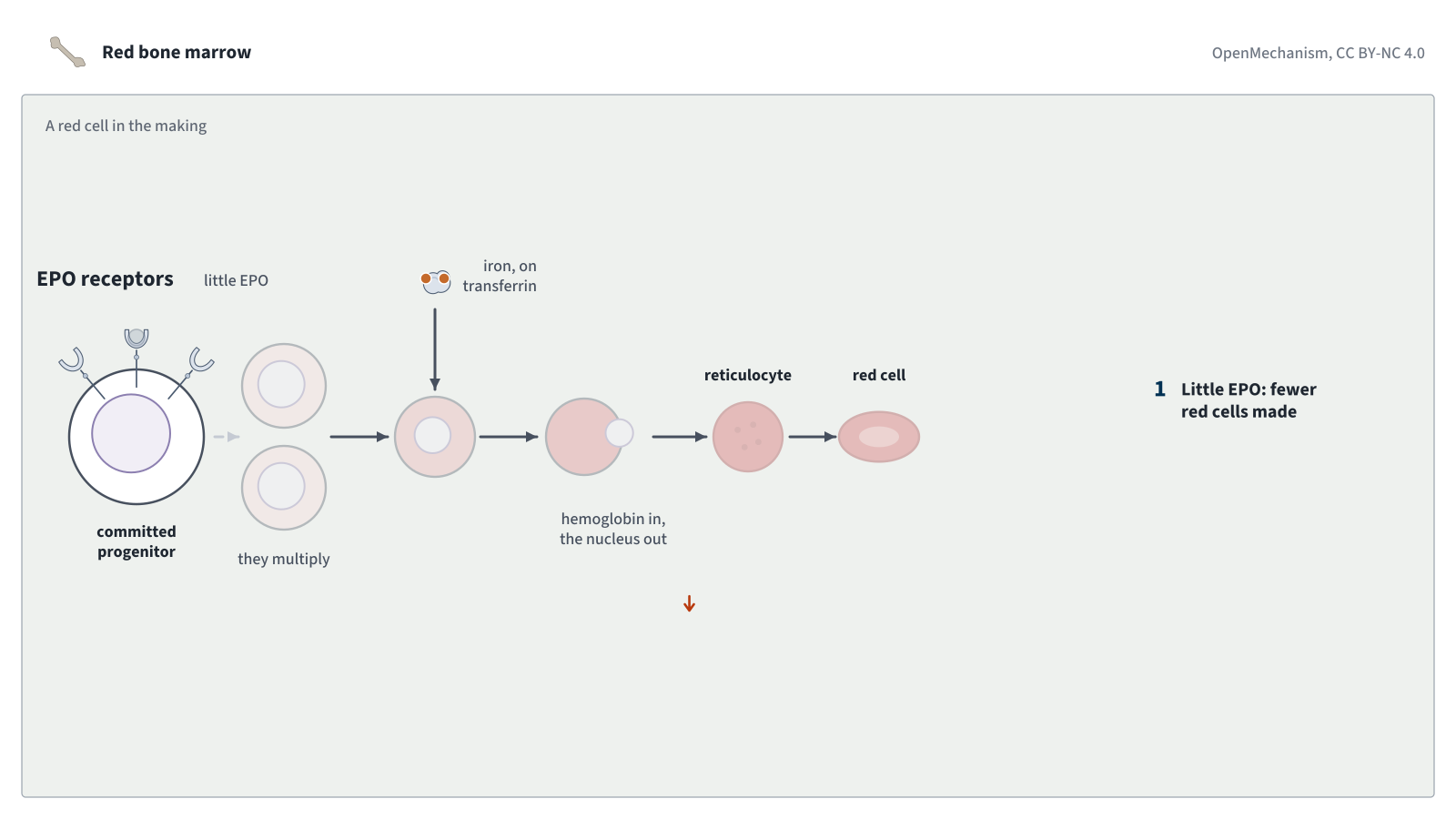
Little EPO: fewer red cells made. In chronic kidney disease the kidneys often make less EPO, the hormone that prompts red cell production, so fewer red cells are made.1,2
What the source says
“These include chronic kidney diseases often associated with a decreased production of EPO”
Epoetin alfa on the receptors. Epoetin alfa works by the same mechanism as the body's own erythropoietin, on the EPO receptors of committed red cell progenitors, which multiply and mature into red cells.4,6
What the source says
“Epogen stimulates erythropoiesis by the same mechanism as endogenous erythropoietin.”
“circulating EPO binds to EPO receptors on the surface of committed erythroid progenitors in the bone marrow resulting in their replication and maturation into functional erythrocytes.”
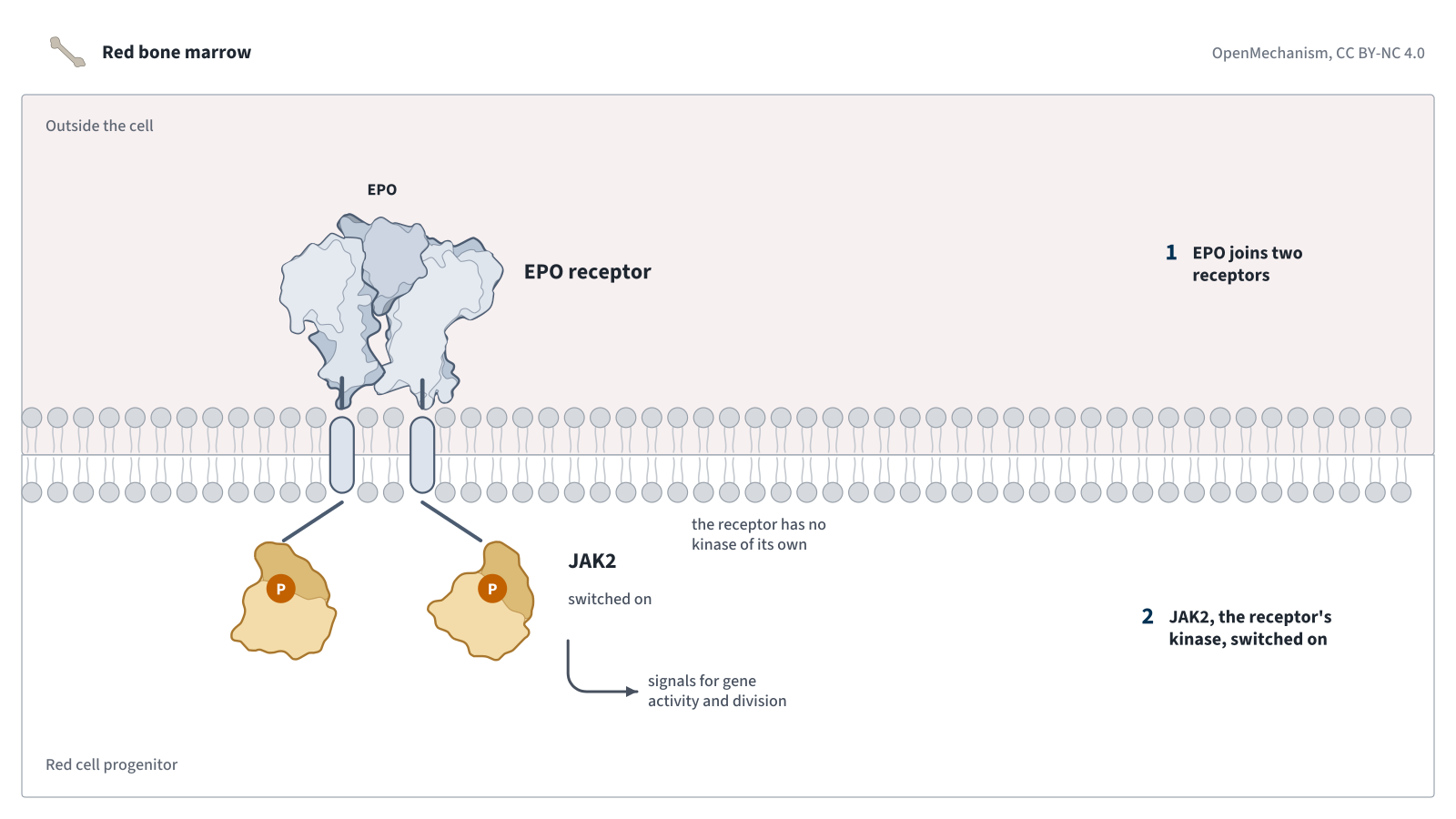
EPO joins two receptors. EPO, needed for precursor cells to multiply and mature into red cells, activates them by binding two EPO receptors on the cell surface and setting their orientation, which starts a chain of phosphorylation inside the cell.8
What the source says
“Human erythropoietin is a haematopoietic cytokine required for the differentiation and proliferation of precursor cells into red blood cells.”
“It activates cells by binding and orientating two cell-surface erythropoietin receptors (EPORs) which trigger an intracellular phosphorylation cascade.”
JAK2, the receptor's kinase, switched on. The receptor has no kinase of its own. JAK2, a kinase bound to the receptor's tail near the membrane, is phosphorylated and switched on when EPO binds; the signal is linked to gene activity and cell division.9
What the source says
“Although EPOR is a member of the cytokine receptor superfamily and lacks a kinase domain, EPO induces tyrosine phosphorylation, which is correlated with gene transcription and mitogenesis.”
Schematic, not to scale. JAK2 outline from its kinase domain. License CC BY-NC 4.0.
?Step 1: inferred
The drawing infers this from the normal state, which Witthuhn and colleagues' laboratory study describes: Here we demonstrate that EPO induces tyrosine phosphorylation of JAK2 kinase and activates its in vitro autophosphorylation.
Clinical study: In a records study of 500 hospital patients, blood EPO levels were compared with how anemic they were, with and without chronic kidney disease; it measured EPO in the blood, not the receptor: In anaemic patients with Hb < 11 g/dl, relative EPO deficiency defined as EPO concentrations below the 25th percentile was present in 38%, 67%, 93% and 100% of the patients with CKD stages 1-5, respectively.Artunc F, Risler T, Nephrol Dial Transplant 2007 (PMID 17556407)
This study was picked with a literature search and is not yet checked by our reviewer.
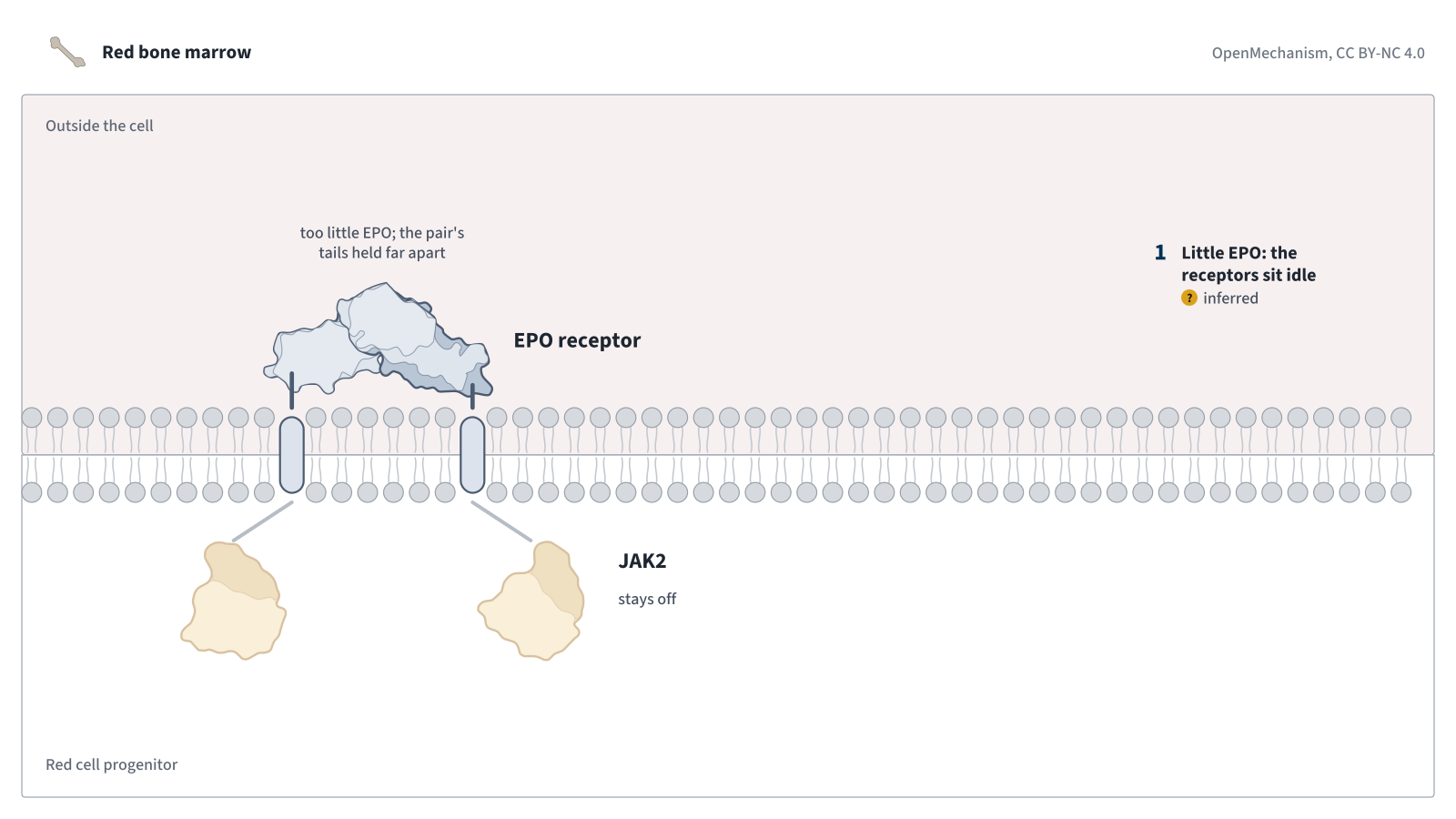
Little EPO: the receptors sit idle. In chronic kidney disease the kidneys often make less EPO, and JAK2, which EPO switches on, stays off. Without EPO, a crystal structure showed the receptors' outer parts paired in a way that would keep their parts in the membrane and inside the cell too far apart for JAK2 to work.1,9,10
What the source says
“These include chronic kidney diseases often associated with a decreased production of EPO”
“The crystal structure of the extracellular domain of EPOR in its unliganded form at 2.4 angstrom resolution has revealed a dimer in which the individual membrane-spanning and intracellular domains would be too far apart to permit phosphorylation by JAK2.”
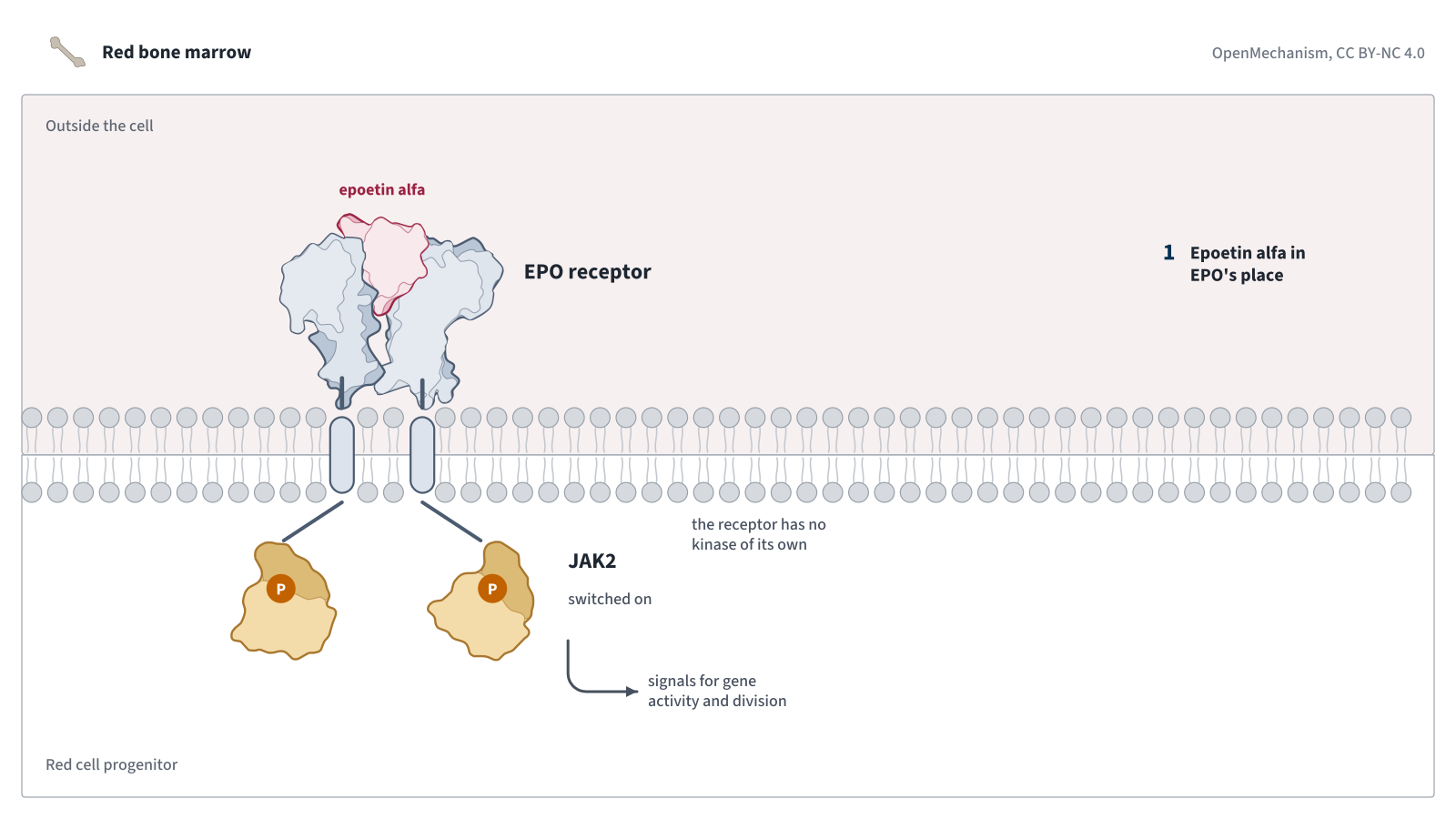
Epoetin alfa in EPO's place. Epoetin alfa has the same amino acid sequence as natural erythropoietin and works by the same mechanism, binding two receptors in EPO's place.4,8
What the source says
“The product contains the identical amino acid sequence of isolated natural erythropoietin.”
“It activates cells by binding and orientating two cell-surface erythropoietin receptors (EPORs) which trigger an intracellular phosphorylation cascade.”
Tran D. Making red cells [Internet]. OpenMechanism; 2026 [updated 2026 Nov 13; cited 2026 Nov 13]. Available from: https://openmechanism.com/body/scales/marrow