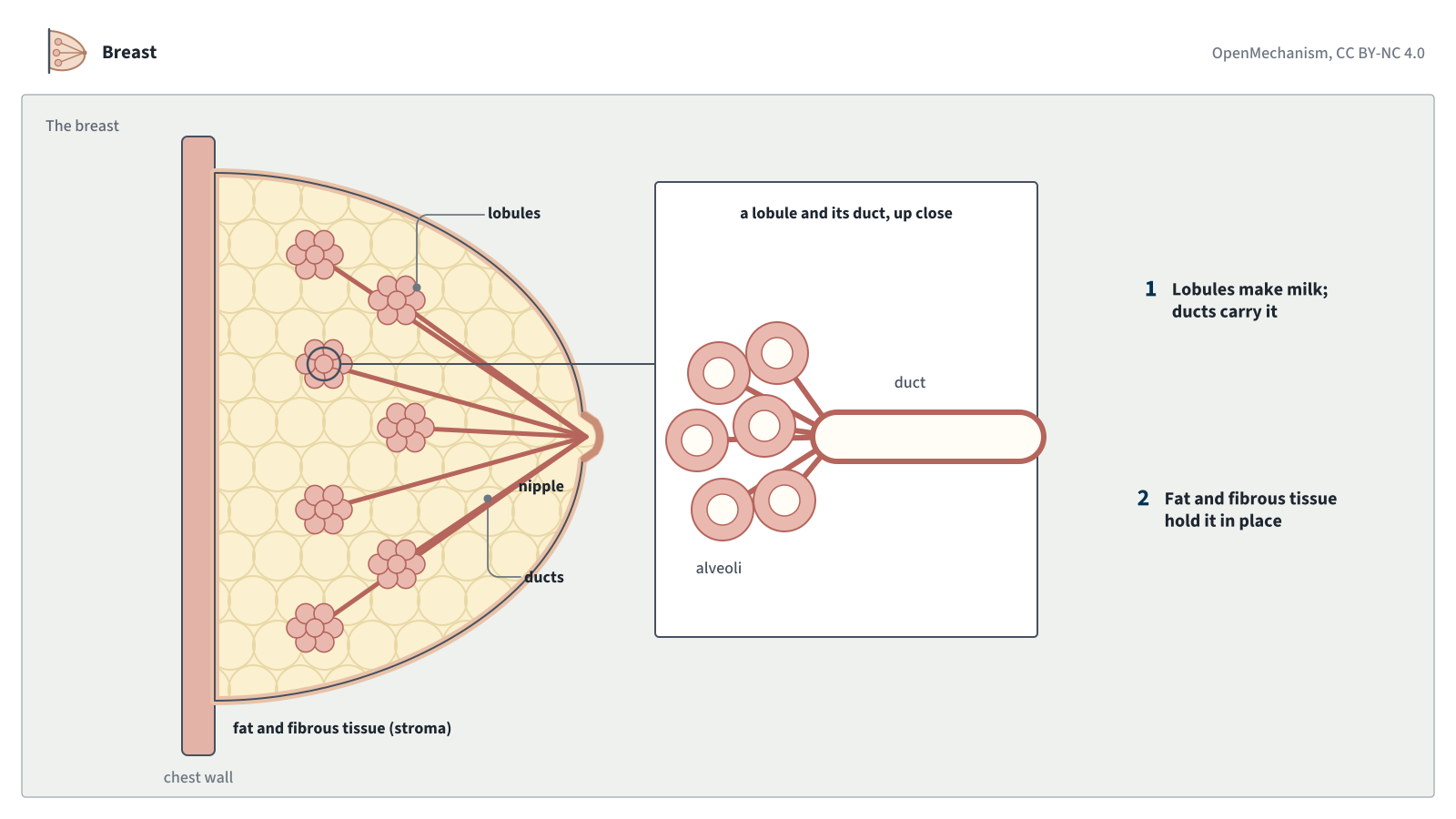
Lobules make milk; ducts carry it. In the breast, lobules are tiny glands that make milk; after a baby is born, the milk flows from them through thin tubes, the ducts, to the nipple.1
Fat and fibrous tissue hold it in place. Fibrous and fatty tissue (stroma) fills the spaces between the lobules and ducts, holds the breast tissue in place and gives the breast its shape and size.1
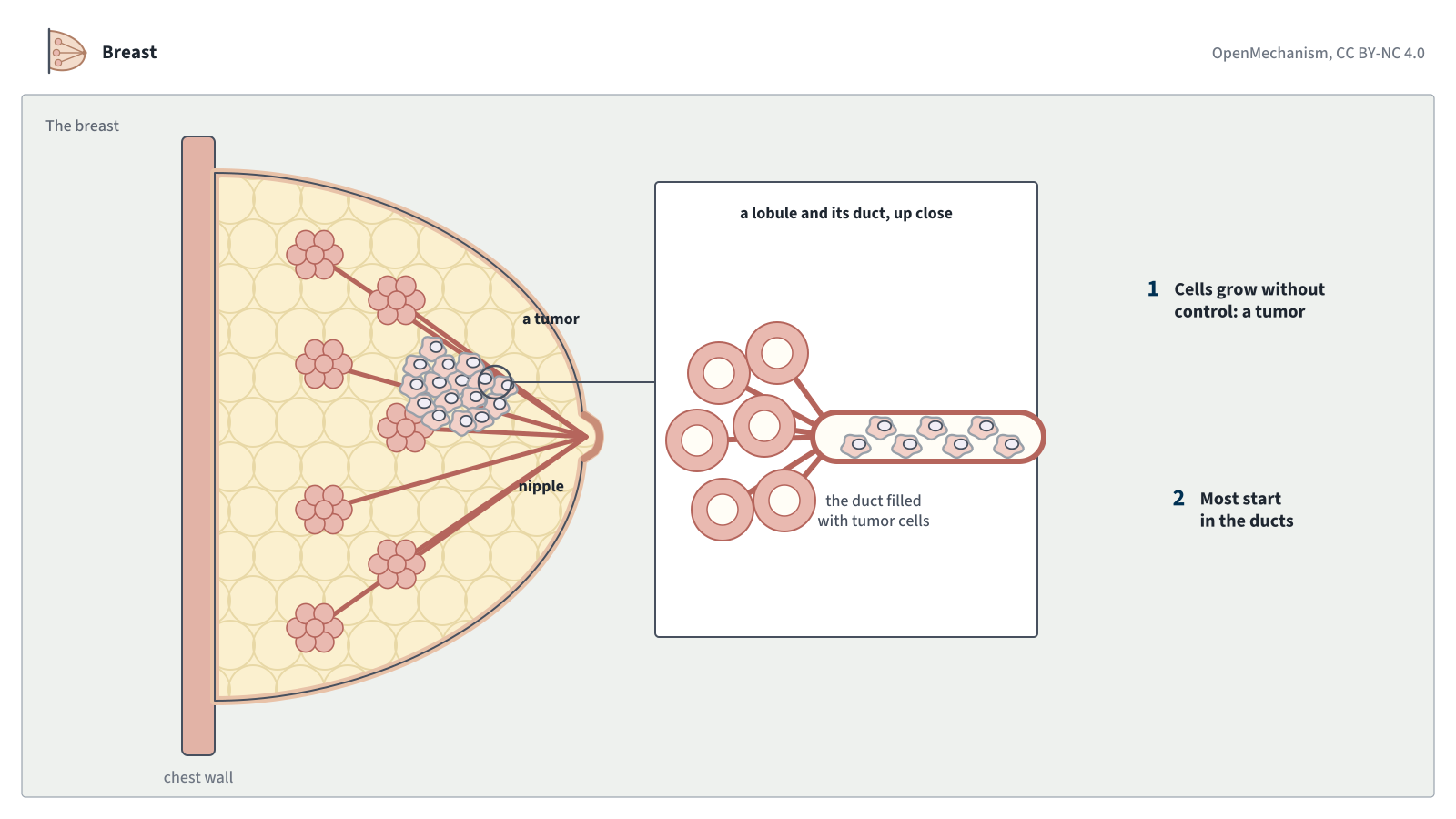
Cells grow without control: a tumor. Breast cancer happens when cells in the breast grow without control, making a mass called a tumor that may spread elsewhere in the body.1
What the source says
“Breast cancer happens when cells in the breast grow without control, creating a mass called a tumor that may spread elsewhere in the body.”
Most start in the ducts. Cancers that start in the ducts are called ductal cancers and those that start in the lobules lobular cancers; most breast cancers are ductal.1
What the source says
“Cancers that start in the ducts are called ductal cancers.”
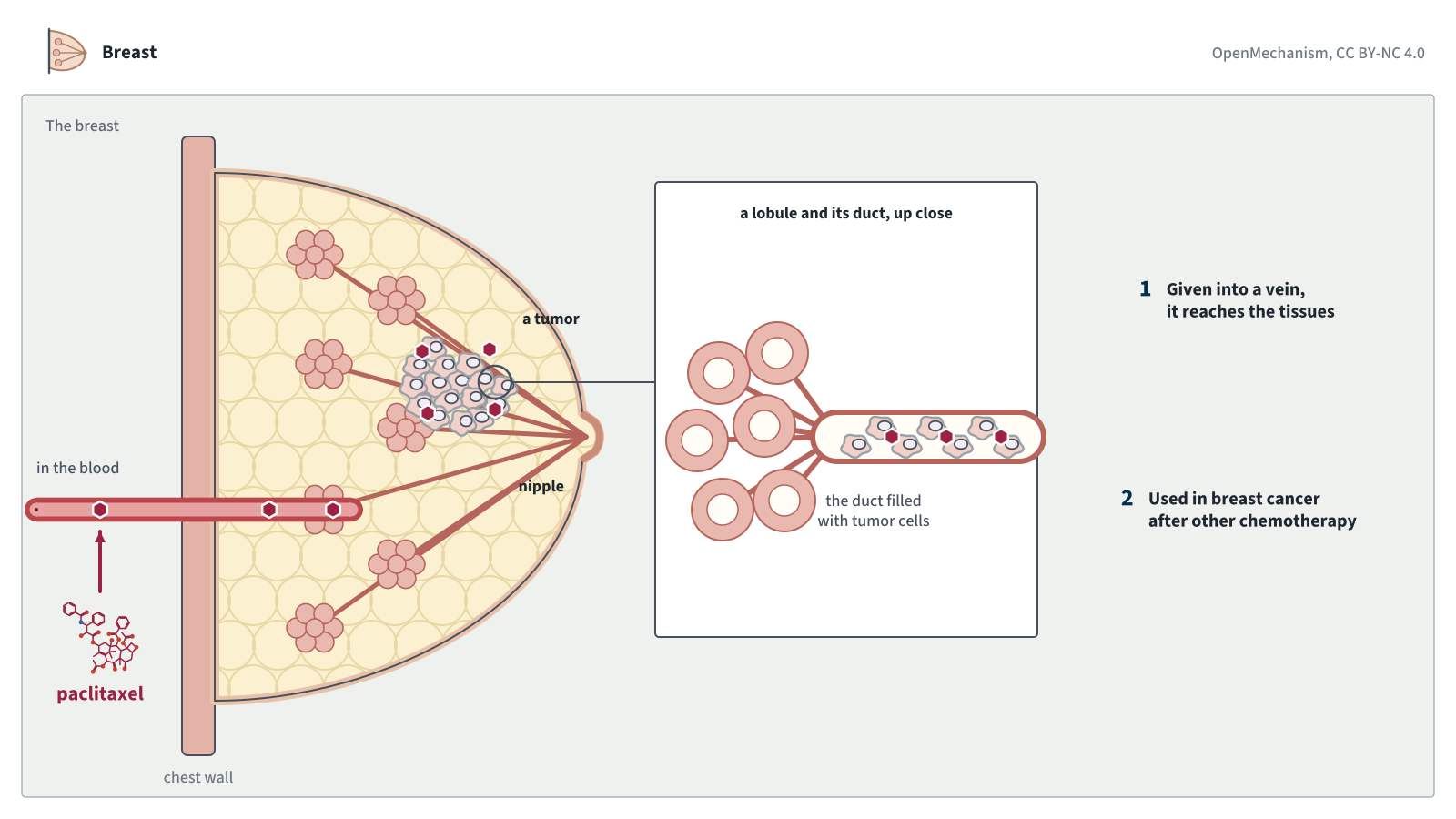
Given into a vein, it reaches the tissues. Paclitaxel is diluted and given as an infusion into a vein; from the blood it spreads widely into the tissues or binds there.2
What the source says
“It is supplied as a nonaqueous solution intended for dilution with a suitable parenteral fluid prior to intravenous infusion.”
Used in breast cancer after other chemotherapy. It is used in node-positive breast cancer after doxorubicin-containing chemotherapy, and when combination chemotherapy for metastatic breast cancer has failed or the cancer has come back within 6 months of adjuvant chemotherapy.2
What the source says
“Paclitaxel Injection USP is indicated for the adjuvant treatment of node-positive breast cancer administered sequentially to standard doxorubicin-containing combination chemotherapy.”
“Paclitaxel Injection USP is indicated for the treatment of breast cancer after failure of combination chemotherapy for metastatic disease or relapse within 6 months of adjuvant chemotherapy.”
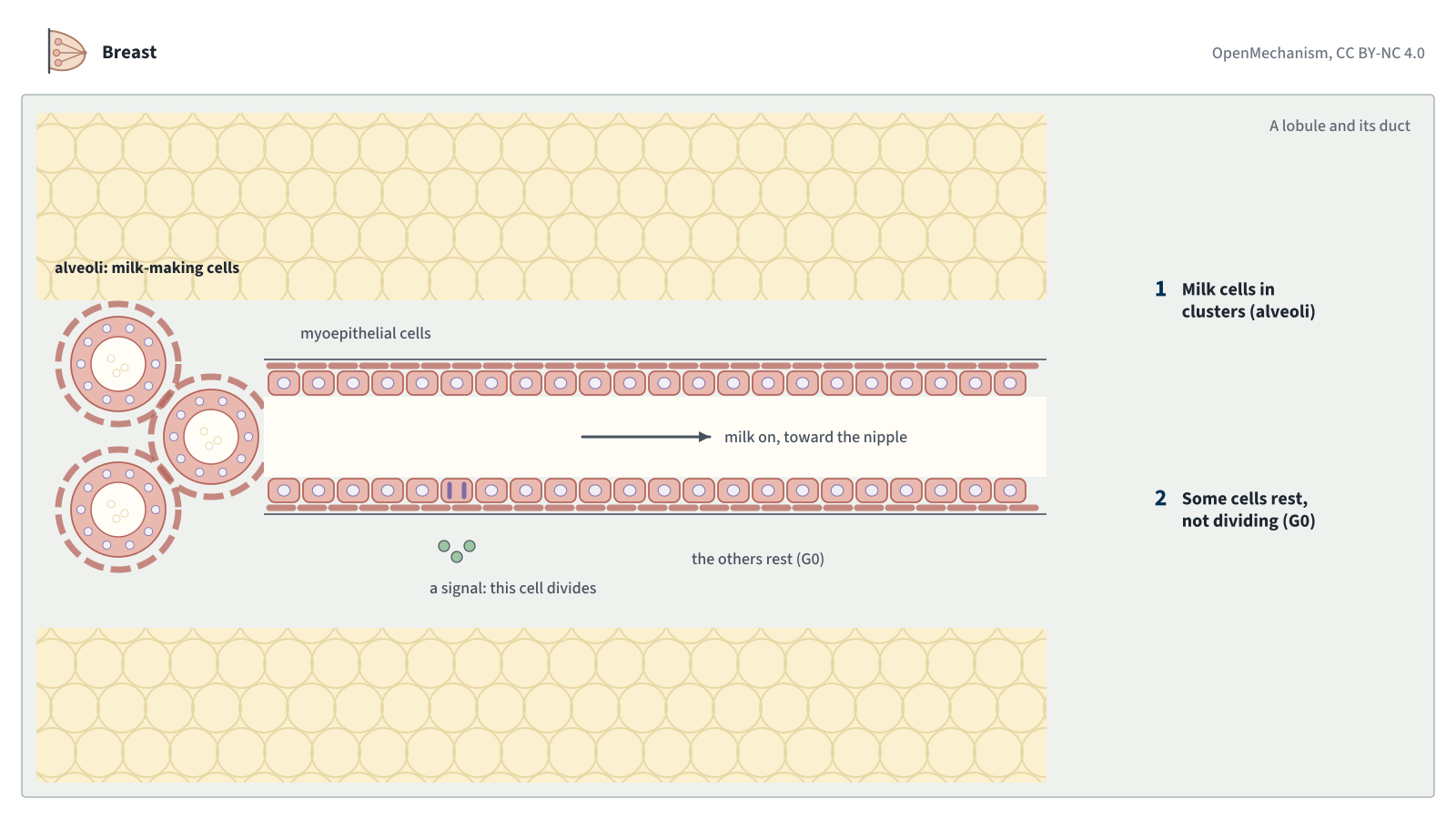
Milk cells in clusters (alveoli). Each lobe holds groups of milk-secreting cells in clusters called alveoli; once milk is made, myoepithelial cells around them contract and push it toward the ducts.3
What the source says
“These lactiferous ducts each extend to a lactiferous sinus that connects to a glandular lobe within the breast itself that contains groups of milk-secreting cells in clusters called alveoli”
Some cells rest, not dividing (G0). Some cells leave the cycle and rest (G0), not preparing to divide, until conditions improve or a signal from outside starts the cycle again.4
What the source says
“Cells in G0 phase are not actively preparing to divide.”
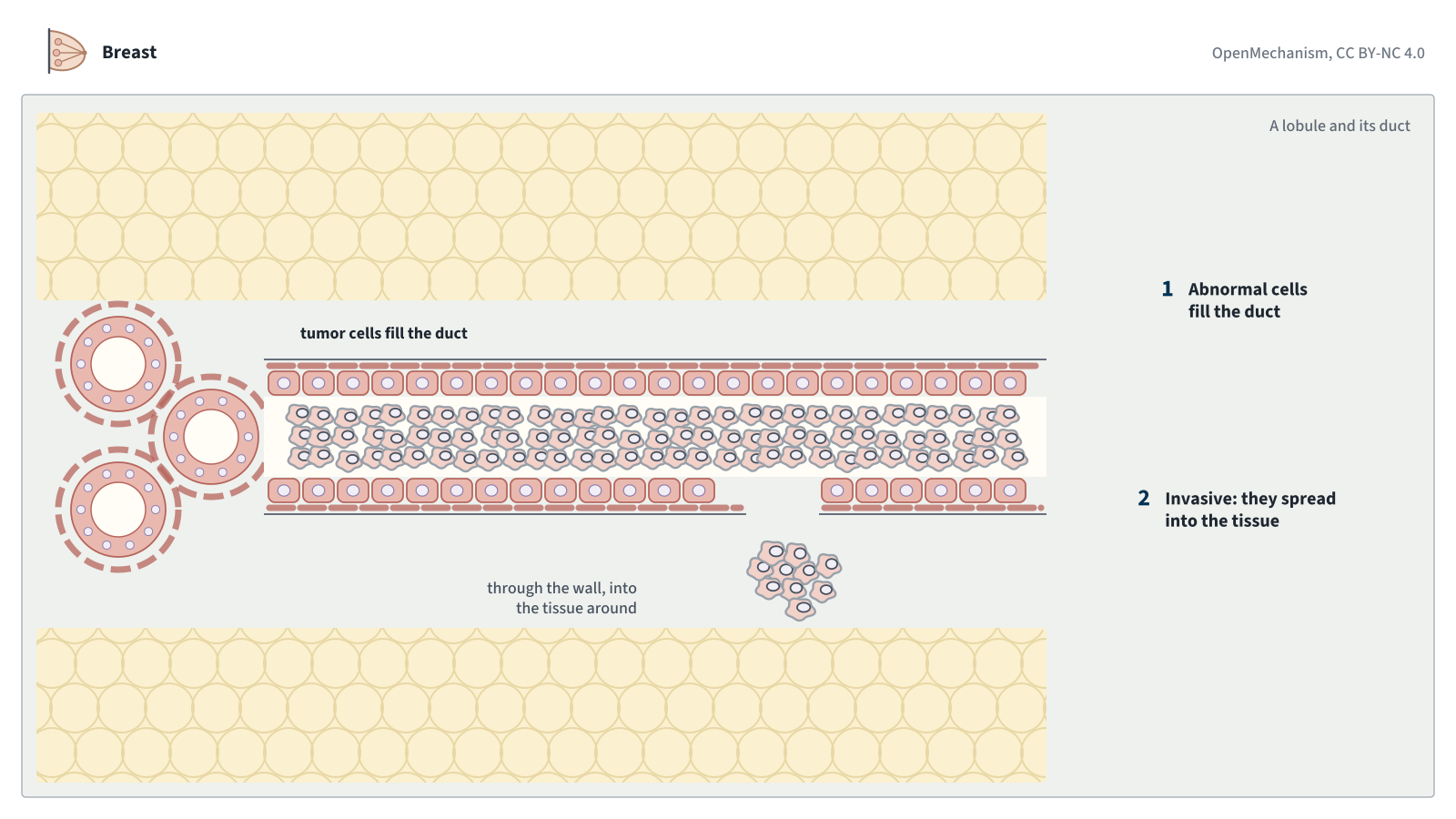
Abnormal cells fill the duct. While the abnormal cells stay within the ducts or lobules and have not spread to other breast tissue, it is called carcinoma in situ.1
What the source says
“When the abnormal cells are within the lobules or ducts and have not spread to other tissues in the breast, it is called carcinoma in situ.”
Invasive: they spread into the tissue. Invasive cancers have spread into the surrounding breast tissue and can spread to nearby lymph nodes or other organs; most breast cancers are invasive.1
What the source says
“Invasive cancers have spread into surrounding breast tissue and can spread to nearby lymph nodes or other organs throughout the body.”
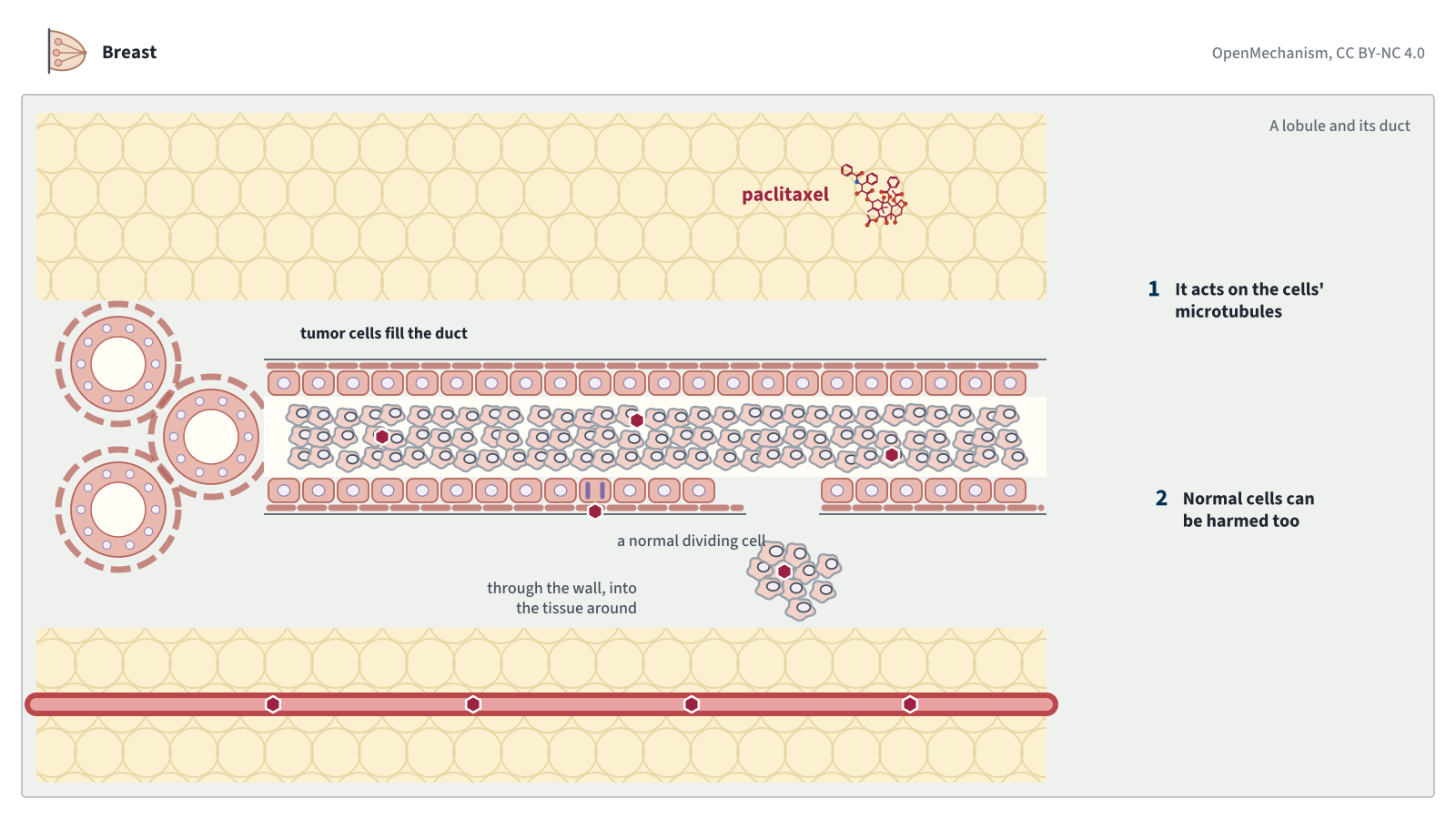
It acts on the cells' microtubules. Paclitaxel acts on , whose normal reorganization cells need for interphase and for mitosis.2
What the source says
“Paclitaxel is a novel antimicrotubule agent that promotes the assembly of microtubules from tubulin dimers and stabilizes microtubules by preventing depolymerization.”
“This stability results in the inhibition of the normal dynamic reorganization of the microtubule network that is essential for vital interphase and mitotic cellular functions.”
Normal cells can be harmed too. Chemotherapy is used to destroy cancer cells, but it harms normal cells as well, so it can have unwanted side effects.5
What the source says
“Traditional cancer treatment uses radiation and/or chemotherapy to destroy cancer cells; however, these treatments can have unwanted side effects because they harm normal cells as well as cancer cells.”
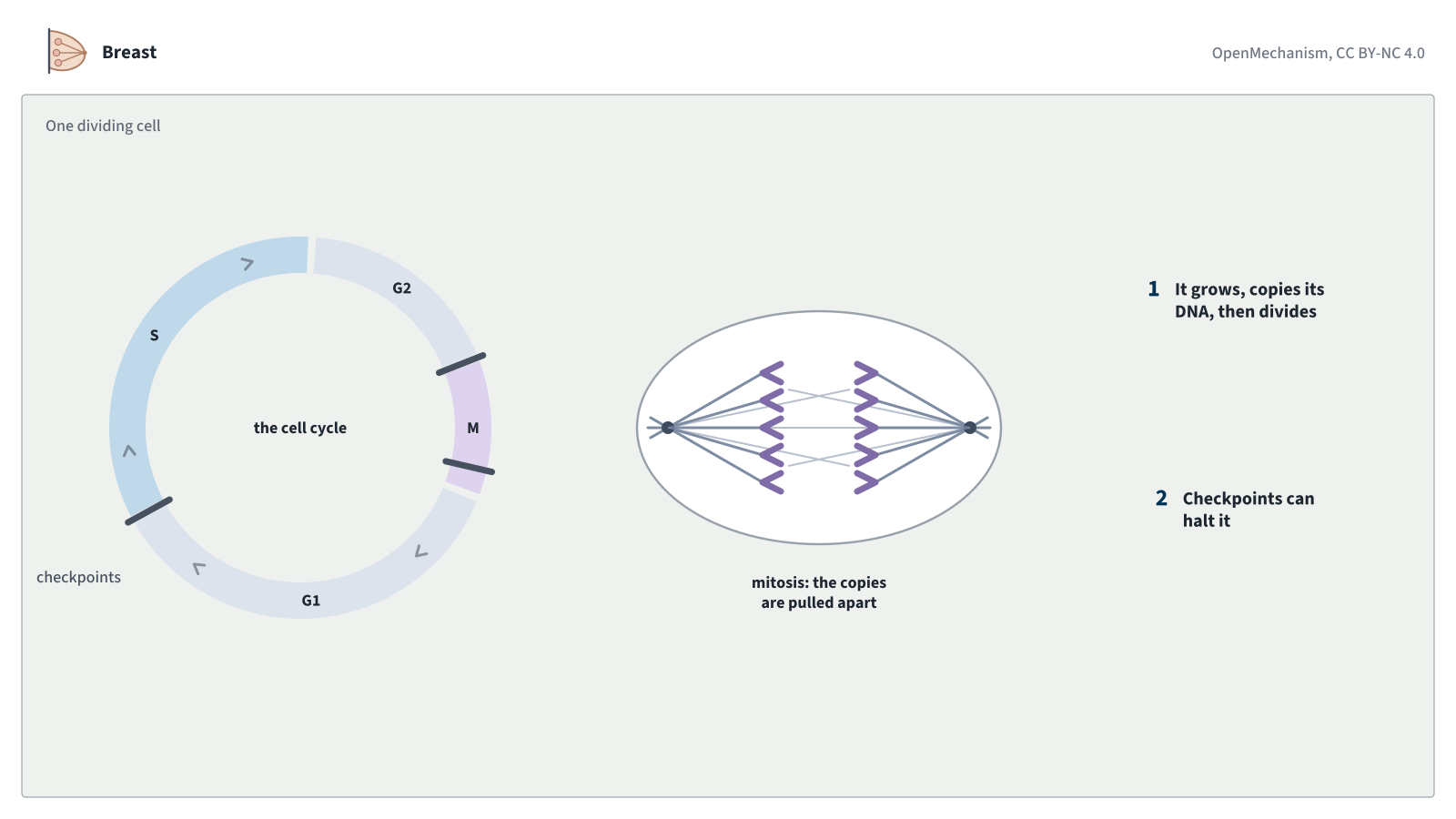
It grows, copies its DNA, then divides. In the cell cycle a cell grows and copies its (interphase), then separates the copies (mitosis), making two new cells.4
What the source says
“The cell cycle is an ordered series of events involving cell growth and cell division that produces two new daughter cells.”
Checkpoints can halt it. At checkpoints near the end of G1, at the move from G2 to mitosis and during metaphase, the cycle can be halted until conditions are right.6
What the source says
“A checkpoint is one of several points in the eukaryotic cell cycle at which the progression of a cell to the next stage in the cycle can be halted until conditions are favorable.”
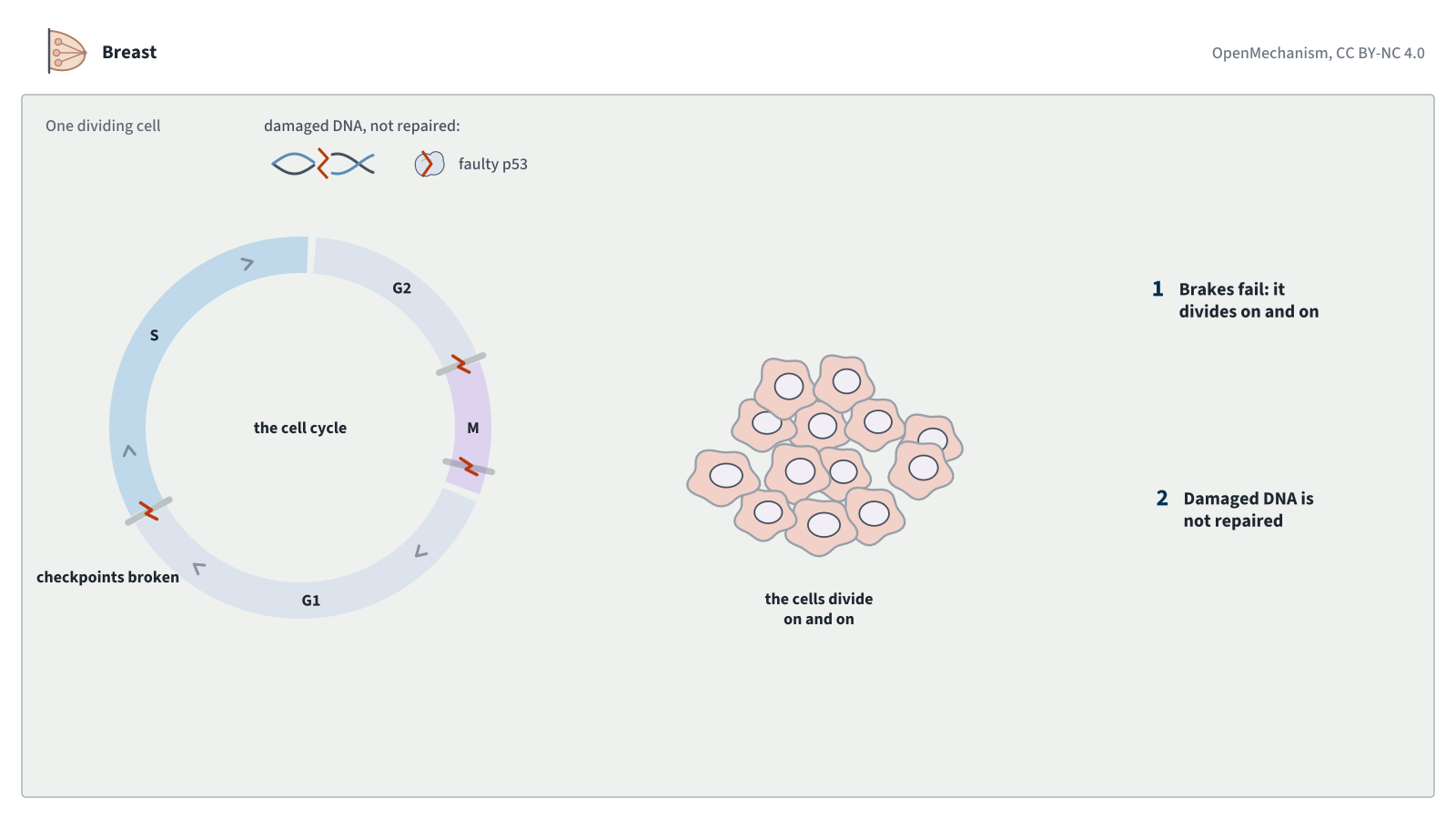
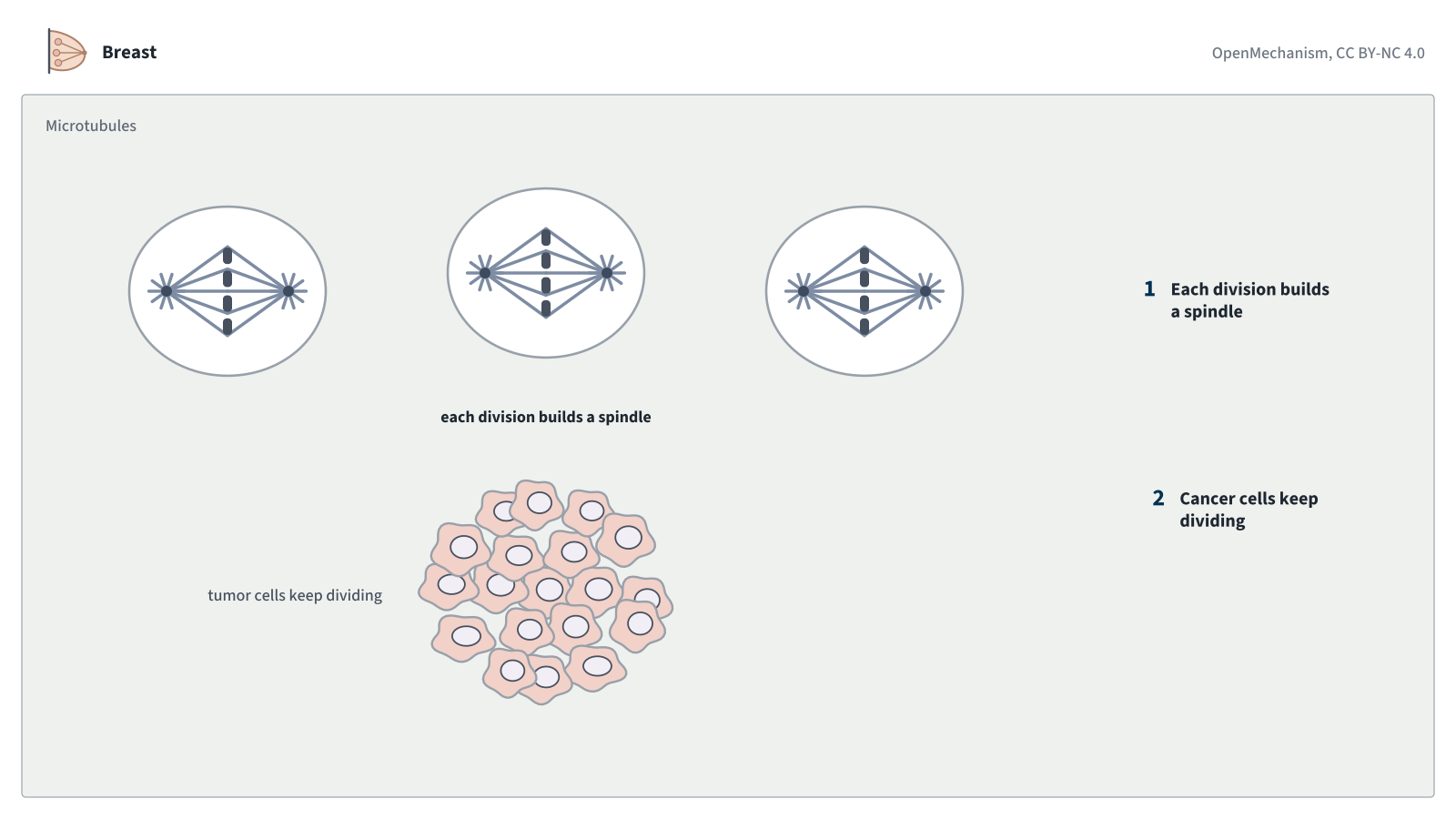
Brakes fail: it divides on and on. A cell with mutated brakes (tumor suppressors) might not halt the cycle when there is a problem, and the mutated cells outgrow the normal ones.7
What the source says
“Tumor suppressor genes are segments of DNA that code for negative regulator proteins, the type of regulators that, when activated, can prevent the cell from undergoing uncontrolled division.”
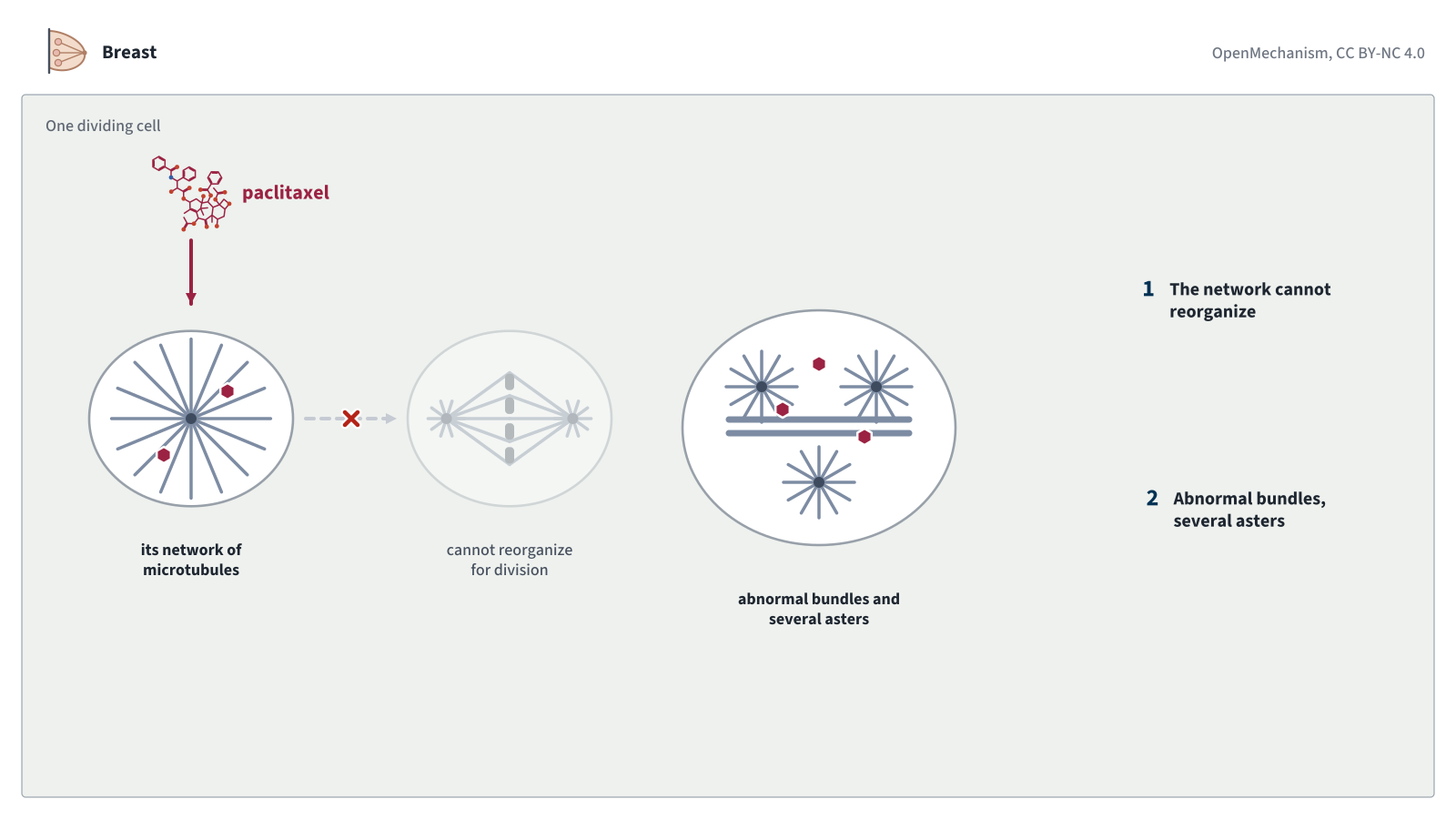
The network cannot reorganize. Paclitaxel holds the microtubules still, so their network cannot reorganize as the cell needs for interphase and for mitosis.2
What the source says
“Paclitaxel is a novel antimicrotubule agent that promotes the assembly of microtubules from tubulin dimers and stabilizes microtubules by preventing depolymerization.”
“This stability results in the inhibition of the normal dynamic reorganization of the microtubule network that is essential for vital interphase and mitotic cellular functions.”
Abnormal bundles, several asters. It also makes abnormal bundles of microtubules throughout the cycle, and several asters of microtubules during mitosis.2
What the source says
“In addition, paclitaxel induces abnormal arrays or “bundles” of microtubules throughout the cell cycle and multiple asters of microtubules during mitosis.”
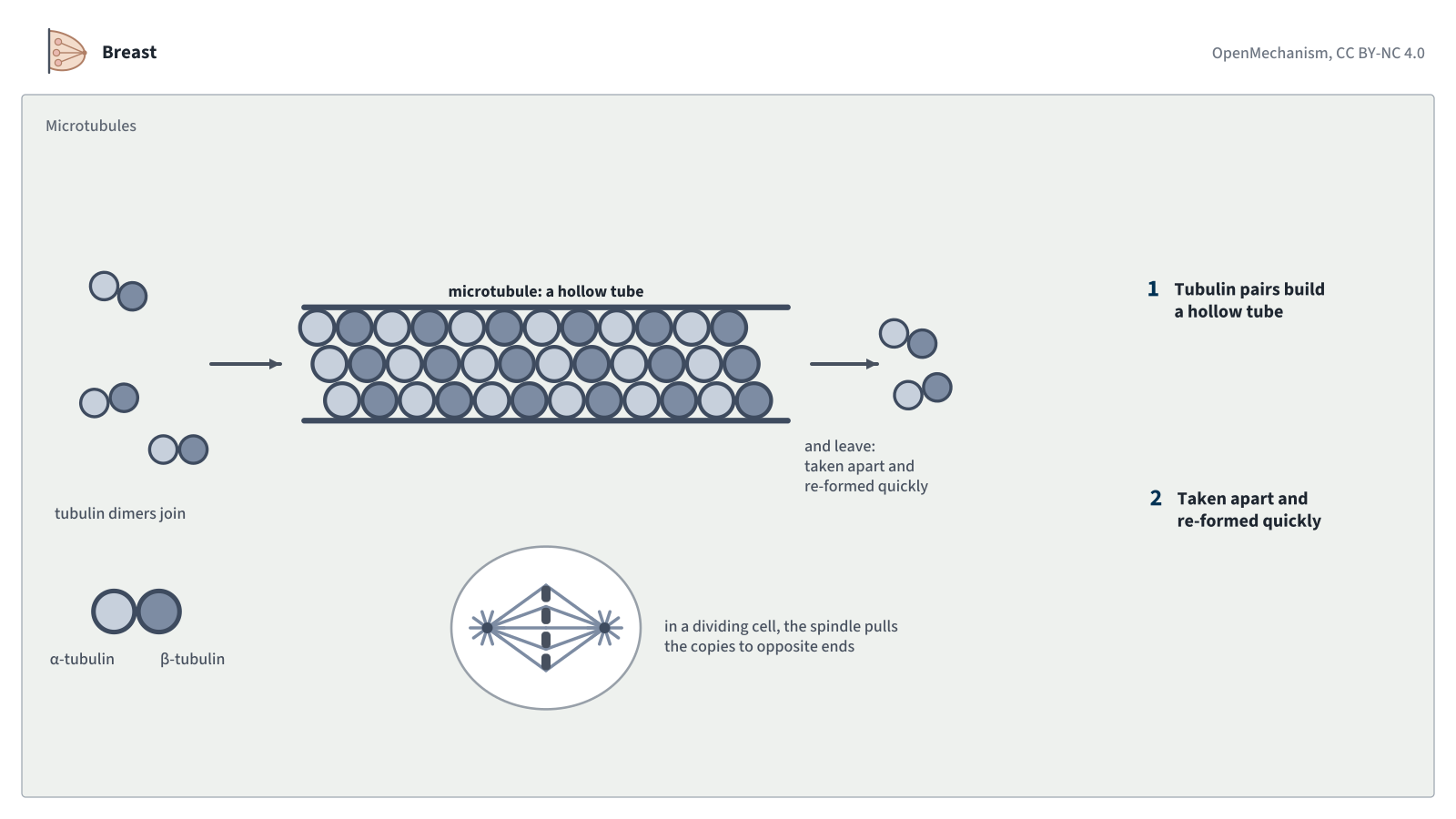
Taken apart and re-formed quickly. Microtubules can come apart and re-form quickly; in a dividing cell they pull the copied chromosomes to opposite ends.8
What the source says
“Like microfilaments, microtubules can disassemble and reform quickly.”
“They help the cell resist compression, provide a track along which vesicles move through the cell, and pull replicated chromosomes to opposite ends of a dividing cell.”
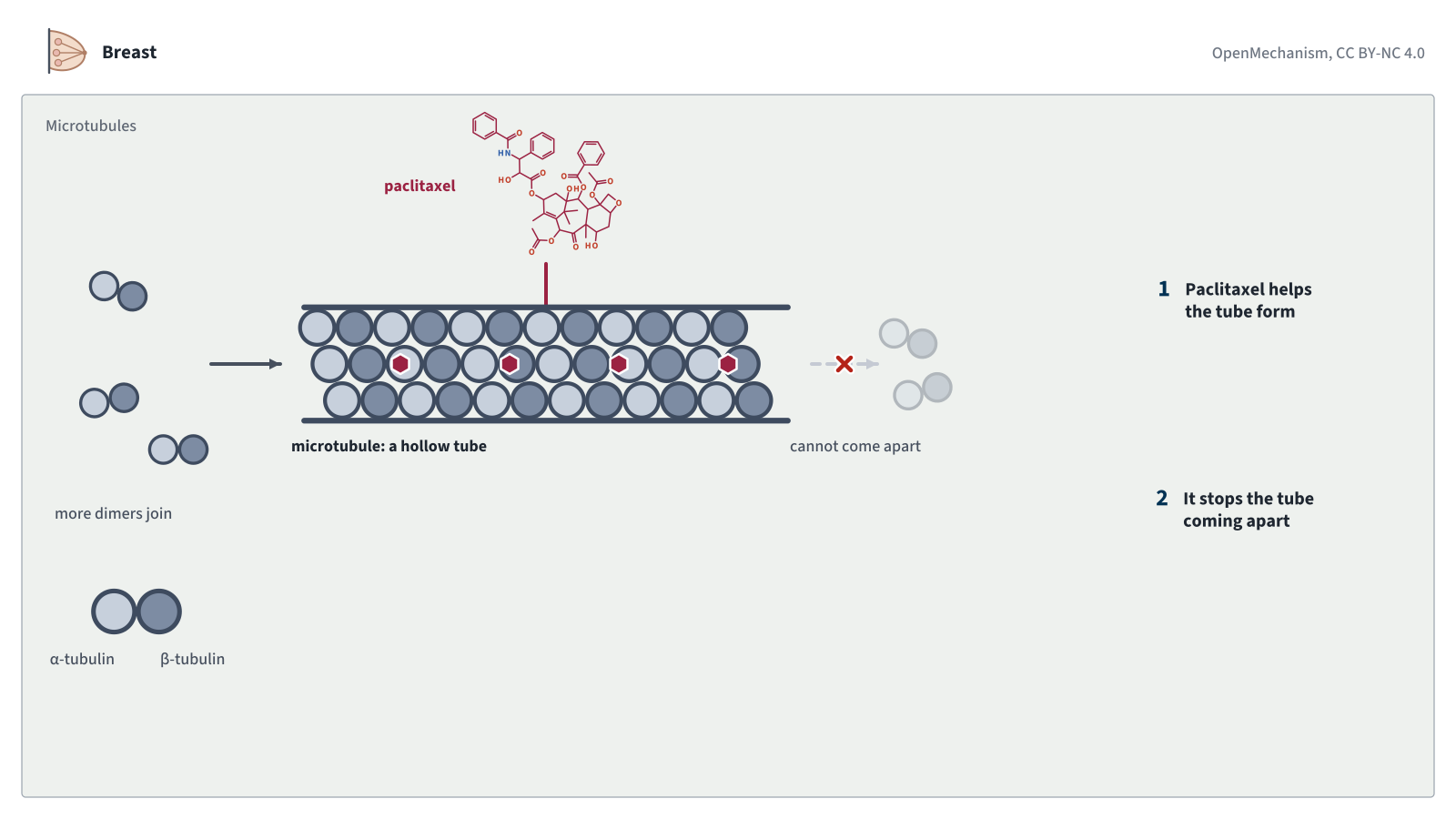
Paclitaxel helps the tube form. Paclitaxel helps tubulin dimers join into microtubules.2
What the source says
“Paclitaxel is a novel antimicrotubule agent that promotes the assembly of microtubules from tubulin dimers and stabilizes microtubules by preventing depolymerization.”
It stops the tube coming apart. It stabilizes the microtubules by stopping them coming apart (depolymerizing), which blocks their normal reorganization.2
What the source says
“Paclitaxel is a novel antimicrotubule agent that promotes the assembly of microtubules from tubulin dimers and stabilizes microtubules by preventing depolymerization.”
“This stability results in the inhibition of the normal dynamic reorganization of the microtubule network that is essential for vital interphase and mitotic cellular functions.”
This page follows breast cancer, most often ductal, and one of its medicines; there are many types of breast cancer, by where it begins and how far it has spread.1
The drawings are schematic and not to scale; each shows only what the statements under it say.
Tran D. The cell cycle [Internet]. OpenMechanism; 2026 [updated 2026 Nov 13; cited 2026 Nov 13]. Available from: https://openmechanism.com/body/scales/cell-cycle