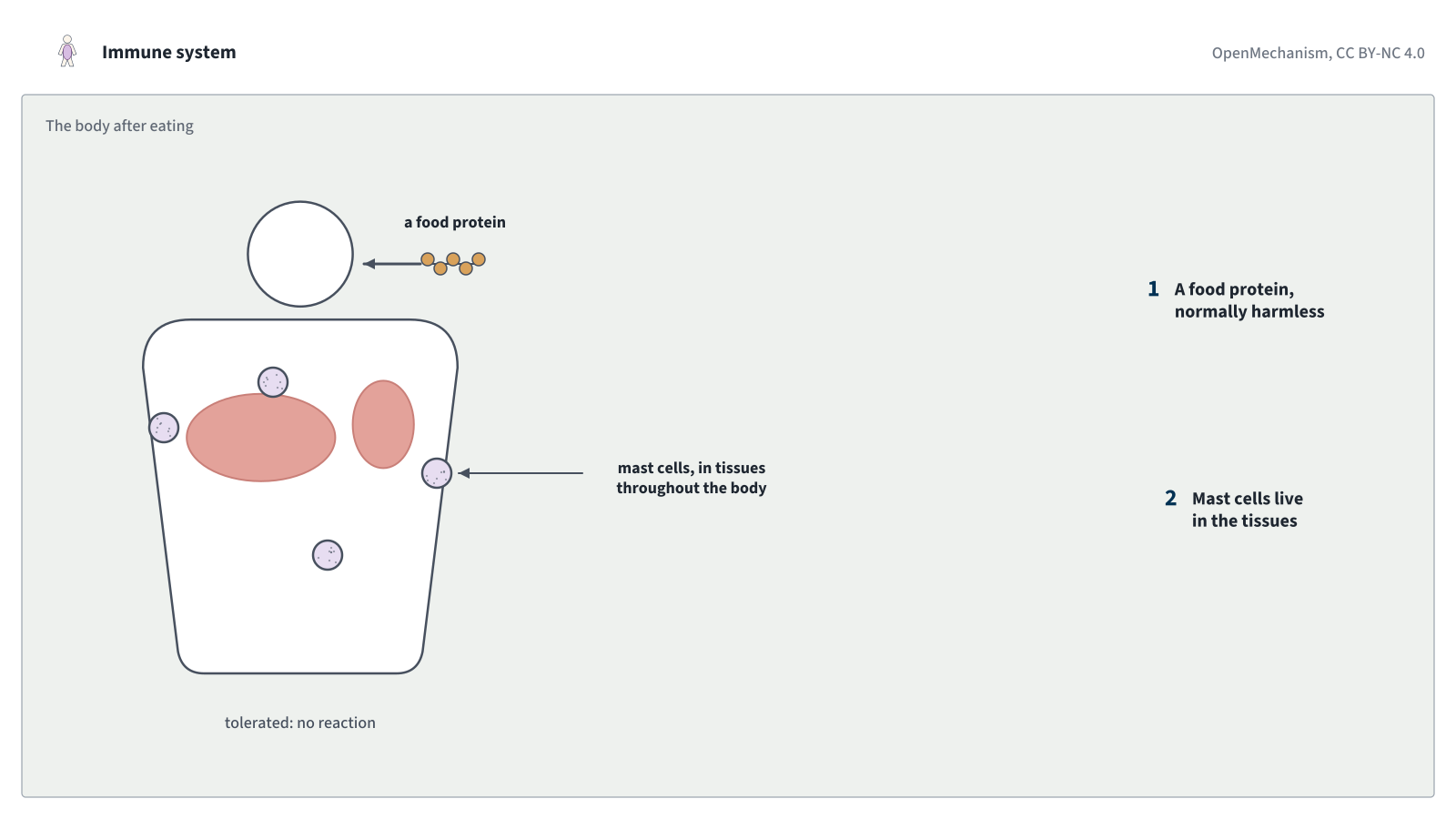
Mast cells live in the tissues. , immune cells with granules of histamine, leave the blood and live in the tissues.2
What the source says
“Functionally, mast cells are very similar to basophils, containing many of the same components in their granules (e.g., histamine) and playing a similar role in allergic responses and other inflammatory reactions.”
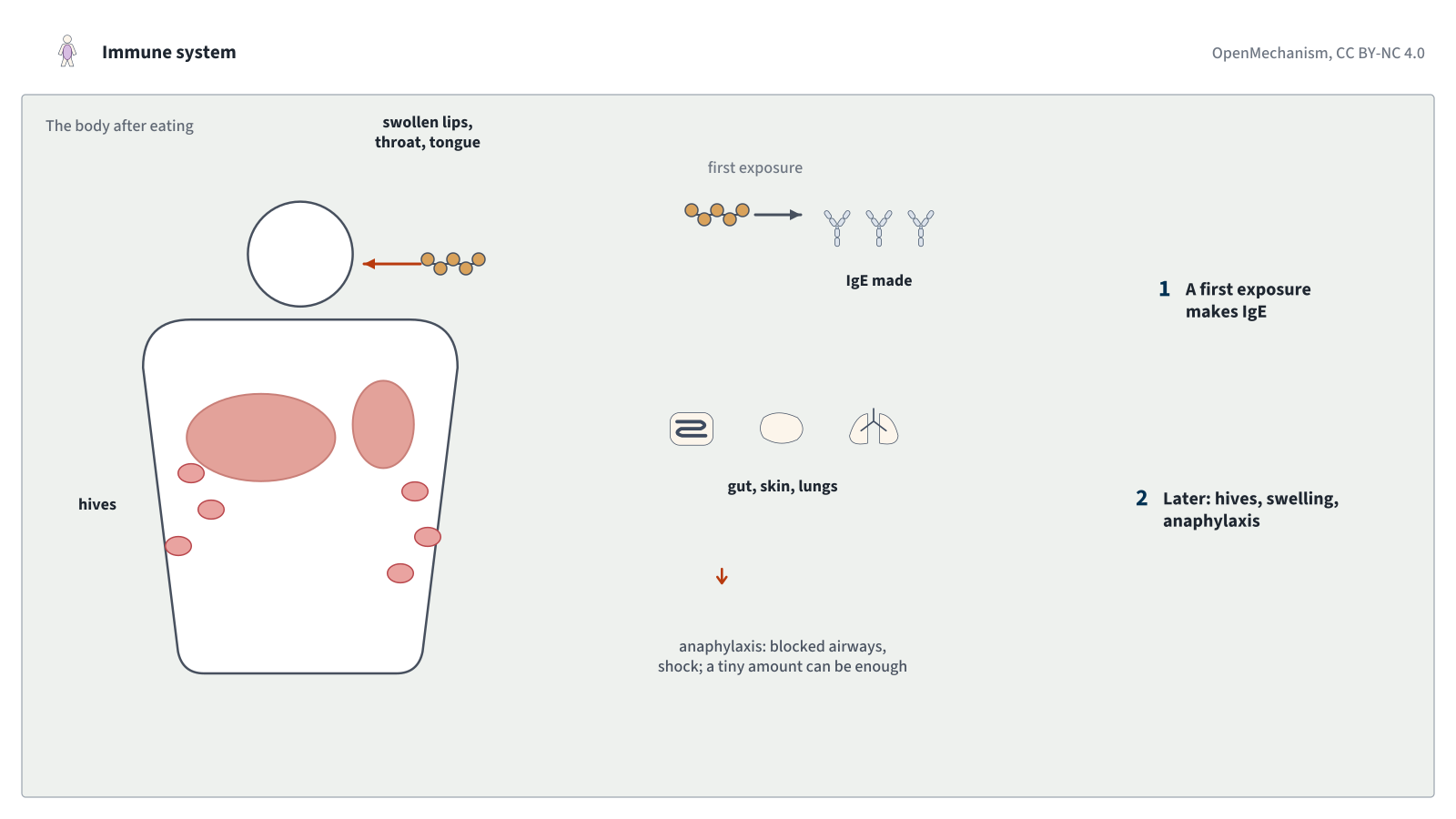
A first exposure makes IgE. In IgE-mediated food allergy, a first exposure to the food makes the body produce against it. This sensitizes the person, often with no reaction yet.3
What the source says
“Regardless of the allergen, the first exposure activates a primary IgE antibody response that sensitizes an individual to type I hypersensitivity reaction upon subsequent exposure.”
Later: hives, swelling, anaphylaxis. On a later exposure a reaction can come almost at once, in the gut, skin or lungs: hives, swelling of the lips, throat and tongue, and low blood pressure. In anaphylaxis, the most severe form, swelling can block the airways and blood pressure can fall into shock; in some people a tiny amount of the food is enough.3,4,5
What the source says
“When a presensitized individual is exposed to an allergen, it can lead to a rapid immune response that occurs almost immediately.”
“Food allergies manifest in a variety of clinical conditions within the gastrointestinal tract, skin and lungs, with the most dramatic and sometimes fatal manifestation being anaphylactic shock.”
“The vasodilation caused by several of the mediators can result in hives, headaches, angioedema (swelling that often affects the lips, throat, and tongue), and hypotension (low blood pressure).”
“the swelling of the tongue and trachea, blockage of airways, dangerous drop in blood pressure, and development of shock can make anaphylaxis especially severe and life-threatening”
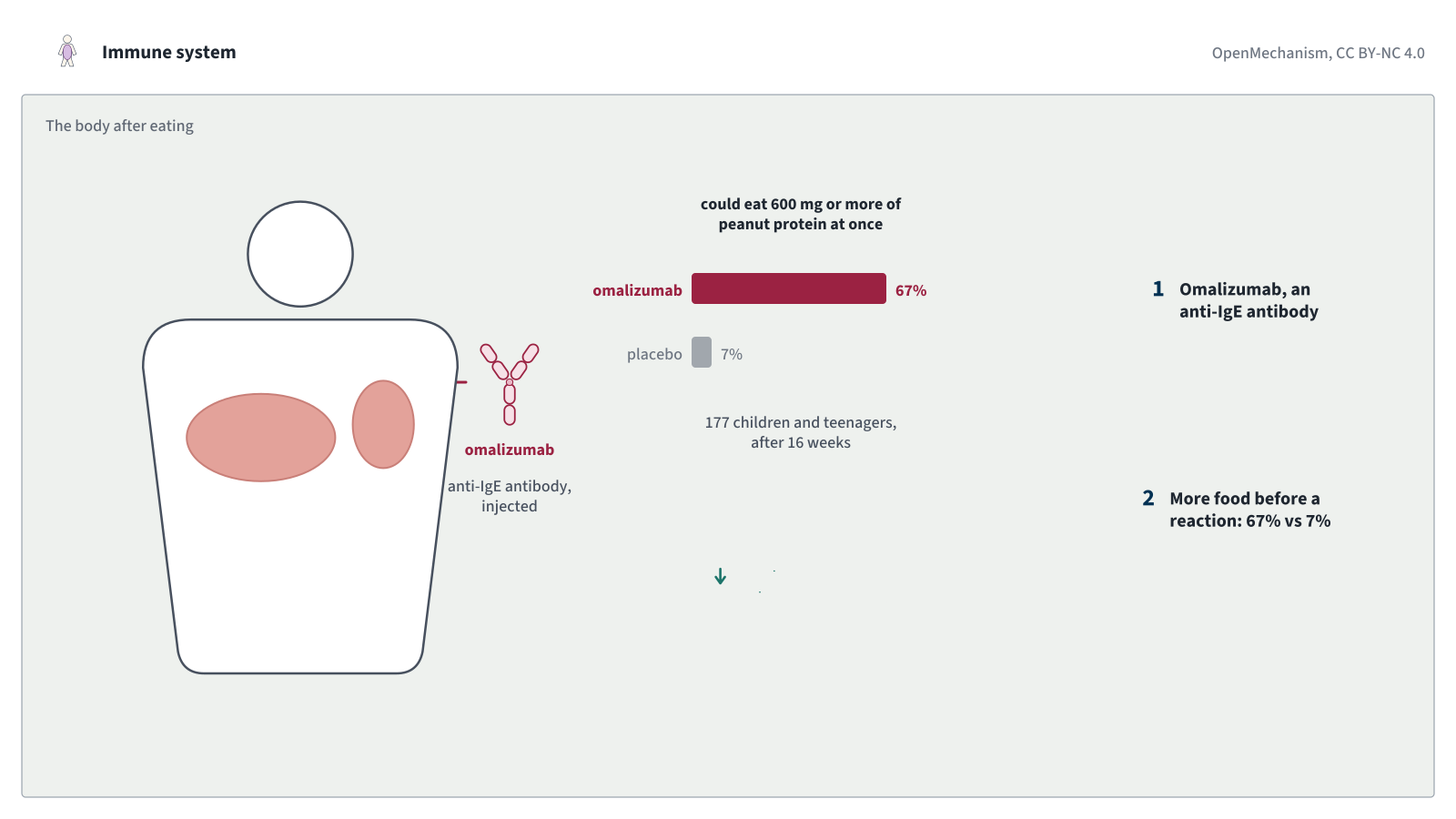
Omalizumab, an anti-IgE antibody. Omalizumab is an antibody against IgE. In IgE-mediated food allergy it is used to reduce allergic reactions, anaphylaxis included, after accidental exposure, along with avoiding the food.6
“IgE-mediated food allergy in adult and pediatric patients aged 1 year and older for the reduction of allergic reactions (Type I), including anaphylaxis, that may occur with accidental exposure to one or more foods. To be used in conjunction with food allergen avoidance”
More food before a reaction: 67% vs 7%. In a trial of 177 children and teenagers allergic to peanut and at least two other foods, 67% of those on omalizumab for 16 weeks could eat 600 mg or more of peanut protein in one dose without dose-limiting symptoms, against 7% on placebo.7
What the source says
“Persons 1 to 55 years of age who were allergic to peanuts and at least two other trial-specified foods (cashew, milk, egg, walnut, wheat, and hazelnut) were screened.”
“A total of 79 of the 118 participants (67%) receiving omalizumab met the primary end-point criteria, as compared with 4 of the 59 participants (7%) receiving placebo”
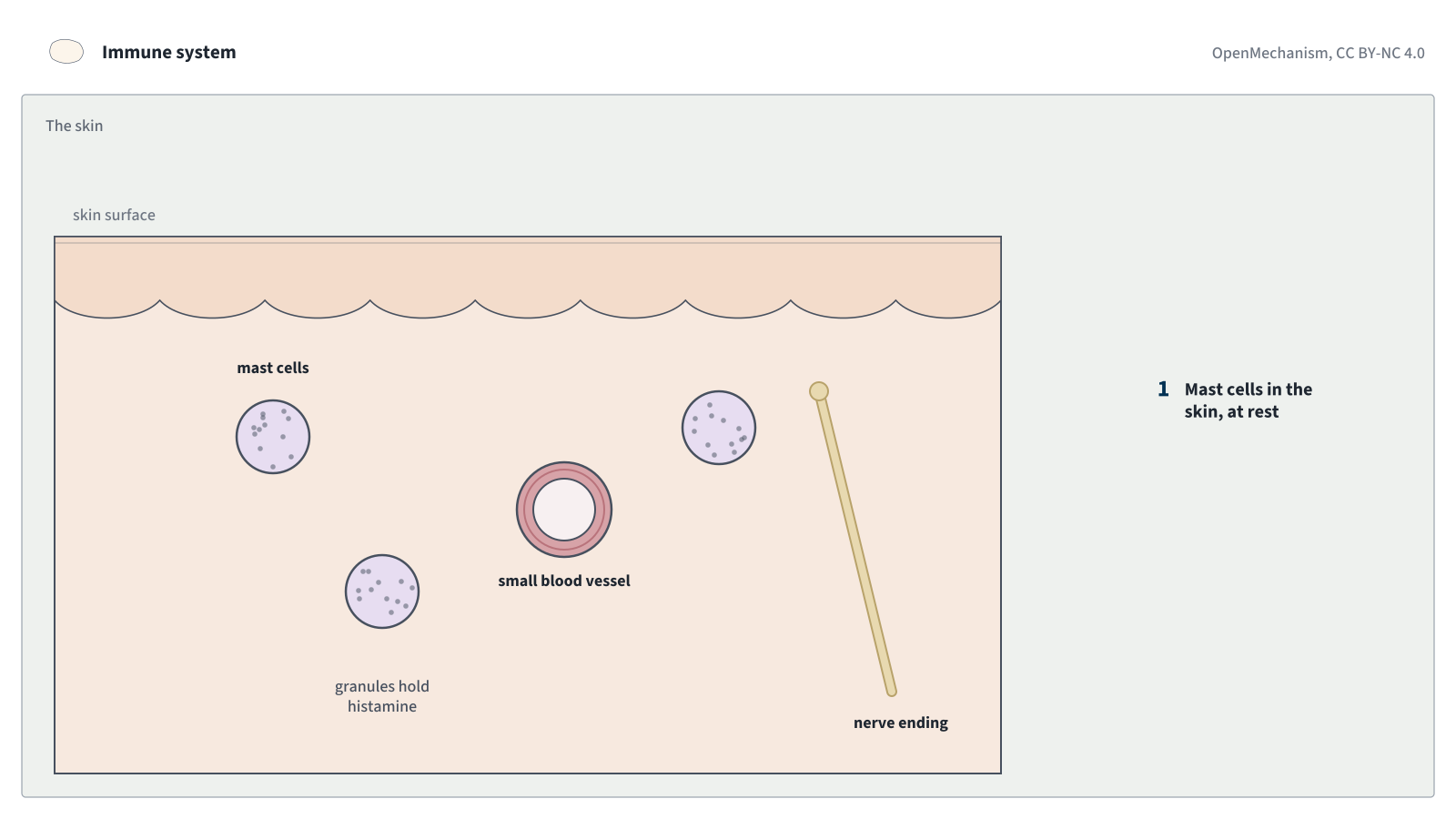
Mast cells in the skin, at rest. Mast cells are found throughout the body, the skin included, their granules holding histamine and other signals until they are set off.3
What the source says
“The fragment crystallizable (Fc) regions of the IgE antibodies bind to specific receptors on the surface of mast cells throughout the body.”
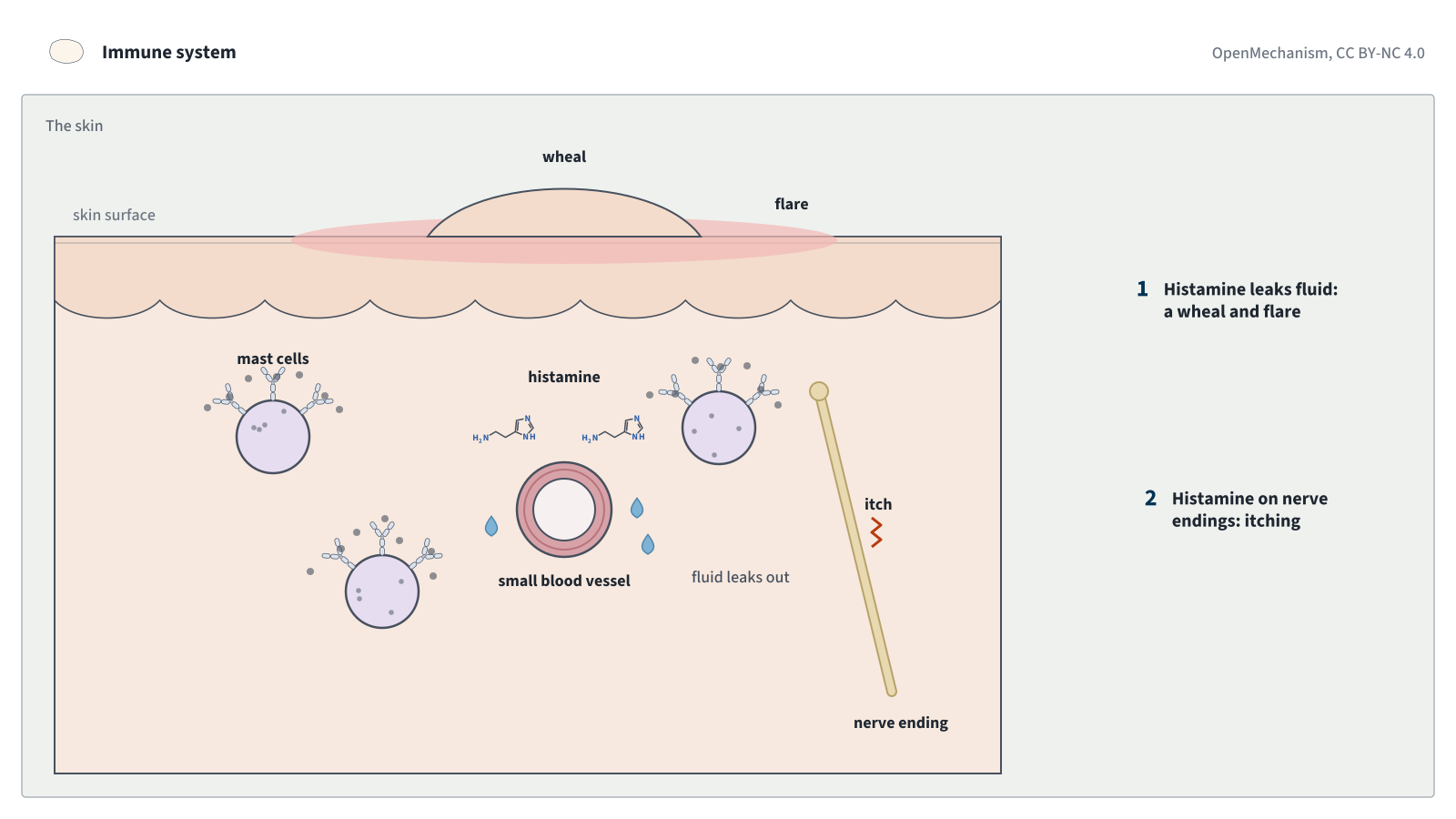
Histamine leaks fluid: a wheal and flare. When the food reaches mast cells armed with IgE, they release their granules within minutes. Histamine makes small blood vessels leaky, and in the skin a reaction of this kind shows within minutes as a wheal, a raised, itchy bump, with redness around it, the flare.3
What the source says
“Within minutes, this cross-linking of IgE activates the mast cells and triggers degranulation”
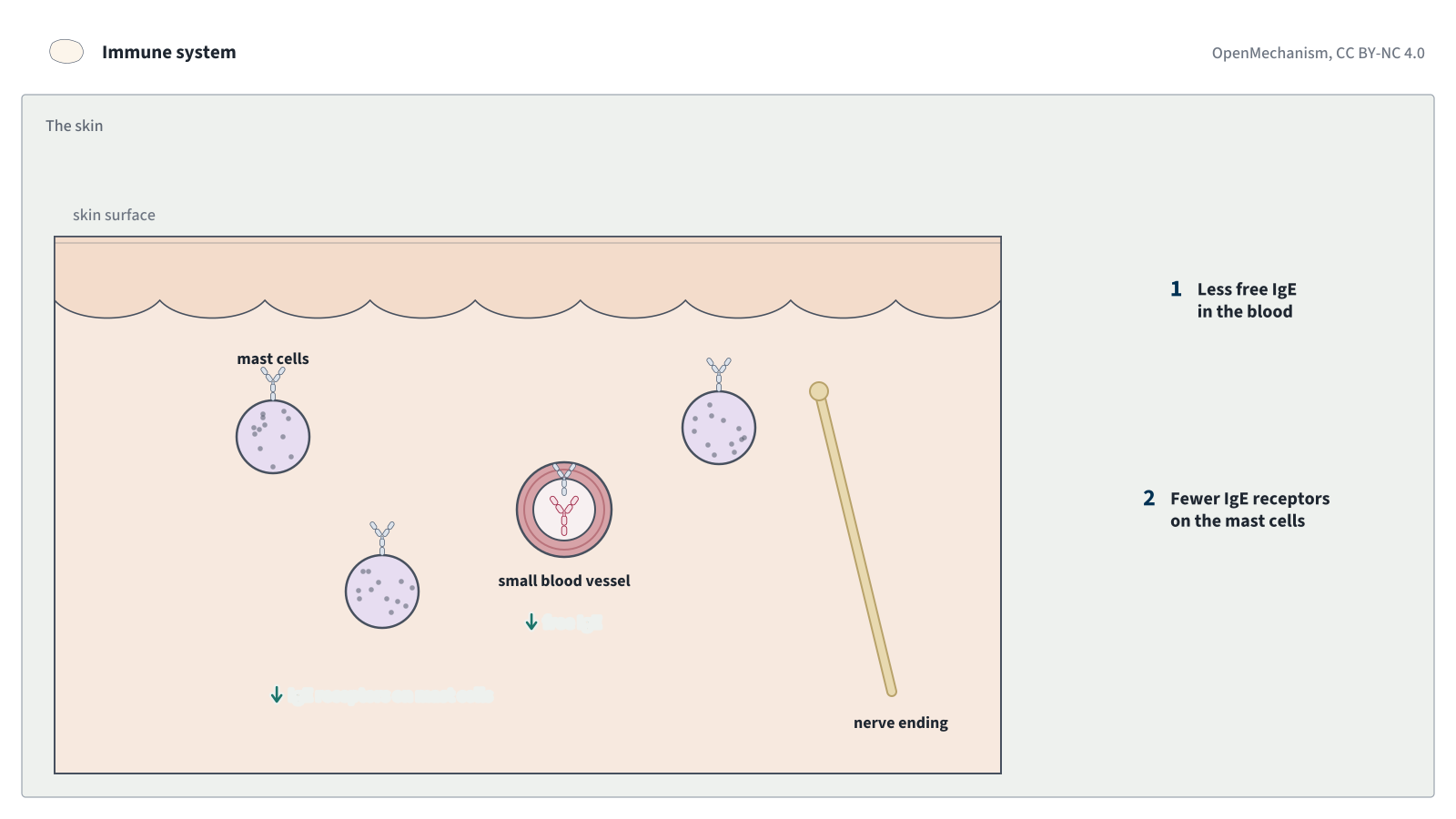
Less free IgE in the blood. Omalizumab lowers free IgE in the blood: in asthma studies within an hour of the first dose, on average by more than 96% at the recommended doses, and a study in food allergy found the same fall.6
What the source says
“In clinical studies, serum free IgE levels were reduced in a dose-dependent manner within 1 hour following the first dose and maintained between doses.”
“In a clinical study in patients with IgE-mediated food allergy, omalizumab treatment led to a reduction in serum free IgE and an increase in serum total IgE levels, similar to the observations in asthma patients.”
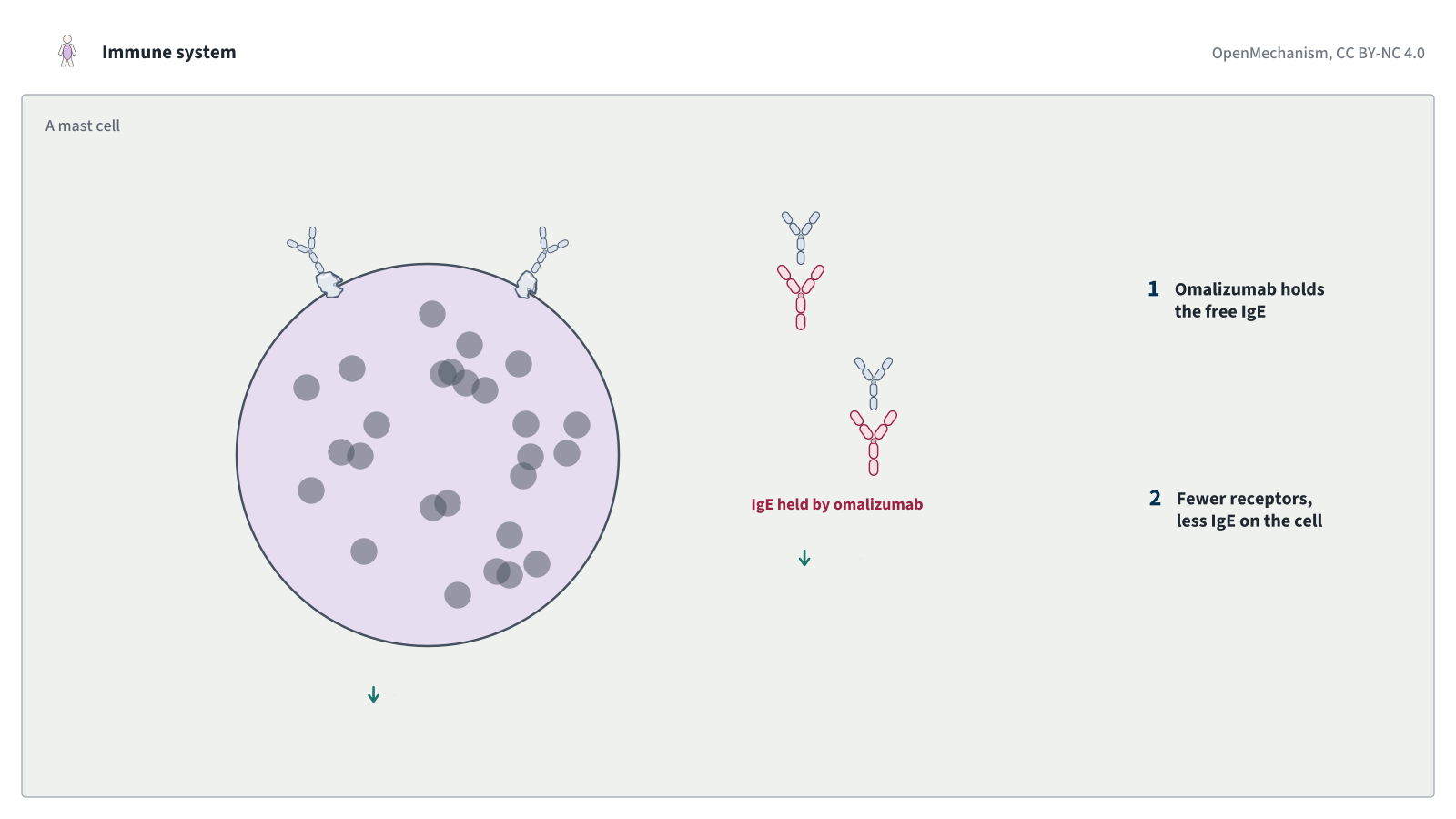
Fewer IgE receptors on the mast cells. With less IgE binding them, the mast cells' IgE receptors () are down-regulated.6
What the source says
“Omalizumab inhibits the binding of IgE to the high-affinity IgE receptor (FcεRI) on the surface of mast cells, basophils, and dendritic cells, resulting in FcεRI down-regulation on these cells.”
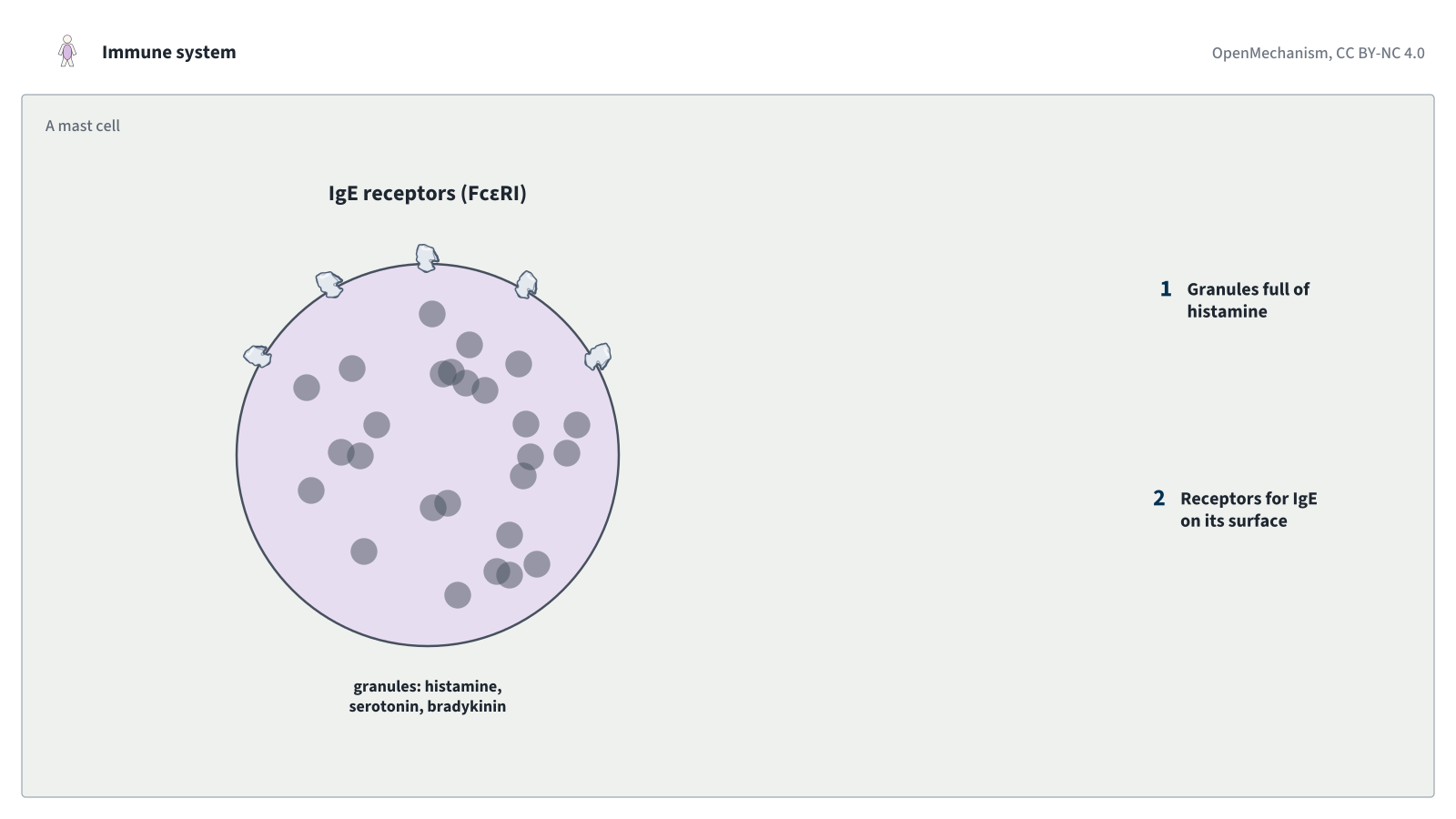
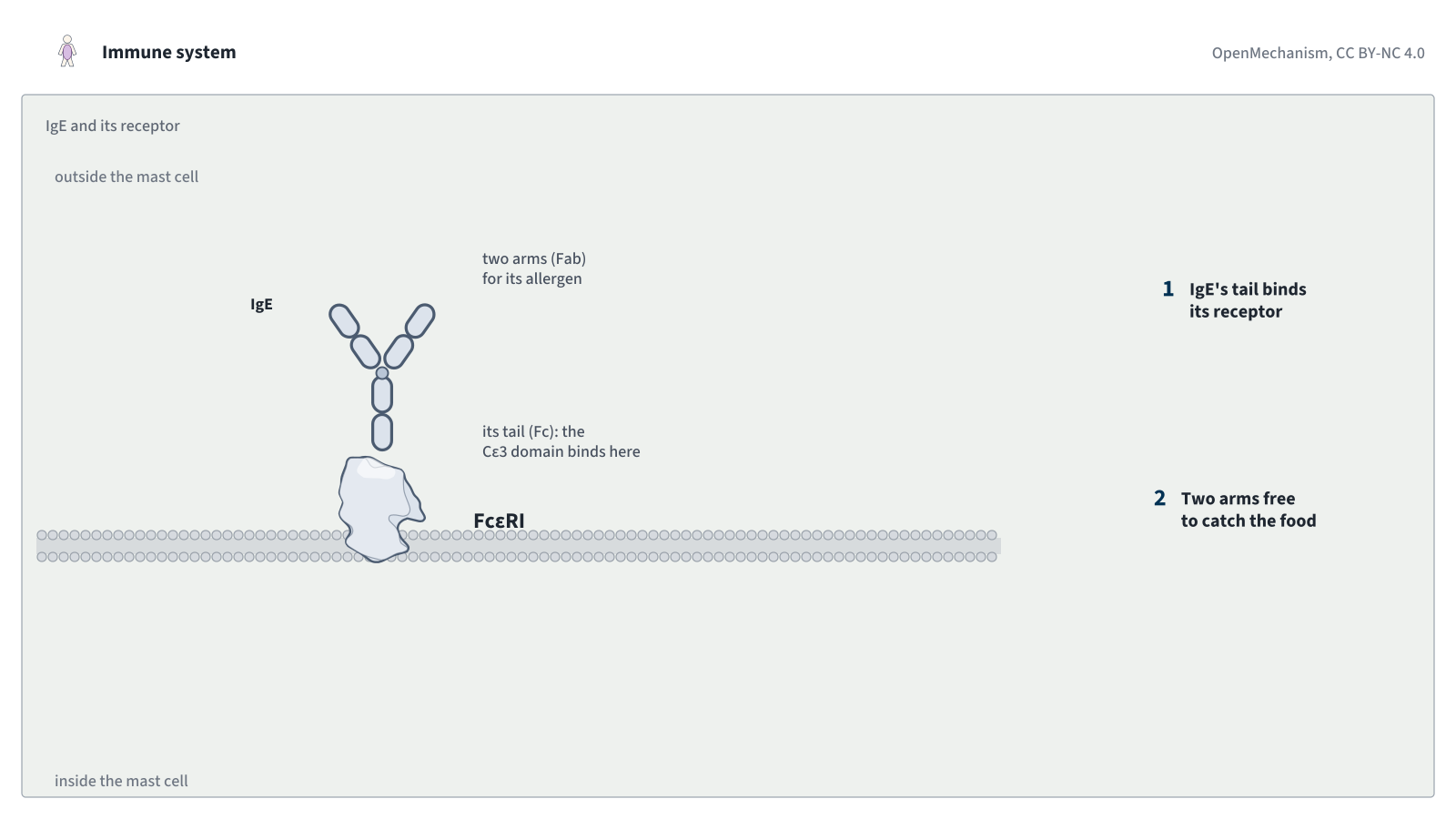
Receptors for IgE on its surface. Its surface carries receptors for the tail (the Fc region) of the antibody IgE: the high-affinity IgE receptor, FcεRI.3,6
What the source says
“The fragment crystallizable (Fc) regions of the IgE antibodies bind to specific receptors on the surface of mast cells throughout the body.”
IgE against the food coats the cell. In food allergy, IgE against the food fixes to these receptors. Each mast cell can hold up to an estimated 500,000 IgE, each with two arms that can bind the food.3,8
What the source says
“Antigen-specific IgE production, with subsequent fixation of IgE to FcepsilonRI receptors on mast cells and basophils, is central to the initiation and propagation of immediate hypersensitivity reactions.”
“It is estimated that each mast cell can bind up to 500,000 IgE molecules, with each IgE molecule having two allergen-specific fragment antigen-binding (Fab) sites available for binding allergen on subsequent exposures.”
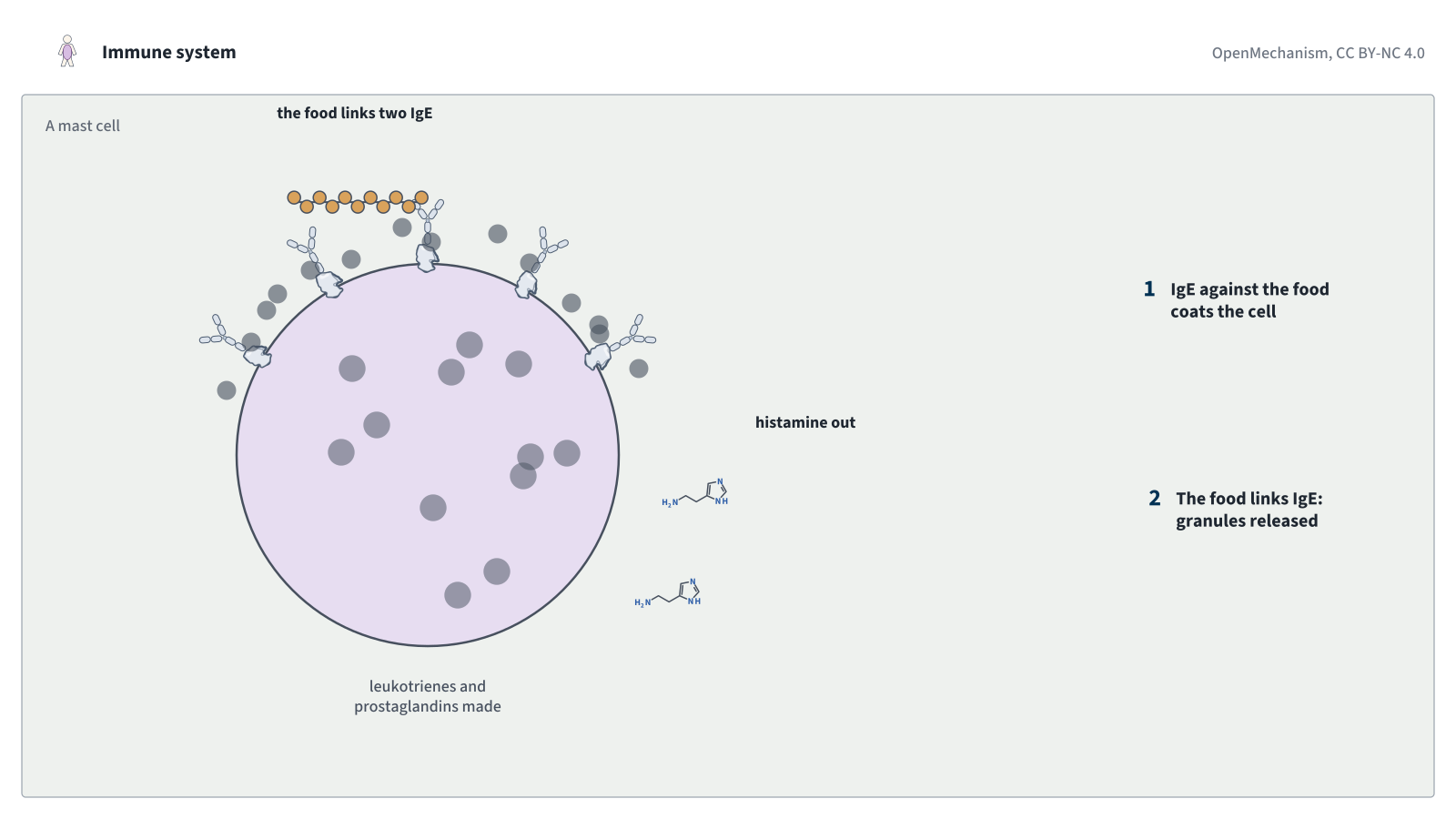
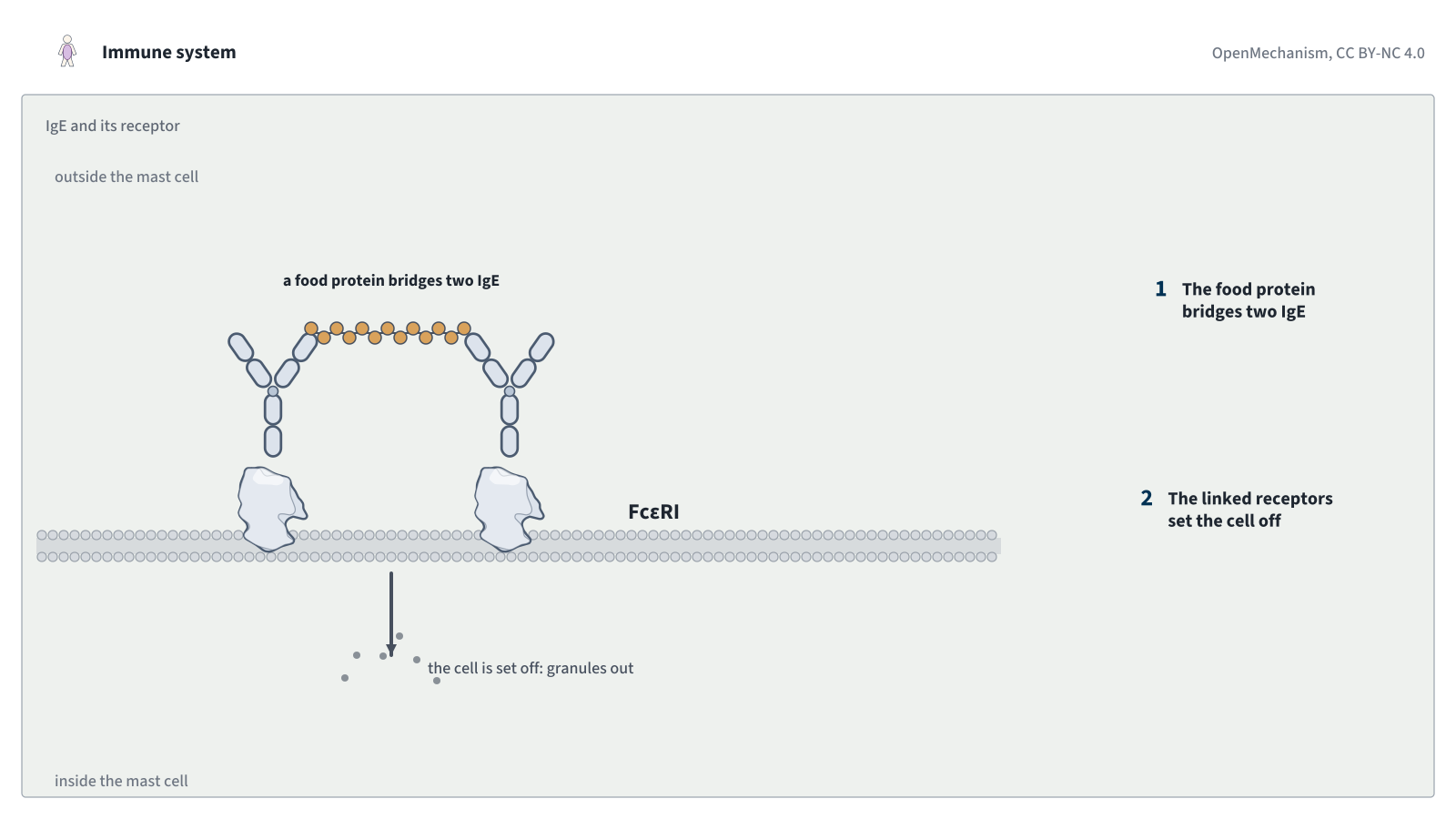
The food links IgE: granules released. When the food arrives it binds several IgE at once, linking them. Within minutes the mast cell releases its granules, and it also makes new signals, and prostaglandins.3
What the source says
“On subsequent exposure, allergens bind to multiple IgE molecules on mast cells, cross-linking the IgE molecules.”
“Within minutes, this cross-linking of IgE activates the mast cells and triggers degranulation, a reaction in which the contents of the granules in the mast cell are released into the extracellular environment.”
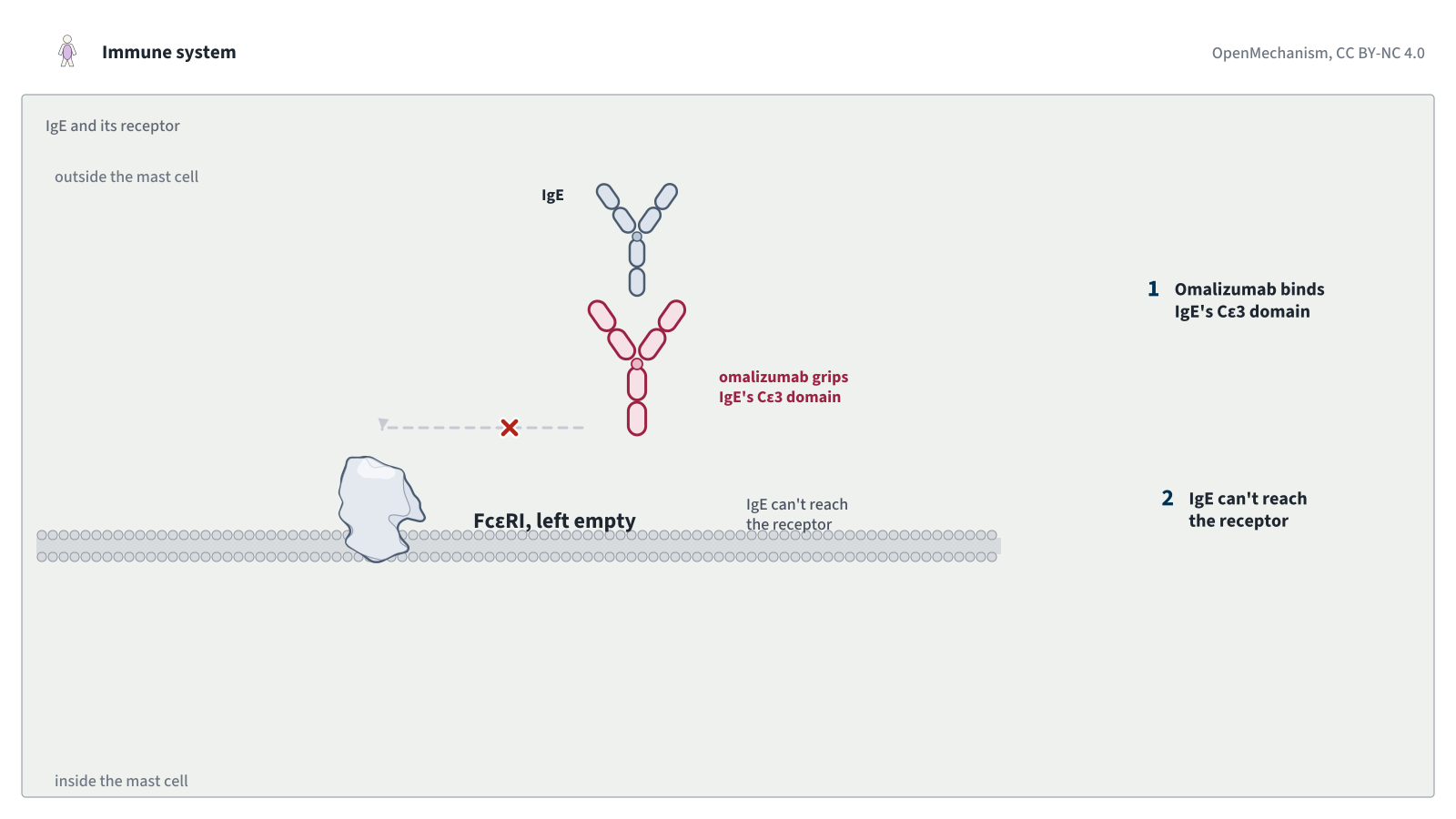
“Omalizumab is a recombinant humanized anti-immunoglobulin E (IgE) antibody that binds to the Cε3 domain of the IgE heavy chain and prevents it from binding to its high-affinity receptor FcεRI.”
Fewer receptors, less IgE on the cell. With less IgE reaching it, the mast cell carries fewer IgE receptors.6
What the source says
“Omalizumab inhibits the binding of IgE to the high-affinity IgE receptor (FcεRI) on the surface of mast cells, basophils, and dendritic cells, resulting in FcεRI down-regulation on these cells.”
“Omalizumab is a recombinant humanised monoclonal antibody which specifically binds to the Cε3 domain of immunoglobulin (Ig) E, the site of high-affinity IgE receptor binding.”
High-affinity IgE receptor (Fc-epsilon RI). The receptor on mast cells, basophils and dendritic cells that holds IgE.
IgE
Immunoglobulin E. A type of antibody involved in allergic reactions.
leukotrienes
Cysteinyl leukotrienes. Signal molecules released by cells such as mast cells and eosinophils; in asthma they swell the airways and tighten their muscle.
mast cell
Mast cell. An immune cell in tissues such as the skin and the airways that releases histamine and other signals.
Tran D. An allergic reaction to food [Internet]. OpenMechanism; 2026 [updated 2026 Nov 13; cited 2026 Nov 13]. Available from: https://openmechanism.com/body/scales/allergy