Respiratory distress syndrome in preterm babies
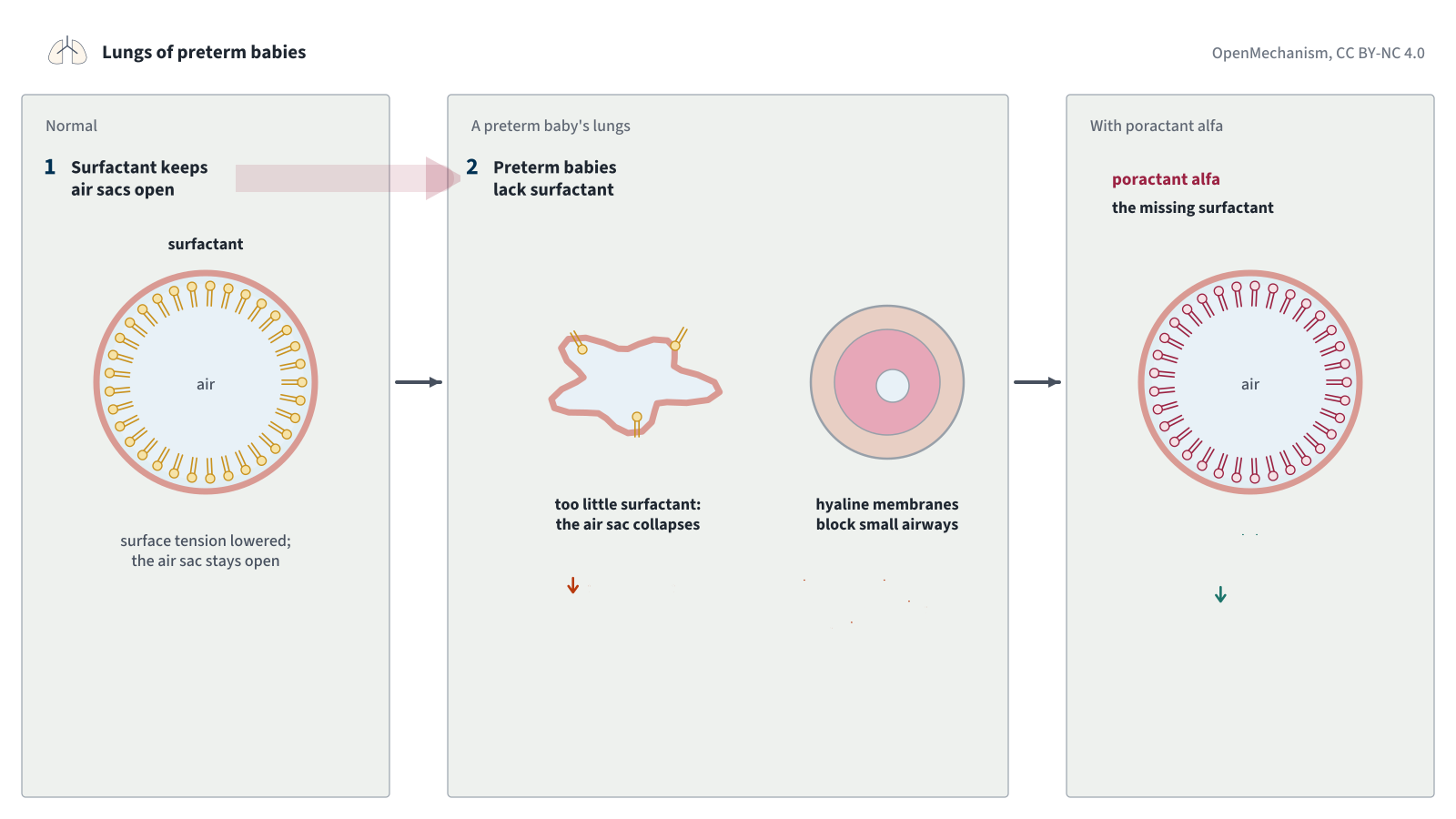
Surfactant lowers surface tension in the air sacs (alveoli) and keeps them from collapsing. Preterm babies may not have enough; their lungs expand poorly, gas exchange falls short and the lungs gradually collapse (atelectasis). It remains a major cause of death and illness in newborns. Poractant alfa, a surfactant from pig lungs, makes up for the missing surfactant.
- Where
- Lungs of preterm babies
- Body system
- Lungs & airways
- Medicines
- 1 medicine
For teachers: download this drawing.
What goes wrong
Surfactant keeps air sacs open. Surfactant made in the lungs lowers surface tension where air meets liquid in the air sacs, and keeps them from collapsing.1
What the source says
“Endogenous pulmonary surfactant reduces surface tension at the air-liquid interface of the alveoli during ventilation and stabilizes the alveoli against collapse at resting transpulmonary pressures.”
Source 1Preterm babies lack surfactant. In preterm babies, too little surfactant causes respiratory distress syndrome: the lungs expand poorly, gas exchange falls short and the lungs gradually collapse (atelectasis). Hyaline membranes block small airways, and the inflammation that follows can become a lasting lung disease.1,2
What the source says
“A deficiency of pulmonary surfactant in preterm infants results in Respiratory Distress Syndrome (RDS) characterized by poor lung expansion, inadequate gas exchange, and a gradual collapse of the lungs (atelectasis).”
Source 1“as hyaline membranes block small airways. In turn this contributes to the inflammation that becomes bronchopulmonary dysplasia.”
Source 2
Where medicines act
- A
Poractant alfa: surfactant replaced
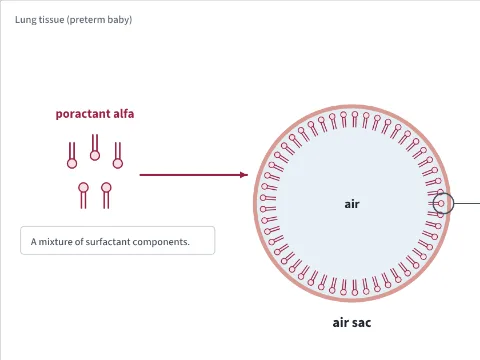
Poractant alfa, an extract of natural pig lung surfactant, makes up for the missing surfactant and restores surface activity; it is a rescue treatment for respiratory distress syndrome in premature babies and reduces deaths.1
What the source says
“Poractant alfa is an extract of natural porcine lung (pulmonary) surfactant”
Source 1“CUROSURF compensates for the deficiency of surfactant and restores surface activity to the lungs of these infants.”
Source 1“is indicated for the rescue treatment of Respiratory Distress Syndrome (RDS) in premature infants. CUROSURF reduces mortality and pneumothoraces associated with RDS.”
Source 1
See also
Body system: lungs & airways.
Sources
- 1Curosurf (poractant alfa): FDA label1 Indications and Usage; 12.1 Mechanism of Action. Saved copy
- 2Pathophysiology of neonatal respiratory distress syndrome: implications for early treatment strategiesAinsworth SB. Treat Respir Med 2005 (abstract). Saved copy
Notes and limits
- A 2005 review says giving surfactant early, with positive end-expiratory pressure and, where needed, gentle ventilation, would seem to be the best way to prevent lung collapse.2
Notes that apply to every page are on How to read a page.
Spotted a mistake? Report an error (hello@openmechanism.com). Since launch, every published error we fix is listed on the corrections page.
Cite this page
Tran D. Respiratory distress syndrome in preterm babies [Internet]. OpenMechanism; 2026 [updated 2026 Nov 18; cited 2026 Nov 18]. Available from: https://openmechanism.com/conditions/neonatal-respiratory-distress-syndrome