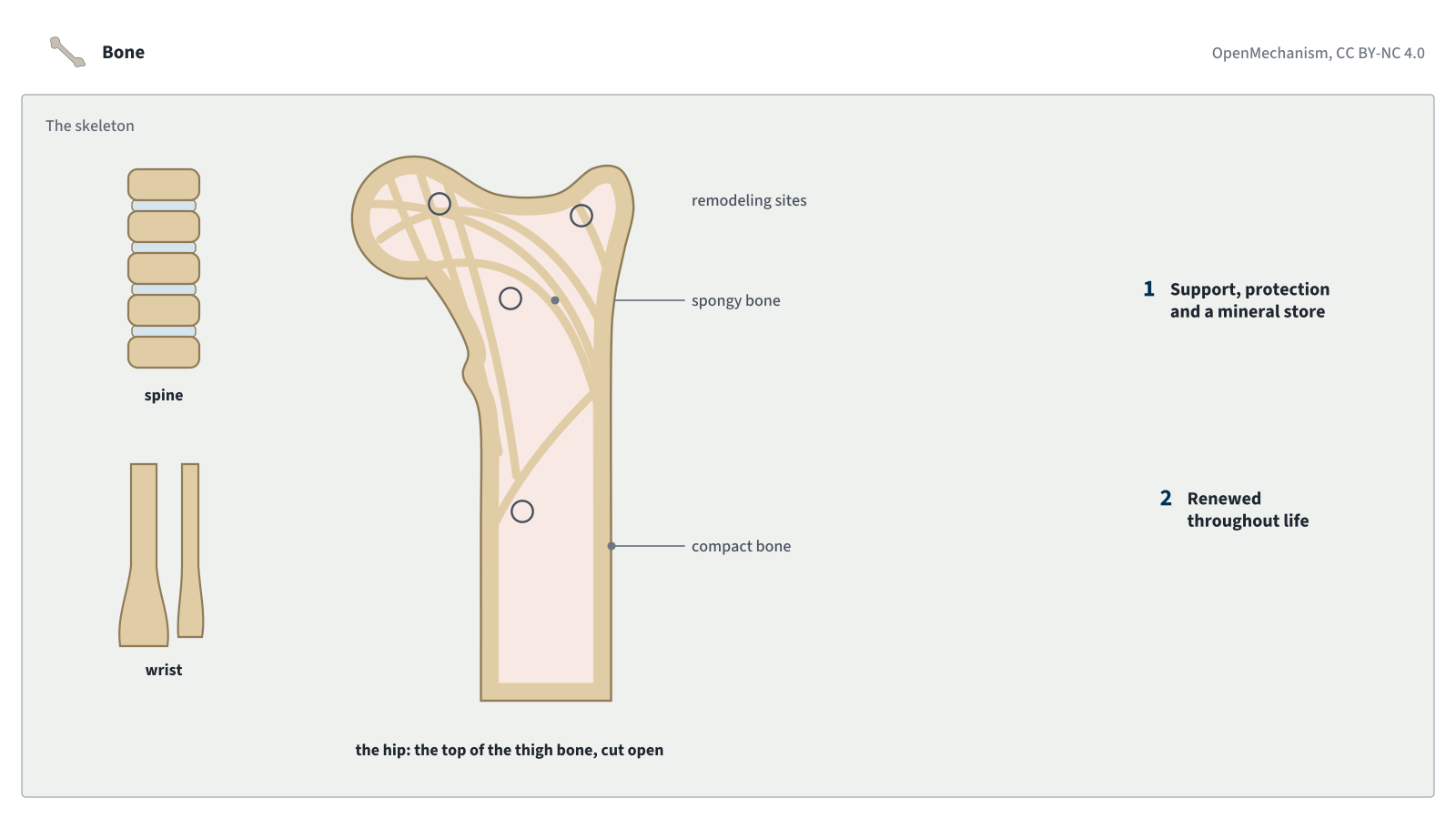
Support, protection and a mineral store. Bone holds up the muscles and joints, protects the vital organs, stores the minerals the body needs for its calcium balance, and houses the tissue that makes blood cells.1
What the source says
“Bone is a complex tissue that provides mechanical support for muscles and joints, protection for vital organs, a mineral reservoir that is essential for calcium homeostasis, and the environment and niches required for haematopoiesis.”
Renewed throughout life. Throughout life, remodeling replaces old and damaged bone, at many places in the skeleton at once.2
What the source says
“The bone remodelling cycle replaces old and damaged bone and is a highly regulated, lifelong process essential for preserving bone integrity and maintaining mineral homeostasis.”
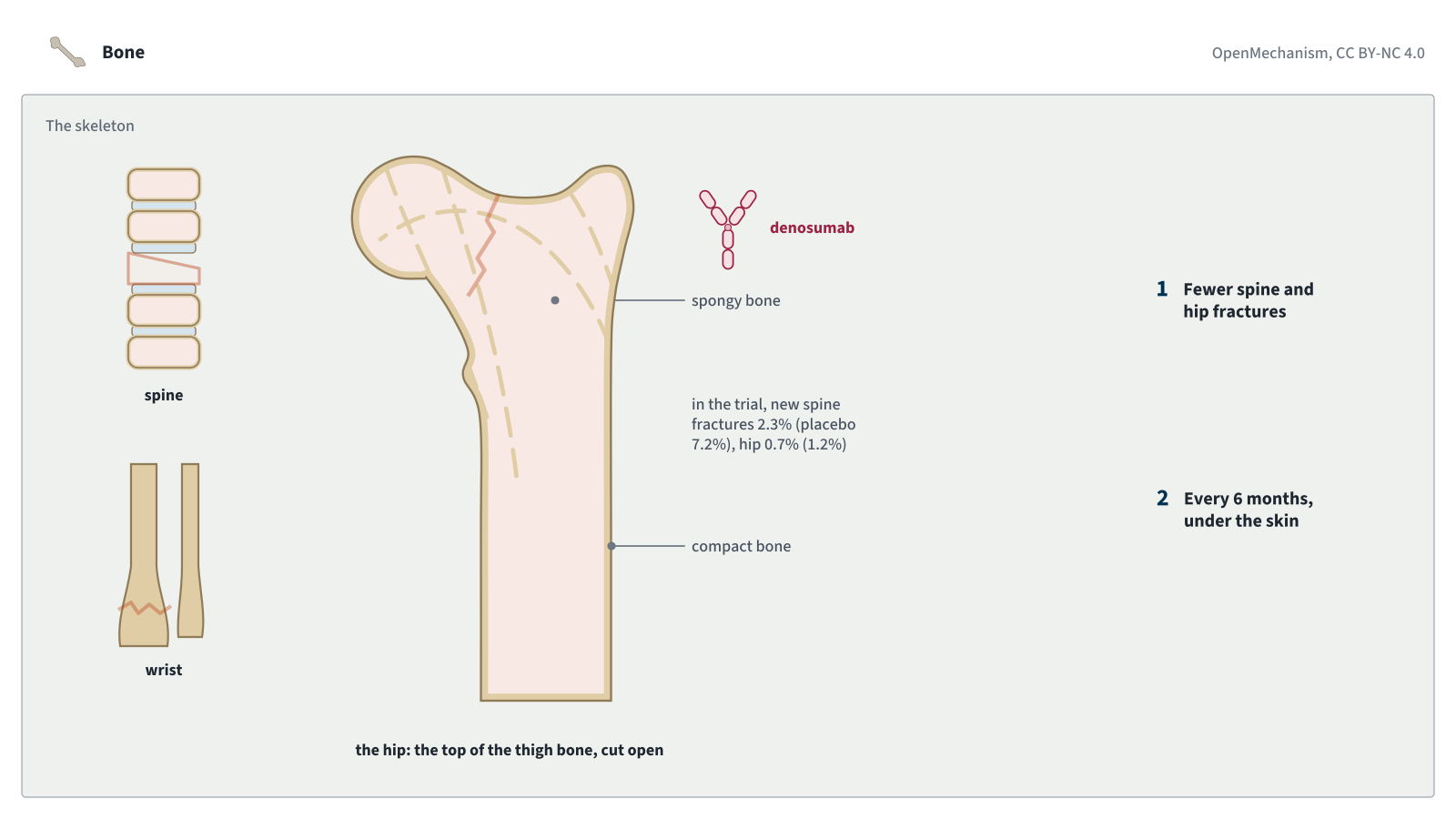
Fewer spine and hip fractures. In a 36-month trial in women with osteoporosis, new spine fractures were seen in 2.3% with denosumab and 7.2% with placebo, and hip fractures in 0.7% and 1.2%.4
What the source says
“As compared with placebo, denosumab reduced the risk of new radiographic vertebral fracture, with a cumulative incidence of 2.3% in the denosumab group, versus 7.2% in the placebo group”
“Denosumab given subcutaneously twice yearly for 36 months was associated with a reduction in the risk of vertebral, nonvertebral, and hip fractures in women with osteoporosis.”
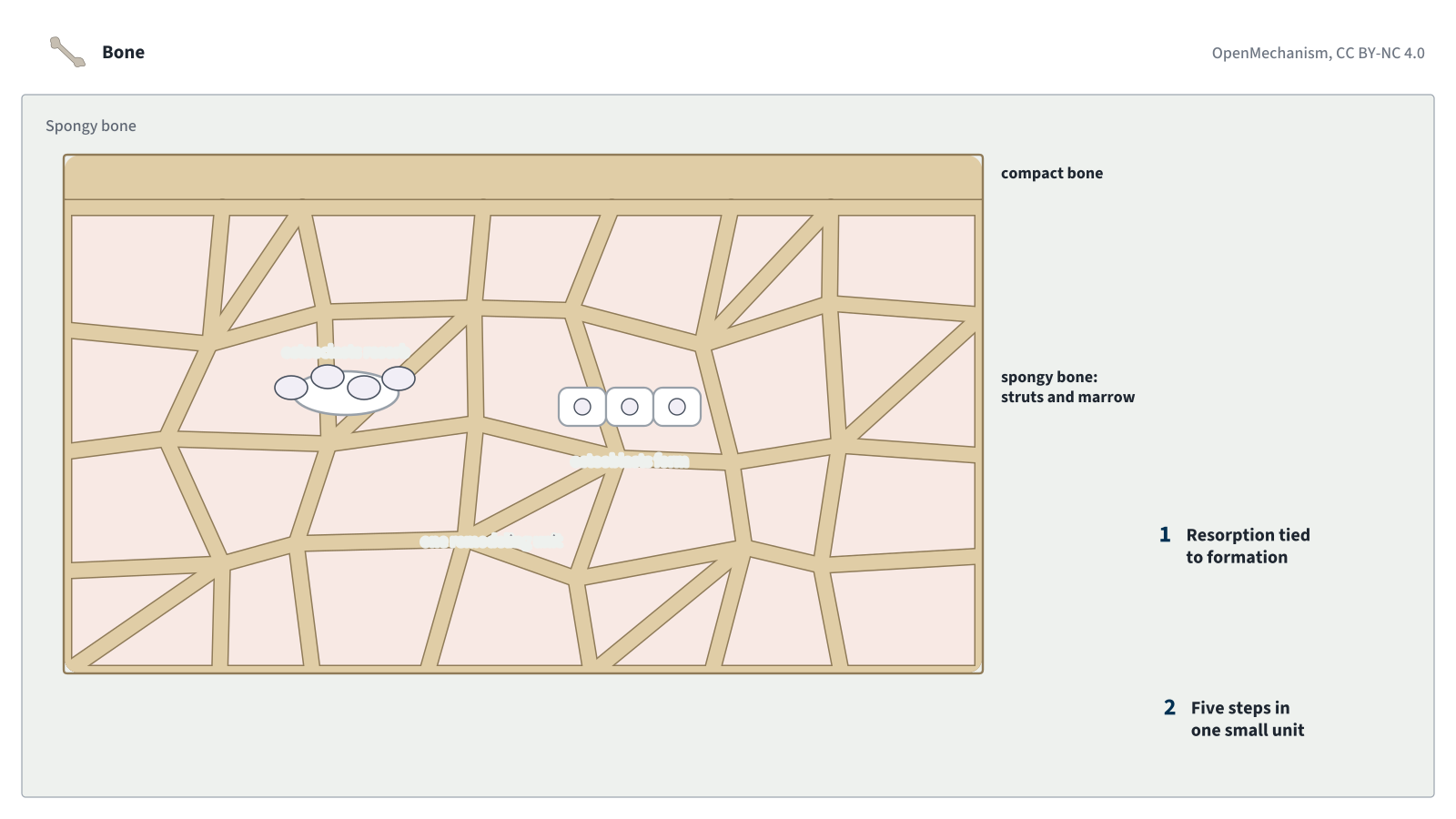
Five steps in one small unit. Each remodeling site is a small unit of cells working through five steps: activation, resorption, reversal, formation and termination.2
What the source says
“The remodelling cycle occurs within the basic multicellular unit and comprises five co-ordinated steps; activation, resorption, reversal, formation and termination.”
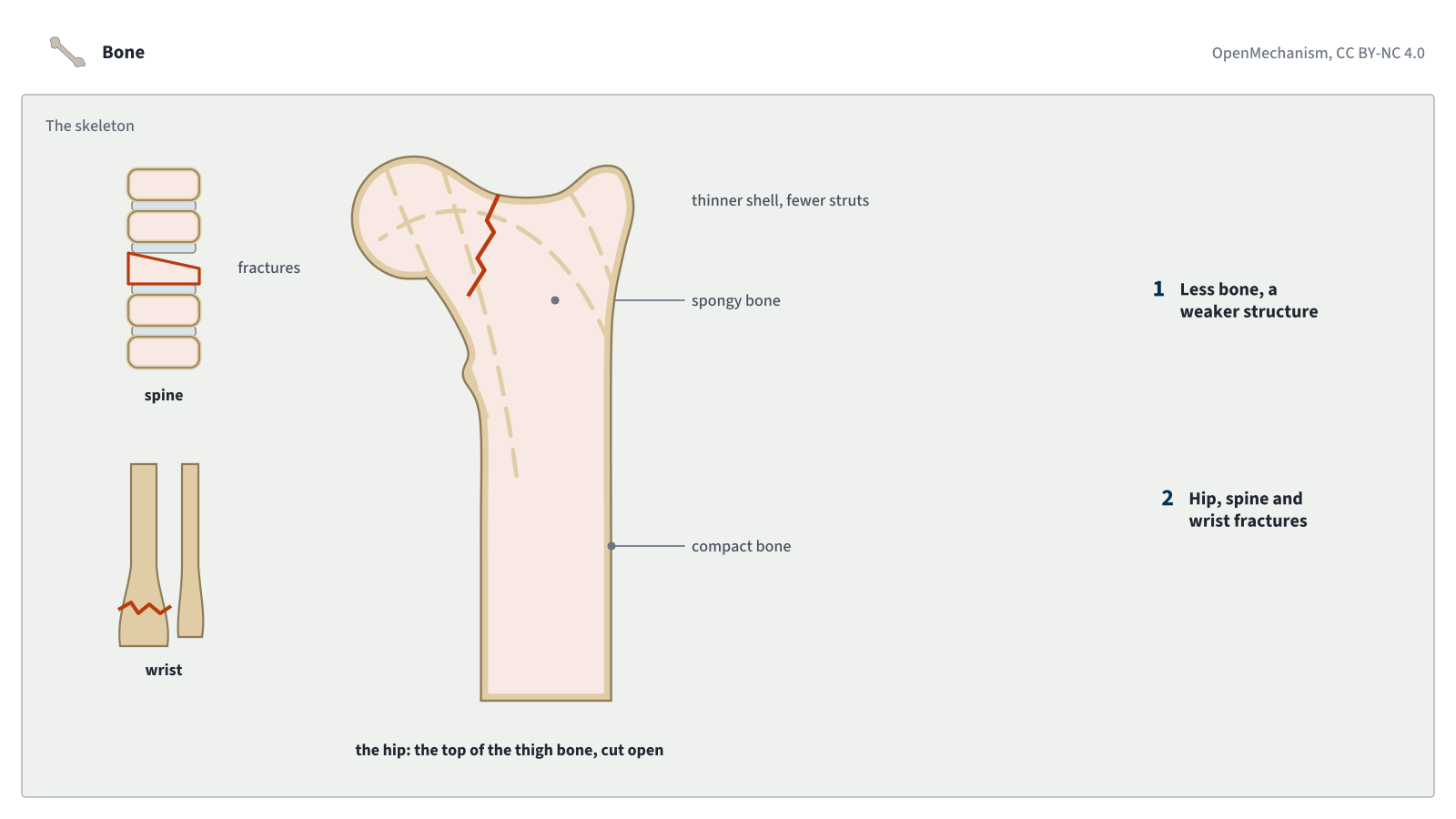
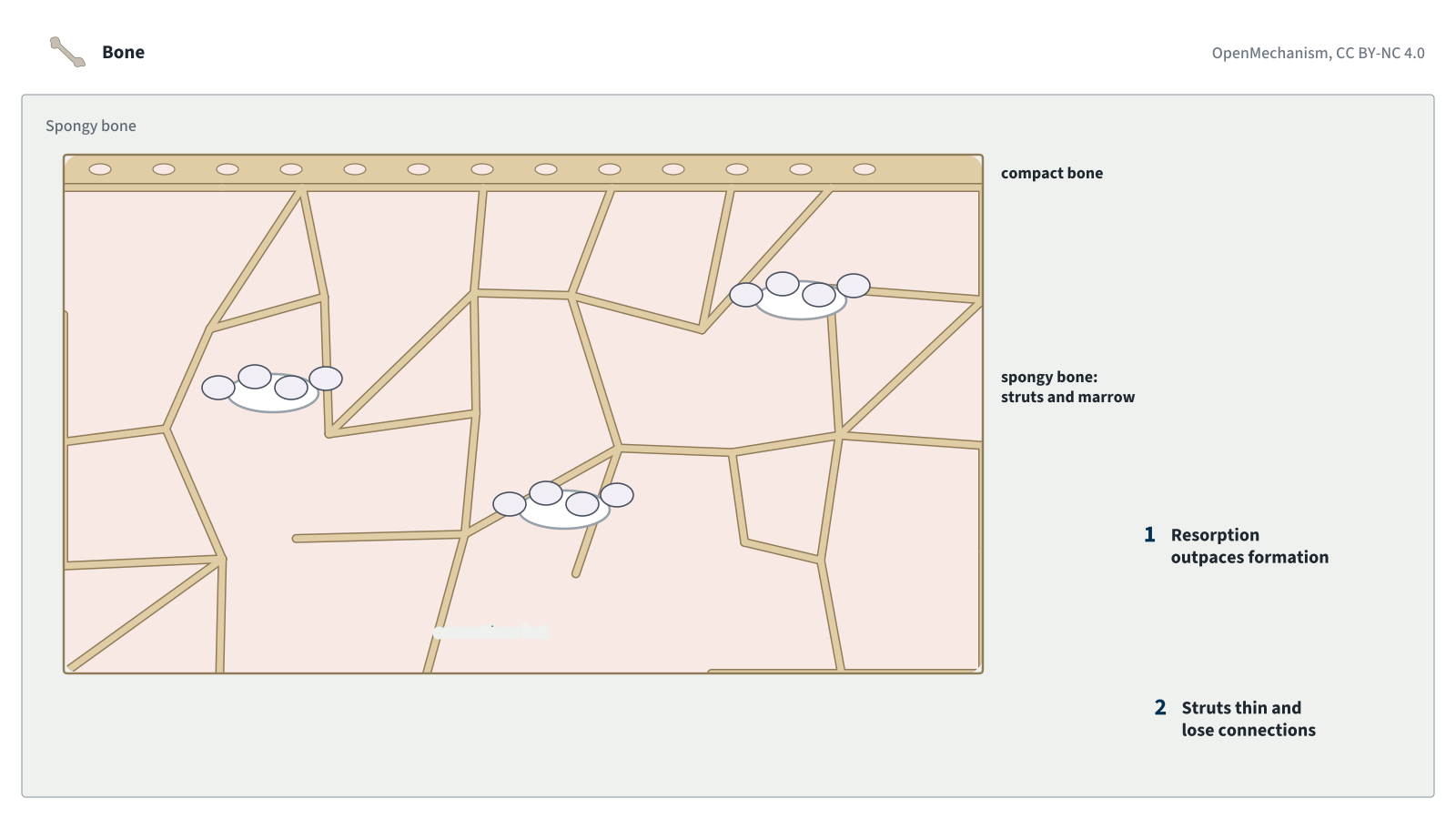
Resorption outpaces formation. When resorption and formation fall out of balance, bone disease follows, most often osteoporosis.2
What the source says
“Disruption of the bone remodelling cycle and any resulting imbalance between bone resorption and formation leads to metabolic bone disease, most commonly osteoporosis.”
Struts thin and lose connections. In spongy bone, the struts lose their connections; compact bone grows thinner and more porous.3
What the source says
“The imbalance in bone formation and resorption has effects on trabecular bone (loss of connectivity) and cortical bone (cortical thinning and porosity).”
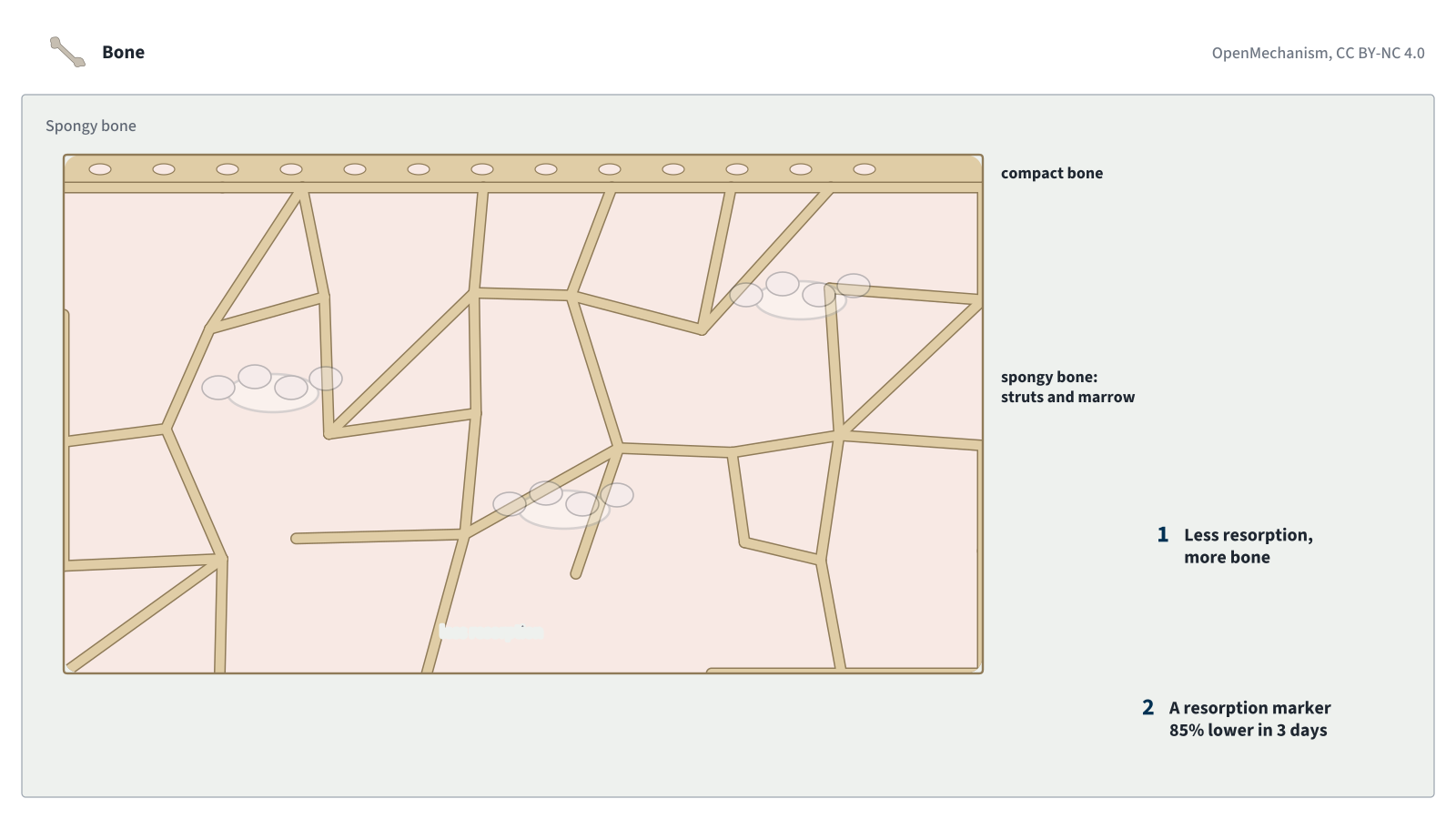
Less resorption, more bone. With denosumab, bone resorption falls and bone mass and strength rise, in spongy and in compact bone.5
What the source says
“Prevention of the RANKL/RANK interaction inhibits osteoclast formation, function, and survival, thereby decreasing bone resorption and increasing bone mass and strength in both cortical and trabecular bone.”
A resorption marker 85% lower in 3 days. A marker of bone resorption in the blood (CTX) fell by about 85% within 3 days.5
What the source says
“In clinical studies, treatment with 60 mg of Prolia resulted in reduction in the bone resorption marker serum type 1 C-telopeptide (CTX) by approximately 85% by 3 days”
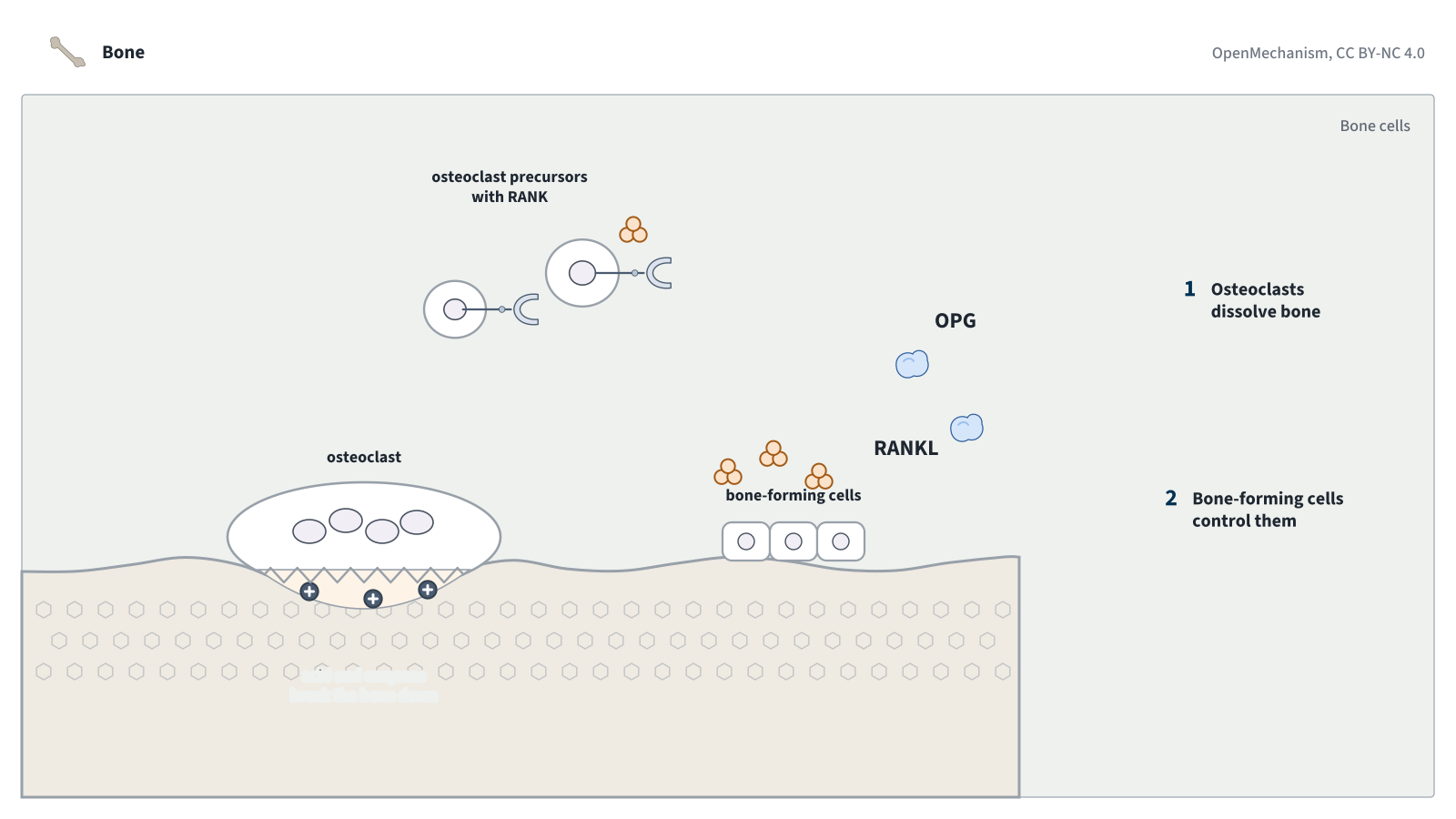
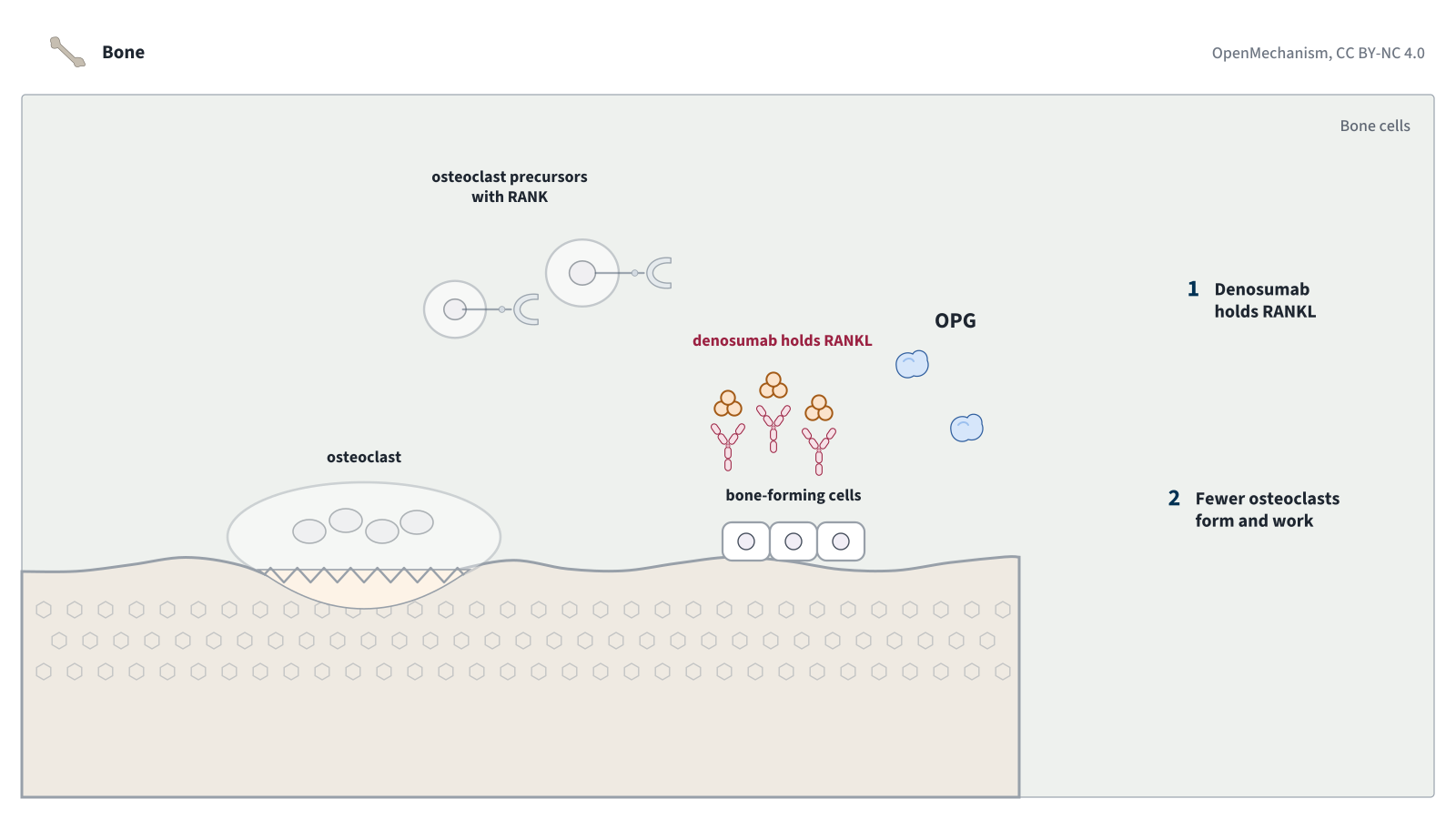
Osteoclasts dissolve bone. Osteoclasts, which come from the same line as blood monocytes, attach to bone and release acid and enzymes that break it down in a special space outside the cell.6
What the source says
“Osteoclasts are specialized cells derived from the monocyte/macrophage haematopoietic lineage that develop and adhere to bone matrix, then secrete acid and lytic enzymes that degrade it in a specialized, extracellular compartment.”
Bone-forming cells control them. Cells of the bone-forming line control how many osteoclasts form, through two signals they make: RANKL and OPG.7
What the source says
“osteoblastic stromal cells regulated osteoclast formation, but it had not been anticipated that they would do this through expression of members of the TNF superfamily: receptor activator of NF-kappaB ligand (RANKL) and osteoprotegerin (OPG)”
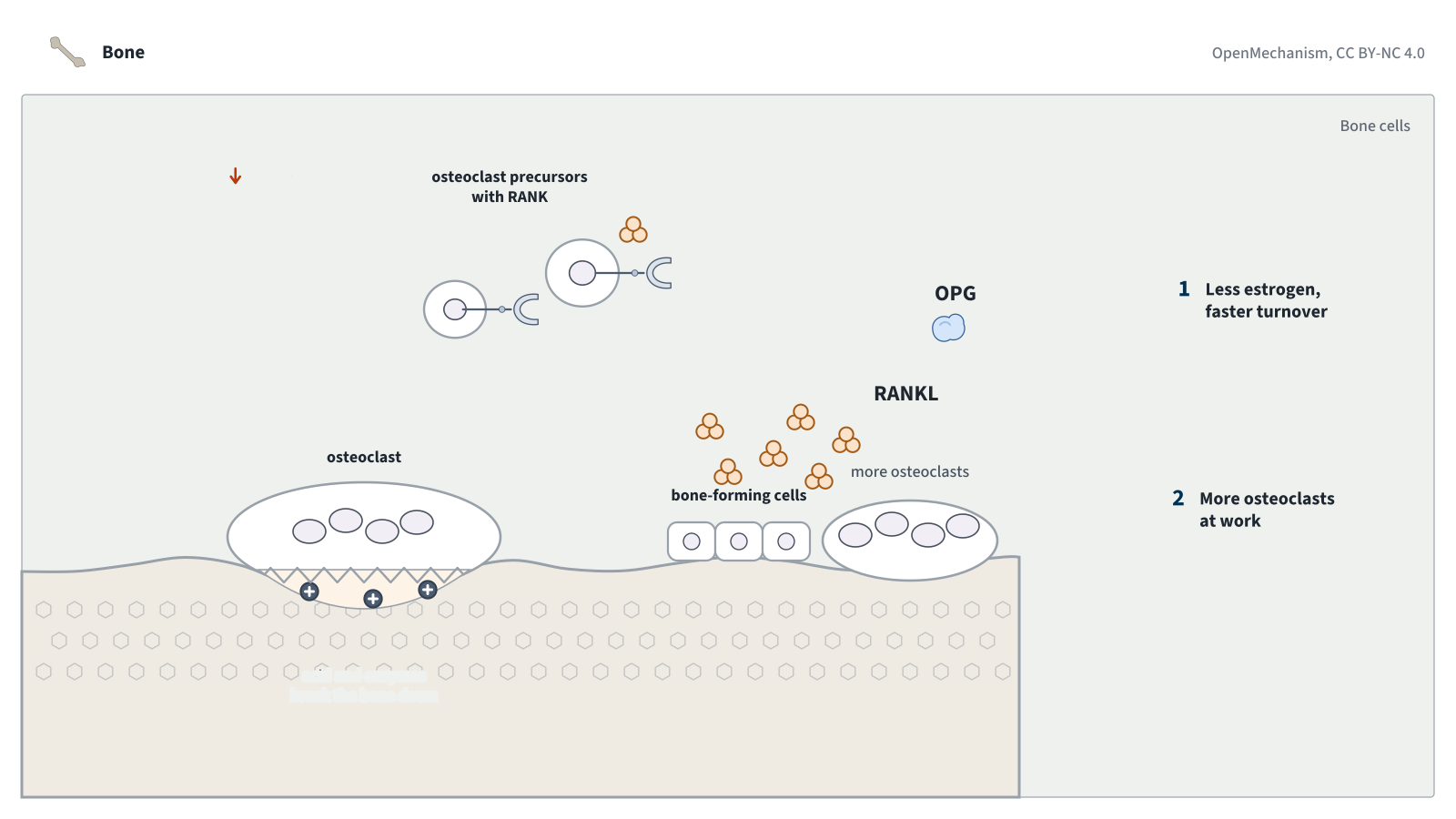
Less estrogen, faster turnover. After menopause, the loss of estrogen speeds up bone turnover through effects on every kind of bone cell; this is the most common type of osteoporosis.3
What the source says
“Postmenopausal osteoporosis, resulting from oestrogen deficiency, is the most common type of osteoporosis.”
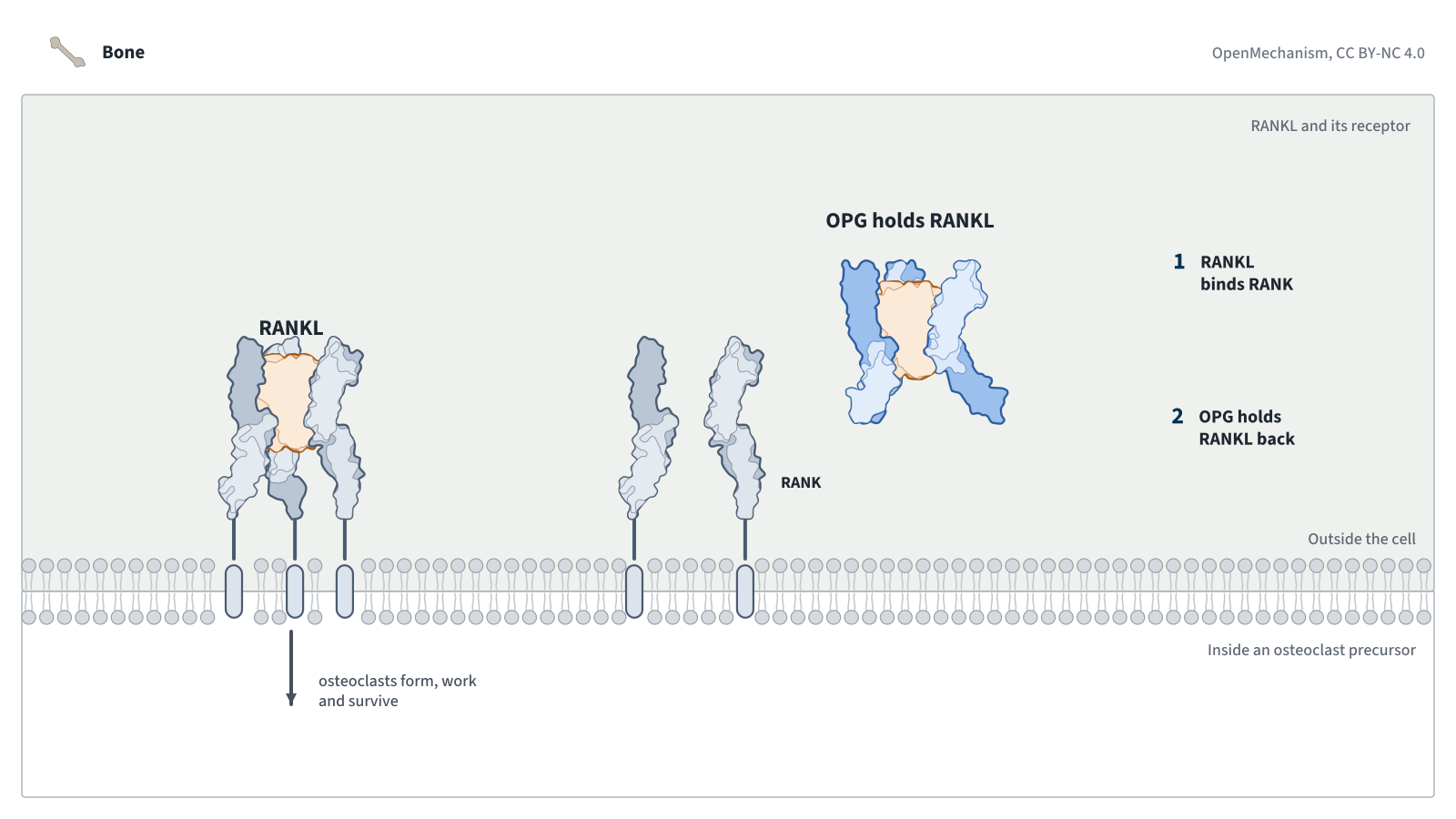
More osteoclasts at work. RANKL acting on RANK controls how osteoclasts form, work and survive, in normal bone and in diseases where bone turns over faster.7
What the source says
“RANKL/RANK signaling regulates osteoclast formation, activation and survival in normal bone modeling and remodeling and in a variety of pathologic conditions characterized by increased bone turnover.”
Denosumab holds RANKL. Denosumab binds RANKL, which osteoclasts, the bone-resorbing cells, need to form, work and survive.5
What the source says
“Prolia binds to RANKL, a transmembrane or soluble protein essential for the formation, function, and survival of osteoclasts, the cells responsible for bone resorption.”
RANKL binds RANK. RANKL binds its receptor, RANK, on osteoclasts and the cells that become them; this signal controls how osteoclasts form, work and survive.5,7
What the source says
“RANKL/RANK signaling regulates osteoclast formation, activation and survival in normal bone modeling and remodeling”
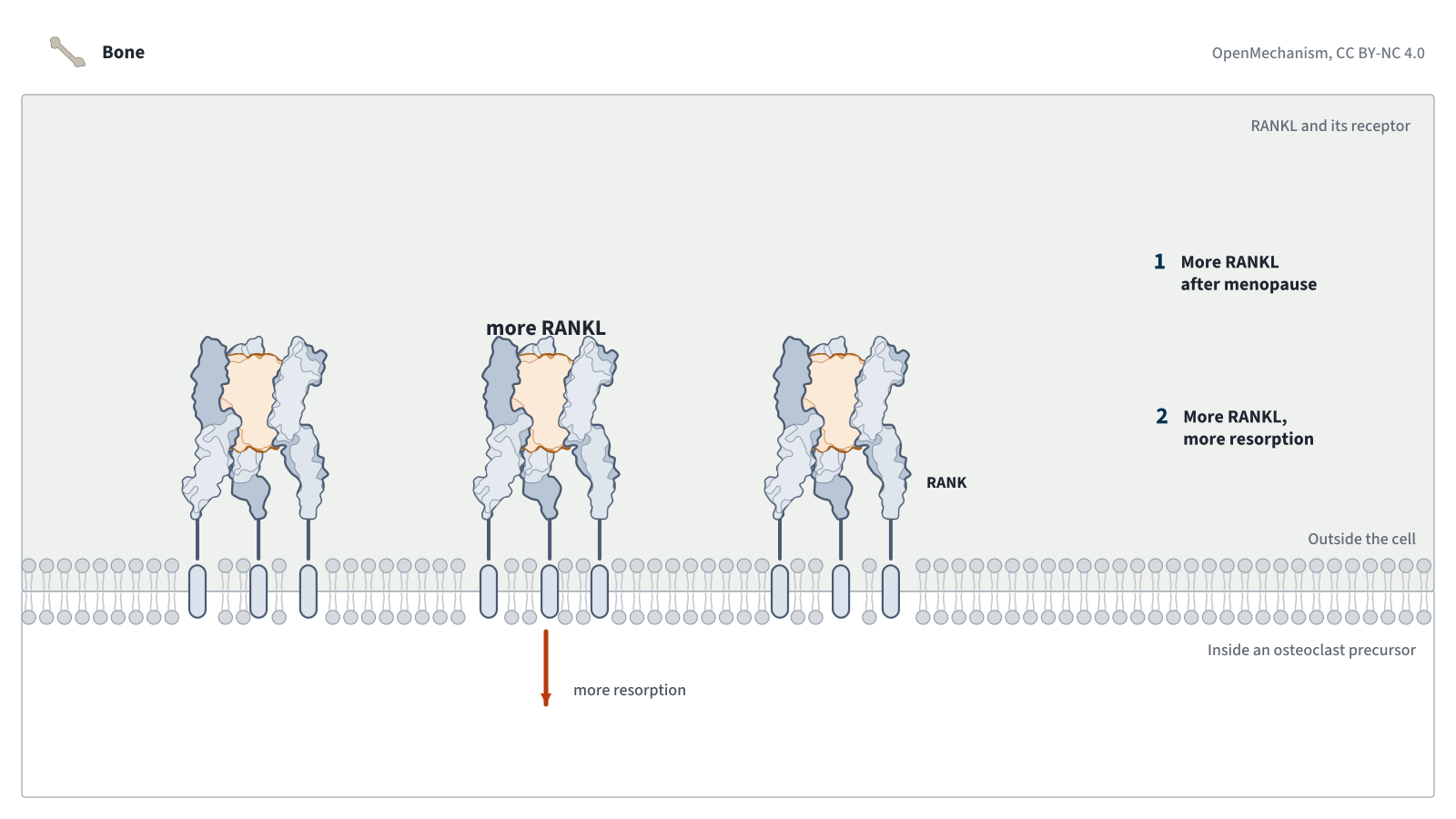
More RANKL after menopause. In a study of 36 women, bone marrow cells carried two to three times more RANKL in early postmenopausal women than in women before menopause or in women taking estrogen.8
What the source says
“12 premenopausal women (Group A), 12 early postmenopausal women (Group B), and 12 age-matched, estrogen-treated postmenopausal women (Group C)”
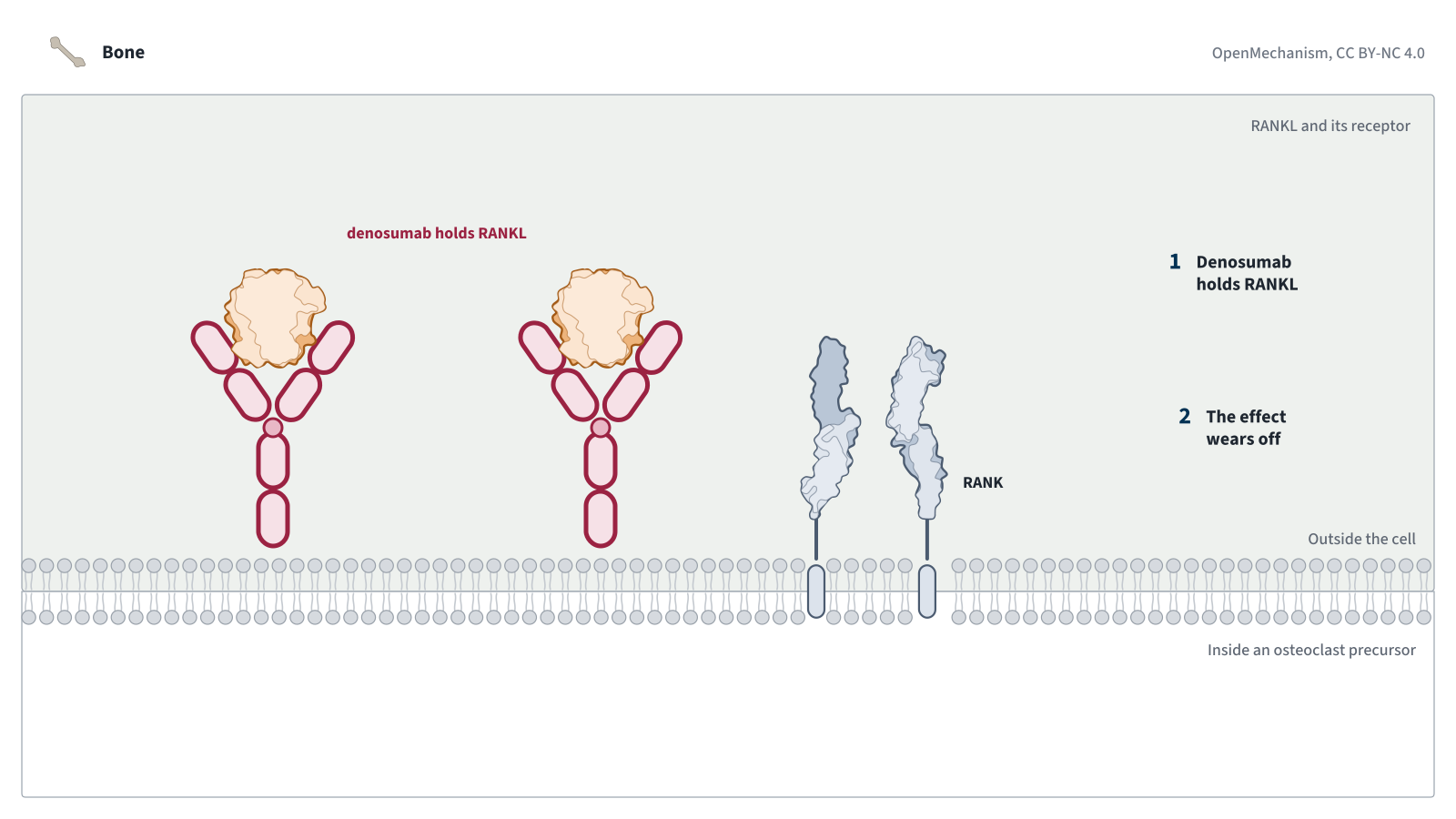
The effect wears off. As denosumab levels fall at the end of each dosing interval, its effect on bone resorption partly wears off: the effect is reversible.5
What the source says
“At the end of each dosing interval, CTX reductions were partially attenuated from a maximal reduction of ≥ 87% to ≥ 45% (range: 45% to 80%), as serum denosumab levels diminished, reflecting the reversibility of the effects of Prolia on bone remodeling.”
When denosumab is stopped, markers of bone turnover rise above where they started within 6 months and bone density falls back to baseline by 12 months; spine fractures then become as common as without treatment.9
The drawings are schematic and not to scale; each shows only what the statements under it say.
Tran D. Bone remodeling [Internet]. OpenMechanism; 2026 [updated 2026 Oct 18; cited 2026 Oct 18]. Available from: https://openmechanism.com/body/scales/bone